


By Roberto Amorosino
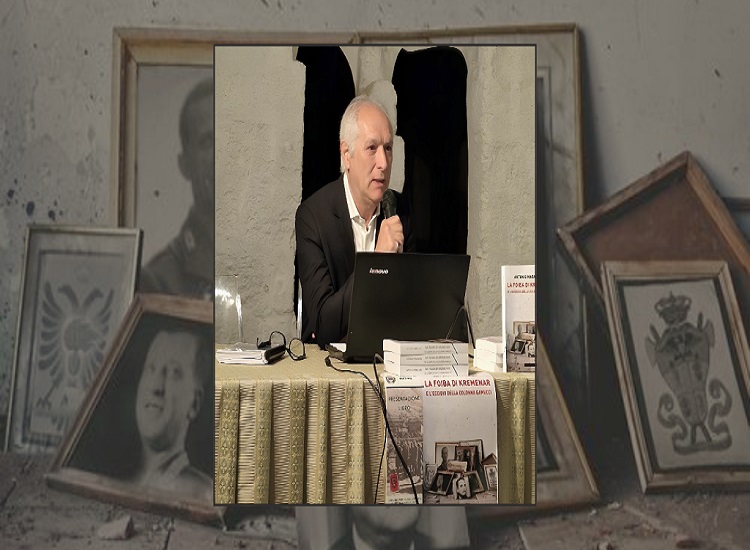
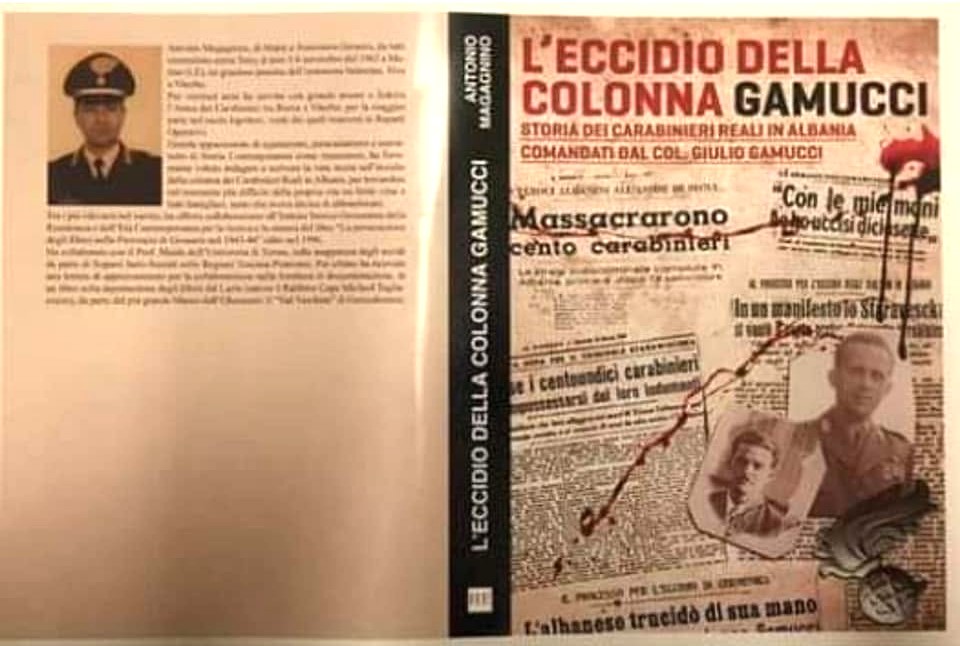
Memorie.al / In his work “The Kremenar Foiba and the Gamucci Column Massacre”, Antonio Magagnino reconstructs the events, complicities, and cover-ups on both sides of the Adriatic to preserve the “good name” of the communist partisans who came to power in the post-war period. We are in Albania during the heated months of 1943, before and after September 8. The actions of the communist partisans – guerilla warfare, sabotage, and raids – consistently targeted the Italian military. Combining field research and original documents, Antonio Magagnino’s work brings to light pages of history ripped from books and memory.
Two Main Episodes
April 1943. Dozens of Royal Carabineri, first captured and subsequently tortured, were finally killed by irregular Albanian formations. Their bodies were thrown into the depths of a cave. This is the “Kremenar Foiba”.
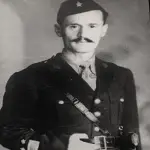
November 1943. The Royal Carabineri of the Tirana Legion was ambushed by partisans near the mines of Selenica. The Italian column was led by Lieutenant Colonel Guido Gamucci, while the partisan unit was commanded by local leader Xhelal Staravecka, who received and executed the extermination order from Colonel Hoxha – who was directly involved in the massacre and the concealment of the victims.
They numbered more than one hundred officers, non-commissioned officers, and enlisted soldiers. Antonio Magagnino masterfully narrates the events, complicities, and cover-ups on both sides of the Adriatic, from September 8 and in the years to come, in his book, The Kremenar Foiba and the Gamucci Column Massacre (available on Amazon). We spoke with the author, asking him:
You served in the Carabinieri all your life, across Rome, Brindisi, and Viterbo. Furthermore, you spent twenty years in the Operational Services. Your work has helped restore a voice and justice to pages of history ripped from books and memory, but above all to the fallen. Where did this research stem from?
The origin lies in the search for the truth, which I have always placed above all else. Sooner or later, I believe the truth will come to light; one simply needs to know how to wait for it. The history taught until a few decades ago is a distorted, twisted, and censored version, with missing key pages and silent intentions by order of the victors of the Second World War.
Years of archival work to reconstruct the “Kremenar Foiba” massacre and the “Gamucci Column” massacre – two 1943 events in Albania that almost no one has talked about?!
We can say that this careful and detailed investigation, often conducted in an investigative capacity, lasted twenty long years: to reconstruct the dynamics, causes, and effects, and to identify both the perpetrators and the victims (nearly three hundred Royal Carabinieri) of the “Kremenar Foiba” Massacre and the “Gamucci Column” Massacre, along with the respective dates of the events. The Foiba: April 1, 1943. The Massacre: the afternoon of November 4, 1943, a date personally confirmed by Air Force Lieutenant Gagliardi, an officer accompanying Gamucci.
Who were the perpetrators and who were the victims?
The perpetrators were members of the First Assault Partizan Brigade, known as the “elite of the country”. The Royal Carabinieri killed in the pits constituted the entire 17th Company. The members of the Gamucci column were units stationed in central and northern Albania who, having regrouped in Tirana, set off for the Bitola junction.
For those unfamiliar with the history: who was Colonel Giulio Gamucci, and what role did his Carabinieri column play after September 8?
Prominent figures in Tirana described Gamucci as a true gentleman officer, so much so that he sacrificed himself for his Carabinieri by refusing an offer to save himself. Superior officers at the head of the column fled, while some were sick. A few months earlier, Colonel Giuseppino Ricci, having already been shot, was dismembered because he was not dying fast enough (testimony of Xhelal Staravecka during the trial) and was subsequently thrown into a stream near the house of Mehmet Shehu’s father, where he still rests today.
His company, however, had been thrown, mostly alive, into the “Kremenar Foiba”, or the “Cave of the Bats”. In the early 1990s, following a confidential tip given to an Italian journalist by the village head of Kremenar – a young partisan present at the scene at the time – it was declared that the Foiba was located outside the village, with the Carabinieri inside. Onorcaduti, interested in the case, organized a descent with several Alpine soldiers: only twenty-one bodies were retrieved, and then, suddenly, by order from Rome, the rest were left inside.
And why?
The official reason, which no one believes, was that the walls showed signs of collapsing due to the use of jackhammers required to extract the bodies. A judicial case was opened in Bari and immediately closed.
The facts: what emerges from the reconstruction?
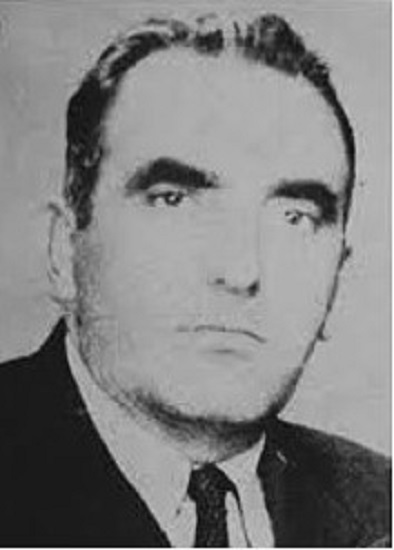
Describing the two events in just a few lines is not easy. There is much to write and tell: such as the chance discovery in Tirana, in June 1993, of Colonel Kadri Aziz Hoxha, sentenced in absentia in Italy, who never wanted to be arrested. Video-interviewed at the age of ninety-three, he expressed only fear, revealing nothing.
The interview is reproduced verbatim at the end of the book. Hoxha, to be fair, had been released from prison in his hometown in January of that year after serving forty-eight long years in prison due to issues with the regime. He died three years later.
On the afternoon of November 4, 1943, in the forests of Mount Panit: what happened that day at the hands of Xhelal Staravecka’s partisans? And what happened on April 1, 1943, in Kremenar?
In Kremenar, on April 1, 1943, the entire 17th Company was thrown into the “Foiba”, most of them still alive. On the afternoon of November 4, 1943, following deception, broken promises, and the deceitful disarmament of the Royal Carabinieri by the self-proclaimed partisan colonel – an early friend of Gamucci since the Nunziatella School – after the Carabinieri and non-commissioned officers were separated from the officers, the soldiers were stripped, even robbed of their gold teeth, machine-gunned, and left in the snow at the mercy of wolves.
Why is the official version unconvincing?
The official version, sanctioned by the verdict of the Court of Assizes of Rome with the sole conviction in absentia of Staravecka and Hoxha, is a deliberate lie. The judicial authorities had all the elements to identify other partisans, but failed to do so. Something that, eighty years later, I managed to accomplish.
For decades, there has been talk of anti-Italian revenge and looting. Why do you believe these were merely contributing factors and not the real reason for the massacre?
Besides revenge, which formed the basis of both incidents, additional motivations were weapons, clothing, and money. Gamucci had one million leks in cash with him and a 500-lira check from the Bank of Italy. Furthermore, only the Carabinieri were well-dressed and well-armed.
You write, if I am not mistaken, that Staravecka would not have acted without the support of local command, the British, and the Italians. What evidence leads you to believe this?
Staravecka, described by his comrades (Central Archive of Tirana) as “a psychopath and a rebel”, who is still remembered today as “The Lion of Tirana”, harbored intense hatred solely toward the Royal Carabinieri, who – according to court documents and self-incriminations by some of them – were guilty of murders, summary trials, arson, and violence. It was precisely due to this behavior that Staravecka was selected by hierarchical command to track down and kill every possible Carabinier.
A betrayed alliance…?
Certainly: initially, there was an alliance, which was later betrayed for various reasons and used as a springboard for crimes. Suffice it to say that a meeting was called between MI6 British officials, trusted men of Enver Hoxha and Tito, and the Commander of the Eastern Mountain Troops, Italian Army General Armando Azzi, to decide whether or not to massacre only the Carabinieri. Shortly thereafter, Azzi fled on a British submarine with his staff. He would later become a member of parliament for the Italian Communist Party…!
After September 8, Italians who did not collaborate with the Germans were considered allies of the partisans. Why, then, was this column exterminated? Was it due to internal feuds within the Albanian resistance?
Apart from internal feuds and disagreements among the various partisan groups present in the area, only the Carabinieri paid the price, while the army remained free. Many Carabinieri and soldiers – hoping merely to survive – joined partisan groups, and many of them (some identified) were responsible for the murder of their comrades from the day before.
Closed archives: what is the situation today?
In both countries, the archives remain closed: in Italy, due to the 70/100-year law; in Albania, because a large part of Enver Hoxha’s old regime, which kept an entire country closed off from the world for forty-eight years, is still felt and experienced.
The book contains a wealth of documents, yet you report obstacles in both Tirana and Rome. Do you feel there is still a desire to cover up the responsibilities of Italian commanders who abandoned their troops in Albania?
I faced more obstacles in my own country, especially from members of ANPI (National Association of Italian Partisans), than in Albania, but no one has ever had the courage to contradict me. To be fair, a few honest members of ANPI have praised and thanked me for this work. I will always go anywhere and before anyone.
Half justice?
Yes, half-justice. Without forgetting divine justice, which no one can ever escape.
The Italian judiciary convicted only Staravecka in 1951. Why was no effort ever made to identify the instigators and those responsible for the crime?
I have always harshly criticized the judicial authorities who investigated and tried Staravecka and Hoxha, while a third individual, Mark Berisha, was never identified. I emphasize: they did not want to pursue the case simply because many partisans held high positions in Albania, from the Prime Minister and Commander of the infamous Sigurimi, Mehmet Shehu, to the Minister of War, Peçi, and many other important government posts.
Eighty years later, I searched for, found, and identified several members of the First Assault Partizan Brigade. I recall that Staravecka surrendered to the Carabinieri thanks to what we would now call a “state’s witness”, in exchange for protection for his family, who now lives in America.
A denied memory?
Memory was denied until two decades ago; no longer. I will always bring the truth to those who believe history should not be silenced and hidden, but made known, especially to young people in schools, which I continue to do.
Today, there is not even a memorial stone for our fallen Carabinieri. In your opinion, what should be the first concrete act of justice and commemoration?
Both at the “Kremenar Foiba”, which remains open today, and at the site of the Gamucci column massacre, there is nothing to remind us of the tragic actions of Tito’s partisans, both Albanian and Italian.
If tomorrow you could open just one closed archive, which would you choose and what would you expect to find there to close the circle once and for all?
For the moment, I believe the only truly important and complete archive is the Central Archive in Tirana, which is currently being reorganized and made available to anyone wishing to learn about the pages of history that were deliberately silenced. / Memorie.al