Part Two
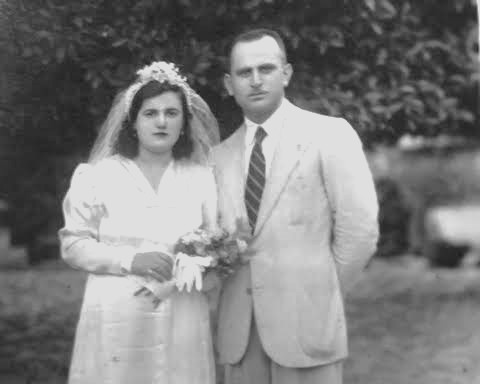
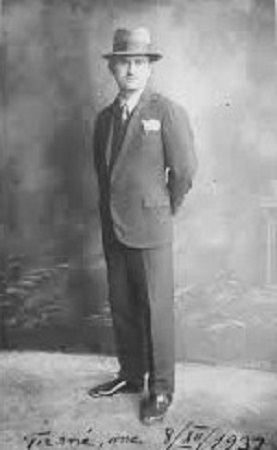
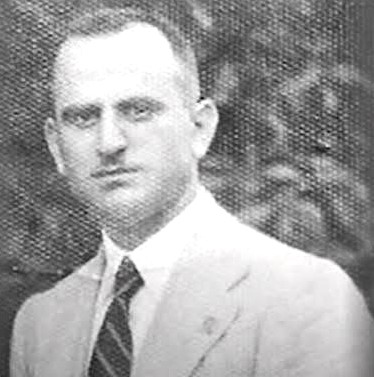
Memorie.al / 76 years have passed since the execution, but Daut Elezi’s family, despite their efforts, still has not found his remains. Suzana, the youngest of the children, who was not even one year old when her father was arrested, recounts the sorrows that have accompanied their family throughout their entire lives. Daut Elezi was one of those young Albanian intellectuals of the 1930s, educated in the West, whose life was cruelly cut short with the establishment of the communist regime. He worked in the state administration before and during the Second World War, ending this career in Gjilan. Very little is known about him today. Even his descendants are discovering his figure piece by piece, with great effort. Because for over 40 years they could not speak, and for more than 30 years of pluralism, those who hold the hidden truths speak little or not at all.
Continued from the previous issue
What happened to you after your father’s execution?
We were not interned, but we were expelled. They took us to Dushk. There, my mother’s stepmother came and took us, because she heard that camps were being set up in Tepelena. She takes us to her house. The people from the Front or the neighborhood call her and tell her: “You have taken the family of a criminal, the wife of a criminal.” She said: “She is my husband’s daughter, my husband left her in my care. I will not abandon her even if you cut my flesh!”
Luckily, her word carried weight! “Since the son-in-law opposed the brother-in-law,” – meaning “brother-in-law” for Enver, because my mother descends from the Hoxhas, she is Muharrem Hoxha’s daughter, right in the trunk of Enver’s family, they are from the same clan, cousins – “I wouldn’t take her if she were my own daughter,” she said, “but this is my husband’s daughter, and the devil mocks me: If I don’t take her because she’s my husband’s daughter, they will talk.” They left us with her in Lushnja. They didn’t touch us.
When your father was arrested, did your mother try to write to Enver Hoxha, since they were from the same clan?
My mother went, she inquired, because my mother’s aunt was Bedri Spahiu’s sister-in-law. And that was something that wasn’t done. It was too late. What happened had happened. They had killed him. She inquired with everyone she knew. She also met Enver’s sister because they were the same age, but no one helped her. He killed his own in-laws – (because he didn’t just kill Bahri, he also killed one with the surname Çipi in Berat) – would they help my mother, those people!
In what conditions did your family live in Lushnja?
There, on my uncle’s land, in the yard, they built a house over time. The people my father had helped, who had won their court cases, they helped us. Because my father had this quality: he wouldn’t take on cases that he thought couldn’t be won, and he created respect among people because he didn’t cheat, he didn’t take on things he couldn’t do. And they brought us straw from Karavasta, from the swamp, to cover that shack. They brought some planks, and mats. They enclosed the house, made two rows of reeds, and filled them inside with mud mixed with straw.
Wasn’t the grandfather’s house spacious enough for you to build another dwelling?
Grandmother put us there, my mother’s stepmother, but they didn’t leave a single policeman without renting from them, because grandfather had built a large house. It was one-story, but it had many entrances. And they brought various people in and removed the “criminal’s” family. In their yard, we built a shack.
Did your uncle live with you too?
My uncle lived with us. After I got married, my uncle separated. My older brother also got married. They got married at an older age, because my aunt said: “Let Daut’s children grow up, because they are very young. Let them grow a bit, and they’ll take care of themselves.” With extraordinary grief, those men! Both without finishing high school. My uncle was even a year younger than Mustafa (my half-brother). But they worked, they shouldered the house. Both were honorable men.
They had been partisans. How were they treated?
My uncle never received the one-thousand-lek war medal. My brother received his. That’s how they decided: they gave it to him; they didn’t give it to my uncle. My uncle’s house was also unjustly sequestered. Not the whole house in Peqin was my father’s. It was a family inheritance. The one in Elbasan was my father’s.
And how did they justify not giving him the reward?
“He doesn’t fulfill the conditions.” They only gave him heavy labor afterwards. A man with the Elbasan “Normale,” intelligent, bright! Fine, they didn’t give him the war medal, but they left him in heavy labor until he got sick. He died from that.
Were you always treated the same way, or was there ever a moment of some relief?
After Hamit Matjani was killed, my mother was called to the Party Committee. – “Why your husband was killed, the party and the state know, but you will be looked at with a different eye,” they told her. Nothing changed! Nevertheless, they didn’t send us into internment. That was the greatest mercy that they left us there.
When they caught Hamit, they asked him: “What relationship did you have with Daut Elezi?” – “You killed him?” he said. – “You took him on your neck for nothing. Daut was an intellectual, a civil servant, an administrator; he wasn’t a man of the bullet. Let me go, and I’ll show you who I am.” Because they betrayed his trust when he came. Because supposedly they would be killed here, and they would be killed by these Security people too. They caught him, because he wouldn’t be caught alive. He was very nimble.
I remember the hanging of Hamit Matjani, because all the schoolchildren were taken there. A terrifying terror! At the sports field of Lushnja. The Lushnja High School was like a podium, one side of the sports field was the high school, and below was the elementary school, above was the high school, because it was a three-story building. They took us organized by classes to see him hanging. He would stay there for more than 10 minutes, to fix it well in your mind and create terror and horror. That’s how they left us!
What did they tell you about your father when you were little?
I remember once, our neighbor was a policeman, but his daughter was in the same class as me. I might have been in third or fourth grade of elementary school, I don’t remember. And that girl’s grandmother, her mother’s mother, had come to visit her. Perhaps that old lady saw me as a bit more well-behaved and asked her daughter: “Oh, they seem like a good family,” she said, “who is this?”
– “This poor thing’s father was killed, they hung him, they tied him with a rope and a car dragged him around the city, dead,” – the policeman’s wife told her mother. I was present. My shock then! I ran away. I never went to that house again. And I told my mother: this and that. “No,” my mother says, “what are those words?! They say them out of spite, because they have a grudge against us.” My poor mother was very upset. She had our worry, that we wouldn’t suffer any trauma.
But what did your mother herself tell you about your father?
She never mentioned him at all. Only when my aunt came, because she came very often. There were no cars then. By cart, from Kavaja to Lushnja. My father’s sister stayed very close to us. I remember once: she came to the house, climbing the stairs, with a napkin on her head, because the napkin is a sign of mourning in Central Albania. She dressed in black at 30-32 years old, when her brother died, and she never wore white again. And when my mother sees her, she almost fainted: “Behije, it’s as if Daut came back to life!” I have that scene in mind. They never talked about it. They never even mentioned his name; they would say “that poor soul.”
How did you learn the truth?
You learn over time, because you start growing up. – “Where is father?” – “He died” – “He died in prison,” they would say. In a way, you figure it out. I remember my aunt, when others would die, she would say: “I don’t mourn them. They died in bed, when they wanted water, when they wanted aspirin… my brother we don’t know. No one ever saw him again. They took him and…! We don’t know if he died or was killed, if he died in torture, if they hung him, or killed him.” Only recently did we find out that they shot him.
Did you feel as a child that you belonged to a persecuted family?
We did, yes. The “Congress of Lushnja” school and the Police station were separated by one wall. To go from my house to school, you had to pass once by the police door, then the school door. I was afraid to pass there. I would go around. I would have to go through the path, around and around. Rain, wind, cold, I couldn’t pass. I had a terror. Even now, I have a terror of the police.
How did they behave towards you at school? Do you remember any particular episode?
I have never spoken about these things, but what happened in a situation not long ago at home, I told it, because I wasn’t going to. I was in the second year of high school. The Youth Committee was changing buildings, and they take high school students to carry the books, chairs, furniture. And they fabricated it as if I had taken a Russian dictionary. We were afraid of our own shadow, they hadn’t left us anything without taking it, what would I need a Russian dictionary for! A fabricated thing to degrade me, to put me through extraordinary stress.
I appeared before the district youth bureau, that first secretary of the district youth, there were about 5-6 people judging me, they discredited me. – “But I don’t know!” – I told them. Made up, in some way, for a child! The first secretary’s wife, a very young girl, took pity on me; I don’t know how I looked. A child in front of all those adults. “Where will they take me now? Will they intern me? Will they put me in prison?” Because it wasn’t for nothing that they called me there. – “I will take her under my patronage,” she said, “to rehabilitate her.” She felt sorry for me. And it ended there.
I remember another time, it was the Party Congress. My brother was in the fourth year of high school, I was in the first. It was before I was called to that “trial.” My brothers were like that in school, top of the class in mathematics. Someone tells Luli (Kamber) to tease him: “Sing.” Luli said: “You start, I’ll follow.” He probably didn’t know how to sing. We have no voice. They had sucked the life out of us, even before we were born, damn it! We never sang, to tell the truth.
There was a literature teacher there, and he says: “From first year of high school to fourth year, come back to school”! Because ahead were the 7-year, elementary, and the older ones were behind. On the school steps, he starts shouting. Luli had run away. I didn’t know what had happened. If I had known, I wouldn’t have gone either; I would have turned around on the street and gone home. A great shock to hear about your brother. They criticized him for not singing. By name: Kamber Elezi. The school was buzzing.
Were you given the right to study?
My brothers were very good. They took the most difficult branches. My older brother, Shpëtimi, finished the Polytechnic, here in Tirana. After he started working, he was an electrician, the branch of Petroleum Engineering opened at night, in “Stalin City.” And they also issued the law that those who finish the Petroleum Institute in “Stalin City” don’t have to do military service. My brother did the school then, graduated very well. He came from Lushnja to “Stalin City,” on Fridays and Saturdays. As soon as he finished, they drafted him.
How is it possible they gave him the right to higher education?
No one applied to that branch, and they made it in “Stalin City.” There was no demand.
Did he practice the profession?
He didn’t practice it, because when oil wasn’t extracted, “they sabotaged,” they would say. And he didn’t go, because he knew he had a mark on him, that they would arrest him. He worked at NSHN, fixing cars.
And your other brother?
Kamber was a teacher in Karavasta. He studied Mathematics and Physics. At that time, they had a great need for teachers, because I finished three years later, but they didn’t let me become a teacher. He was lucky that year. He finished the two-year program and then started university from scratch, the four-year, by correspondence. At that time, on August 15th, the cadre list would come out, and we were always in a fever. My mother had her head wrapped, because; “he’ll be in the cadre list this year, he won’t.” And where would he go? To the most difficult areas. This brother, Kamber Elezi, was the prefect of Berat in the 1990s, until 1997, when he left for Canada.
And you?
I got married, 18-19 years old. No, there was no question of the right to study.
What work did you do?
I was a substitute teacher in the village of Adriatik, with the internees. It was about 10 km from Mamurras. I would go by bus, by cart, on foot. They’d put me in work, they’d take me out.
Did your husband have problems with his biography?
My husband, Shyqyri Dervishi, had studied geodesy in Poland. He was the chief water engineer for the Krujë area. The directorate was in Mamurras.
Were there consequences from this marriage?
He suffered because of me. He did a study in Godëll, which is between Fushë-Kuqe and Adriatik. That was salty land; he diverted the Ishëm River and the Droja River and created 850 hectares of agricultural land, without any expense from the state budget. But one time, in the 1980s, the world was flooded with water because of an exceptional rain. They called it sabotage. They brought in an inspection. They told him: “You will come to the office when we enter. The key is ours. You will give us those documents we ask for.”
His luck was that he had the permission papers for the study: from the Agriculture section and from the Ministry of Defense, because there were bunkers there too. And he was saved, but he was traumatized. He was hospitalized on a stretcher then. And afterwards, he developed two serious illnesses that he had until the end of his life. He suffered because of me! I am aware and I have declared that he was an exceptional man. Not once did he get nervous, not once did he mention what he did by marrying me.
He would put my father’s photo on the wall. I would take it down, he would put it back. “Oh Shyqyri, you’ll get us in trouble,” I’d tell him, because everyone around us was from the party. He wouldn’t respond. One time he came upset and told me: “Look, anything can happen. You have three girls. I feel sorry for you because you are young. You must prepare yourself spiritually.” He had been called in for interrogation to make him a collaborator. He had refused. And we just found out that he is on a list with names and next to his name is written: “Has not accepted collaboration with the State Security.”
In this interview, Suzana was accompanied by her two younger daughters, Teuta and Klodiana, who live outside Albania, as well as the oldest, Lura. Despite belonging to the third generation since Daut Elezi’s execution, they lived their share of the drama in the dictatorship. On one hand, there was the pain and trauma left by the execution of their grandfather on family members: the grandmother always dressed in black, the mother often found crying, the unspeakable anxiety when any letter arrived in the mail.
On the other hand, there was the class struggle that affected them too, learning they had a bad biography from that age when they didn’t understand and couldn’t even pronounce the word “biography” correctly. They would see their photos removed from the class honor board. “My older sister Lura had her photo removed and stepped on by the school’s party secretary. ‘You’ve put the kulaks there,’ she told the teacher. And Lura comes home crying. But the class teacher, Marinda Loku, picked up the photo, put it on her heart and said: ‘The teacher loves you, the teacher will keep the photo,’ and she placed it in a book,” Teuta recounts. While she herself had a wreath of flowers taken from her hand by a teacher during the martyrs’ commemoration ceremony on May 5th. Even the youngest, Klodiana, remembers how badly she experienced the times when, even though she won the recitation competition in the Krujë district, they didn’t take her to the national competition, or when teachers would put her name among the best students to receive gifts for the New Year, and at the party meeting, they would remove her name.
By the time Klodiana was to start higher education, the communist regime had fallen and she could study abroad, but her older sisters had a much harder time. Lura was given the opportunity to study only by correspondence, while Teuta, despite being an excellent student with all 10s (straight A’s) in both the eight-year school and high school, initially had her right to study denied altogether. And while she waited outside the doors of institutions, she remembers how the head of the education section addressed her father, who accompanied her, in front of her: “What are you looking for, Shyqyri Dervishi? Your father-in-law was executed.”
It was about Daut Elezi, the grandfather they had known only through photographs, even those half-hidden. The grandfather they get to know little by little, every day. “Every time we search, all these new, very interesting and meaningful things come out and we say: Wow, who was our grandfather! And we ask: What is the purpose that he was denied, and killed, and disappeared in this form? Absurdity!” Teuta says.
For Klodiana, a psychiatrist, this treatment was intentional to condemn the person being killed to oblivion, cutting him off as much as possible from family, relatives, acquaintances, and descendants, who would have nowhere to bring even a bunch of flowers. “They had a very malicious purpose behind those actions they did: to make the person forgotten.
“Reading Jonel’s paper,” – Klodiana said during the conference dedicated to Daut Elezi’s figure, organized by the “House with Leaves” museum in September 2024, where Jonel Hibo’s study was presented – “which matches what I’ve heard from mom and others, it had been determined by directives that these people who were designated to be killed would not even meet their families. They killed them and we don’t know when, where, how; we don’t even know where his bones are…”!
But they, despite having moved forward, do not want to forget. They await recognition from the institutions of Albania, like what happened in Kosovo regarding Daut Elezi’s figure and the discovery of his remains. “The problem is that they know and they don’t show it,” says Klodiana. “There is no chance that those people were executed and no one knows, that such a great truth is lost”! / Memorie.al