By Skënder Tufa
Part Six
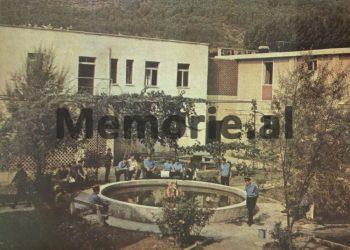
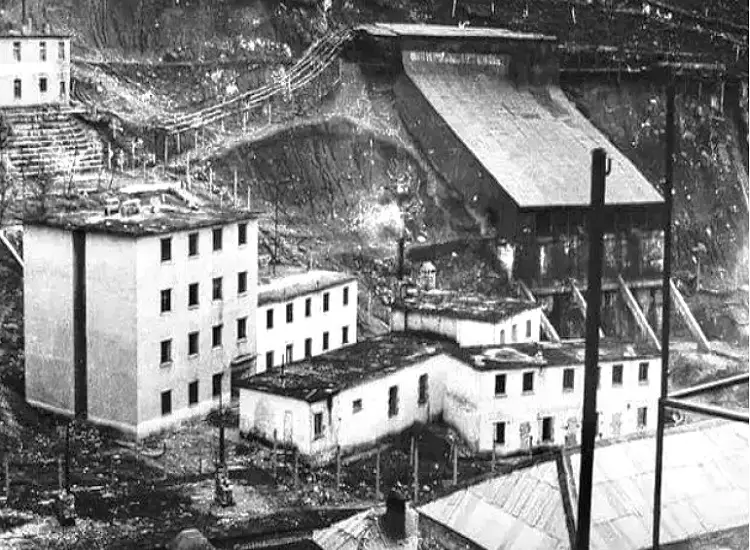
Memorie.al / Following the 1982 amnesty and the killing of Rexhep Geci, the situation grew even direr at Spaç Prison. The police began tightening internal regulations regarding schedules, food lines, and extending the waiting time on the terrace for roll call. In late January 1983, we were informed that a portion of Spaç Prison would be transferred. A new prison had been opened near Mount Munella in Puka, called Qafë-Bari, and manpower was needed for exploitation. Strong workers and those deemed “problematic” were put on the list to be sent to the Puka mine. The transfer of about 200 prisoners was a great ordeal; blankets, sheets, mattresses, and utensils – such as bowls, spoons, and flasks – had to be handed over, and personal items had to be retrieved from warehouses and prepared for inspection.
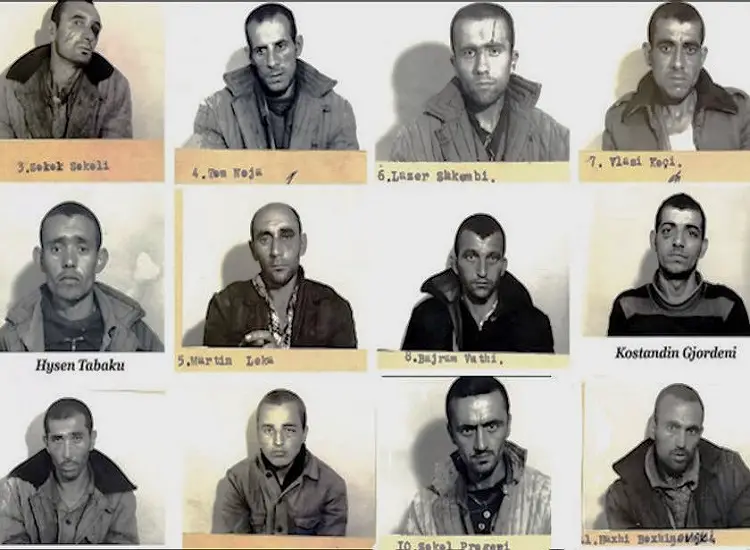
On May 22, 1984, an event of historical significance occurred there: The Qafë-Bari Revolt. I believe this must be recounted through the direct testimonies of its participants to bring it as close to reality as possible. By gathering the fragments of facts expressed by the protagonists, a more complete vision can be created, much like the restoration of a mosaic.
Continued from the previous issue…
The Essence of the Revolt
If there is an anti-communist revolt in Albania, it is the Spaç revolt that raised a flag without communist symbols – which I compare to Imre Nagy’s rebellion, the “Prague Spring,” and Lech Walesa’s movement in Gdansk, Poland. Political prisoners were active; I have never called them victims, and I do not accept the opinion that labels them “victims of communism.”
It is astonishing how many absurd things the Sigurimi (State Security) fabricated – as if Russian paratroopers were coming to take us to the Soviet Union to train us and drop us into “Skënderbej Square” to overthrow the government. Such absurdities bordered on madness! With Llazi Koçi’s cry – “Down with Communism!” – the Qafë-Bari revolt was identified as political.
Çajup Bejko regarding the end of Sandër Sokoli:
“During the journey in the truck, where we were packed like sardines, a black-uniformed guard with a radio in hand provoked Sandër, who was lying there with us. Sandër reacted. The guard communicated via radio, and shortly after, the vehicle stopped. The tarp at the back opened, and Lek Ymeri ordered Sandër Sokoli to be taken down. He was never brought back.”
DALIP ZHABOLLI’S TESTIMONY
“I was taken for a report to explain how the event happened and who was responsible. Through arguments, I shifted the responsibility onto the police. They took me and moved me to another room. I noticed Dr. Drago Vujoshević and Sandër Sokoli were there. They tortured us inhumanly; we would lose consciousness, they would throw water on us, and start again – until morning. Drago and I were put into an ‘ARO’ vehicle; we were unconscious. Later, I saw Sandër; they left him with us for a short time. Sandër collapsed in the ‘ARO’ – that was his death.”
MY CONCLUSION ON THE END OF SANDËR SOKOLI
Sandër Sokoli was not eliminated within institutions like Qafë-Bari prison or the Puka cells.
-His killing was planned and detailed.
-The police officers who provoked him were part of the plan.
-Stopping the convoy was an unprecedented action, as it compromised the security of the transport.
-Taking a political prisoner down in the middle of the road, under such extraordinary circumstances, was unimaginable.
-His failure to return to the other prisoners confirms the actions taken against his body.
-Dr. Drago Vujoshević stated: “They brought him into the ‘ARO’ where Dalip Zhabolli and I were. Sandër’s eyes rolled back (showing only the whites).”
-Nuredin Skrapari states: “Drago told me they had struck Sandër at the back of the head, at the medulla oblongata, after an incident with the police. His eyes had rolled back.”
-Dalip Zhabolli concludes: “I judge that the spot where Sandër Sokoli was taken off the truck was planned and controlled. The blow was swift and intentionally lethal. The lack of a spinal column examination during the autopsy leaves us to suspect its damage.”
AGRON HOXHA’S TESTIMONY
“Those of us who hadn’t caught the ‘vigilant eye’ as much were taken the next day. We were all sitting in the square in front of the canteen. When they called my name, they didn’t even let me stand up; several policemen pounced like ‘hunting dogs,’ twisted my arms, tied them, and directed me toward the isolation cells. I don’t know how I reached the cells – kicks, punches, rubber hoses to the face, seeing stars.
Upon arrival, beyond the corridor of police and Sampist (Special Forces) lined up along the path, there were other groups in the isolation rooms and corridors beating us mercilessly. It felt like watching a horrific horror film. From the afternoon of May 23 until the morning of May 24, the beating never stopped. They brought Nuredin Skrapari to my room; he was half-dead, inhumanly massacred. If I hadn’t held him, he certainly would have died.
The next morning, they laid us flat on the bed of an ‘IFA’ truck. Throughout the journey, they struck us with kicks and sticks; I don’t know how we reached Zejmen in Lezhë. There, I met a friend of mine, Met Pojani. He asked what happened. ‘Let it be, Met, you’re better off not knowing,’ I told him. When they put me in the cells there, it looked like a slaughterhouse – water and blood everywhere, walls and floors splattered with blood. They beat us three times a day. At one point, my soul grew so weary that I truly wanted to die; I couldn’t endure it anymore.”
HAJREDIN FRATARI’S TESTIMONY
“Zejmen was prepared for these criminals (the guards), who came three times a day to torture us in the prison cells every time the guards changed shifts. They didn’t know us; they were simply told: ‘These are dangerous enemies.'”
EPILOGUE OF THE REVOLT
These fragments, collected directly from those who faced state terror and defeated it in battle, shed light on the bloody events of the May ’84 revolt at Qafë-Bari prison. They clarify how it was provoked, by whom, how it ended, and the true reasons behind it.
This revolt, an uncontrollable explosion by heroes who wrote an important anti-dictatorship event in blood, was instigated by the State Security (Sigurimi). They exploited the hatred accumulated by the prisoners due to police mistreatment.
- Nuredin Skrapari confirms the Sigurimi fabricated the story of Russian paratroopers to justify the crackdown.
- Haxhi Baxhinovski notes that during interrogation, they were asked: “How were you going to take power? How were you going to escape?”
- Operational Officer Miti prepared the file with 35 informants.
- Edmond Caja, Chief of Police at Prison 311 Qafë-Bari, was the executor of the pre-prepared scenario.
- Lekë Ymeri was the executioner of Sandër Sokoli – the supposed “head” of a counter-revolution imagined to take power.Memorie.al