Memorie.al / “The Confiscation of Property and the Looting of Gold (1944-1955)” is one of the publications issued several years ago by the Institute for the Study of Crimes and Consequences of Communism (ISKK) and is authored by Alvin Saraçi. The publication sheds light on one of the still-unclarified crimes of communism in Albania, namely the looting and confiscation of property and monetary assets of Albanians. The study focuses on the years 1944-1955, when the newly established communist government fiercely attacked private property and all assets that Albanians had created over centuries. The study has five chapters, dividing the process into five phases. It is equipped with official data and facts gleaned from archives and preserved documentation. The undertaking of this study was made possible thanks to the support of the Konrad Adenauer Foundation.
EXCERPTS FROM THE STUDY
The law on the confiscation of the assets of political fugitives was issued in 1943, as evidenced by the regulation of the Antifascist National Liberation Council. At the Congress of Përmet, the taking under control of private firms by the Antifascist National Liberation Council was proposed, so that they would supply the Army with their products. Lists of war criminals were issued, into which many political opponents were included, along with the regime’s defence of not sharing power with the parties of Legality and the Balli Kombëtar.
As a result, on 15 December 1944, the law on the confiscation of private assets of political fugitives was issued, following the Soviet and Yugoslav model, which led to the political incrimination of opponents. A large part of them belonged to the aristocratic-landowning class, encompassing large areas of private property under the Agrarian Reform law, as a consequence of decisions to confiscate private property and expropriate without compensation those who possessed immovable assets…!
Also, following the confiscation decisions, the land, houses, shops, goods, factories, workshops, and bank accounts were transferred to the state, and gold was also seized after the houses of political opponents were taken under control. The laws of full and partial confiscation, following Law No. 41 on the organisation of courts, were also extended to political prisoners, whose private property was confiscated…!
Implementation in practice of seizure decisions and their consequences
The focus of the seizure decisions of the executive committees were the most important figures of the Albanian state before the end of the war, who were declared war criminals and collaborators with the occupier, even though they did not belong to this category, because the United Nations Organisation had made public the list of 385 genuine war criminals for all countries after the end of the conflict, which also included Albanian collaborators.
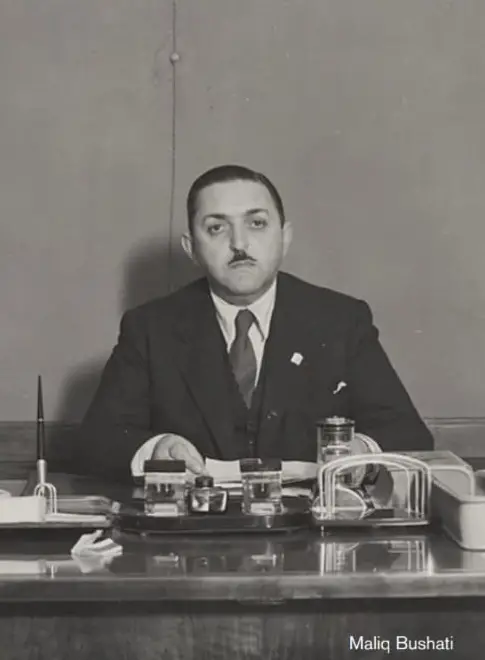
Nevertheless, most of them were sentenced as “war criminals” with capital punishment, life imprisonment, or deprivation of liberty according to categories, and with the penalty of confiscation of private property, according to the decisions of the special court of 13 April 1945. Even though a year had passed since the confiscation decision, the Durrës Executive Committee sent to the “Official Gazette” for publication decisions concerning some of the participants in previous governments, such as decision no. 3 dated 9 January 1946, for the seizure of immovable and movable property of Idhomene Kosturi, and no. 5, dated 15 January 1946 of Maliq Bushati, Zef Kadare, Mark Kodheli from Shkodra, and Ymer Fortuzi from Tirana.
Decisions for other convicts were published throughout 1946. The document dated 18 July 1945, which was the first seizure decision published in the “Official Gazette,” contains a list of 36 fled and seized political personalities of the Tirana prefecture and the sub-prefectures of Petrelë and Valias, which excluded from seizure only Faik Shuajpi, because after new investigations he was not listed as a fugitive. This highlights how the political configuration in Albania changed after the war. Most of the fugitives had left their villas in Tirana e Re and the neighbourhoods in the centre of Tirana, which were taken over by the new political class.
From the list of fugitives of the Executive Committee of the Antifascist National Liberation Council of the Tirana prefecture, as well as the assets they had left as of 11 July 1945, data also emerge on the new inhabitants of the houses of political fugitives, which are often villas and are placed at the disposal of leaders of the partisan army or their allies. In other cases, there are also large houses rented out by these uprooted persons, with the rent going to the state.
The house in Tirana e Re of Prenk Pervizi was inhabited by Sefedin Koleci, a partisan of the IV Brigade, and Ilija Budini, an attendant in the Army Corps. The residence of Mehdi Frashëri had been given to the Soviet Military Mission. In the residence of Ymer Fortuzi on “Fortuzi Street” lived Myslym Peza, while the house of Asim Abdurrahmani in Tirana e Re was inhabited by Dr. Ymer Dishnica. The dwelling of Sali Vuçiterni was recorded as being rented by Beqir Balluku and two other persons, and the residence of Hamdi Kërçiku was held as rented by Koço Tashko and eight other persons.
Some of these residences were given to partisans and persons in good political standing by the Housing Section without rent. This practice, as we will see, would be followed in later years also with the wealthy and merchants, whose best houses would be given to communist leaders after the removal of the previous owners.
Persecution of merchants for gold
The first phase of gold collection had been the drafting of a declaration of assets for each merchant and the payment of an extraordinary tax in Albanian and foreign gold and silver coins, alongside payment in gold francs.
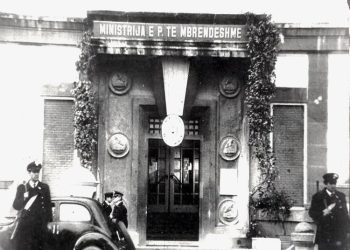
Merchants tried to avoid the exact gold statistics that the Executive Committee demanded, as they had done with the valuation statistics of properties and goods. The collection of hidden goods and warehouses of merchandise was accompanied also by the discovery of hidden gold by all means, including torture to extract it. For this purpose, the third sector of the Ministry of Internal Affairs was created, which would also prepare three records of gold seizure, one for the head of the State Bank and another for the local branch of Internal Affairs.
According to reports from the Korça Police, merchants in that city had been stripped of 400 kg of gold and 48,000 napoleons (gold coins). The “People’s Defence Organs” and their local sections in various cities were engaged in discovering gold hidden in jars or hidden goods, and in raiding the houses of the rich, seizing not only gold coins but also every kind of valuable cutlery and items, such as gold, silver and filigree jewellery, rings, pendants, etc., as well as sets of gold-plated or silver-plated spoons and forks, antiquarian objects such as gold works from past centuries, decorative gold coins, and memories inherited from family ancestors.
The year 1946, which was also the year of nationalisations, would bring great pressure on merchants and the collection of gold would be carried out by all means. The first phase of gathering merchants’ gold covered the years 1946-1948 and the second phase the years 1950-1952, while political opponents were sentenced to confiscation and their gold were continuously confiscated throughout the first decade. In the years 1952-1954, gold seizure was extended to other social strata that possessed gold.
The consequences of using force to extract merchants’ gold led to their imprisonment. They were left without food and for months lived on dry bread. Then their family members were also imprisoned and subjected to continuous psychological pressure, with torture aimed, under threat of violence, at psychological breakdown and the disclosure of gold. Even in Durrës, merchants were buried up to their necks in the ground, with only their heads left out, until they handed over the gold. As a consequence, in Elbasan, the merchants Sulejman Domi, Xhaferr Çelirama, Mateo Papajani, Refik Myftiu, etc., died in prison for gold.
In Tirana, Cen Alimehmeti (as he himself affirms), after his shop goods and house at “Kodra e Kuqe” (which had been turned into an orphanage), as well as his shops in the centre and lands in Mëzez were seized, was forced to hand over 3,000 napoleons in 1946 and other sums in 1951, and was held by the Internal Branch to extract where he had hidden the gold. He did not resist and showed the place where he kept the gold. He came home and found another 900 napoleons.
The same fate awaited other merchants, such as Tod Çoka, who died from torture because he refused to reveal where he had hidden the gold. Other merchants who handed over gold included Hoç Këllezi (father of former Finance Minister and Deputy Prime Minister Abdyl Këllezi), as well as Murat Begeja, Tahir Gjinali, the Radheshi brothers, Mihal Dovana from Durrës, etc.
Many large merchants were sentenced to confiscation of movable and immovable property as political opponents and were sent to the labour camp in Maliq. According to the memoirs of Skënder Stefanllari, a survivor of the Vloçisht camp, merchants became victims of the Maliq swamp under the threat: “show the gold, or you will die in the swamp,” and they were subjected to tortures that the human mind could not conceive. The merchants who died in the swamp were Sotiraq Lako, who was buried in the swamp, as well as Kosta Fundo, Bexhet Frashëri, while the merchant Koço Misrasi hanged himself, and his gold teeth were pulled out.
In July 1948, Skënder Stefanllari recounts how, after false accusations were made against him that he had allegedly created a court of prisoners headed by Niko Kirca, with the role of prosecutor to condemn the communist regime, he, offended in his pride, fought with the camp guards, and after being struck on the head with a belaying pin and falling unconscious, his life was saved by being carried on the shoulders of a major merchant from Durrës, originally from Kavaja, Alfons Dovana.
Only 100 kg of grain for former Prime Minister Koço Kotta
Decision no. 183, dated 16 July 1945, with proposal no. 1/115, dated 15 June 1945, of the Commission for the Study, Administration, Seizure of Assets of Political Fugitives of Korça, decided the seizure of the assets of imprisoned former Prime Minister Koço Kotta, which according to the mortgage inventory included a house in Korça, two vineyards and several plots of land in the villages of Vinçan and Pendavinj near Korça, as well as 32 shares as co-owner of 299 shares of the “Majestik” cafe, salon and cinema, together with their shares managed by the joint-stock company “Cinemattaro”, valued at 500 gold francs each, and also included the inventory of household objects, including some of antique museum value, such as a portrait with the “royal coat of arms” under glass, silver plate services, and two empty chests. Only 100 kg of grain were left for the family until the final decision.
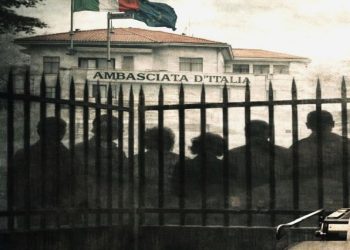
Confiscations of the victims of the Soviet Embassy
On 13 April 1951, the Tirana Internal Affairs Branch delivered to the Tirana Bank branch 28 napoleons, 25 pounds, 9 Turkish lira, a gold coin holder and jewellery, as well as 113,590 lek deposited in the state budget, and 30 Italian banknotes of 1,000-30,000 lire out of circulation, confiscated by the Supreme Military Court under decision no. 64, dated 27 February 1951, from those executed, unjustly accused for the bombing of the Soviet Embassy: Lluka Raskoviç, Tefik Sheku, Haki Kodra, Reis Selfo, Manush Peshkëpia, Ali Qoralli, Qemal Kasoruho, Petro Konomi, Hekuran Tresake, Mehmet Ali Shkupi, Reshit Shima, Sabiha Kasimati and Pandeli Nova.
On 24 March 1953, the Police had decided that for the jewellery found belonging to Mediha Libohova, wife of former minister Eqrem Libohova, the sum of 31,000 lek should be returned to her, because no confiscation decision had been taken against her, but the Minister of Finance did not agree and requested that, by legal provisions, they be transferred to the State Bank without compensation.
Hamit Matjani’s gold coins
In 1954, 7 kg and 870 g of gold were brought into the State Treasury, confiscated from the “saboteurs” Zenel Shehu and Hamit Matjani, consisting of 607 napoleons, 1 half-napoleon, 317 pounds, 315 half-sterlings, 1 two-and-a-half dollar coin, 27 Turkish lira, 1 rouble worth 7½, 3 five-rouble coins, Austrian gold coins weighing 5.5 grams each. / Memorie.al