By András Tóth
Part One
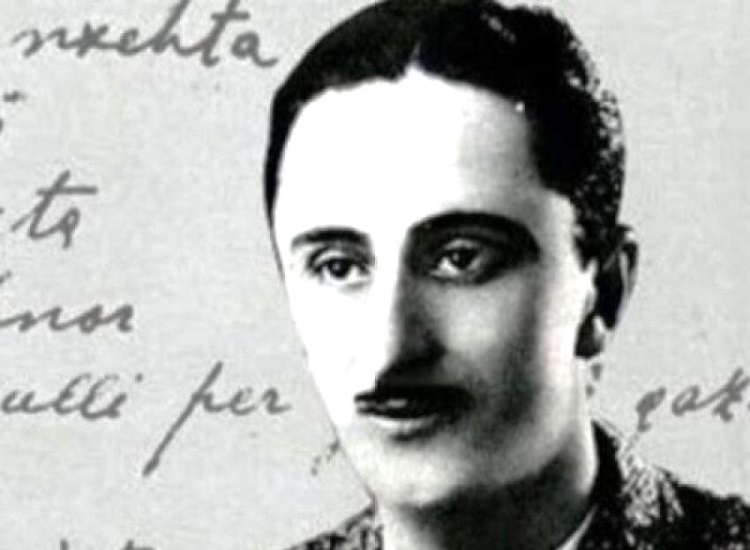
Memorie.al / There exists a sentence, written in black ink in June 1962 by an Albanian foreign official, in the margins of a petitionary letter sent by an 86-year-old, nearly blind widow from Belgrade: “Dr. Kalmar is an Albanian citizen. Therefore, he cannot be allowed to become a Yugoslav.” Behind this sentence stands the youngest son of a Jewish merchant family from Budapest, who fled the “numerus clausus” to Prague, from there to the very Davos of “The Magic Mountain,” and then ended up in the poorest country in the Balkans – a country that first lured him with gold francs, then hid him in its mountains from the Germans, and finally, simply would not let him leave for decades on end.
The story of Kalmár Lajos is a compendium of the 20th century: it contains the generation of Hungarian emigrant doctors, the great European war against tuberculosis, and the miracle of the Albanian besa, and the suffocating embrace of the Hoxhaist dictatorship.
From “Erzsébet Boulevard” to the Dissection Halls of Prague
Kalmár Lajos was born in Budapest on October 5, 1901, as the sixth and last child. His father, Kalmár Géza – born Gerson Kohn – came to Pest from Monok in the Zemplén region, became a commercial agent in the paper industry, and was such a passionate member of associations that the Association of Commercial Agents of Hungary saw him off as vice-president in 1939, after half a century of membership. According to his obituary, he had even campaigned for the regulation of “degraded public health conditions” in provincial hotels during the war – so the issue of hygiene was a family inheritance.
His mother, Burger Amália from Miskolc, managed a laundry for undergarments at 51 Erzsébet Boulevard and raised six children in a rented apartment in the 7th district. The youngest son wanted to become a doctor – however, when he finished high school, the “numerus clausus” law came into force in Hungary. Kalmár did what thousands of young Hungarian Jews did at that time: he went abroad.
From the autumn of 1921, he studied at the medical faculty of the German University in Prague, lived in the Vršovice district, and was promoted to doctor in March 1927. (Let us remember this Prague diploma: later, everyone – Albanian journalists, colleagues, even his friends – would insist that he had graduated in Vienna or even in Zurich. However, page 230 of the register of Charles University does not lie.)
Davos: The Sanatorium and Love
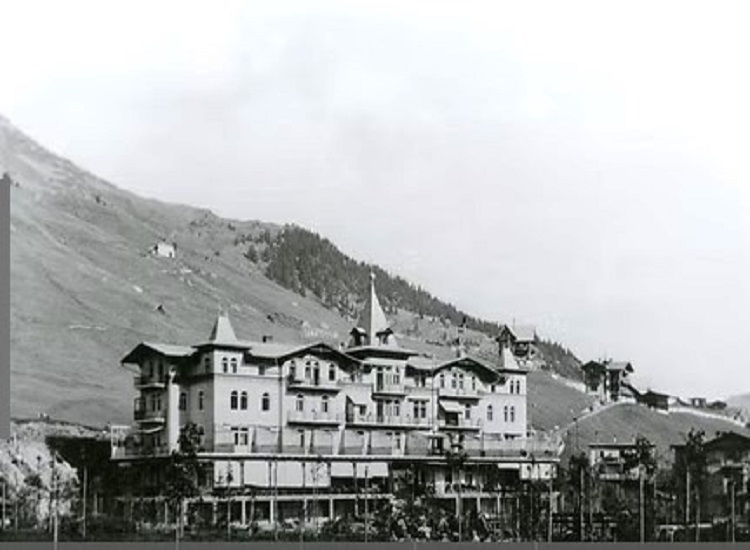
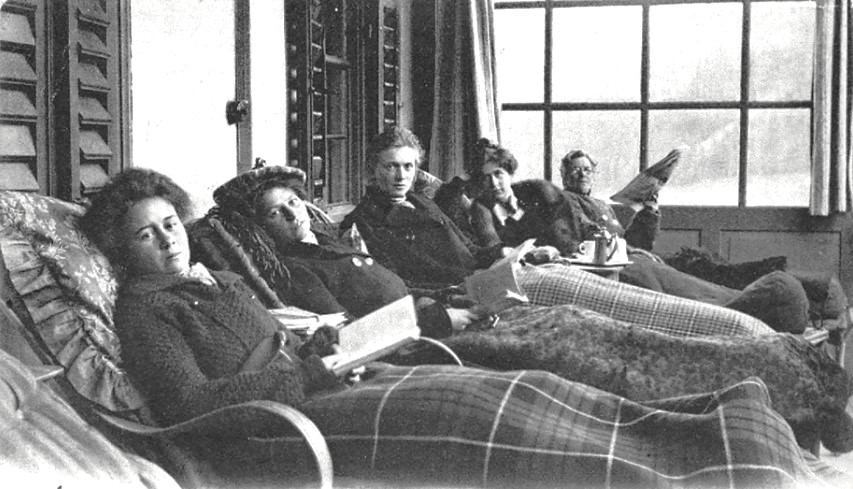
The young graduate doctor was employed that same year in the “Mecca” of pulmonology: on November 19, 1927, he registered at the foreigners’ office in Davos as an assistant physician at the Neues Sanatorium. Thomas Mann’s “The Magic Mountain” had been published only three years earlier – Kalmár found himself right in the middle of the novel’s world: the lying cure, snow-covered terraces, patients from every corner of Europe spending their deadly illness with a spirited social life.
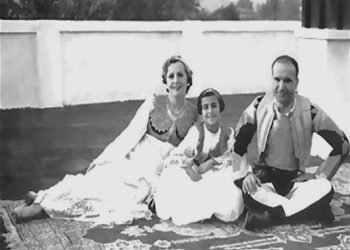
One of the patients was a music student from Belgrade: Jovanka Ristić, known by the nickname “Joja,” who had been sent to the mountains because of tuberculosis. She was no ordinary girl: her grandfather, Jovan Ristić, had been Regent and Prime Minister of Serbia; her maternal grandfather was the Chief Master of the Queen’s Court; her father, Colonel of Military Justice Milan Ristić, fell as a hero in 1917, when his ship was sunk by a torpedo. The doctor and his patient fell in love. The marriage lasted a lifetime – and tied Kalmár to the Balkans forever.
“So That Albanian Gold Does Not Flow Abroad”
In 1930, an unusual letter arrived in Davos. The Royal Albanian Government was looking for a tuberculosis expert – and for a very prosaic reason. The newspaper “Zëri i Korçës” even said it openly: wealthy Albanians send “millions of gold francs” to the Davos sanatoriums, while Albania itself also has beautiful and healthy mountain areas.
Therefore, a local sanatorium was needed, “so that Albanian gold does not flow uselessly abroad.” The government of Zog I offered the Hungarian doctor in Davos 1,000 gold francs per month – a royal sum – to tour the country and choose the location for the future Albanian Davos.
Kalmár arrived in August 1930 and began a field inspection that Albanian bureaucracy had rarely seen. The Minister of the Interior sent telegrams to the prefects: “Give him a car, a companion doctor, and, if necessary, an armed guard.” He arrived in Krujë at 9:00 PM and left at 3:00 AM with four hired horses towards Qafë-Shtamë.
(For the forty-gold-franc invoice for the horse rental, three ministers corresponded with each other for six months – while the horse owner, Ramadan Guni, regularly went to the sub-prefecture and demanded his money.) The Mayor of Pogradec demanded, with an offended telegram, that the expert also visit their area, since “when the Germans and Austrians were here, they were left enchanted.”
In the end, after comparing nine regions, Kalmár chose Voskopoja in southeastern Albania: the Monastery of Saint Prodhrom, which was located at an altitude of 1,300–1,500 meters above the once-flourishing Aromanian trading town, surrounded by pine forests and abundant water springs, with the energy of which the sanatorium’s electricity supply could also be solved.
The journalist of the time expressed himself lyrically: “They found a valley where the air smells of pine, where nightingales sing in summer.” Kalmár personally negotiated with the Orthodox archbishop for the release of the monastery, organized a transport company with a six-month payment term, and even offered his own apparatus.
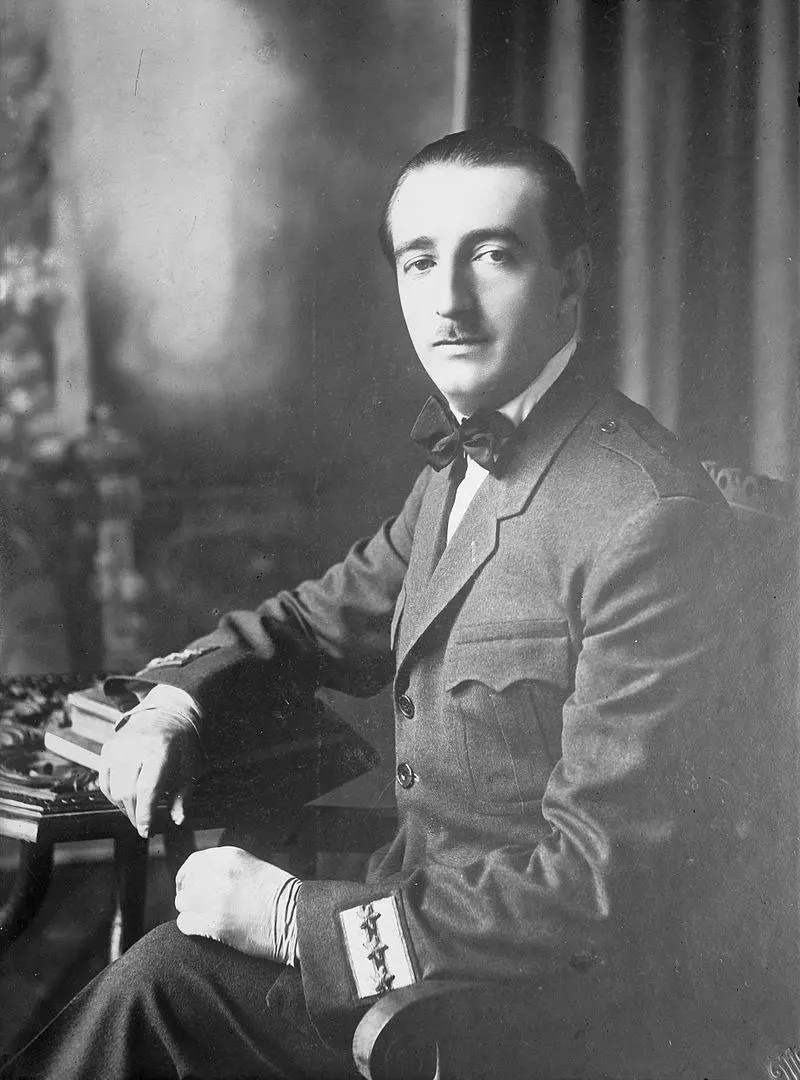
In January 1931, the Albanian government signed a five-year contract with him, which included everything: the obligation to treat the poor for free, a ten-kilometer protective zone where no other foreign doctor could settle, and the promise that after three years, he could become an Albanian citizen. Only one thing was missing: the money.
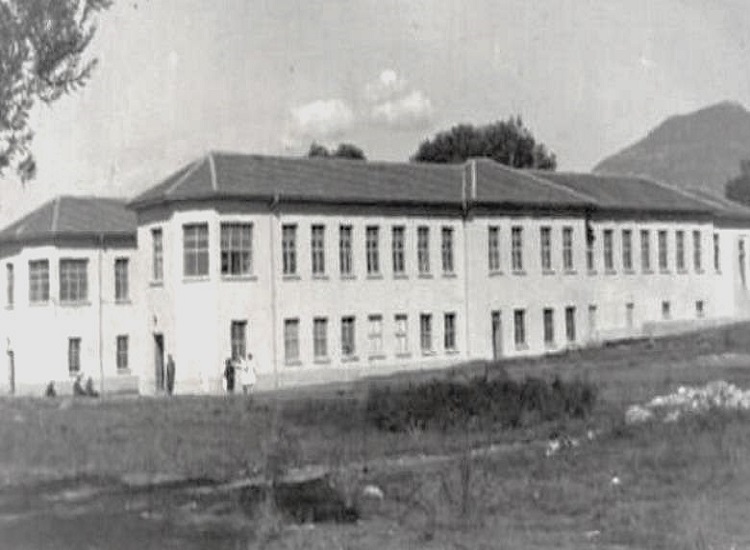
In the budget of the new Albanian state, no line item could be found for the star doctor’s salary; for months he received not a single franc, and in the end, a special law had to be passed so that he could be paid from the savings of a vacant medical position in the provinces. Nor did the great dream of Voskopoja materialize – reality was more modest: in 1935, in a military barracks building in Tirana, the first tuberculosis ward in Albania was opened, under Kalmár’s direction. But something had to start, and he started it.
“A Cracked Vessel”
The Albanian press adored him. In January 1931, the newspaper “Arbënia” published a series of interviews with him, in whom Kalmár said something that at the time was a debate across Europe: the tuberculosis patient must be told the truth. The patient feels that something is wrong anyway – if they are lied to, they give up. “Why do I need steps and suffering? The doctor’s duty is to make the patient optimistic, because the disease can be cured if identified early.” And then came the sentence that could become a popular saying: the patient in critical condition is like a cracked vessel – “but it is known that the cracked vessel, because it is used with more care, often lasts longer than the one that is not cracked.”
The journalist – whose sister had died of TB because the doctors had hidden the diagnosis from her until the very last moment – listened to him in tears, and then launched an open campaign in the newspaper against the “ignorant” Albanian doctors who “fight against Dr. Kalmár; they don’t want him to stay here and cure people.”
The jealousy of the local medical community accompanied Kalmár’s Albanian career all the time – as did his desire for scientific debates: in 1937, he clashed in the press with an adherent of a miraculous Japanese method (an injection with turtle bacillus!), and defeated his opponent not with his own opinion, but with an expert opinion requested by letter from Professor Neumann of Vienna.
His fame reached so far that even the greatest Albanian poet of the time, “Migjeni” – full name Millosh Gjergj Nikolla – who was in his twenties and fighting tuberculosis, turned to him. According to biographical literature, in 1934–’35 he went to Tirana “to be examined by Dr. Kalmár, who had already gained great fame.”
Migjeni died of TB on August 26, 1938, at the age of 26, in the sanatorium of Torre Pellice, near Turin in Italy – not in Slovenia, as is often mistakenly repeated. What exactly these two fates shared between them – that of the doctor who worked for another thirty years, and that of the poet who died at twenty-six – could only be told by Migjeni’s medical file, which someone once found and which someone must look for again one day.
Besa: The Power of a Given Word
In April 1939, when Mussolini’s troops invaded Albania, Kalmár moved with his wife to Belgrade. Two years later, the Wehrmacht also invaded Yugoslavia – and the couple returned again to Tirana, with an Albanian passport issued by the Italian legation in Belgrade.
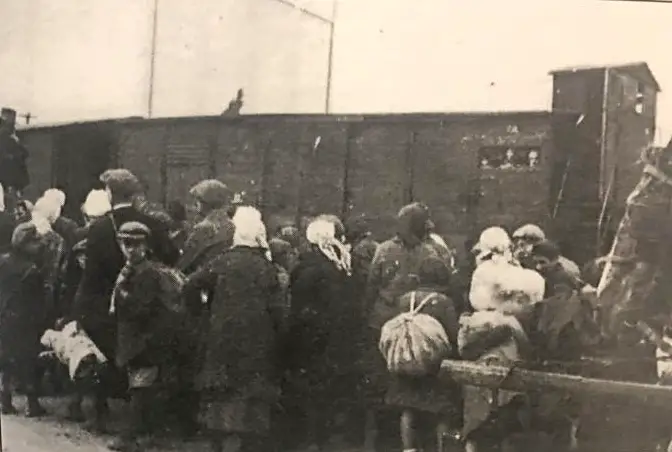
In September 1941, the Tirana police ordered a confidential surveillance of the doctor as a “suspicious person, Hungarian, of Jewish origin.” In the file, later, a single word was noted in the reports section: “Nothing.” The real danger to life came in September 1943, with the capitulation of Italy. Kalmár knew exactly what would follow.
“Sadik, Italy has capitulated and the Germans are taking over their country. They will catch me and kill me” – he said to his friend, Sadik Ram Salimusaj, a shoemaker master whom he had cured of pneumonia six years earlier and from whom he had refused to accept a single gold Napoleon. He entrusted the keys of his house to Sadik, while he went with Jovanka to the mountains, to the village of Shëngjergj, where the villager Islam Trimi hosted them.
They loaded their belongings onto two horses and walked for eight hours on foot. “In the village, everyone knew we were hiding a Jewish family” – the villager’s son recalled decades later. And no one said a word. This is besa: the given word, which in the Albanian mountains was stronger than the Gestapo. / Memorie.al