
Part Two
Memorie.al / Albania were mired in debt, and the “clearing” method used at the time between socialist countries was not enough to pull a country out of crisis. Albania produced nothing to exchange. It would be Enver Hoxha himself who, in opposition to every socialist slogan, had signed a dubious contract with a Jewish merchant, which consisted of opening a corridor for cigarette smuggling. All the backstage details of this agreement – how it was created, how “Albtrans,” the trading enterprise subordinate to the Ministry of Internal Affairs, functioned – are revealed to us by its former director in the 1980s, Lorenc Nenshati, in his book “Albtrans, Top Secret.”
Continues from the previous issue
The Book of Lorenc Nenshati
It wasn’t as if only Albania had that geographical position to build a “punto franco” (duty-free point) for the transit of cigarettes on the Adriatic coast. The members of the group, whenever they got nervous, would tell me why we had to wait until Albania made up its mind to sign the agreement?! That is why they had raised other alternatives, to negotiate with Montenegro or Croatia, which were even more civilized with their communism. But I kept them hopeful that it was precisely the naivety of the Albanians that interested us, to build an activity of our own and direct it according to our own views.
“I stayed in Tirana for 11 months,” Beraha continued his long explanation, “and with the withdrawal of the German army units in the north, I went to Skopje and then to Switzerland, where at that time I had my parents’ home. When I started contacts with the embassy in Vienna, for opening the cigarette transit, it was a difficult period. It was understandable that Albania was in the waters of denouncing the Warsaw Pact. It was said that there were plenty of offers, from both the East and the West, but that the Albanian government did not take any of them into consideration. This propaganda might have had a basis.
The fact is that Albtrans remained alone; no other offer was taken into consideration. It truly became a fact that only I had the patience to realize this success. I did not withdraw; on the contrary, I insisted on my own way. That’s how I reached the agreement, but with great difficulty, because the proposal wandered through offices that, as it seemed, did not have it in their competence, until at last the person was found who did not hesitate at all to accept it. At the time, I thought that, apparently, the bureaucracy hesitated to present it from the very beginning to the man who understood that he needed our offer. I entered into the discussion with the representatives of Agro-Eksport with good sense, despite the great difficulties that arose from their ideological views, which had to be overcome with ingenuity and step by step.
My indisputable merit was that I got ahead of the work, insisting that in 1967, I never interrupted contacts for a single moment, by phone and at the table of the embassy’s waiting room. Many times I had invited the clerk of that office for lunches and dinners, but he would make excuses not to come. He was a young man, with a lot of self-respect; he was afraid of creating those kinds of contacts, of going into debt, and, for whatever eventuality, of feeling bad.
During that period, the Albanian interlocutor often hid from me, but I, as if I knew it, would excuse the case. He had nothing to say to me. There was still no answer from Tirana. It was a great fortune that the agreement was signed before the public denunciation of the Warsaw Pact in 1968. Otherwise, the pseudo-revolutionary situation, created by the nationalist communists, would have made my insistence impossible. Once the agreement was signed, I had decided to sell the contract. I was tired. I had agreed with the group itself on the amount and the terms of financial liquidation. I sold the business, for which I worked for nearly two years, and I stepped out of the game.
They paid me well, despite the fact that they did not believe that this business would succeed. This was better for you and for me. I had never worked with cigarettes. The group was well-known and specialized in the international cigarette sales markets. I myself withdrew from the game, without my name yet appearing in the cigarette black market. Afterwards, Beraha liked to stay more in the loop about how this business, which he had created with so much hardship and effort, was going.
– Later, after about two or three years, when the business became routine, I was no longer as interested or in the loop about everything, but I liked to listen when some conversation started during morning coffee, where, besides Black, there was also some other person in the circle, – Beraha explained to me. – Age was advancing and I took pleasure in my last creation as a business, and that it had closed my career with honor and success. Perhaps it could have been the greatest business success of my life, not in terms of profit, but as satisfaction and gratitude. –
Only one curiosity remains with me from the past, – he addressed us one day. – Why was this agreement decided only by the biggest man in Albania? There was a government there too, wasn’t there? Beraha came out into the open with us. We were with Naim in this conversation. This was the last enigma that remained for him, but there we wanted to get out too. We had wanted to ask him for a long time, but we didn’t want this request to come from our side, which is why we were in difficulty. – We have no document regarding this agreement, – we told him.
– Everything has disappeared, because for us it is not a legal activity, either within the state or outside. As a guarantee for any eventuality, we have stock goods that at any time amount to more than 20,000 crates. We have heard spontaneously how the event unfolded. We also learned them from you. Then, the signatures on that agreement were those of the lowest officials, and we are curious how you managed to learn what happened there in those circles, that forced the highest one of all to approve it?!
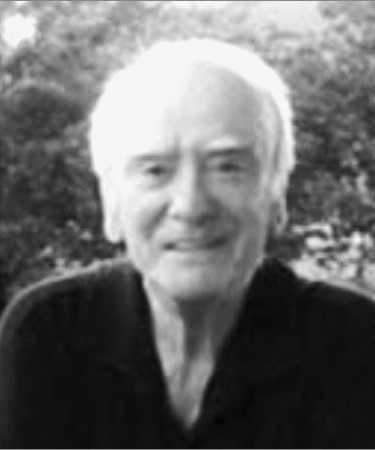
We have wanted to ask you several times, but it seemed to us as if we were asking some suggestive question to test your memory. Then, we also don’t know how you managed to learn these things. To our questions, Beraha replied: – One of the representatives of Agro-Eksport, who came from Tirana and signed the document, boastfully said that we should have followed this path from the very head from the beginning and, as far as I remember, the person in question had a position in Agro-Eksport. It was said that he was supposed to be a relative of Enver Hoxha. Thus, I believed and still believe that this agreement, in that situation, only he could have resolved. Afterwards, we have many good memories from our contacts with Beraha. He was a man who had passed his 80s, tall and straight-bodied, walked several kilometers a day and kept a regular diet. He knew how to organize nice lunches and dinners in notable places. We maintained social relations with him; we were even present on the day he died suddenly, from a heart attack at the age of over 83. He lived alone, but every weekend a young woman from Lucerne would come to him. She was a doctor by profession and, apparently, checked on his health every weekend. She was very beautiful, around fifty years old. Only once did he bring her to a lunch with us, but not again. We were much younger than him. Old people are somewhat more jealous and he had no reason to do us that honor either. In fact, we teased him and he would reply that she was his own thing, like a relative or kin, but he wouldn’t respond to our teasing as Albanians, nor to that of others. We learned a lot from him, not just the history, but also many other sides of the cigarette business, particularly about the participants (our partners), about the personal characteristics of the bosses on whom we could eventually rely, about the competition and contradictions of this second-hand cigarette market, etc.
From the very beginning, getting to know Beraha was very valuable to me for creating a clearer vision of some important characteristics of those people I would meet. I prepared even better for the problems we would discuss and, according to him, where the limit of our demands and interests should be for this phase. In Vienna, Beraha had two grown children, while his wife had died. The children, a son and a daughter, had finished their studies and were very well established. He maintained very good relations with the families of each child. We were impressed that every birthday he gave the children gifts of 500,000 dollars. I asked him about this one day too, and he said: – I will leave a will to my children as well, but the smaller the amount in the will, the better, because the lawyers take their own portion based on the total sum. That way I ease it gradually; better to feel their gratitude now while I am alive than when I die.
Beraha lived in a beautiful house in Lugano. He was rich, but very rarely paid for the whole table. For us he made an exception; he never let us put our hand in our pocket, even just for a coffee.
Albtrans, between Agro-Eksport and the secret services
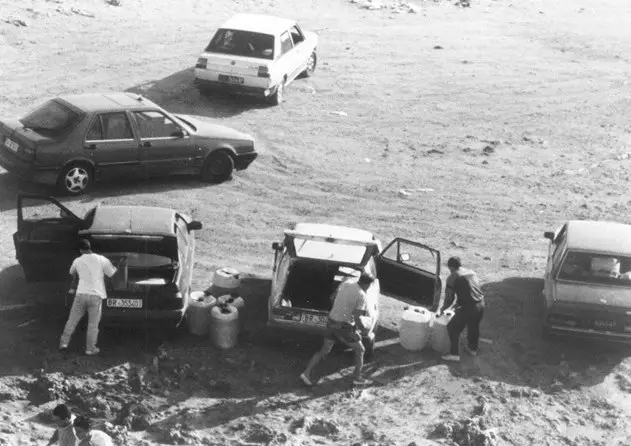
Albtrans was opened as an enterprise of Agro-Eksport. Its activity was the storage, handling, and delivery of foreign cigarettes through maritime transport. As such, it was officially known by locals and foreigners in obligatory formal working relations. The agreement was signed in the name of the Agro-Eksport enterprise and the Swiss import-export/franco company “Vanawer Ltd.” The signing was the formal act, because other difficulties still lay ahead. Albtrans had to be organized to take the form of a duty-free point for the storage, handling, and delivery of cigarettes. Everything had to be built from scratch. In the processing of the maritime means that loaded on behalf of Albtrans, at a special quay in the Port of Durrës, the port entities participated: the State Maritime Agency (the only one) of the Port of Durrës (Adetare), the Harbour Master’s Office, the Interclub, and the Shipyard; the border crossing control point; the soldiers of the Albtrans warehouse in their dynamics, who dealt with loading-unloading from the Security Battalion – it was known by the State Bank, the military units of coastal defense, the border crossing points of Hani i Hotit, Qafë-Thanë, Kakavijë, Rinas, etc., and by “induction,” thousands of others.
Outside the country, it was known by business partners, transport companies that transported the goods from Northern and Central Europe to the full address: Rrushbull – Durrës – Albania. This address was known by goods insurance companies, etc. Albtrans was not born from the very beginning as a secret enterprise, because it was under the jurisdiction of Agro-Eksport, but not legal from the very beginning either. It was born as a specific Albanian state secret. It was created as an economic enterprise and one fine day it was placed into the secrecy of the Ministry of Internal Affairs. That is why I called it a specific Albanian secret, a secret by order; it was started as a “free storage zone” (punto franco) for the transit of foreign cigarettes and, after only a short time passed, the Ministry of Internal Affairs took it into its own structure. The motive for these changes was also made for the simple fact that its environment was full of foreigners, so it was thought a priori that this cooperation would serve to build intelligence work, to break the wild capitalist-revisionist encirclement that had forced Albania to isolate itself much more under this new motive.
But Albtrans was never built and never took the form of a “Top Secret” intelligence agency, because its activity was not legal, with the aim that the intelligence point and employees with double duties would be covered within the legal activity of Albtrans. But it was an intelligence agency, according to our view. At the time Albtrans was created, Albania had three official directorates of secret services: the First Directorate of State Security within the Ministry of Internal Affairs; the Second Directorate of Military Intelligence within the Ministry of Defense; and the Third Directorate of Political Intelligence, subordinate to the Ministry of Internal Affairs. We liked to also have an intelligence agency, like everywhere else. We wanted it to resemble, more or less, its other sisters that the secret services of the great states used. As in our entire civilization, we liked the idea here too, but its form and content we knew only ourselves. Even this was built backwards; it was built “to our taste,” because all typical Albanian ideological and moralistic principles had to be preserved.
Albtrans was created in 1967, as an enterprise that developed commercial activity with foreign partners to transit foreign cigarettes, mainly American. But the difference with other agencies, spread in different parts of the world, was that Albtrans was not legal; on the contrary, it was kept secret within the country and outside the state, or, better said, we tried to keep it secret inside and out. Ultimately, it stood out as an enigma of the communist state administration. Why not, even today, for example, it continues to be known as a legend still not deciphered. Those who worked there were clear that it could not be entirely unknown to the people, as was claimed when it was approved. We had no reason to deceive ourselves to that extent; however, we had to follow the ritual of its mindless classification. All the more so, since times and knowledge changed every day in Albania, compared to the time when the activity began. At that time there was only the University of Tirana, as well as some institutes. While later the university multiplied with branches and numerous institutes throughout the country. Likewise, people with scientific titles, promoted within our country, increased, and their programmed movements abroad were not negligible. So Albtrans began to be called by the name, more or less true according to its activity: “a capitalist enterprise within the communist state.”
***
This intelligence point within Albtrans was technically built more or less with the view that, in every environment of foreign relations, secret service employees would be camouflaged. So, Albtrans had inaccurate moments, from what was thought to be a true intelligence agency. Another problem was the contingent in which it had to operate, as it was very difficult, which in appearance did not meet the conditions of selection and study of elements for cooperation from this environment. The contingent of the environment where it had to operate was the people who worked at sea, the foreign sailors. This contingent offered very few opportunities. They lacked the means to solve the numerous tasks, which were related to the defense of our country. This environment had no connection whatsoever with those. They had a very low educational and schooling level. None of them had completed the compulsory “lower” secondary school, according to the laws of their country of origin; in fact, semi-literates predominated. The individualistic work they did had almost severed them from true human feelings. From a young age, they entered the circle of cigarette smuggling, inherited from grandfather and father. Due to their poor education, they also had many character flaws.
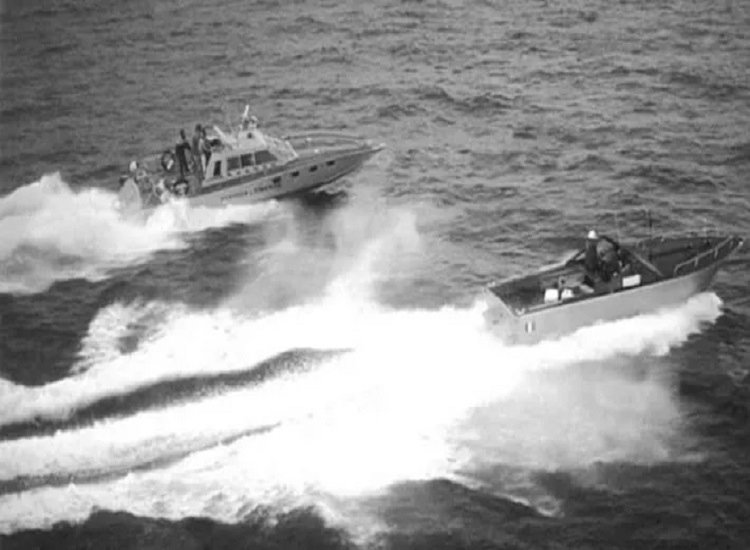
As a work contingent for espionage, they were suitable for the special forces of the Italian Finance Guard, who controlled cigarette smuggling through the smuggler contingent. For none of them could one put one’s hand in the fire that they were not an agent of that powerful force at sea and on land. The principle of the skiffisti was the use of double play: they denounced their colleagues, to privilege the realization of their own work. Their job was to load the goods from the quay or from “mother” ships in the open sea and find the opportunity, at all costs, to deliver it to Italian soil undetected, by cunning or even risking their lives at any time. This work gave them good income. Even if they had operational and informational capabilities, the Albanian intelligence, with its secret funds, could not compensate them for the money they earned.
“Many operational sectors of the MIA, of the Third Directorate of Intelligence and of the First Branch of the Security Directorate, which at that time dealt with coordination between intelligence and counterintelligence, had initially tried to build agent-operational work in these environments,” the former assistant of Qazim, Josif Dedia (Daja, as everyone called him), whom I found on the Albtrans staff when I started work, told me. “Prominent officers, all well-known names, like Rasim Dedja, Haki Keta, Koço Eftimi, Tahir Malo, Isa Lika, etc.,” he said, “had tried to build intelligence work, but they couldn’t succeed. Some more, some less, had started the competition with intuition among themselves, but after a year or two, the struggle materialized in another direction, to win the power of Albtrans, which meant becoming the director of the most prestigious enterprise of the time, plus the privileges that came with that career. In the end, they were all scrapped and sent back where they came from, while the office was won by Qazim Myftiu, who quickly disciplined it as a commercial enterprise in cooperation with foreign partners with experience from other countries. Gradually, it turned from a spontaneous enterprise into a regular commercial enterprise. But it is understood; neither did Qazim distinguish himself as having combined anything purely as an intelligence officer. Neither did we maintain relations with the Intelligence Directorate, but we did not leave double work to oblivion either. From time to time we would gather confidential information.
We were not in a position to reach correct conclusions, as the Commander had envisioned Albtrans: an intelligence agency of state intelligence or just a kind of alibi to get by, to be used as a justification that the opening of Albtrans contradicted the ideological-political principle “With our own forces.” Also, we were not clear as to why Albtrans was removed from the jurisdiction of Agro-Eksport and transferred to the Ministry of Internal Affairs. We have always thought that this change was made for the sake of order, so that the specific goods would be administered with special military discipline. / Memorie.al