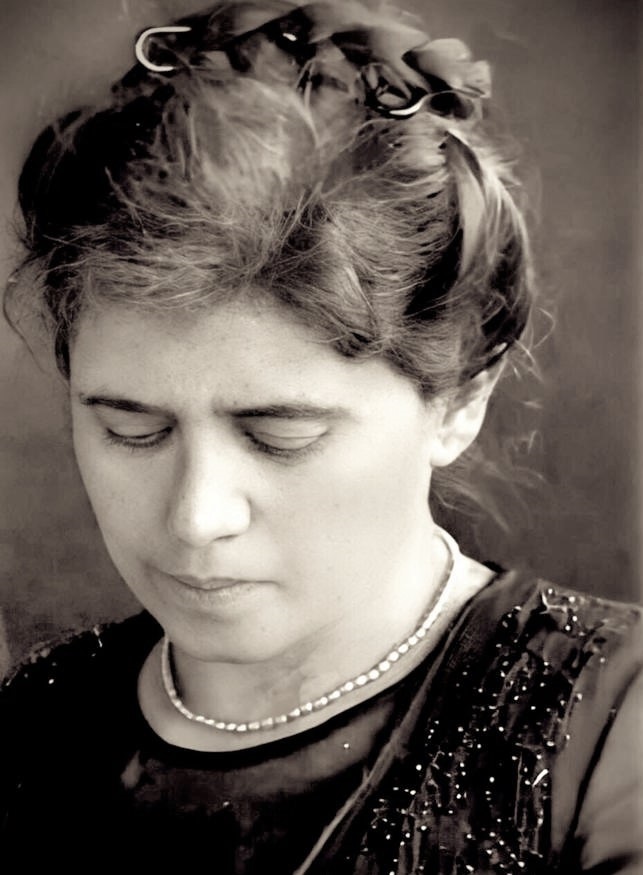

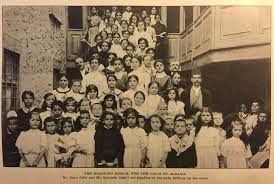

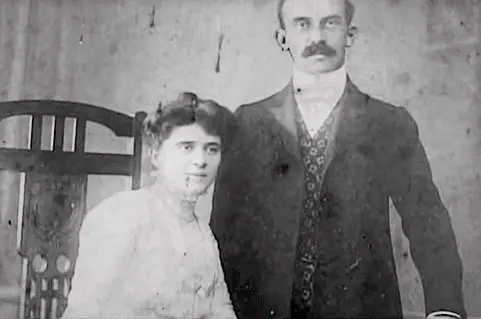
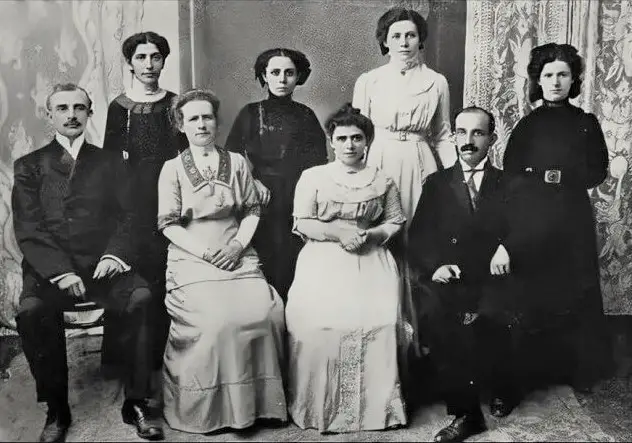
Memorie.al / No one would have thought, especially not then, that all their sacrifices for the Albanian language, at a time when the Ottoman Empire would exile people for such deeds, would be rewarded with ingratitude, robbery, violence, interrogation, accusations of treason and espionage. The Qiriazi Sisters, those courageous women who opened the Girls’ School in 1891, who worked for the Albanian language and the Albanian cause, even when they left for America (1915-1921), would experience communist hell in the ugliest way. Driven out of Albania during the Balkan Wars, they would return to their homeland to support the new government, educational reforms, and the emancipation of women.
But none of this would serve them before the new communist power. After returning from the Nazi concentration camp, where they survived alive, Sevasti and Parashqevi Qiriazi, along with their family, faced looting, confiscation of property, being left destitute, and even the arrest of their two sons, Aleksandër and Gjergji. The latter could not withstand the torture of the investigators, who tried to force them to admit they were agents of the Americans. He took his own life. And Sevastia, that strong woman who had never stopped before anything, knocked on door after door to have her son’s body returned, but received only slamming doors as a response. She would pass away only a few months after her son’s death and the loss of his body, on the banks of the Tirana River.
Much later, in 1962, on the occasion of the 50th anniversary of Albania’s Independence, due to the political conjuncture of the communist regime, interest was shown in the patriotic activity of the Qiriazi family. Four members of the Qiriazi family, Gjerasim, Gjergji, Sevastia, and Parashqevia, were decorated with the “Order of Freedom” and the order for “Patriotic Activity.”
The tragic end of the Qiriazis is recounted to us by Sevastia’s granddaughter, Viktoria Dako-Ruli, in a letter attached to Sevasti Qiriazi’s autobiographical book “My Life,” published only recently by the Institute for Albanian and Protestant Studies, promoted at the premises of the Metropolitan Theater. This autobiography, found in the State Archive, is published for the first time.
Letter from Viktoria Dako-Ruli
February 24, 2015
Selected parts from a letter to Dana Stucky
From Viktoria Dako – Ruli, granddaughter of Sevasti Qiriazi
The story begins in 1943, when Sevastia and Parashqevia lived in Kamëz, without any particular public activity. It was wartime. Sevastia had two sons. Aleksandër served as an attaché with the Chilean legation in Rome, while Gjergji worked at the Civil Hospital in Tirana, as part of the surgical team. Since staying in Italy became dangerous, after Italy capitulated and was occupied by the Germans, who began to take revenge against the civilian population, Aleksandër returned to Albania. His wife, Rozi, and their two-year-old daughter, Viktoria, also returned. Gjergji lived in Kamëz with his wife, Maria (who was Rozi’s sister), and they had no children. Aleksandër took up managing the property in Kamëz.
In November 1943, the Germans came to Kamëz because someone had said that partisans were hiding in our forest behind the school. They fired cannons from the Shkodër road. On the balcony of the house were the whole family and some friends who had come from Durrës. The friend was Gjon Zaja, an Albanian from Montenegro, with his son, Xhixhi. The cannon that fired killed Gjon Zaja and Xhixhi, while Rozi was wounded in the leg. To prevent a greater tragedy, Parashqevia and Sevastia went out on the balcony with a white sheet, to show that there was no resistance from our side. The Germans, unintentionally, killed one of their own soldiers and wanted to blame us, but Gjergji proved resourceful and pulled the bullet from the soldier’s body and showed the Germans that it was their bullet.
At home, we had only a hunting rifle and a pistol, both licensed. Nevertheless, the Germans made all of us go outside into the yard with a soldier with a machine gun behind each of us and began searching the house. They took all valuables, gold coins, even took the covers of the Encyclopædia Britannica, which were made of good leather. After that, they started loading us onto a truck, and when it was Rozi’s turn with me in her arms, the driver said: “If you have somewhere to leave the girl, leave her. Because where they are taking you, you won’t come out alive.” Mother had nowhere to leave me, because Sevastia, Parashqevia, Aleksandër, Gjergji, Rozi, Maria, and even the loyal cook of the “Rukie Tafaj” school, we were all in the truck and headed towards “Elbasan Street.” Near the village of Ibë, with a counter-order, the truck turned back, and we hoped they would take us home, but the truck continued along the Shkodër road northwards, crossed the border, and we found ourselves in the “Banjica” concentration camp in Belgrade.
There began the family’s true ordeal. We were separated, women and men apart, and throughout the entire time, neither side knew if the other was alive or dead. Conditions in the camp were terrible. Food was cabbage and boiled potato peels; from not washing, we got lice, fleas, and bedbugs; I risked dying of hunger several times and survived thanks to the daughter of an English general, who had been captured by the Germans and kept there in the camp. She worked in service of the camp commandant and gathered all the leftovers from lunch and dinner and brought them to me. That’s how I survived. She was killed the last night before the camp was bombed. Sevastia and Parashqevia were constantly interrogated about why they had been brought there. We were not accompanied by documents stating the reason why we had been taken, because it had been decided that we would be killed, to erase all traces. Thus passed the days and months, until the end of November 1944 came, and the camp was bombed by Allied forces and the camp gates were opened. We left by train to the Albanian border and from the border to Tirana, a journey we made in 5 days, coming with animals and the help of villagers who assisted us with clothing and food. When we returned to Kamëz, everything was desolate and stolen. The valuable things had been taken by the Germans, while all the school and household equipment had been stolen by residents of Tirana, who came from Tirana with carts and took whatever they could.
Sevastia and Parashqevia went to the military command of the city to seek help. They managed to secure a truck and two soldiers, with whom they went to the old market of Tirana, where they were told our things, were being sold. Sevastia managed to get some beds, blankets, quilts, pillows, school mattresses, as well as a cabinet gramophone, a set of armchairs, two kitchen cabinets, tables and chairs, and two valuable Persian carpets; we loaded the truck and thought to return the next day. But the next day, no one came out to sell our loot, and we had no more opportunity to recover anything else. In these circumstances, the family’s situation was quite difficult; everything had been destroyed or stolen, so Sevastia and Parashqevia, with the help of family members, began to engage in a subsistence economy, planting vegetables. With the remaining fruit from the trees, we made marmalade just to get through the winter. But after two weeks, great help came from the trustworthy people of the family.
Living and working near the family were five Kosovar brothers from Luma, very loyal and honest people. They took care of our herd of livestock. In the summer, they went with the livestock to the mountains of Luma and in the winter they came down to Kamëz, bringing with them the cheese, butter, and curds they had made during the summer at the shepherd’s hut; they even brought the puppies of the dogs that had been born there. As soon as they learned that we had returned alive to Kamëz, they came and brought with them the flock of sheep and their produce, and some chickens and chicks, which greatly eased the difficult conditions we were experiencing.
The year 1945 passed quickly, dealing with work around the property to further improve living conditions, but in January 1946, an order came from the government to rent the school building. After two months, the order came to confiscate all property and evict the family from Kamëz. Sevastia and Parashqevia complained and they were allowed to live there temporarily. Rukia helped them adapt a chicken coop to live in. But after three months, they too were evicted by government order. Sevastia also had to overcome a bitter and tragic moment in her life. The school had been turned into a party school, where former partisans and ignorant peasants studied, who destroyed the grave of Kristo Dako. The bones were removed from the grave and scattered here and there, and today no one knows where they are. In Tirana, we did not know where to shelter, so the loyal cook, Rukije Tafaj, offered us to live in one of her son’s houses. It was a ground-floor house with earthen walls and floors, no ceiling, no water inside, and a toilet outside in the yard. In these difficult conditions, Sevastia took care of cooking the food, Parashqevia with the housework, while Rozi and Maria worked to secure the loaves of bread.
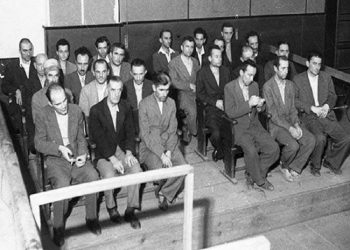
At the end of 1946, the State Security began to interrogate Aleksandër and Gjergji every night, hoping to place them in some hostile group…! They had attended elementary and secondary schools in America and when Sevastia returned to Albania in 1922, the boys went to “Robert” College in Istanbul and then for a master’s degree in Italy. Thus, they stayed in Albania from the end of 1944 until the end of 1946, when they were imprisoned and accused of being spies for the Americans. For Sevastia, this was a very heavy blow, both sons in prison without any fault, and since they were under investigation and no one had admitted the accusations, they could not be visited.
Thus, for nearly three years she did not see her beloved sons. In February 1949, we were informed that Gjergji had died, that he had killed himself, because he could no longer endure the torture. Sevastia went to get her son’s body. At least she would see him dead, but they did not give him to her. Sevastia managed to find out that those who died in the [investigations] were thrown into the Tirana River. So, at night, she set out together with Maria to the Riverbank to find Gjergji’s body, and they found the body wrapped in a blanket. Meanwhile, it was breaking dawn and they were afraid someone might see them, so they hid the body in the side of the earth and returned home, with the intention of returning in the evening to retrieve his body. But when they returned, they found the ground had been worked by a tractor and the body had disappeared, never to be found again.
Sevastia, although in life she had gone through many troubles and vicissitudes, characterized by strength and courage, this time the pain was beyond her strength, and she fell into a deep depression, wandering for a full five months through government offices in order to recover the body of her beloved 36-year-old son, but no one responded to her. Wherever she went, she found the doors closed. Thus, in August 1949, Sevastia closed her eyes, desperate and with a wounded heart, without seeing her eldest son who was lying in prison, paralyzed in one leg from the bestial tortures.
Aleksandër, after three years of isolation, not accepting any accusation, was sentenced to seven years in prison and was released in 1953. Much later, in 1962, on the occasion of the 50th anniversary of Albania’s Independence, due to the political conjuncture of the communist regime, interest was shown in the patriotic activity of the Qiriazi family. Thus, there in Vlorë, where 50 years earlier the Independence of Albania was proclaimed, four members of the Qiriazi family, Gjerasim, Gjergji, Sevastia, and Parashqevia, were decorated with the “Order of Freedom” and the order for “Patriotic Activity.”
Later, Sevastia and Parashqevia were given the title “Teacher of the People,” the highest title for education. Parashqevia lived all that time with Aleksandër’s family and died in 1970 in Tirana. Unfortunately, all these honors, even if Sevastia had been alive, I am sure she would not have enjoyed them, not having her beloved 36-year-old son beside her, innocent and in the flower of his youth. / Memorie.al