By Besim Dervishi
Part One
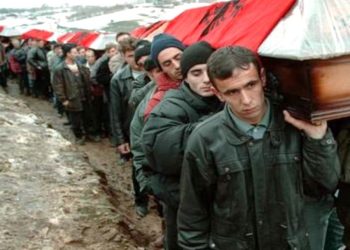
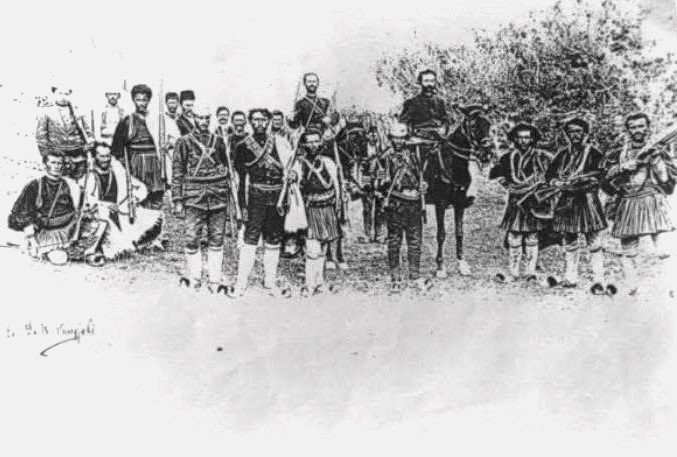
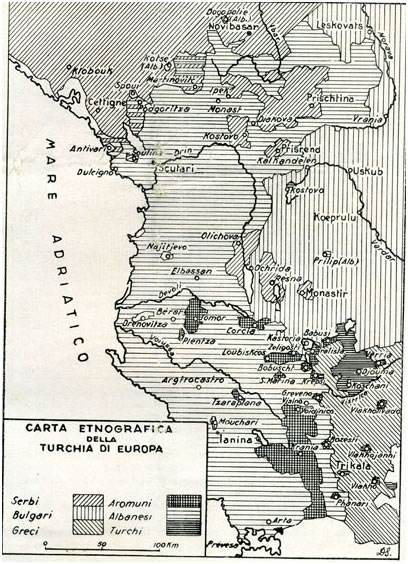
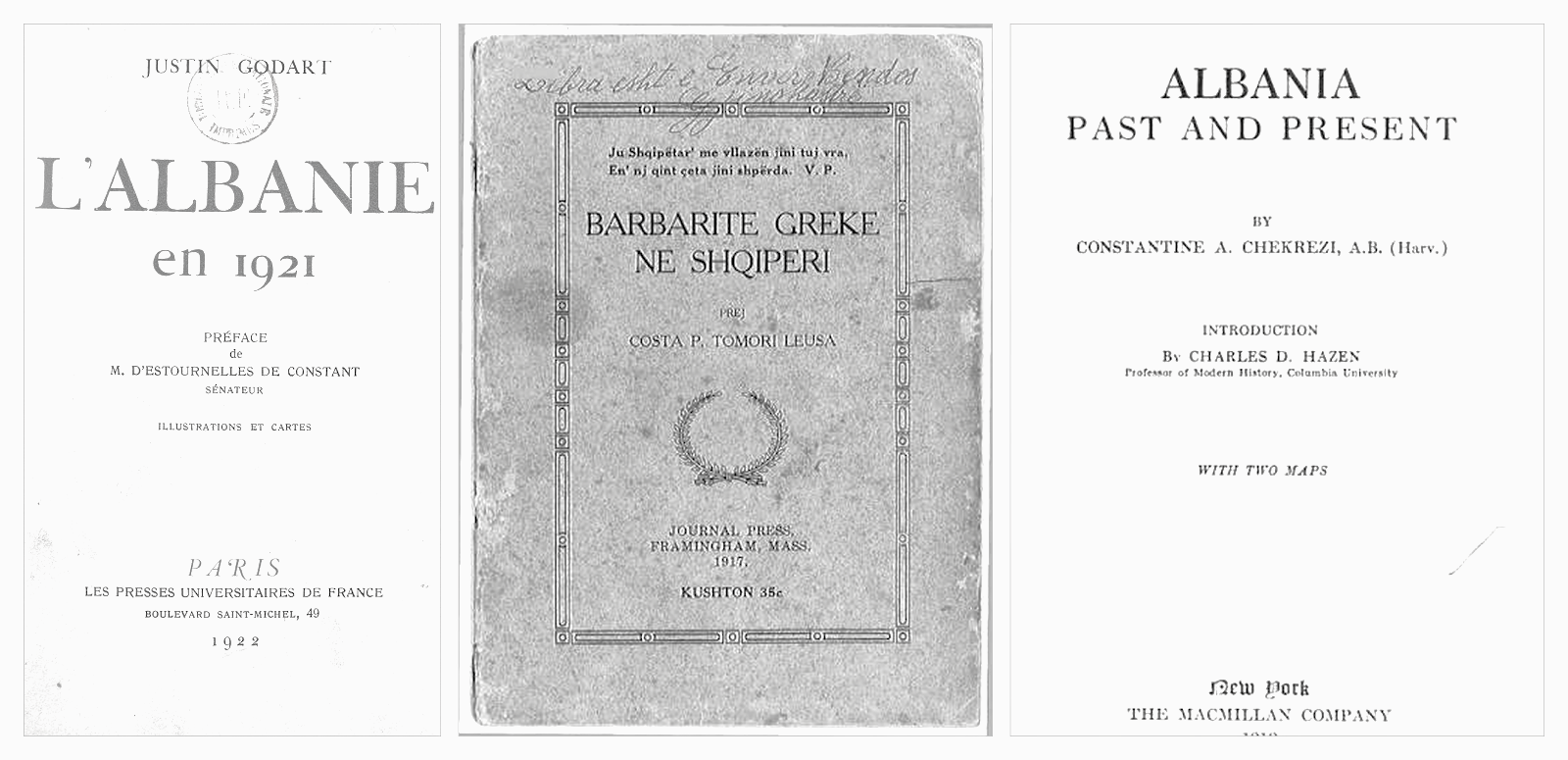
Memorie.al / One hundred and seventeen years ago, on July 25, 1913, at “Qafa e Martës” in the village of Backa, Skrapar, one of the most legendary battles took place between the guerrilla bands of Skrapar, Kolonja, and Korça against the Greek andarte (irregular) hordes. The men of Skrapar, Kolonja, and Korça fought shoulder to shoulder like men against the andarte criminals. But how did events unfold leading up to this fierce battle? The history of the “Megali Idea” theory has marked one of its most shameful and hated pages, especially with the massacres carried out in southern Albania in 1913–1914. The Greek government of that time was not satisfied with taking “Lower Albania” (as the historian John Foster Fraser calls Southern Epirus in his work of the same name, as do all Western travelers in the 1800s) but also laid claim to the Kazas (districts) of Gjirokastër and Korça (see the book “L’Albanie en 1921. Préface de M. d’Estournelles de Constant” by author Justin Godart, page 259).
For this purpose, the Venizelos government devised and implemented on the ground a plan to destroy Albanian villages, especially in these two kazas, but also in other kazas such as those of Berat and Vlorë. But according to the French author Justin Godart, all the villages of the Korça and Gjirokastër kazas were Albanian, except for 18 villages in Gjirokastër, consisting of 400 houses. However, their inhabitants were simple farmers who were employed by the landowners in these areas (see the book “L’Albanie en 1921. Préface de M. d’Estournelles de Constant” by author Justin Godart, page 260). The Conference of Ambassadors in London, held on August 1, 5, 8, and 11, designated a truncated Albania. But again, the Athens government was not in agreement.
This conference unanimously decided to investigate the national affiliation in the kazas of Korça and Gjirokastër by the ICG (International Control Commission) and all this data and results would be entered into the Protocol of Florence (December 17, 1913). The ICG submitted the results of the field data, which designated the border line from Shën Naum – Konispol and continuing along the Stilo hills up to elevation 254, into the Protocol of Florence, and on January 13, 1914, the Greek government was notified threateningly to withdraw its army from these lands.
Meanwhile, the ministers of Germany, Austria-Hungary, France, Great Britain, Italy, and Russia informed Greece of their governments’ decision to hand over the Aegean islands. But they set a condition: that the Protocol of Florence would be executed first. So Greece would be given the Aegean islands once the Greek troops had withdrawn from the kazas of Gjirokastër, Korça, Delvina, and the Island of Sazan, which they held occupied. The evacuation of troops was to begin on March 1, 1914, and end on March 31, 1914 (see the book “L’Albanie en 1921. Préface de M. d’Estournelles de Constant” by author Justin Godart, pages 263–264). What had happened “de facto” on the ground? March 31, 1914, was the last day when the regular forces of the Greek army were to leave Albania.
But the Greek government, simultaneously with withdrawing its regular army troops, infiltrated groups composed of “Cretans” (former prisoners who had escaped from the prison of Crete) as well as Greek soldiers (deserters). Politically, Venizelos incited and financed a puppet Epirote government, with Prime Minister the renegade from Albania, Georgios Zografos, Foreign Minister Alexander Constantine Karapanos, and Minister of War Colonel Dimitrios Doulis. In these operations, the Bishops of Gjirokastër and Korça were directly involved. On March 27, the regular troops of the Greek Army withdrew from Gjirokastër, while immediately on the ground they were replaced by the so-called “Vorio-Epirote” troops. Disturbances and attacks were also recorded in Korça on April 11, 1914. The Greek government played a dirty game in Korça. While it handed over the city to the Albanians at the end of March 1914, it treacherously left a large number of its military personnel in the city’s hospital under the pretext that they were sick (see the book “Albania Past and Present” by Constantin Chekrezi, page 139). On the other hand, within the city there was a known pro-Greek nucleus and sympathizers of Greece, because there was also a Greek gymnasium in Korça.
This pro-Greek faction was led by the Greek Archbishop of Korça, who was the mastermind of the plot to capture the city of Korça, as well as the link and coordinator between the Greek soldiers in the city hospital and the pro-Greek sympathizers (see the book “Albania Past and Present” by Constantin Chekrezi, page 140).
On the night of April 11, the Greek soldiers and their collaborators began the plot. From their positions, they attacked and in a short time took the main buildings of the city. But very soon, the patriots and the people of Korça united in battle, and after fierce fighting, they routed the andarte and pro-Greek forces. After this, the andartes attempted to avenge their defeat by committing many atrocities against the defenseless population. The most aggressive in these massacres was the group of prisoners from Crete – the Cretans (see the book “Albania Past and Present” by Constantin Chekrezi, page 141).
One case that author Chekrezi tells us about is that of the Monastery of Kodra. 218 people, elders, women, and children, had taken refuge in the Orthodox Monastery of Kodra. The andartes removed part of the monastery’s roof and from there began firing with firearms at the unfortunate refugees trapped inside. After they ran out of ammunition, the andartes entered the monastery and slaughtered the survivors with knives and axes. This was a terrible crime that is difficult to imagine in our days. But an official report of the massacre was written by General De Weer of the Dutch Mission. He confirmed in this report that this was the most revolting massacre in modern history.
These barbaric atrocities doubled the courage of the Albanians, who now understood that this was a war of life or death. The bands were guilty of the most serious crimes; they destroyed, burned, and looted the country, massacring the population (see the book “Albania Past and Present” by Constantin Chekrezi, page 142). During this time, General Papoulias of the Greek Royal Army threw his infantry and artillery against the Albanians, forcing them to stop. However, the Greek government denied all responsibility for this event. At these moments, Europe thought it advisable to intervene, and the infamous Protocol of Corfu was organized, but even during these negotiations, the Greeks burned Tepelena and Leskovik. Under the nose of the Control Commission, about three thousand soldiers were transported from Corfu to Southern Albania (see the book “Albania Past and Present” by Constantin Chekrezi, page 143).
Even during the period of May–July 1914, many horrific massacres took place. One of the authors who described these massacres in detail is Kosta Papa from Përmet, in his book titled “Greek Barbarities in Albania,” published in the USA in 1917: In this work, he shows with facts that regular officers of the royal army were involved in the operations: “…The andartes made preparations for the offensive against Këlcyra and Çepan, which began on Monday, May 29, 1914.
The plan of the offensive was as follows: Fjorgakaqi, Jorgollaqi, and Qiro Vaso in Miçan would attack Backa. Captain Farmaqi in Malind would attack Koprëncka. Sotir Bubuna in Sevran would attack Qafa e Rogut. Captain Niko Aristidhi and the troops of Kocifaqi in Qarishte would attack Muzhaka. The offensive would also be joined by Captain Psaro, Papa Jani, Captain Zerva, Captain Kollovo, and the troops of Karaxhai with all their cannons. The offensive began at 0:2 in the morning in Qarishte” (see page 66). Furthermore, the author shows in detail that the cannon from Brezhdan were continuously bombarding Këlcyra, and the cannon from Miçan was bombarding Backa (see page 66).
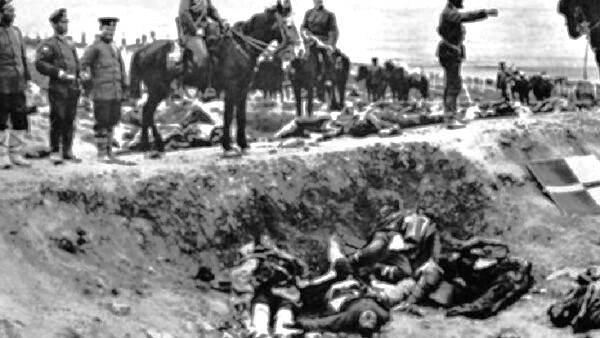
In the forest of Qarishte, the andartes and the Albanians clashed hand-to-hand, where four andartes were killed and four were wounded. The Albanians withdrew after several hours of bloody fighting, thanks to the enemy’s numerical superiority and the heavy weapons they possessed. Then the andartes entered Backa, Çorovoda, Sevran, Rog, Muzhaka, Çepan, Prishta, Turbohova, Vlush, Gjerbës, Spatharë, Vëndresh, and other villages, where they burned and killed children, women, and the elderly (see page 67). 300 horse-loads and cart-loads were sent to Ioannina. Thousands of heads of livestock went to Greece.
In Backa, 30 women and infants were slaughtered, who had not managed to reach Zhepova. 15 women with cradles in their arms were caught and slaughtered along with all their infants. The Albanians became demoralized because on one side they had the andartes, and on the other side, the Essadist bands, which occupied Berat. Many inhabitants of the Skrapar area went as “muhaxhirs” (refugees) to Berat and its surroundings, but there too they were tormented by the Essadist bands; many of these people died from malnutrition and poor conditions, but those who survived decided to return.
Over 400 children returned to Skrapar, who fell into the treachery of the andartes (see pages 67–68). The andarte bands, as an act of revenge, went all the way to Uji i Zi and burned all the surrounding villages. The andartes slaughtered 180 children in the Skrapar River (see page 71). The macabre acts of the bloodthirsty had no limits. These criminals, after being defeated in Vëndresh by the band of Sulejman Spathara, headed towards the village of Spatharë and burned the neighborhoods of Odobash, Kushovalli, and almost the entire village. The inhabitants had previously left towards Berat. The only person they found in the village was an elderly sick woman, whom the andartes impaled and roasted alive. These massacres are also mentioned by the British MP of that time, Aubrey Herbert, and simultaneously one of the greatest friends of the Albanian nation (Aubrey Herbert, journalist and British MP. Known as one of the most powerful advocates of the Albanian cause. Was proposed as King of Albania before Prince Wied. The circumstances of his refusal of this post are unknown).
Here is what he says, among other things: “The inhabitants of the villages in southern Albania have been emptied and destroyed by the andarte bands led by former ordinary prisoners who escaped from the prison of Crete. 60,000 to 100,000 refugees from the areas of Korça, Berat, and Skrapar have gone to Vlorë. I have received a letter from a Briton who was in Vlorë. He says that: ‘I cannot believe what I am seeing here. I have no words to describe the terrible cruelties committed by the Greek bands in southern Albania. 100,000 refugees are in Vlorë. The whole country has been destroyed. Albanian women and children who had fallen into the hands of the Greeks were all killed.'” / Memorie.al