By Rudina Papajani
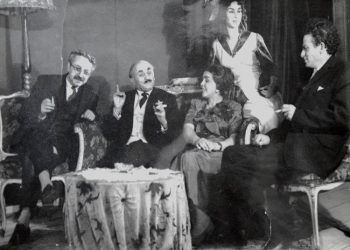
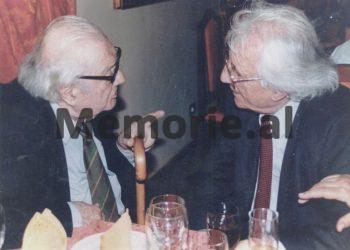
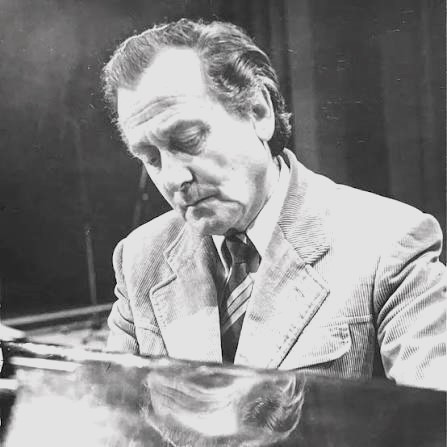
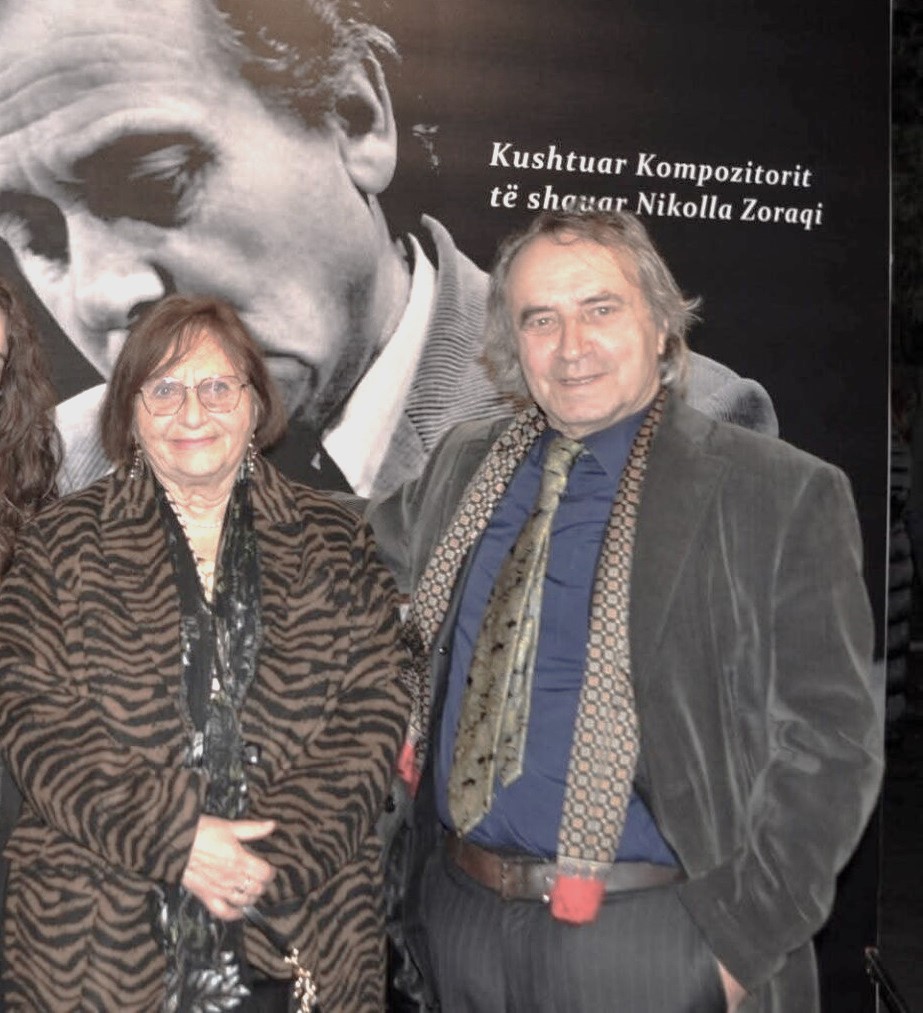
Memorie.al / There are artistic figures whom time does not diminish. On the contrary, the further we move away from them, the more clearly we understand the weight of the mark they have left. In this space of Albanian cultural memory comes the documentary “Nikolla of the Heart of Tirana,” a work dedicated to the distinguished composer Nikolla Zoraqi, with a script by Natasha Lako and direction by Mevlan Shanaj. A film that should not be viewed simply as a biographical portrait, but as a serious effort to bring an important figure of Albanian music out of the silence of the archive and return him to the consciousness of today’s public. At a time when culture often faces the speed of oblivion, returning to an artist like Nikolla Zoraqi takes on a special meaning.
Because to speak of Zoraqi is not merely to list his works, to mention the period in which he created, or to recall his contribution to Albanian music. It means touching a part of our artistic history, of an era, and of a way of thinking about art. Precisely here lies the value of the work of Natasha Lako and Mevlan Shanaj: they do not treat Zoraqi as a name frozen in an encyclopedia, but as an artist who can still communicate with the present.
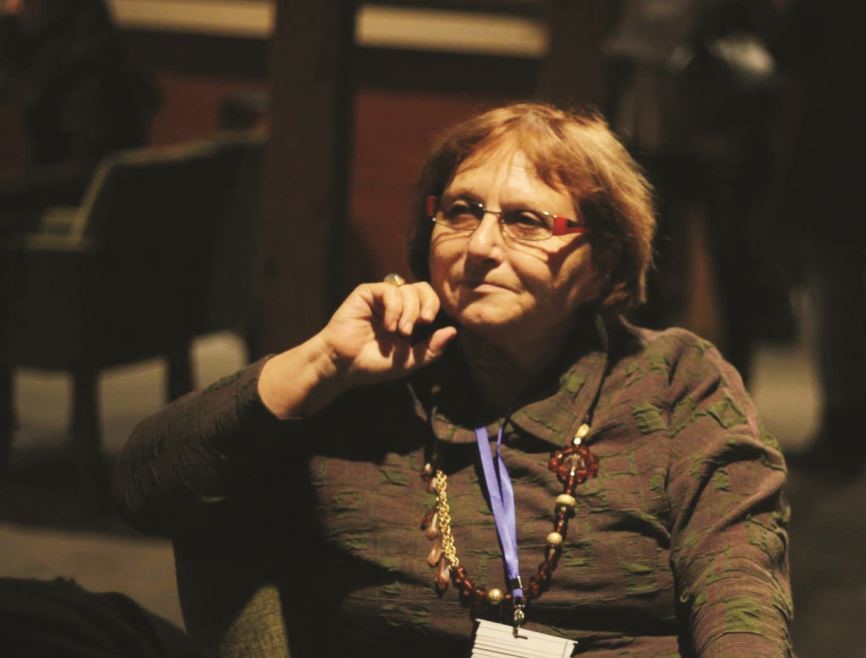
Natasha Lako, through her script, brings to this documentary that quality that also characterizes her literary work: the ability to seek the human being beyond the public figure. Her words serve not only to inform, but to create atmosphere, to connect times, and to build an emotional relationship with the character. She is not satisfied with the question of who Nikolla Zoraqi was; she seeks to understand what shaped him, what nourished his creativity, and what made his music so strongly connected to a land, a city, and a culture. This moves the film away from the classic biographical documentary scheme and leads it toward a more human, more meditative narrative and at the same time closer to the modern language of documentary.
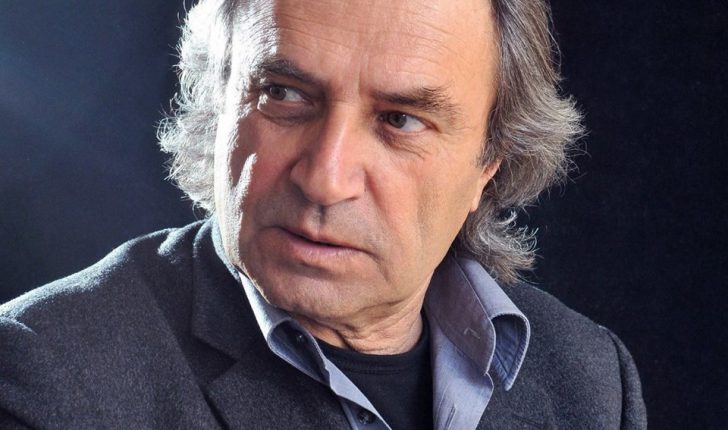
At this point, Mevlan Shanaj’s work takes on an equally important role. The director translates words into images and places Zoraqi’s figure in a space where archive, memory, testimony, and music coexist. Shanaj does not merely seek to tell us a story; he seeks to make us feel it. And this is one of the greatest challenges of a film dedicated to a composer: how to transform sound into image, how to make music visible and a past life still feel present. Through his direction, Zoraqi does not remain distant from us. He returns as an artistic presence that seeks to be heard even by generations who did not live in his time. Thus, the collaboration between Natasha Lako and Mevlan Shanaj becomes one of the most interesting pillars of the documentary.
Two authors with different creative languages meet on common ground: Lako builds the thought and literary dimension of the narrative, while Shanaj builds the image, rhythm, and cinematic atmosphere. One notices the manner of reading as a very original, impressive, and emotionally moving solution, departing from schematic and empirical reading. Between them stands the music of Nikolla Zoraqi, which becomes the element that unites word and image. It is a creative relationship between three languages: word, photography, and sound. And it is precisely from this dialogue that the identity of the documentary is born.
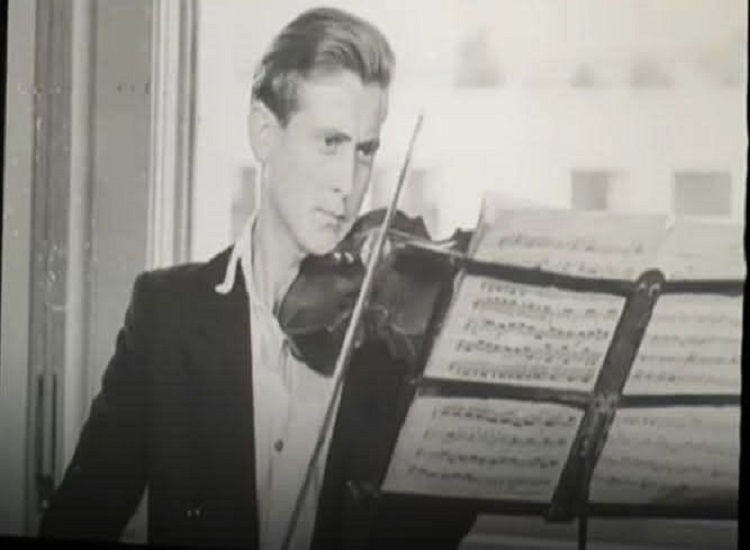
Nikolla Zoraqi cannot be understood only through a list of works. He was a composer who drew the breath of his homeland and translated it into a cultivated musical language. Albanian melody, tradition, rhythm, and the colors of our culture became part of his creativity. He worked in various genres, leaving his mark on symphonic music, stage music, ballet, opera, song, and film music. But his importance does not lie only in the number of works. The importance of an artist is measured by what continues to live after him. And Zoraqi’s music is precisely that part of the heritage that continues to seek its listener.
The title “Nikolla of the Heart of Tirana” is in itself a key to reading the documentary. Tirana is not only the place where part of the composer’s life unfolds. It appears as a spiritual space, as a city that shaped the rhythms, memories, and atmosphere of an artist. Zoraqi and Tirana seem to communicate with each other through music. The city becomes part of the portrait, while the composer becomes part of the city’s memory. And this makes the documentary more than a biography: it makes it a reflection on the relationship between the artist and his homeland.
In this sense, Natasha Lako and Mevlan Shanaj have not simply made a film about the past. They have made a film about the present. Because the question that arises when faced with a figure like Zoraqi is not only: “What did he do?” but also “What have we done with what he left us?” This is a powerful cultural question. A society that does not know its heritage risks losing a part of its identity.
Great names should not live only in textbooks, institutional archives, or commemorative ceremonies. They must be brought back into dialogue with the public.
And the documentary does this through cinema.
Herein lays its modernity. A modern documentary is not necessarily one that uses a fast-paced language or a dense montage. Modern is one that knows how to place the past before the questions of the present. “Nikolla of the Heart of Tirana” seeks precisely this confrontation. It takes us to a figure of the last century, but asks us, today, what relationship we have with culture, with memory, and with our artists.
In this regard, the film also takes on a civic dimension. Cultural memory is not a luxury. It is a responsibility. A nation does not preserve its identity only through monuments, political history, or official documents. It also preserves it through music, literature, cinema, theater, and the people who gave spirit to that time. Therefore, such a documentary is an act against oblivion.
And oblivion is perhaps culture’s greatest adversary.
In a reality where everything is consumed quickly, where new names replace old ones, and where daily information often excludes long-term memory, returning to Zoraqi is a way to slow down time. To listen again. To see again. To understand that what we have inherited is not simply past, but a part of our present.
Therefore, the work of Natasha Lako and Mevlan Shanaj should also be seen as an artistic collaboration that gives the documentary a unique identity. Lako brings the sensitivity of the writer, the power of words, and the ability to turn a historical figure into a living character. Shanaj brings the director’s experience, the cinematic eye, and the ability to build this world through images. They do not compete with each other; on the contrary, they complement each other. The word does not cover the image, and the image does not replace the word. Both make way for the music.
And in the end, it is precisely the music that remains.
Dates may be forgotten. Photographs may fade. Documents may be lost. But a melody that has entered memory can live much longer than the time of its author.
This is also the most powerful message conveyed by the documentary: Nikolla Zoraqi does not only need to be remembered. He needs to be heard. And this is the difference between homage and a good documentary work. Homage says: remember him. A good documentary says: discover him again.
“Nikolla of the Heart of Tirana” is precisely an invitation to this discovery. An invitation to enter the world of an artist, but also into a part of our cultural history. An invitation to see how a creative life can become a mirror of an era and how a composer can remain alive through the sounds he has left behind. In this sense, the film by Natasha Lako and Mevlan Shanaj is not only a documentary about Nikolla Zoraqi. It is a documentary about how we remember.
About how we preserve what belongs to us. About our relationship with the artists who have built Albanian cultural identity. Lako gives the story the word. Shanaj gives it the image. Zoraqi gives it the sound. And all three elements meet in a work that reminds us of a simple but profound truth: a culture does not live only when it creates great artists; it also lives when it knows how to keep them alive in memory.
Perhaps this is why a film about Nikolla Zoraqi is necessary precisely today.
Because in the end, we do not only need to know who he was.
We need to understand why he still belongs to us. And when his music returns through the screen, we understand that some people never fully leave the city, the art, and the memory of a place. They continue to live where art knows no age: in the sound that repeats, in the image that returns, and in the word that refuses to forget…! / Memorie.al