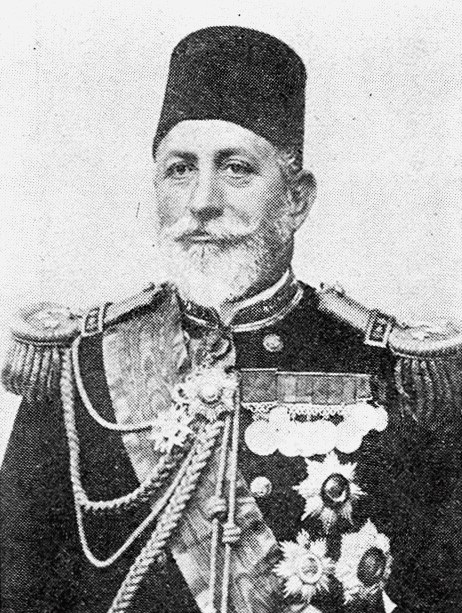


Memorie.al / After the imprisonment of his father, he and his brother were adopted by two different families. When their father came out of prison and another brother and sister were born, they were a family with three surnames. Kujto.al presents the memories of Bujar Nepravishta about the difficult kilometers to Burrel to meet his father and about the suffering when the prison guard threw away the food they had gathered with effort, because it exceeded the limit. The borrowed surname enabled him to get a better education and job, but throughout their lives they kept their mouths shut with the threat of a new punishment hanging over their heads. Regarding these and other events from his family’s and his personal life, the full testimony of Mr. Nepravishta, which we are publishing below in this article, acquaints us.
Mr. Bujar, when were you born and what was your family like?
I was born in Delvina, on August 18, 1940. My father was named Myslim Çarçani, born in the village of Fushë-Bardhë near Gjirokastra. A family of medium economic status and, as my grandfather and other people relate, they were closely connected with the great problems that Albania had at that time, regarding the issues of the Declaration of Independence, and our houses in Fushë-Bardhë were the bases for the guerrilla bands of Çerçiz Topulli, Mihal Gramenos, etc.
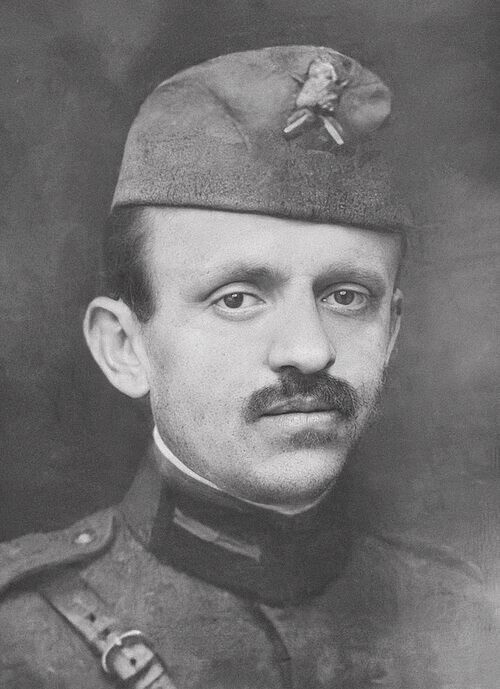
My father was educated at the Korça Lyceum and graduated in 1931. Afterwards, he could not continue his higher studies, although he was an excellent student at the Korça Lyceum. He did a supplementary school and there was also a course for communes back then. He finished that one-year course for communes and was appointed commune head in Fratar. During the Second World War, he held various duties: he worked in Elbasan, was secretary in the Prefecture, General Secretary; then he spent a good period in Tirana, again with duties at this level, and finally, he was in Delvina, also in the position of sub-prefect.
My father had nationalist views and was very closely connected with the nationalist movement in the Delvina area. He had his cousin, Ismail Haki Tatzati, a very close person with whom he collaborated, and at the same time with other nationalists of the Rami family, with Hasan Rami, with Avdullah Rami, and in this way, he was portrayed as a very harsh political opponent of the communist regime. He had very clear views about Bolshevism in general and about communism, and he often had heated debates with the communist representatives in that area.
In 1945, he was arrested, labeled an enemy of the people, and sentenced to death. Later, the death sentence was commuted to 30 years in prison, and he was imprisoned and served his sentence in Burrel as a political convict. My grandmother, my mother, and one brother (we were two brothers in total), Faruk, were left with no support at all, and in this case, my father’s aunt, Bahrie Nepravishta, took us in. She lived in Lushnja. Her husband, Xhevdet Nepravishta, was a nationalist, who had supported the partisan war, and he was killed in 1944, and we took shelter in his house, in the family and… in Lushnja.
It was a very great ordeal, the journey we made from Delvina in 1944 to go to Lushnja. An extremely dangerous trip and we was people without support: only two women, I was 4 years old at the time, while my brother was 2. Nevertheless, my father’s aunt took us in, and she has an extraordinarily great merit for all our future. She adopted me, and I am now called Bujar Nepravishta, while the other brother, Faruk, was adopted by my paternal aunt, my father’s sister, who was married to Mahmut Toro, who was a teacher all his life, and in this way, my brother took the name Faruk Toro, and being adopted, we were able to get educated and complete schooling.
Mr. Bujar, before we move on to the moments of education, your father was arrested in… 1945?
On what charges?
On the charge of “enemy of the people” and was sentenced to death as I said, then to 30 years, and later afterwards, there was another amnesty, by 7 years, and in 1952, he came out of prison. Throughout the time he was in prison in Burrel, the periods were extremely difficult. We were in a very difficult economic situation, because my father’s aunt was the only one who worked, she sold cigarettes, and we lived on extremely meager income. I remember that we went to Burrel several times. It was an extremely harsh torture. We went by trucks, by random cars to Vora, and then from Vora, the chrome cars went all the way to Burrel.
I remember that on one of these trips, we went all the way to Bulqiza, and then we returned to Burrel. In Burrel, we also went via the road of Qafë-Shtama, extremely difficult roads. I went on these trips with my adoptive mother and my biological mother, as well as with my grandmother, to meet my father. We would take some meager food supplies. I remember one time that, I don’t know how much the allowance was: one kilo or two kilos, and in an extremely arrogant manner, they opened all the food and whatever exceeded the limit, they threw it away. Imagine how difficult and touching it was for us, that with so many sacrifices we gathered something to take, and it was brutally thrown away.
I remember that we slept at an old woman’s house, where families who met prisoners usually went. This was in the years ’49-’50-’51. At that time, the Ulza hydroelectric plant had not been built, and we went to Burrel via Mirdita, via Rrësheni, and the road was a real torture, and so was the way we were treated. The meeting was very short, behind bars, but the drivers had compassion, and as soon as they saw that we had bundles, they generally gave us a ride, while the rest was a very difficult part.
How long did the journey take?
We left early in the morning from Lushnja and arrived either late in the evening or at midnight.
Where did you sleep?
In Burrel, there was a woman who had been recommended to us by other families who went, and we also took shelter there and slept one night, then left the next day. Like all other families, it was very difficult. Often we went together with one or two other families. One was from Gurëza, with the surname Zdrava; they also had a prisoner in Burrel, and we would leave and organize ourselves, two families going together. Naturally, because there were only women, with small children as well. Then, after my father came out of prison in 1952, he worked his whole life as a farm worker, in the agricultural enterprise of Lushnja.
He worked on a piecework basis, but naturally, a man who had come out of prison, even at that age – he was born in 1908 and it was the ’50s and ’60s – he had a hard time. He died in 1987, and until then, he lived in Lushnja and worked his whole life as a farm worker, doing some of the hardest jobs. I also had another brother and another sister who was born after my father came out of prison. They are called Teki Çarçani and Engjëllushe Çarçani. For them, it was an extremely difficult life.
They kept their father’s surname and were the paternal line.
Yes, they were the paternal line. After they finished secondary school, they could not be given further education, and my brother worked in a brick factory. Extremely hard work. He transported the bricks by wagon, put them in the kiln, and then took them out of the kiln, at a temperature of 70, 80, 90 degrees, and when he came home, he was unrecognizable, because he was covered all over with soot, and only because he was an extremely strong-willed boy did he endure such extremely hard work. Likewise my sister, who graduated with excellent results.
In Lushnja, she is well remembered for her results, and she worked all the time in construction. She also had an extremely difficult life. In fact, my sister, unfortunately, remained unmarried, and today she is over 50 years old, because in small towns, families that were considered reactionary were generally not approached, and this was an extremely bad fate. To be honest, we had the protection of my father’s aunt, because several times attempts were made to intern us, but it was her intervention and pressure that saved us.
Meanwhile, your brother stayed in Lushnja all that time and worked as a laborer?
Yes, all the time, that is, until the year 2000, they lived in Lushnja. Whereas in 1991-’92, my brother worked in an oil company, while my sister worked at the Lushnja Municipality.
So the moment of political pluralism, of democracy in Albania came…?
And after ’92, my sister continued, after being laid off, she attended the Faculty of Law and worked at the Lushnja Municipality. She was proposed by the Democratic Party to run for mayor of Lushnja, and even for deputy, but a political career was not in her nature. She was the type who saw her future, not in the field of politics.
Let’s return once more to the period of the communist dictatorship. Your father lived until ’87. He worked as a laborer until he retired. Did you ever talk, perhaps closely, in intimacy…?
In our family, we talked constantly. I did not reside in Lushnja. I worked in the oil industry until 1991 in Kuçova, then in Patos, and I came once a week to Lushnja, and naturally, in the evenings, we talked. That is, in our family, we were not raised with any idea of the system as it was presented by the system. We were extremely clear and conscious, because our parents had made it very clear to us what communism represented in general. We knew from family conversations, we attached great importance to all political developments from the pre-war period and subsequent developments, and my father was extremely well-formed in his political views regarding the role of all political factors in the international arena and, in this respect, also in Albania.
He knew the communist leaders of the area from the confrontations he had had. And he knew that communism was just demagogy, was a lie, and for this he felt the greatest regret, because a people was deceived by the beautiful ideals that communism presented. On the other hand, the nationalists were not organized and did not have a propaganda machine, as perfectly organized as the communist party’s propaganda was. At the same time, we talked about all the political developments that happened in the country, and we were constantly silent because we knew that we were people who were surveilled, we were under control, and the only thing that could save us from some consequence, as often happened, was to remain silent and keep our mouths shut, even though we were extremely conscious.
We were naturally formed as children with clear and accurate knowledge of what this system represented, this great misfortune that had occupied Albania, but outside we spoke to absolutely no one and we trusted absolutely no one. My father’s cousin, Mr. Hasan Rami, came to us. He was interned in Cërrik, and he was a nationalist, a very good patriot, and he would speak with pathos when he came in the evenings, he would even stand up and talk with my father, about all the problems and great misfortunes that accompanied this country after the communists came. This was generally the atmosphere in the family. People did not approach us either, because, as happened in Albanian families, some were nationalists and in the same tribe there were others who were linked to the National Liberation Movement. We were completely isolated in Lushnja.
Those people who came to us were only those who had suffered, and life was very difficult. In small towns, this class hatred was even greater…! Lushnja, for example, had this thing marked, because it was also a place that had many internment camps. Lushnja was full, also in this aspect; it was very gloomy for family’s labeled reactionary to live, in neighborhoods, everywhere…! An incident where we again had consequences was this: in the 1946 elections, my mother voted in the black box, and it made a sound…! In this respect, we ourselves confirmed that we were opponents of the regime. Despite my father being in prison, my mother also confirmed such a thing. Undoubtedly, all this caused, in what were called Front meetings, extremely dangerous labeling as enemy, etc., etc. Generally, this was the whole period in which we lived…!
How did you experience the moments of political pluralism, the arrival of democracy in Albania, both you and the other family members, brothers, sister, from an emotional point of view…
I felt the greatest regret that my father did not live another three years to at least see this day. Because he fought and tried his whole life for a democratic Albania and suffered immensely, and just on the threshold, when he should at least have left knowing that Albania changed, he did not achieve that. As for the rest of us, naturally, this was an aspiration that we dreamed of, like all other Albanians who had suffered. We were naturally on that side that aspired to a Western democracy. We were against any kind of dictatorship, let alone that which was in Albania, the dictatorship of the proletariat, which was perhaps the most brutal, and undoubtedly, we were educated and formed as a family with feelings of love for the country, love for people, love for a free life for everyone, that creates opportunities for development, etc.
Undoubtedly, this day was important for all of us, but in particular, it was experienced by my brother and sister, by my mother who were in Lushnja, who, among other things, were relieved of those severe hardships, not only spiritual but also physical, that they suffered throughout their youth. Thus, the days of 1990, 1991 were welcomed by our family as days which, as indeed happened, brought a different life, a different era. To be honest, we thought that one day communism would not be able to survive any longer, because especially in Albania, especially due to the severe economic situation, the immense isolation, we did not think it would have a long life, but we also did not think that this could happen so quickly.
With the fall of the Berlin Wall and with all the movements initiated by Gorbachev, with perestroika and others, all hopes began to arise, and this process was later crowned in Albania as well with the toppling of the bust of Enver Hoxha, which was one of the most emotional and dramatic moments that happened in Albania, when, in that gesture, all the great popular hatred that existed towards the regime was manifested. So, with the arrival of democracy, with the collapse of the communist regime, all our hopes were revived for a different Albania. A general national rebirth, a spiritual rebirth in the first place. I want to say that communism, during its 45 years, influenced the values of the Albanian person extremely badly.
It destroyed, through the exercise of an extremely brutal, harsh, bloody power, the power of fear, many of the virtues and qualities of people. The attempt was made to create the new man, and the difficult economic situation, the extremely great psychological pressure, life under such duress, created, besides a large number of spies, numbering in the thousands as I have seen in the literature being published now, it created a caste of serviles, and on the other hand, the category of tight-lipped people who remained silent. So Albania, during this period, cultivated in people some traits that were unnatural, and with this legacy that communism maimed the human spirit with, we came to democracy, and naturally we would also have problems.
Having such a legacy from communism, this harsh class struggle that existed and the way the system change happened in Albania, meant that the communists, their numerous descendants, continue to this day not to be a category that enjoys hatred for the crimes committed, but unfortunately, we are confronted with communists and the descendants of communists who are in high positions, whereas the whole category of the persecuted, unfortunately, which has still not been integrated with dignity into today’s society as it deserved after all that 45-year Calvary, has remained in other positions.
It’s a pity that the former owners, the political persecutors, wander through offices and it seems as if they are given alms. Naturally, this category expected more from democracy. This transition has been extremely difficult, with many zig-zags, with many confrontations, but we must say that the true right in Albania remained a façade that was needed by political parties in order to present themselves as real right-wing parties. In reality, the real right in Albania has not been able to survive in the political sense of the word. It has always, and currently, has extremely weak representations.
Mr. Bujar, thank you very much for your interview.
I thank you too. I think that it is important for people’s memory that all of that past remains, and I am glad that writing about this period has now begun. On the other hand, I have hope that the Institute for the Study of the Crimes and Consequences of Communism, which is led by a young man for whom I have sympathy, Agron Tufa, will serve history, despite the fact that during these 20 years of the democratic system, there have been no significant effects. I think that from a historical point of view it will serve, and it is never too late, for the demasking and presentation to public opinion and to history of what communism was in Albania.
I think that writing will happen, and it is necessary to write, besides these memories, these interviews. This is a very useful work that you are doing, and I thank you for it, but one must write and write a great deal so that future generations and history have a clear picture of what that reality was like, because communist propaganda did an enormous amount, and unfortunately, our children who were born on the eve of democracy, or in the years of democracy, due to the developments that have taken place so far, have no clear idea of what communism was.
Therefore, it is very important to tell history as it is and to write it with the greatest objectivity, without political passions, so that generations know the truth of how this people lived, how they progressed, because being aware of this, they will become better, they will have clearer and more correct visions for the future, and on this basis, better social relations will be established among all social categories that, for a very long period, have been in an absurd conflict with each other./ Memorie.al
From the archive of the Doko family