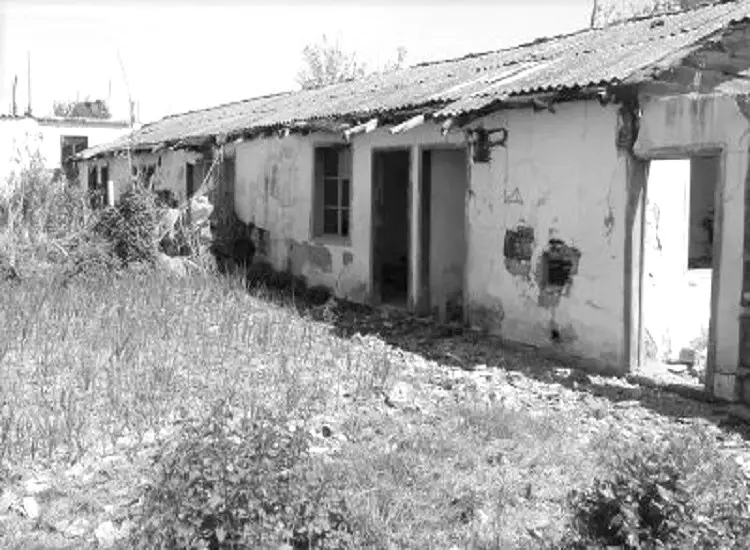

Memorie.al / If all the madness of hundreds of imprisonments and executions could find some sort of justification due to open opposition that might be mounted against the regime, the consequences inflicted upon children, grandchildren, and the entire extended family had no excuse whatsoever to be classified as the work of a sane mind. The story of Alma Liços is just one among thousands of internment stories. One of those children who could not find any reason for the sudden disappearance from the city, only to be hidden away in flea-infested shacks where she had to sleep. If you think there was even worse than this, you are probably right, but none of those childhood memories—not even a single day that might have been considered normal—are ever erased by all the subsequent years during which you are supposed to live in normality.
Those memories create a new normality, from which you behave differently with everyone! Alma wrote the fragments of her story herself. First, she began to do it for herself, then for close family members, and finally, she decided to publish the book for everyone. She has also told part of her story in the recent documentary film “Children of the Dictatorship,” produced by IDMC. These are four stories that have returned to the scenes of the events to recount their history…! This is Alma’s story!
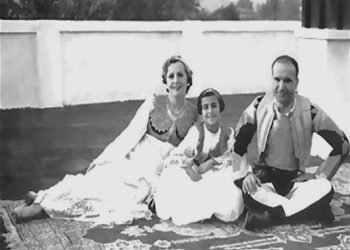
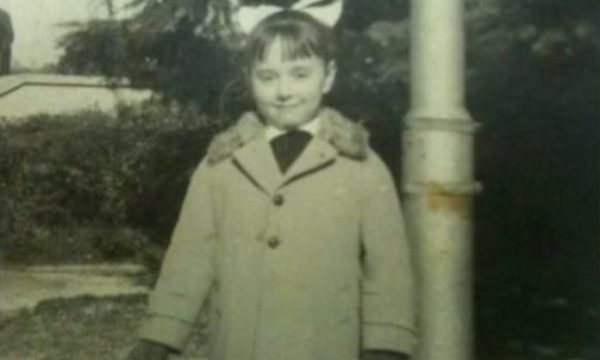
I was born in Tirana in 1958. My father was the son of a Korçë merchant, sentenced to execution by the communist regime. The calamity for my family began in 1968, and by a very bitter coincidence, that day was also my birthday—I was turning 10. That day had been imagined entirely differently in my childish fantasy, but in reality, a black car arrived and took a long, seemingly endless road, full of potholes and dust. Many villagers gathered around that car; some expressed astonishment, while others showed a malicious joy.
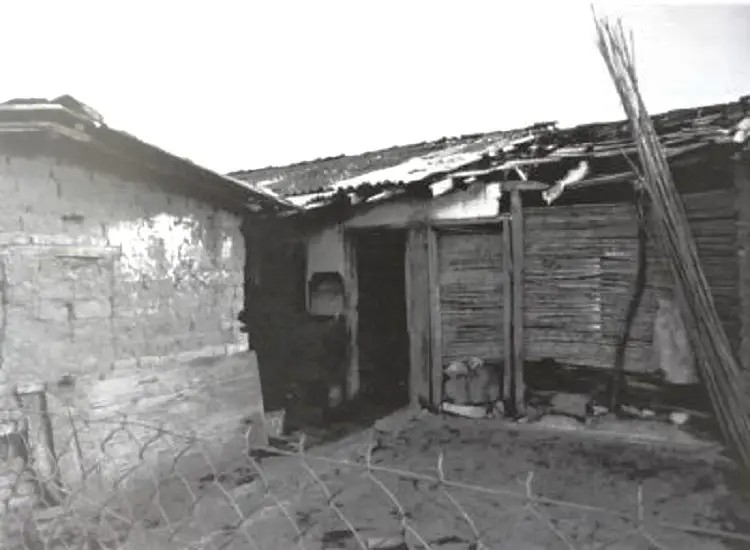
My mother could not contain herself; she burst into loud sobbing. My father, deeply desperate, told the driver that we could not turn back, because prison awaited us. The first night we slept in internment was terrifying. The villagers had used that place as a bathroom, and it reeked only of urine. We had nothing to do; the three children lay down on the straw with insects constantly falling onto my head and body. I felt extraordinary terror. My father called me close, and for the first time in his life, he felt the obligation to explain to me what was happening.
He told me the story of his father, an intellectual educated at Harvard. He spoke to me about his execution and about what the party-state was pursuing against all those who were in opposition to the communist regime. The villagers considered us enemies; even when we bought bread, they looked at us very badly. Even that was not meant for us, it seemed. With these attitudes, I was confronted and grew up in school. We did not approach the other children.
One day, one of the teachers looked at me with great hatred and threatened me: “Learn as much as you want, but the pickaxe awaits you!” Truly, the later years seemed to confirm her prophecy. I decided to return to my grandmother two years after living there because of schooling. My grandmother told me that two days after the internment, the neighborhood council had come to the house and brought a person with mental issues to shelter there. She had been living with him for two years. More bolts had been added to her door. Nevertheless, I continued school where I had left off. They had continued normally, while I could no longer be like them. I avoided any kind of activity that gave us opportunities for conversation. I had a close relationship with a girl whom I am still friends with today.
She and her family have been permanent supporters of me and my family. In the 8th grade, my grandmother died and I was left alone; it was that family that took me in. With some effort, I managed to start high school as well, but only the first year; then they expelled me. The teacher’s prophecy followed me. They assigned me to work in a tomato greenhouse.
Besides the difficulty, there was also cynicism from my workmates. After an incident of tomatoes going bad, I called the farm technician, who accused me of ruining them, telling me I had sabotaged them—but at that time, the word sabotage was equivalent to death. However, luckily for me, an expert came to make an assessment and said that it had only happened due to excessive amounts of water. On my first Election Day, after an armed man passed by, they signaled to me that they would give me a pre-written ballot, inside of which I only had to fold it and put it in the right place.
EXCERPTS FROM THE BOOK
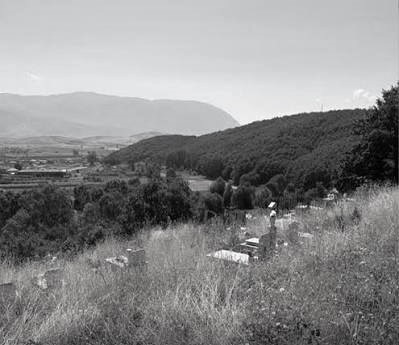
Situated at the exit of the village, at first glance, it looked like a hill just like all the others. It was June, and the green grass covered it all around. The uniformity of that astonishing greenery was interrupted here and there by stone slabs that could be distinguished from afar. At the lower end of that hill, the village cemetery was located. Inevitably, those silent stones gave that marvel a sad appearance. Silence reigned everywhere.
No bleating of sheep, no barking of dogs, or enthusiastic cries of any children. A chilling silence that followed the farewells that remained there forever. Lives interrupted naturally or cruelly, just as life itself tries to flow with its mysteries and unforeseeable surprises. But that day was unusual for that place of final parting. The one being escorted to their final resting place was a child of just eleven years old. The lifeless body lay in a small white coffin, which had arrived that morning at Rinas Airport, from very far away.
Fate brought me to be present at that mournful and tragic procession. As I watched hundreds of saddened people, I thought that all the experiences that mark life’s paths have their own languages. But the pain of losing a child always speaks the language of tears. Those crystalline droplets slide down exhausted faces shriveled by despair, or try to be swallowed amidst gasps that nearly drown in their own pool.
Among the hundreds of relatives and residents of that village, two parents of the deceased boy drew attention. They stood frozen and hunched over that coffin. They were immersed and stuck in an icy world that had paralyzed every cell of their being. What had happened, after all? In what way had the life of that unfortunate child been interrupted?!
As I watched them devastated by pain, I tried to understand how much a crushed conscience influenced the agonizing experience of that calamity. In some way, that child had been abandoned by them. Poverty and the uncertainty of tomorrow had driven those parents towards that extremely painful act. The phenomenon that separated minors from the bosom of the family was spreading like a devastating epidemic. In search of a more dignified life, education, and a more secure future, hundreds of parents wandered the roads of Europe, in search of Social Centers for childcare, abandoning their children near their perimeter walls.
Thus, after a long journey, that desperate father, unable to feed four children, had abandoned him, alone, like a frightened bird, at the entrance gate of such a Center. The little one was the firstborn of the family. “Successfully,” hundreds of fellow citizens had followed the same journey. So why shouldn’t he try it too? Hadn’t the health institutions slammed the door in his face when he had asked for financial help for his sick wife, who was unable to work?
Meanwhile, the social structures of these Centers immediately took those lonely little ones under protection, providing them with every immediate necessity of life. The poor child’s parents had forced him to say and repeat almost by heart that while wandering in that city in search of a family friend, he had unintentionally been separated from his father’s sight. In other words, he had gotten lost. In the presence of an interpreter, he then continued to identify himself and his relatives with made-up names. The weight of the lies pressed down on his eyelids, without him daring to look anyone in the eye.
Thus, the possibility of contacting the families and returning that little one to their bosom was almost impossible. I imagined that minor, shy and suppressed under the weight of abandonment and lies, frightened under the pressure of the unknown, surrounded by strangers who, despite all their care, remained unknown persons to him. Moreover, they did not know his language at all. How, after all, had they managed to force that child to accept that he must grow up far from the love and attention of his parents? A painful compromise for the little one. He didn’t even understand it.
They had simply taught him that he must obey them. After all, they were the ones who decided his future. He was only a child and could not know or perceive what was good or bad for him. While I was thinking with a broken heart about that abandonment of tragic proportions, suddenly I remembered an event I had read somewhere. The protagonist was also a boy, who had had the luck, only once in his life, to experience his father’s love and attention.
In fact, it had been a bad day for the little one, because while trying to climb a tree, he had fallen and badly broken his leg. He had enjoyed his father’s devotion so much that after this event, the poor child prayed with all his heart to break another limb again…! Ohhh…! I don’t know why this story came to mind… perhaps because of the weight of torn and shattered parental love.
For the sake of truth, I had no doubt that the unfortunate boy had received all the necessary care in that Center, except for the divine, the irreplaceable, and the exhilarating one—the love of family. I could not know how many times that little one had dreamed of falling asleep next to his mother, as she caressed his hair. I could not imagine how many times he had imagined running through the meadows of his village, cheerfully chased by his younger brothers.
I could not think how many times he had missed the teachers who spoke his language and his schoolmates. But, unfortunately, what I did know was that a few months after arriving at that Center, a sudden fatal illness had extinguished the unfortunate boy. Nailed to a hospital bed, amidst machinery, he had closed his eyes far from his family and loved ones. It was not at all easy to find which family the little one belonged to. While the lifeless body was placed in the morgue, the verification procedure of his origins lasted about three weeks. Twenty endlessly long days to determine his final resting place…
I broke away from that painful reflection, and my gaze stopped again on the white coffin and the two parents hunched over it. Meanwhile, the sun’s rays were reflected on its shiny surface, gently caressing it. That gleam resembled a faint farewell trying to soften the sadness of the loss. Tears, silence, and again tears. Through wailing and lamentations, a few moments later, the coffin disappeared into the consuming grave to rest eternally on the green hill of the village where he was born. A few fistfuls of soil from the crumbly earth, and everything seemed to be over. Did it truly end, after all???? Not at all.
The landscape of pain and tears was present on the faces of all those present at that funeral ceremony. A chilling balance. A child abandoned in an unknown place. A life unlived, extinguished in an anonymous hospital room. No relative nearby, no warm word, no caress. Two desperate parents, whose wounds will never heal. Poverty. Lack of perspective and hope. No serious effort on the part of the state to fight hunger and guarantee the vital minimum—and the consequences…! Hundreds of desperate people following the same path through the labyrinths of the world… How long will we allow this to happen???
DEFINITELY AT WORK
Just as was foreseen, a few days later, I was definitively registered for work. I would toil in the same brigade alongside my parents. I was supposed to be satisfied and consider myself favored. At least I would not find myself alone in that entirely foreign and hardly welcoming environment. I was facing a reality that I had gradually accepted, and I awaited its consequences like an unappealable sentence.
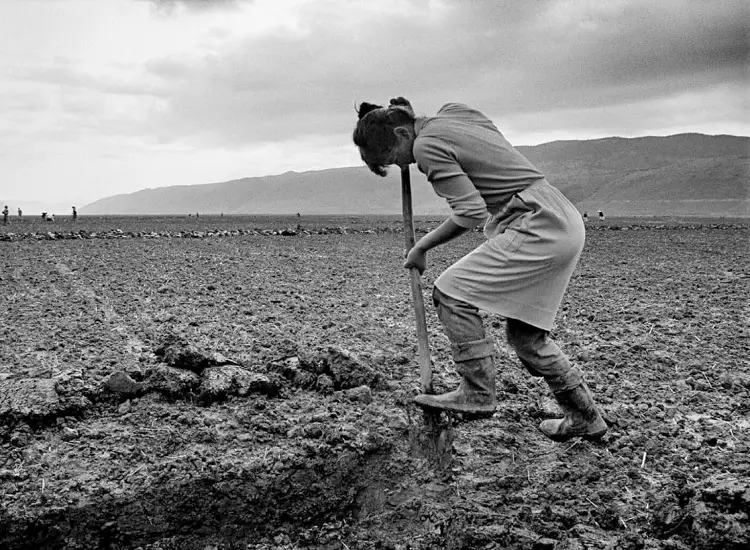
Although I tried to sleep earlier than usual, that night I could not fall asleep. The time when I slept with books and my schoolbag by my head belonged to the past. My parents had to wake me up very early from the mattress-bed to make it to the start time of work. Its duration was tied to sunrise and sunset. Terror!… during that period, the day was about 14-15 hours long. Oh God!… Would I be able to endure full-time slavery? …
If my parents had managed to pull it off, why wouldn’t I, who was young and healthy? Ehhhhhhh…! True, they had endured that exhausting life, but within five years, they had aged as if by fifteen. As I watched them exhausted, hunched over, with blackened faces and chapped lips, I sadly observed them dragging themselves through that torturous Calvary, and my soul would break.
They had transformed so much. We left home before dawn. On our shoulders, we had hung a sack with some food and a bottle of water. To adapt to the working conditions, I had accepted the ridiculous clothing of trousers with a skirt over them. But what I could not accept was placing the headscarf on my head. My mother had adapted to wearing it. She advised me to put it on too, since I should not behave and present myself differently from the others. This could bring me problems.
I stubbornly refused. Before even starting work, I began to rebel. Nervously, I prepared a kind of cap made of cotton fabric, with a cardboard brim. It was so necessary to somewhat protect me from the sun’s rays. Along the way, some villagers greeted us, not without curiosity looking at my cap. Finally, we reached what was considered the center of the brigade. It consisted of a tent covered with straw, and a sort of room built with reeds. A mud mixed with cow dung had served to fill the spaces between them.
In this way, it could be considered plastered. This mini-barn, divided in two, served as an office for the brigade leader and as a warehouse where tools were kept. I managed to make out inside it picks and shovels with crooked handles, thrown haphazardly. The brigade leader, who had arrived there before us, stood in front of his office and waited irritably for all the workers to arrive.
Nevertheless, he was kind enough to welcome me. I noticed that he was very attentive to his appearance, as he wore clean and carefully ironed clothes. Apparently, the four-year period when he had attended secondary school for agronomy had created a different standard in him regarding image and hygiene.
After all, he had lived a few years in the city. Within a few minutes, all the workers arrived. I looked with pity at those undernourished and battered faces, thinking that henceforth this would be the image of my days. From this kind of despairing reflection, I was startled by the loud and nervous voice of the brigade leader. Apparently, he was making an analysis of the previous day’s work, accompanying it with shouts, insults, and threats for those workers who, according to him, had not done their job properly. I was horrified by this kind of communication and was waiting for someone to react, to object, after all, to do something. But in vain. They were all bowed down, waiting for this to end so they could be dispersed to their tasks. As he roared, I noticed that beside him, a short, stocky man, around fifty, approached servilely and took his place.
In a low voice, my mother told me that he was the brigade’s technician, and that this entire outburst by the leader was a product of his spying. It was not at all difficult to read the malicious joy in his colorless eyes, as his fellow villagers were denigrated and insulted. He seemed to me like a moist and disgusting reptile. I had no difficulty identifying him with Uriah Heep, that most accomplished character of Charles Dickens. I had just finished reading his famous novel “David Copperfield.” The first to leave in the direction of the work assigned by the brigade leader were my parents and some older people.
Since they had passed their forties, they worked in the elderly squads. The work processes assigned to them were less strenuous than those carried out by the young people. Having helped my mother in the afternoons, I had already tried some of those tasks. I expressed no surprise. The forty-year-olds of that village looked like seventy-year-olds. The arduous life aged and ruined them prematurely…! / Memorie.al