
By Sadik Bejko
- Reflections on two books by Ibrahim Vasjari
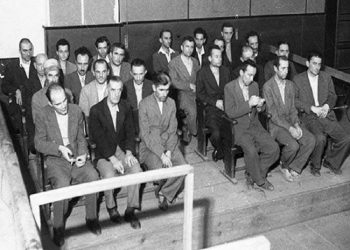
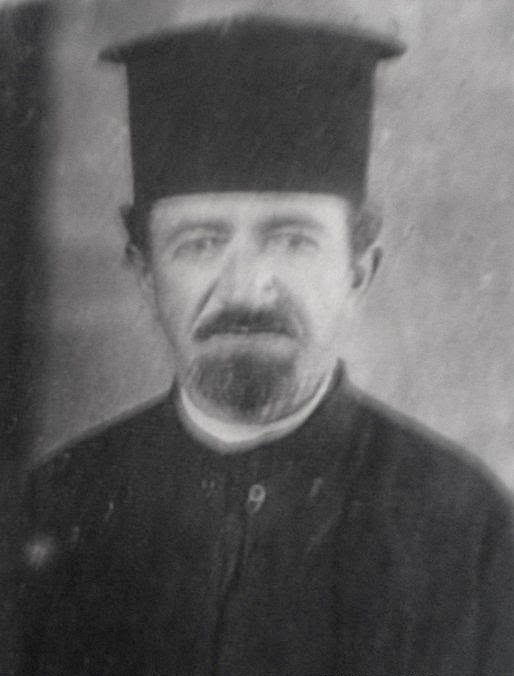
Memorie.al/ “Crystals in Darkness”, Ibrahim Vasjari. We have before us a book that recounts the execution by firing squad of four persons in Gjirokastër in 1948. These are: – Syrja Bej Vasjari, graduated in agricultural engineering in France, leader of a nationalist detachment until 1943. Several partisan commanders of the time testify to his anti-fascist resistance, as does the burning of his house by the fascists. After that year, because the war took on the appearance of a clash between Albanians, Syrja Bej Vasjari disbanded his detachment and returned to private life. – Zenel Shehu, with secondary education (the Commercial School of Vlora), former commissar of a partisan battalion and chairman of the Executive Committee of the Tepelenë district, until 1947, when he was arrested. – Father Gjergj Suli, an Orthodox cleric, and Baba Shefqet Koshtani, a Bektashi cleric.
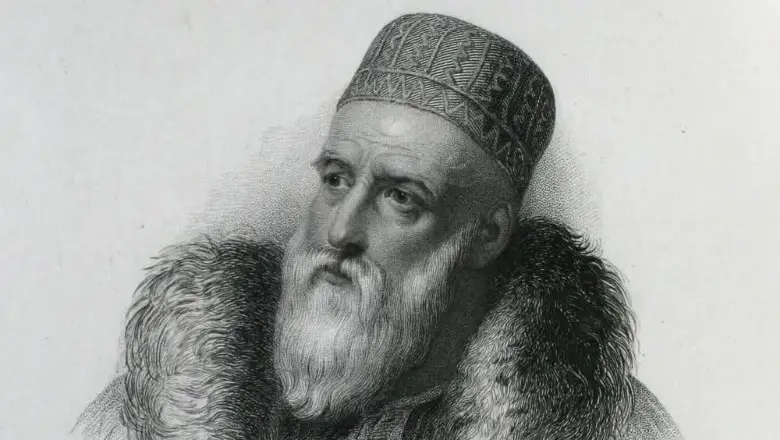
Besides the testimonies, facts and documents on the political and life activity of the four characters of this book, there is also revealed to us a history little or not at all known of the Vasjari family, with a tradition spanning over two hundred years. The most mentioned representatives of the Vasjari hearth are: Ago Vasjari, who from 1870, as a high-ranking officer, entered the service of Ali Pasha Tepelena; Veiz Vasjari, who alongside Tafil Buzi and Çelo Picari, are mentioned as heroes in the songs of historical epic, as leaders of the uprisings of the time of the Tanzimat; Ibrahim Vasjari, representative of Tepelenë in the Albanian League of Prizren, etc.
Following the line of memories and personal impressions, the style at times takes on the features of artistic writing: the grandfather of the book’s author is drawn with the hand of a true prose writer. In its entirety the book has an inseparable artistic sense: in the phrase, in the conception of individual chapters, in the organization of impressions. Such a structuring of the material has made easier the passage from impressions or memories, to the documentation and, further, to the elaboration of arguments on the facts and documents presented.
The sensitivity is heightened also by the fact that this is a book written by a son for his father killed by the communist state, a victim of the class war. It begins, develops and ends as such: a book of the son for the dead father without a grave, dead in dark circumstances and without any justification. At the end one parts with the impression of having read an artistic work. On the other hand, to make clear to us that this is a book about true events, the author at the end of each chapter gives the references from the books or documents on which he has relied. After this presentation in general lines of the book, I will dwell on what the author tells us through it.
Culturologists insist that religion, authority and tradition have been at the foundation of Western civilization. These, religion, authority, tradition, put you in connection (religo) with your past and give you identity as a person, but also beyond a purely personal identity. They create and cement the continuity of cultures. The author of this book has had a connection, a chain of connections with the past, which in 1948 were cut, to be replaced by some others.
His father was placed in the ranks of the “century-old enemies of the people” and was killed. This was the term of the time for all those who had a title of nobility, who had things and wealth inherited from the family. The order of the world and the order of values were changing. To replace the old order, with the new communist values, you had to kill under the term “century-old enemies” all those who had created values until then.
Thus, the characters of this book, victims of the communist class war, were killed for ideology, became a sacrifice in the foundations of a new order that sought at any cost the elimination of the old. They were killed for a guilt that hovered in the air, for guilt beyond them and above them. Fatally. Two clerics were killed by bullet bound hand to hand, a former commissar from a well-known family of clerics that had given everything for the war, and a bey who, more than wealth, (in Tepelenë there have not been classic beys), had the authority of a well-known family tradition of two centuries.
You could say that the representative images of a time were killed, of the “old world”, its symbols. Those who would create a “new world” killed, executed by firing squad the “old”, the historical, religious, customary, traditional Albania. Returning us back to times with wounds, this is a book for memory.
The foundation of the soul is in memory (Saint Augustine).
The nobility of this book is that, started as a book about the father, written by the son, it goes beyond this frame, proving to us that in this country the Father was being killed, (with a capital letter), the creator of life, of tradition, of history. Now everything would start from the beginning. The “new world” was rising on foundations of blood, on the blood of the old. It was rising not only on the cutting of people, but also on the crime of severance, of cutting from a world in its natural, proven continuity.
Blood was being placed in the foundation of the times; the curtain of blood was spread on the dividing border between the two worlds. Today’s generations forget it. But until yesterday the communists were proud when they mentioned blood. It is enough to open the pages of the newspapers or the speeches of the time, to see it. They needed a curtain of blood to separate the epochs and to hide the past. A wall of blood so that you would no longer see, would not penetrate beyond it.
There is something more than this. The accounts were being made for the future. As much blood as possible had to be spilled without end and without cause. A blood account had to be opened that could not be repaid with anything else. In this blood bank, in the taking of heads for disagreement in ideas, disagreement in ideology, in wealth, in rank and authority, the blood of the defeated had to flow without stopping. And the account would remain open. Those who left, gave their blood, you, their descendants, will give for us your blood, but more your life.
You will never have a life of your own. You will live as sub-humans, in sub-human conditions. Thus will you live and all that comes from you. In the wall of blood that separates the worlds, you will be walled in as political corpses, without rights. Your life’s blood has been dried up ever since your father’s veins were cut with a bullet to drain him of blood. This blood account would never cease.
The blood of the martyr, the young blood, the blood of the partisan, the fresh blood of the pioneer, of the youth, the blood of the red soldier of the party. The communists had the idolatry of blood, of the red star with blood. These clichés of slogans with blood were repeated at every feast, at every anniversary of communist victories. Even in the banal morning meetings, when the brigade leaders assigned work places to people. And he singled them out in the most ordinary jobs, the sons of the “enemies” of the class.
They were not from the red blood, from our proletarian, revolutionary blood. Crime, when it does not accept reason, builds myths. The myth of the “enemy” had frozen life. Life, this coagulation of blood, this taboo that, if you touch it, kills it, will pay equally with the blood spilled, had frozen. The myths of the time that were not satisfied … were intoxicated with the blood of the enemy. The dividing curtain of blood had no return. The myths of the world of shadows would turn you into shadows if you touched them.
Homer’s Odyssey, to speak with the shadows in Hades, spilled the fresh blood of a lamb. The warm flow of blood pierced the curtain of the world of shadows and connected the living with the dead. Odysseus with his dead mother. Which is, where to find that slaughtered lamb that with the flow of its blood, descends us into the Hades of impenetrable shadows? The communists, besides the curtain of blood, also raised a curtain of lead to separate us from the enemies, from tradition, so as not to penetrate into the past. A sacrifice equal to a head was needed to pass through these curtains. On the part of Ibrahim Vasjari, what was the sacrifice? What sacrifice awakened his dead, what sacrifice made the shadows alive, so that they have a mouth and speak in this book? Certainly there must be a sacrifice as in every new foundation?
The new political turn after the ’90s allowed the opening to our tragic past. The indelible debt of the author to a missing father, humiliated and after the killing had to be proven. The agony of enduring a life gone under violence and under contempt, the irreparably violated feeling of fatherhood had to be proven. Balzac in Uncle Goriot says: “The fatherland will be destroyed, if fathers are trampled underfoot”. The author takes upon himself to build something that was heavily destroyed in the foundations of the fatherland. To revive the killed and muddied fathers even after death.
Therefore in its most fundamental feeling and meaning this is a Hamletian book. Albania has been called for years a Hamletian land. Ibrahim “revives” the father and the others who hand in hand with him were executed by firing squad in 1948. The debt still remains indelible to the end. The son cannot give a grave to the dead. Those who killed them took care to tear out even their bones, so that no sign or grave for them would remain.
“When the Shadows Fade”, Ibrahim Vasjari
It is courage to make a book of poetry. At any time. Not only now, especially at the age of grandparents. But he succeeded. “When the Shadows Fade”, Tirana 2024, is the newest book of I. Vasjari. The day, when I received the book from him, happened to be Saint George’s Day. A feast that when we were children, our grandmothers filled our hands with wheat cakes, honey cakes, with fresh dairy and flowers on top. The poet Ibrahim Vasjari adorned Saint George’s Day with poetry, adorned his life with this new poetic book.
I have read in manuscript “When the Shadows Fade”. It is a book of the album type with the author’s best creativity. It is a poetic travelogue… there appear the gloom in the shocking flow of the years. The young Ibrahim Vasjari published poetry in the press of the time. But for “bad biography” they cut his verses with hatchets. Still in silence he dreamed of realizing what was interrupted in his youth. After the fall of the dictatorship, he managed to publish several books in prose and poetry. The books bring the wounds lived… our heavy stories, not so tellable orally… even with literature.
But life must be lived, Ibrahim’s books tell us. Even in evil
The book “When the Shadows Fade” in its structure breaks the poetic fractures, the procedures of language and thought in accordance with the breaks of our life through the years. Memory is the barn that feeds the poetry of this book. The memory of a poet is an organ that masterfully sounds and turns the events of life into literature.
I.
Vasjari is a follower of the poetry of verse and classical construction. His masterful verses slide with the smooth brilliance of silk in lyrics of an intimate nature and in meditative ones. His verse is musical, rich with tinklings: “Somewhere around us the field-nymph of Shkreta shrieks” (poem “Nightmare” p. 61). This poem is worthy of the most representative anthologies of our poetry. Like a chilling tableau the character of the poem “Nightmare” wanders with a lantern in hand surrounded by screeching birds through the night of the field-nymph of Shkreta. A nightmare that repeats itself to him through the nights.
Even when the subjects are dramatic, Ibrahim’s poetry knows how to be restrained. At times, between the verses slides a barely visible humor. The book “When the Shadows Fade” has one hundred poems, the poem “Whirlpool of Life” opens the book which further is divided into three cycles with 33 poems each. At the end of the book are included about forty pages of prose from the author’s selected essays and papers. (The author after several months made a new edition of the book. He explains the reasons in a note).
In the first cycle “Youthful Echo” comes poems of a lyrical nature. The cycle begins with the poem “Memories”, further and a poem with the title “Fragments of Life”. This tells us about the poetic material of these poems, about what they are reflections on events or moments of the author’s former life of the early years. The second cycle, “Night Mosaic” comes with a richer thematic composition. There are singled out the poems for Vlora, the ballads with historical theme. In terms of qualitative artistic realization and piercing tragedy, some of the poems with mythological themes are ranked: Polyphemus, The Sorceress Circe, and In Hades.
Sarcastic and dramatic at once, the author alludes to the dehumanization that the man of our environments suffered under the dictatorship: “How long we stayed, I don’t know?! In the immeasurable nothing/ Time snored piggishly like us/ We honored the stick with dry gullet/ And our being with a tail pleased us”. (The Sorceress Circe).
In the last cycle of this book there is a flight of reflections, a fine filtering of thought and feeling. An elevated mental state above the times, above politics, above that chemistry that sometimes conceives sun and sometimes throws hail. A kind of walking on the ceiling above the clouds. This gives the book a temporal direction of timelessness. The author is emaciated in tragedy, in tallandi and violence. He brings us poetry, brings us the light of Saint George, the renewing saint.
After heavy winters, always comes the return anew of the weather. The time of the increase of birds and livestock, the time of abundance with leaves and new grain of the mountains and fertile lands. We are sons of this planet. We submit to its ancient and eternal laws. We live, suffer, rejoice here, on earth. This is a life philosophy. “We said it daily, we yellowed through the night/ Under a piece of moon with a drooping sickle head/ But the toil only the mother-earth knows it,/ the earth where we sprouted, where we threw roots”.
In conversation sometimes with the grandson, sometimes with the dead grandfather, the author will rise above the everyday, above the sorrows and wounds, to a philosophy of the life cycle that follows the flow from the grandfather of old to the grandson of today. On the last page of the book comes the image of an old stork on the bell tower, which, after a hesitation, decides: “I am leaving with the living, to follow life. So that death finds me in flight”. It is the poetry of a life and there are many verses for close people, for friends, as there are also contemptuous poems for the times that bring with them sorrows and injustices never consoled.
Among the saddest realizations of the book is the one with the title “To Father”. The author’s father was executed by firing squad as an “enemy of the people” and remained such an enemy even dead. The son carries the dead and unburied father, confines him in his bosom. The ravens seek the dead and bite the living. The bullets, the cadre chiefs, the black spies pursue the son – one with the father. This suspended living-death of the son with the father within waits the day when the two will sleep in peace. The poet Qazim Shemaj called the poem “To Father” a “black… diamond”./Memorie.al
TO FATHER
“You have no grave…!
You wander deep in death.
Without coffin, without slab, without stone, without ritual.
As if the legends of resurrection called you
On what horse would you mount, how would you come, I wonder?!
You have no grave…
Thus, bloodied with bullets,
I kept you 40 years confined deep in my bosom.
Around me the clouds darkened gloomily as in ballads
And the ravens cawed… What terror!
You have no grave…
And the ravens sought you.
They bit deep into me to find you.
A distant wail came longingly from the ballads
When the ravens ate eyebrows and eyes.
How to bury you?!
I cannot tear you from my chest.
I kept you 40 years confined deep in my bosom.
The cadre files, the wounds, the surveillances we have together.
Until the two of us sleep in peace.”