By Uran Butka
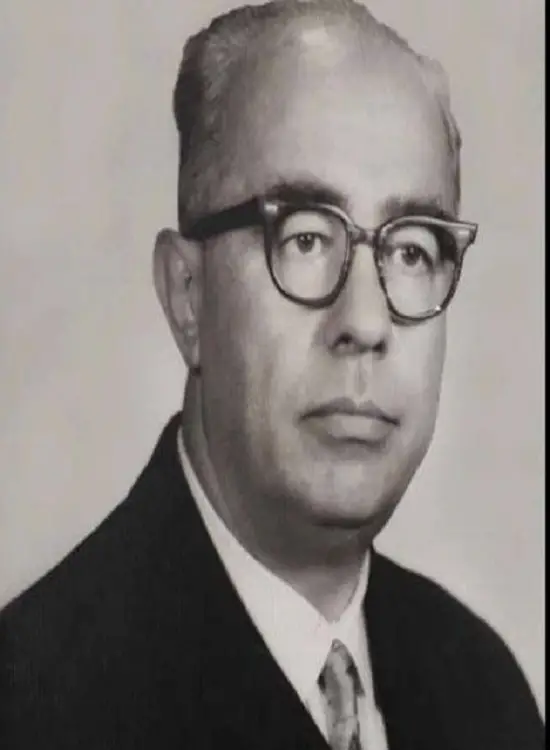
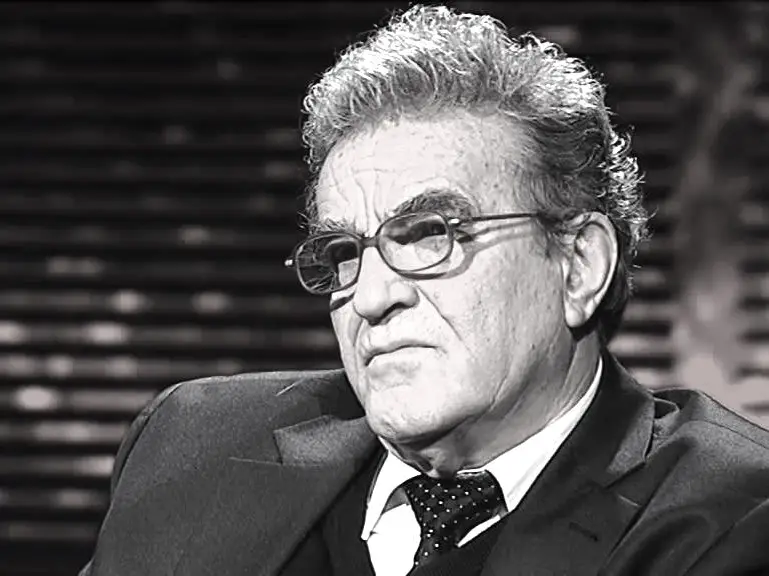
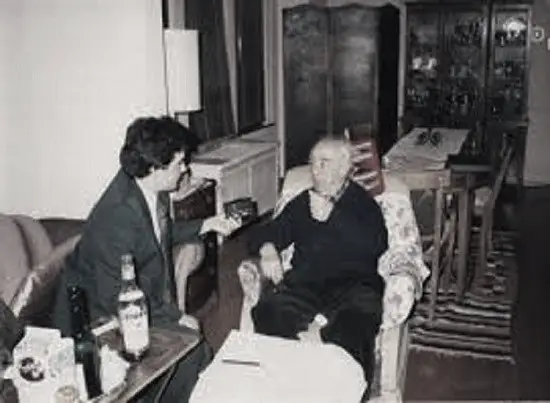
Memorie.al / Four philosophical works by the distinguished Albanian philosopher, Prof. Isuf Luzaj, have just seen the light of publication. Isuf Luzaj was born in Kanina, grew up and was formed in a patriotic and cultured family as well as in the patriotic milieu of the city of Vlora, where he received his first lessons and a sense of beauty; later at the state gymnasium of Shkodra, where he strengthened his literary inclinations; and subsequently pursued his studies at the Sorbonne University in France, where he graduated with Doctorate and Professorship degrees in literature and philosophy with excellent results.
Prof. Isuf Luzaj is a multidimensional phenomenon, interweaving the high school teacher, the nationalist and democratic fighter, the early-hour anti-fascist, the anti-communist and national unity activist, the delegate of ‘Balli Kombëtar’ at the Assembly of Mukje for a free, democratic, and ethnic Albania, an inmate and internee in Ventotene by fascism, exiled and anathematized by the communist dictatorship – where “rivers run red,” as he writes – a political refugee wandering through the world, a philosopher, historian, sociologist, educator, critic, anthropologist, poet, storyteller, and polemicist, with an extraordinary creative output, almost unknown and unpublished.
A co-founder of the Social Democratic Party alongside Musine Kokalari, Skënder Muço, and Selman Riza as a middle, democratic, and liberal path, programmed upon political freedoms and the rule of law. A proponent of the active existentialist school of philosophy in his philosophical works, imbued with the Luzian spirit of rebuilding spiritual powers; a scholar and interpreter of the great philosophers of antiquity, the Renaissance, and modern times up to Nietzsche, Sartre, Camus, Bergson, etc., yet remaining ever true to himself as a philosopher. His scientific, literary, essayistic, and memoiristic works, as well as his distinguished academic contribution at the universities of Argentina and the USA, made him known and honored worldwide. The great writer Borges wrote to him: “I read your diaries and I am glad that a foreign poet has reached academic heights. You were born a poet.”
Fan Noli’s assessment in Boston was heartfelt: “Dear Lab, you will come here as a delegate of philosophy from the University of Buenos Aires; you have Saint George’s Church as your home and I welcome you warmly.” US President Reagan presented him with the “Meritorious Professor of America” award. Only in recent years has democratic Albania decreed him with the high order “Honor of the Nation,” while the Institute for Historical Studies, which I direct, has prepared the publication of Isuf Luzaj’s complete works in 10 volumes. Exiled from his homeland, Isuf Luzaj preserved in his soul and works his love and struggle for the motherland, turning his longing eyes toward it even in his last moments 25 years ago:
“Make me a grave in Kanina.
I want the Shushica nearby,
the hills, the olives, and the castle.
Facing me let there be sea:
Triport, Karaburun, and Sazan.
Alive they did not let me see them,
Dead, perhaps I shall quench my longing.”
The greatest tribute to Isuf Luzaj is the special publication of his four philosophical works by the “Lumo Skendo” Institute for Historical Studies, printed under the care of the well-known publisher Bujar Hudhri – publications that will be followed by his literary, historical, and memoiristic works in six other volumes, a great missing scientific and cultural asset of Albanian culture. We are publishing for the readers some of the philosophical thoughts of Prof. Isuf Luzaj.
ISUF LUZAJ: Philosophical Quotes
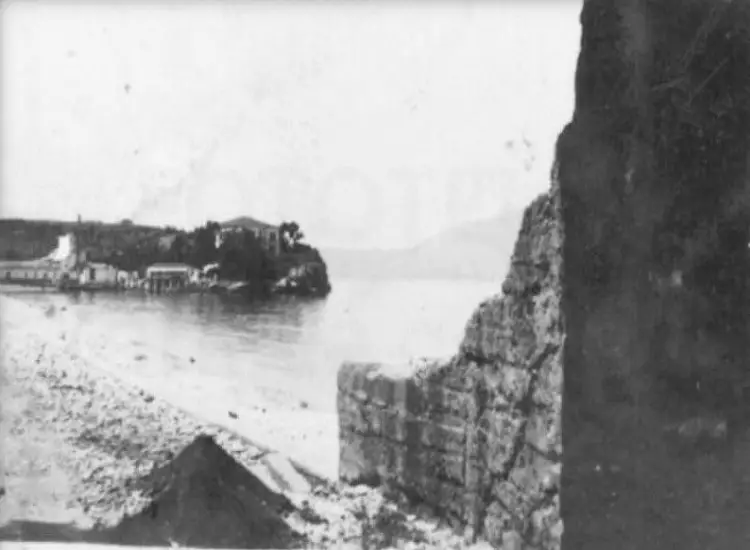
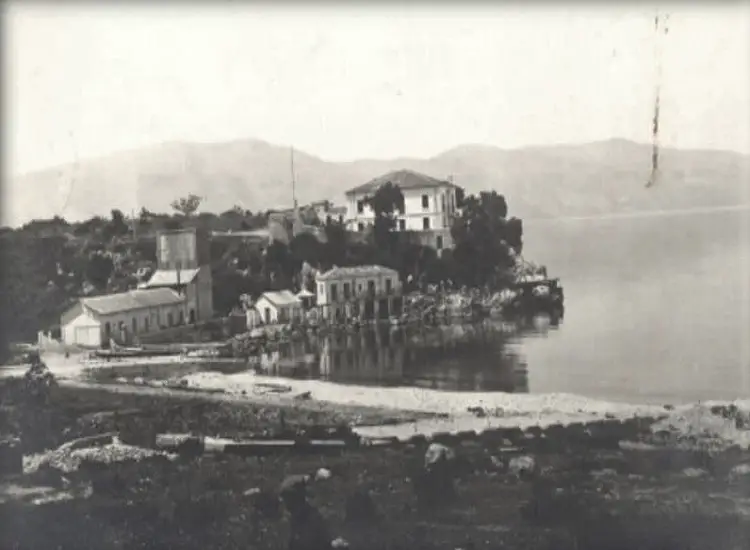
“My birthplace, Kanina: ‘blessed, with its castle reaching the sky / its head in the clouds, its feet by the sea.’”
“As long as we are Albanians, we are all of one seed, we all share one faith, and we are never divided.”
“I have had three loyal, inseparable companions and friends throughout my entire life, from the moment I learned to reason until today, which is the beginning of the end: solitude, boredom, and the curiosity to know. This brought me hundreds of precious friends – books, which I pull from the shelves, converse with without them ever contradicting me, and put back on the shelves, kissing them in a token of gratitude. Against solitude and boredom, I placed my beloved friends, and with their help, I won all of life’s battles. When I saw that I had won the war, I would take pen, ink, and paper to show the outcomes of the consequences through the passages of seasons, from Balsha I to Ismail Qemali.”
“Imprisoned by Zog’s gendarmes during the Zogist regime; admired by Zog’s magistrates during the Italian occupation; imprisoned by Italian police during the occupation; admired by Italy’s magistrates during emigration; sentenced by communists during the fratricidal war; admired by them in the post-war era. My deeply sincere character could never flatter anyone to compromise with conscience.”
“Today at 12:30 at noon, the small steamboat landed us in Ventotene. We climbed the 387-step zigzag path, tied hand in hand, 67 people, guarded by many types of Fascist Security guards. The Albanian prisoners held earlier tried to approach us to offer advice and greetings. Among them, one could distinguish the bald head of Llazar Fundo, the spiky mustache of Faslli Frashëri, the large mouth of Selman Riza, the well-built body of Safet Butka, the shining eyes of Abaz Ermenji, and the thick cane of Leonidha Naçi. A fierce Shkodran voice shouted: ‘Do not honor them by raising your hand (in a Fascist salute), boys!’ It was Dan Hasani, a brave, honest, and generous Shkodran.”
“Whoever desires the greatness of his people must learn that the good path is always the hardest path – the one that fearful hearts consider dangerous. Those who humble their dignity do not deserve to be called free. With buffalo temperaments, herds of livestock are formed that are fit to serve, but never to love. From love come friends of freedom; from hatred come enemies of freedom.”
“First, in service of the truth; then, in service of Albania. In service of Albania through truth, courage, and sacrifice. Only truth corrects when it offends, mends when it hurts, strengthens when it slays, rebuilds when it destroys, and creates a spirit-and-body-healthy nation and society.”
“It has been my nature to live isolated even when surrounded by company. I desire to live in solitude. The word God takes meaning when I am alone. I do not believe Religion is a subject for the intellect, nor for society in conversations and vanities. I believe only when I do not rationalize Religion. I need solitude as much as I need nourishment. Solitude is the time that yields the greatest rewards for my soul, but I do not choose this solitude – it chooses me. For me, to be alone means to be united with the whole world.”
“The greatest damage communism inflicted on our nation is the demoralization – degeneration – pulverization – derangement – poisoning that it caused to the Albanian people in the brain, in the nerves, across all layers of the Freudian subconscious, down to the very gene, yielding for reproduction a series of Albanian generations with all moral values dead.”
“Just as communism, starting as a UTOPIA, created a false theoretical situation and will fail to resist strong spiritual forces that demand freedom, so too will it fall in practice just as it is falling in theory. Their downfall is the condemnation of the cancer worm that harbored its seed within.”
“For the positive creation of a structure of ideas in a scientific or artistic discovery, complete freedom from the centuries-old heritage of that field of thought is required – the equation of which we seek to solve. The poet who creates an imaginary world must be detached from any old writing of that nature; so too the musician, the philosopher, the chemist, the mathematician, and others. The path of freedom has been and remains to this day the only path that leads us where we wish to go; therefore, there is no other path.
Here arises the problem: whether the path of freedom of our thought is truly the path of freedom of logical thought. Is our freedom truly free from other factors of consciousness and life so that it is capable of acting freely, or is it our illusion when we think we are free while remaining slaves to a thousand influential factors – atavistic, real, geographic, climatic, cultural, traditional, etc.?”
“When my mind attaches itself to an idea, I act as a part of my SELF, not as a whole. When I control all perceptions, facts, reasons, and results, their causes and effects, then I act as a WHOLE.”
“Freedom is the oxygen of the soul. We appreciate it only when we lack it. A person, or a society, that does not feel the need for freedom does not deserve the gift of life. Freedom begins in our soul from the moment we leave the water and begin to breathe, and it ends when we breathe no more. No man is free unless he is the master of his actions. The cause of freedom is identified with the fate of humanity.”
“A person must not only be, exist, but even more so, must act.”
“The crisis of European existence has only two solutions: either the downfall of Europe – which has become alienated from its rational understanding of life – falling into spiritual hatred and barbarism, or the rebirth of Europe starting from the spirit of philosophy, thanks to a heroism of reason that definitively overcomes naturalism. The greatest danger for Europe is weariness. Let us fight as ‘good Europeans’ against this danger of dangers, with this courage that is undaunted even by the infinity of struggle, and we shall then see emerging from the great fire of nihilism, from the rolling fire of despair that doubts the West’s vocation toward humanity, from the ashes of great fatigue, the resurrected Phoenix of a new inner life and a new spiritual era – a guarantee for a great and enduring future for humanity: because only the spirit is immortal.”
“When I examine my multidimensional activity: struggle and endeavor in youth, struggle and endeavor through words and manhood, struggle and endeavor through writings in old age, ignorance stands trial in my conscience, accused by thought. This proves that during certain seasons of life, I acted according to my mind and not according to logic, and never according to expediency or the calculus of probability of gain. I then try to adjust the ship’s compass in a shoreless sea, steering by the sunrise and the stars to arrive – as a worker of thought and feeling alike – at the harbor of silence. Yet despite all the mistakes made in youth, I am content, because I was certain and acted in good faith toward others; and those very people brought me disillusionment.”
“When my mind attaches itself to an idea, I act as a part of my SELF, not as a whole. When I control all perceptions, facts, reasons, and results, their causes and effects, then I act as a WHOLE.” (Repeated in source)
“Man’s victory over himself is the noblest triumph.”
“Turn away from all vanities and fight for the truth without bowing before any power.”
“The quality of a leader is not to pay heed to noise, false criticisms, boastings, snitching, doubts, and self-interests.”
“The great architects of universal studies of their systems – from Aristotle, Thomas Aquinas, Augustine the African, to Barth, Dostoevsky, and the French and Italian Catholics of our century on one side, and LEIBNIZ, SPINOZA, SØREN, HEIDEGGER, SARTRE, and others on the other – in their fundamental contradictions appeared uncertain in their theses. The first to fall from the pedestal I had built for him was Bergson, my former master at the Sorbonne. The last to disillusion me was SARTRE; I ask his forgiveness for the friendship he granted me. I suffered greatly spiritually from their contradictions and from the conflicts growing in my mind, because it felt too pretentious to overthrow parts of their theories, and because I felt guilty to sincerely teach those thousands of young souls – who expected the truth from me – what I believed, while I was not in harmony with my own mind and with the stars of thought as to whether I was truly teaching the TRUTH.”
“I do not care what I do with my hands or with my words, but I care deeply about what I do with my feelings. I want to live from the inside out, not from the outside in.”
“The true politician lives poor and dies poor, leaving all the treasures of History in his name. Such were: Ismail Qemali, Qazim Koculi, Mit’hat Frashëri, Fuad Dibra, Lef Nosi, Father Anton Harapi, Ali Këlcyra, Bishop Noli, Faik Konica, and others.”
“With pain, I must be convinced that the fate of my writings depends on no other factor than the path the Albanian people will choose for their 21st-century journey. We ordinary living beings attempt to reason from today’s VISIBLE to tomorrow’s UNSEEN. Herein lays the power of intelligence between the person of today, who uses the powers of the intellect, and the person of past eras, who used muscular power, up to the person of future times, who will rely more on the electromagnetic powers of CALCULATIONS.”
“Communist statesmen, facing political, economic, social, scientific, and artistic bankruptcy – facing the fear of a disillusioned and deceived populace – transform into tyrants (satraps, butchers, bloodthirsty, cynics) and, to save their own skin and that of their clique, create the secret police, which becomes the super-state apparatus; the state shrinks into a bureaucratic machine, the government shrinks into an executive office under the terror of the Tyrant, and he under the terror of himself, resulting in the physical elimination of any thinking person, even if he were his own comrade. The role of the secret police is the destruction of mental and moral values, and of free thought.”
“The misfortune that condemned me to live half a century in exile, unable to serve my people either in language or in thought burned my soul to daily torture. On the other hand, exile reignited my nostalgia for the homeland, made me more feverish for revenge against the irony of blind fate, and spurred me to write this study which I leave as a testament to the generations of the twenty-first century. May God grant that they see the truth crystal clear, assimilate it by clearing their souls of the thorns and brambles of atavism, and enrich it with the thought of the civilization of their time?”
“Heraclitus and Xenophon measure their powers on the basis of the problem of IDENTITY. Diogenes of Apollonia said that only because ATOMS were made of a single substance, for this reason alone could they unite and act together.”
“Pride is a principle of vanity. Having clearly observed its structure over half a century in friends and foes, I dare to dispute SPINOZA, who could not observe the tangled problem in practice. It is a mental state born and developed as a reaction against reality and necessity. It is such a weakness of thought that it harms a person, for it is the opposite of character. The more developed pride is, the greater its errors.
In the person who learns it, it works to make them admire themselves, building a dividing wall against human society; thus calling oneself a superman, refusing to learn, to correct errors, or to listen to what others think. When highly developed, it transforms into a brain disease that, if holding power in its hands, elevates itself into a dictator – which is the cancer of politics. Pride begins with autosuggestion, passing through phases of an absolute degenerative brain process until it ends in an INDECENT and CRIMINAL OBSESSION. Examples are: the lives of dictators of every color.”
“Many times the nature of our morality is damaged when the vice of the will interferes with it. It has become customary to think that virtue is a force of effort, and for this, some people have felt proud of the undertakings they accomplished. I think that virtue is innate in our conceptual essence, and what remains in our hands is to be strong in will and faith toward the ideal, guarding it from the terrible temptations of a materialistic life. Great value was attributed to Caesar and Napoleon, whereas the little good they did was a lucky spark in the essence of their genes; all their other glory is nothing but a series of adventures.”
“Popular opinion is falsehood in the hands of the blindly ambitious. It is the most futile expression of man, the misfortune of those who use it and of those against whom shrewd people use it. The wise person discards popularity – which has many cellars and no windows, causing harm and never benefit to human society. The wise person has no need for zoological alluvions to fill city squares chanting his name. Popularity should follow him, not he follow the popularity of zoological alluvions screaming the name of the demagogue: Piazza Venezia in Rome under Mussolini’s feet; Reichstag Square in Berlin under Hitler’s feet; Imperial Palace Square in Tokyo under Hirohito’s feet; Red Square in Moscow under Stalin’s feet; Beijing Square under Mao Zedong’s feet; People’s Square in Havana…”
“Thus it happens to human society in its journey through darkness and emptiness. For our time and for the inheritances left to us in global cataclysms, it is necessary to clarify the roles played, on one hand, by HISTORICAL MATERIALISM and, on the other hand, by FREUDIAN DOCTRINES. If we analyze their role, we will reach the conclusion that neither was at the height of philosophy, let alone METAPHYSICS. Both turned out to be wrong; therefore, that error became an error of humanity that caused the tragedy of nations.”
“Dictatorships have driven a stack of dogmas into the soul of the Albanian which, the more they rot, the more harm they cause, because they create in our mentality seeds, microbes, bacilli, and viruses that sicken our soul.”
“The quality of a leader is not to pay heed to noise, false criticisms, boastings, snitching, doubts, and self-interests.” (Repeated in source)
“Free is that peopling which manages to transmit the feeling of freedom to future generations? Every other self-proclaimed freedom that fails to fulfill the conditions of a civilization’s mission is a false freedom that, when saturated with abuses, burns out.”
PERSONALITIES ON ISUF LUZAJ
Isuf Luzaj’s work was honored with the high title “Professor of America,” awarded by President Reagan present at the ceremony, where Luzaj is addressed: “I pray to God that what I think is not true. For I think that I have learned more from you than you from me.”
Dear Honored Professor,
“My admired Borges sent me ‘Lumenjtë’ (The Rivers) and kind words about you. Even though I do not agree with your religion and politics, we can be friends as poets. Your poems and short stories powerfully express willpower, love for the homeland, and the exile’s longing. Even though you do not share our language, these will be a revelation for Latin American poets.”
With poetic sympathy,
Pablo Neruda
Professor Isuf Luzaj, Buenos Aires
“Dear Albanian, I read the diaries and I am glad to see that a foreign poet has reached this academic height.
I have always spoken of your intellectual progress, but I would not like academic routine to distance you from the spontaneity of poetic imagination. Always remember what I have told you: You were born a poet and became a teacher of life. This is a good sign showing the traits of our democracy, which tends toward the discovery of moral values. An embrace from your friend and friend of your homeland.”
Jorge Luis Borges
Dear Lab,
“I read in the newspaper that you will come here as a delegate of the University of Buenos Aires to the world convention of philosophy. You have Saint George’s as your home. Many Albanians of your diaspora will come here to welcome you.”
Awaiting you brotherly,
Fan Noli
“I met Isuf Luzaj, professor of literature, and Selman Riza, an able linguist. All of them were concerned about the fate of the war, all the more so in the region of Vlora, where they had their units… With these people I proposed again a democratic coalition. Relying on the Decalogue, I proposed the formation of the Social-Democratic Party. They accepted, and after much debate – mostly between myself and Isuf Luzaj – we drafted the Party’s program and morally recognized Skënder Muço as the leader to carry things forward.”
Musine Kokalari
Dear Comrade,
“If we understood each other well during our conversations on the occasion of our shared imprisonment during the Fier movement; if I have known you and you have known me; if you are as I estimated you to be, you will one day have the honor of taking the primary place in the anti-fascist movement. Your gesture has filled all of us who know you spiritually with admiration. Be assured that you are followed by all the Albanian youth who will soon be set into action under the directives of their leaders…” / Memorie.al
Mustafa Gjinishi