From Gjelosh Nikolla
-“Xhemal Meçi refers to it as manipulation and hides it when he tells these truths”!-
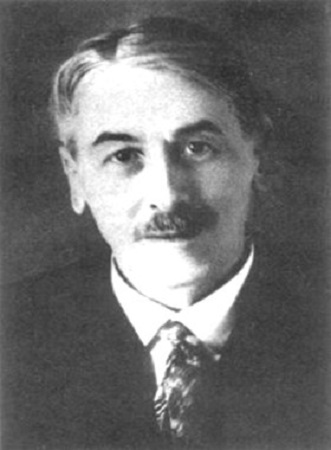
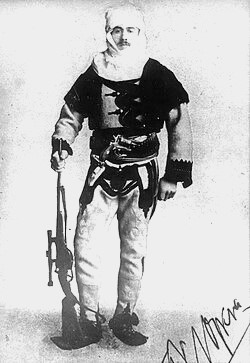
Memorie.al / We are publishing in full, in direct speech, what happened to Dr. Franz Nopcsa in Puka in 1906. Here is what he writes: “In January 1906, since I was traveling without a passport, I was imprisoned in Puka by the local authorities. The situation at first could have been unpleasant, since not far from the spring, together with my two Mirditors, I unexpectedly saw about 30 soldiers with raised weapons, ready to fire, positioned around in a semicircle. A commander (Çaush) came forward to take our weapons from the three of us. In an instant we turned our weapons, first my servant Gjok Prenga, then the other Mirditor, and then I too took aim at the commander, who could not touch us without risking his life. Certainly neither could we.
At first there was a silence, then finally my brave old Gjok Prenga, thought with a bitter laugh that out of thirty weapons one might not hit the target. He told this to the Çaush, and then added that in this case we were indeed dead, but the Çaush too would eat three bullets. He also asked that the soldiers lower their weapons, and then we would do the same. The Çaush accepted the proposal and so we began conversations, through which the situation improved to some extent. He told me that the Kaymakam was asking for me. So I had to go. Meanwhile I thought that if the Kaymakam wanted to meet me, he should have come here, since of the two of us I was the greater gentleman and also positions below and above are equally far.
The Çaush was astonished by this proposal. We debated about this, but then I decided that since the informed Kaymakam had sent his secretary to me, I should go to him, and then when the secretary invited me regarding this, I said: “With pleasure. That the Kaymakam is a courteous man was evident from his first step which he made through his envoy.” The weapon that I had held against the Çaush I emptied provocatively and together with the secretary I went straight to Puka. Our weapons were left to us. In Puka I had to be disarmed, therefore beforehand, at the entrance of the building I voluntarily handed my weapon to one of the soldiers standing there. It is the custom there that at the entrance of a government building even if it is a cane, it must be handed over to the servant, thus avoiding the idea that I had been disarmed.
This again I can note as a diplomatic success. I greeted the Kaymakam briefly but friendly and asked what he wanted. At first he thought of a Turkish euphemism for imprisonment that is, using respectively a gentle arrest, so that even in the absence of documents I had to remain a “friend of the government.” But later he sought to prevent me from notifying my consulate by telegraph about everything that happened. The next day he wanted to send me to Shkodër in a state of arrest, and indeed because such a brilliant achievement as the arrest of a suspicious foreigner would secure him his future career with Abdyl Hamit, while my telegram could destroy this. This created various pauses.
The Kaymakam thought that my calling card was not valid as a document since it contained no personal description from the authorities. Smiling, I completely agreed with him, and then he took one more step further by asking what I had in my pocket. Indirectly this meant that I had to show him what I had in my pockets. I told him that this was not appropriate and I objected strongly, but five minutes later I took out of one pocket a large knife, from another an apple, and said, “look what I have in my pockets,” and began to peel the apple and eat it. The Kaymakam asked me ironically if I was hungry. I answered him “naturally, since it is lunchtime,” and he brought bread and something cooked with eggs, while for my Mirditors nothing.
I gave the bread to the Mirditors and prepared to eat the egg without bread. To give food to one and not to the other was contrary to Albanian hospitality. It did not take long and all the Muslims of Puka came to the municipality to see what was happening, who also reprimanded the Kaymakam. As a result of this intervention, my Mirditors also got food. This for the imprisoned Albanian was again an unprecedented success. Before eating I made the sign of the cross and said a prayer that is said before eating, certainly being faced with an explosion of Muslim fanaticism and an instant killing. The Mirditors followed my example. Since this happened in a municipality and in the presence of the Kaymakam, it truly irritated the Muslims, but it was something that had its weight.
Thus gradually I gained prestige also in personal relations and this thing in the Orient is a great wealth. Naturally, the Kaymakam more than other things I had in my pocket wanted to know about my notebook, about which he guessed what I had in my pocket. The more calmly I took it, the less he believed that words would pass to deeds. Despite my protests, he placed a soldier to check my packages, but then he did not dare and therefore he pondered in his mind how to achieve it indirectly.
An attempt to incite the Muslims of Puka against me as an Austro-Hungarian spy, so that they would attack me even without the express order of the Kaymakam and thus search through my pockets, failed, because while the Kaymakam was drawing the attention of the Muslims, I immediately admitted that I had a notebook with compromising notes and of high treason, but I added that this for me was not all that interested an enemy army, but now it also bore the name of the future Kaymakam of Puka. The Kaymakam took this as a real threat and it seemed clear that he was frightened because I laughed provocatively.
The Muslims noticed that I was making fun of the Kaymakam and laughed at his fear. The situation improved because the laughter continued for at least another quarter of an hour, naturally in my favor. Certainly, from this confusion, first of all I fared well regarding the prestige raised with difficulty, since among the Muslims and even the Kaymakam himself in particular the opinion was created that I must be a great nobleman, but nevertheless I should not rely so much on my prestige and avoid the repetition of such a critical situation, and so I changed tactics. I told the Kaymakam that a body search was a very grave occurrence; therefore it could not be done before witnesses. Through this, first of all, I created the opportunity for all the excessive onlookers to leave the office.
After this success I asked the Kaymakam that if he wished to check my pockets, he should call some soldiers, and finally I declared that a body search was possible only by force. I put one hand provocatively into the pocket of my jacket, as if I wanted to ready the revolver. The Kaymakam noticed my determination, and even a shot, if it were allowed to escape, would not suit his mind, since from such behavior he did not know whether afterward his action would be welcomed in Constantinople, all tricks. Nevertheless he did not want to give up the body search, since this was his first duty. That he would send me the next day to Shkodër was now not even questioned, so he had to find a way to resolve the difficulties of the moment.
As a result of this hesitation, he telegraphed for advice also to the Vali, and indirectly my consulate was also notified of the whole occurrence. Through this, the consul general Karl helped me, and that same night he succeeded in securing my release. The conversations had continued from 11 in the morning until 6 in the evening and only at 6 from Shkodra came the reply by telegraph that I should be released. When this reply came, the Kaymakam became pitiable, and then I said to him: “Do you see, honored friend, how I, through cleverness and an indirect route, managed to notify the Austro-Hungarian consul.” Naturally the Kaymakam changed his behavior toward me as much as that, and since it was now too late for what I had planned at first, that is, to reach from Puka to Qerret, then with all willingness I spent the night as a “true friend” at the Kaymakam of Puka.” / Memorie.al
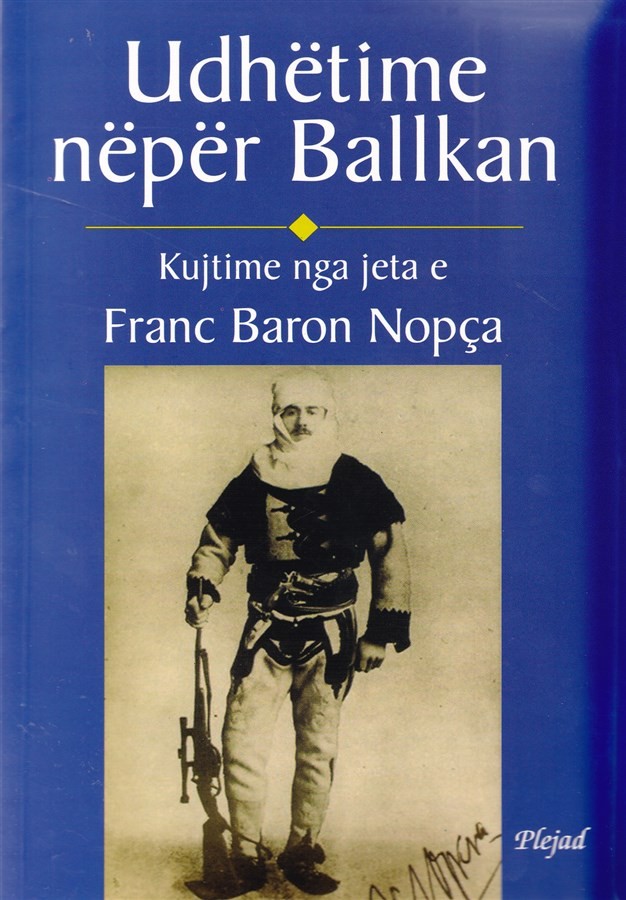
This material was taken from the book: Memoirs from the Life of Franz Baron Nopcsa, “TRAVELS THROUGH THE BALKANS,” pp. 140-143.
Translated by: Ilirjana Angoni.
Publishing House “Plejad,” Tirana 2007