

From DASHNOR KALOÇI
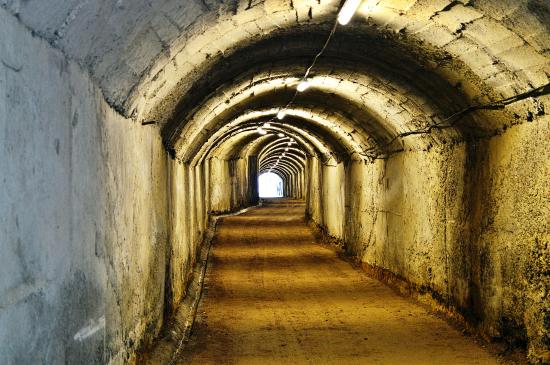
Memorie.al / Starting from the end of the 1960s, after the military aggression undertaken by Leonid Brezhnev’s Soviet Union against Czechoslovakia (where Russian tanks occupied the streets of Prague), and until 1991, the communist regime of Enver Hoxha and his successor, Ramiz Alia, attached a particularly special importance to the fortification and tunneling of the country. In this framework, throughout that entire two-decade period, almost all over the country, from the South to the North, hundreds and thousands of military facilities and fortifications were built, ranging from firing points, otherwise known as bunkers, to tunnels of the most various kinds and types, some of which were considered; “secret facilities.”
All these constructions, known as “military fortification facilities,” were built not only in those border areas, such as in mountains, fields, or the coast, from where, according to the People’s Military Art, an eventual military attack was expected from neighbors, or the Warsaw Pact and NATO (or a coalition of enemy countries), but also inside cities, in front of or behind residential apartment buildings, where the majority of them are still found today. For the construction of these hundreds and thousands of fortification facilities (there is still no exact official figure for their number), besides military units (Engineers/Sappers), and construction enterprises that depended on the Ministry of People’s Defense and the Ministry of Internal Affairs, many civilian construction enterprises were also engaged, almost all over the country, from South to North.
The construction of these fortification facilities, besides costing the state a large part of the budget (impoverishing the state treasury year after year), also had another even greater problem, as in the engineering works for their construction there were hundreds and hundreds of human casualties, mainly soldiers and officers on mandatory military service, but also reservists and civilian employees. Among other things, this fact is also made known from a secret archival document of 1974 located in the Archive of the Ministry of Defense, where only in the time period 1973-1974, about 349 soldiers, who worked on fortification facilities such as tunnels, dugouts, firing points, etc., died or were accidentally injured.
In the following years, the number of accidents at military facilities and of soldiers and officers who lost their lives there is thought to have been many times greater, since from 1975, the construction of fortification facilities gained great momentum and spread throughout the country, a thing which happened after the death sentence (by firing squad) of the Minister of People’s Defense, Beqir Balluku, and his two subordinates, Petrit Dume (Chief of the General Staff) and Hito Çako (Director of the Political Directorate of the Army), who were also accused of having sabotaged the fortification of the country.
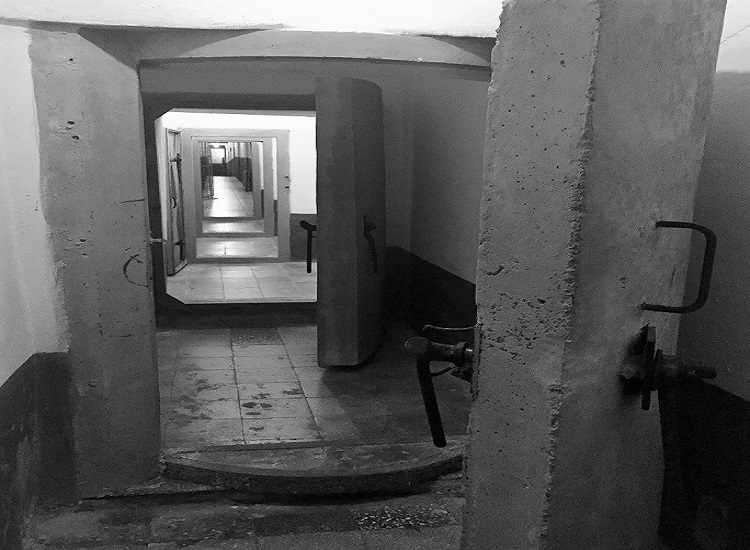
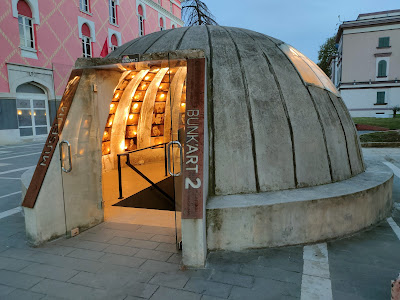
Given this fact, fatal and injury accidents during those two decades that the work on military fortification works continued, where hundreds and hundreds of soldiers, officers, and civilian employees lost their lives, occurred not only in distant districts and places where control or implementation of technical safety rules was less strict, but also in Tirana! Even in its center, in the courtyard of the Ministry of Internal Affairs, in the underground anti-atomic facility, where today the “Bunk’Art 2” Museum is located, which since its inauguration in 2016 has become an object of visits for thousands of domestic and foreign tourists.
One of the accidents with loss of life and injuries to the employees who worked on the construction of this underground facility (Bunk’Art 2) is made known from an archival document with the secret designation (now declassified), extracted from the Archive of the Ministry of Internal Affairs, which bears the date June 18, 1983, where in the operational communiqué of that date, the event of the previous day (17.6.1983) was reported, in which one person lost their life and four others were injured.
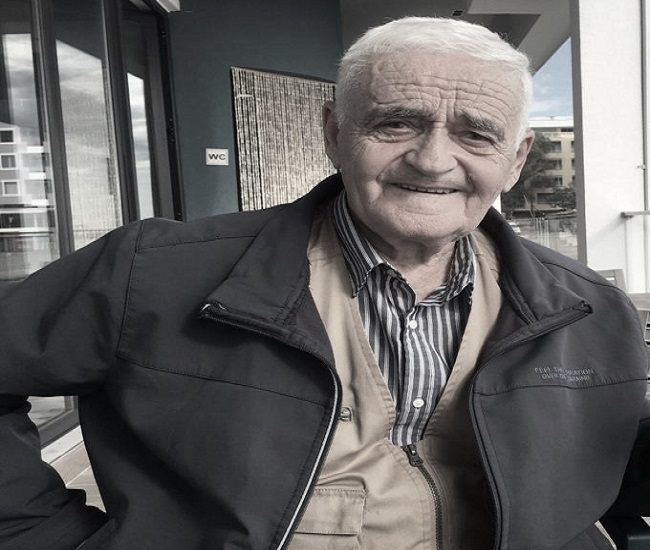
It appears that this event was kept highly secret, since, contacted these days by Memorie.al, the former designer of that facility, 87-year-old Kudret Çollaku (construction engineer), as well as the former officer Halil Rrahmani (personnel of the Special Battalion 324 for the Security of the Ministry of Internal Affairs), who worked there for several years with the soldiers of his company, do not confirm that there had been fatal or injury accidents there at that facility. But for more on this, regarding who the persons were who were injured or lost their lives in that facility, the document in question informs us, which is published for the first time with the corresponding facsimile by Memorie.al.
THE ARCHIVAL DOCUMENT WITH THE OPERATIONAL COMMUNIQUÉ OF THE MINISTRY OF INTERNAL AFFAIRS DATED JUNE 18, 1983, REGARDING THE ACCIDENT IN THE ANTI-ATOMIC UNDERGROUND FACILITY BENEATH THE MINISTRY OF INTERNAL AFFAIRS WHERE 5 WORKERS DIED AND WERE INJURED
SOCIALIST PEOPLE’S REPUBLIC OF ALBANIA SECRET
MINISTRY OF INTERNAL AFFAIRS Copy No.1
GENERAL DEPARTMENT Tirana, 18.VI.1983
OPERATIONAL COMMUNIQUÉ No. 143
TIRANA
On 17.6.1983, Edmond Mustafa Demiraj, age 37, resident of Tirana, engineer at Construction Enterprise No. 10, was detained, for the reason that during the time he was directing the works on the territory of the Ministry of Internal Affairs, as a result of the violation of technical safety rules at work on his part, the earth gave way together with the side wall and the worker Arife Petrit Kurti, age 34, resident of the village of Babrru, was left dead and the workers Foto Hamza Koçi, age 39, Refat Nazif Zeqiri, age 41, Tefik Shaban Ajazi, age 40, residents of the village of Babrru, and Sulltana Ramazan Osmani, age 47, resident of Tirana, were seriously injured, who were admitted to the Military Hospital. / Memorie.al
DEPUTY CHAIRMAN
GJERGJI THANO