By Bashkim Trenova
Part Eight
NAZBOLSHEVISM – LITERATURE AND THE ARTS
FOREWORD
Memorie.al / Historians, political philosophers, intellectuals from different schools or different positions have dedicated thousands and thousands of pages, entire volumes, studies and articles to the comparison between Nazism and Communism. Generally, in their publications and studies, they focus on the police control of society by these dictatorships, the role of the dictatorial state hierarchy and the head of state as suppressors of free thought, the omnipresent role of official propaganda in society, the mass massacres and the network of concentration camps, the activity of the police, the NKVD in the USSR (later the KGB) and the Gestapo in the Third Reich. In his book “Le Passé d’une illusion” (The Past of an Illusion), François Furet notes that Nazism and Communism share the same opposition to liberal democracy and to what they call “capitalist bourgeoisie”. Both ideologies claim to be socialist and use the image of socialism. Communist countries have called themselves “socialist”. “Nazism” is an abbreviation of National Socialism.
Continued from the previous issue
In Soviet literature, in addition to typical themes, typical models of the hero, or the positive hero and the antihero – the negative hero – were also established. The positive hero has several characteristics. He must be vigilant and intelligent. He must love work and be disciplined, simple yet ambitious, pure in spirit, sensitive, while also being capable of hatred. The positive hero shows him to be spontaneous when necessary and with measured thought when needed. Such a specification makes one doubt the sincerity of his actions. As for the negative hero, he is placed in a balancing position: his role as the “bad guy” is weighed on the scales. If he is underestimated, the reader does not take him seriously. If he is given more weight than necessary, he demoralizes the reader.
The heroes of Socialist Realism literature, being stereotyped, are in fact completely alien to the reader, not recognized by him. They aim to “educate” through clichés, both at the level of ideas and style. Such false heroes, outside the normal human world, understandably risk causing only boredom and lack of credibility, and cannot be models to follow.
The first work of socialist realism – that is, where the typical “hero” is also encountered – is considered to be Maxim Gorky’s novel ‘Мать’ (‘Mother’), written even before the self-declaration of this doctrine. The novel describes ordinary life, its organization, various debates in a basic organization of the Russian Social Democratic Labour Party, but also the nature of relationships between comrades, their generally idealized personality.
The novel describes the journey of a working mother in an industrial suburb of pre-revolutionary Russia, whose son Pavel is a revolutionary activist. At first she is frightened by her son’s dangerous ideas, which she does not understand. Then she is captivated by the magic of Pavel’s comrades, full of enthusiasm, ideals and love for humanity. “The people,” says the Mother, “can march unafraid with such friends: they will not fold their arms until the people form a single spirit, until they say with one voice: I am master, I myself will make the laws, the same for all!”
Little by little, she awakens to the injustice suffered by the workers in Tsarist society. When Pavel is arrested for the first time, the mother takes over the clandestine distribution of revolutionary leaflets to the workers of the factory where her son worked. When he is arrested again for organizing a demonstration on May Day, the mother is forced to leave the city, and over time she learns to read, clashes with the police, and spreads banned literature in the countryside. The novel ends with her arrest and transformation into a fiery revolutionary. Gorky’s “Mother” has been adapted for film on several occasions and has also been staged as an opera at the ‘Большой театр’ (‘Bolshoi Theatre’).
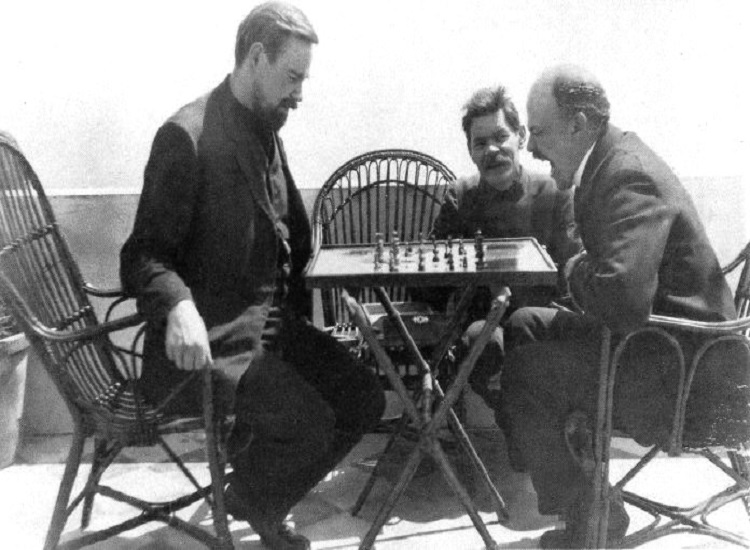
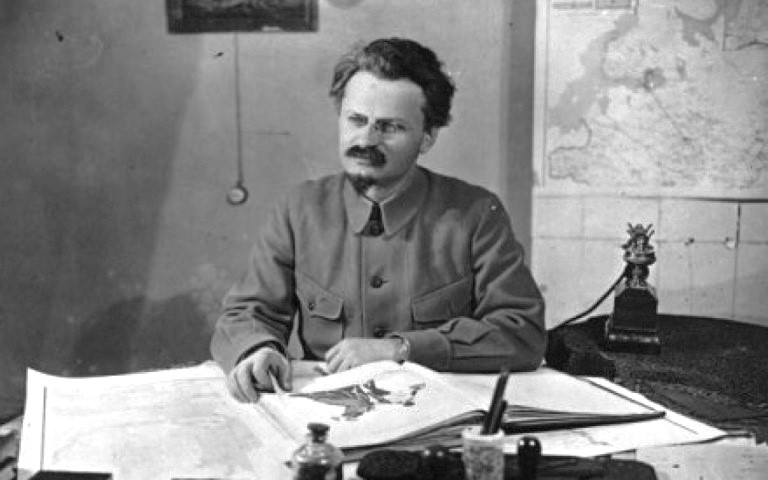
It is interesting to recall that even the pioneer of Socialist Realism was not always liked by the dictatorship, just as he himself did not accept it in certain periods. Almost immediately after the October Revolution, on December 7, 1917, Gorky wrote: “The Bolsheviks have presented the Congress of Soviets with the fait accompli of concentrating power in their own hands, not in the Soviets’…! It is a question of an oligarchy, of the republic of a few people’s commissars.” Even earlier, two weeks after the October Revolution, Gorky had written: “Lenin and Trotsky have no idea about freedom and human rights. They are already corrupted by the polluting poison of power.”
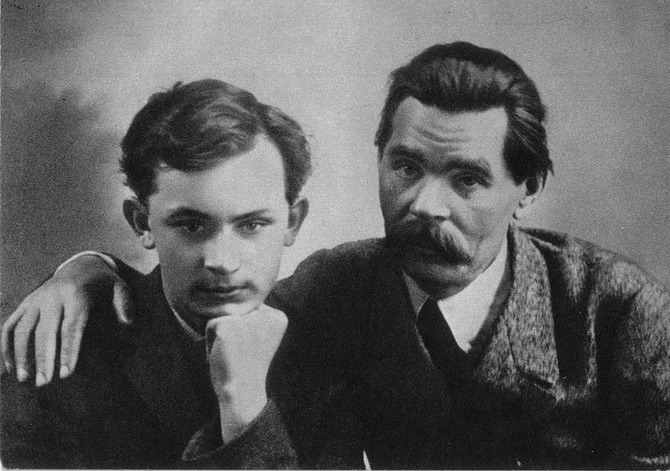
For his part, Lenin wrote: “There is no doubt that Gorky is a man of great artistic talent, who has brought and will bring great benefit to the world proletarian movement. But why does Gorky need to get involved in politics?” The Bolsheviks could not like Gorky’s open and powerful criticisms. They needed only his service, not only through socialist realism literature but also outside literature. Thus, on December 6, 1921, Lenin asked Gorky: “Could you write to Bernard Shaw that he goes to America, and to Wells, who as they say is now in America, that both of them help us collect aid for the starving? It would be good if you wrote to them. Then the starving might get something more. The famine is severe.” Gorky immigrated to Italy for several years. Then he returned to the Soviet Union, where he died on June 18, 1936. His sudden death, as well as that of his son, Maxim Peshkov, nearly a year earlier, has raised suspicions of possible poisoning!
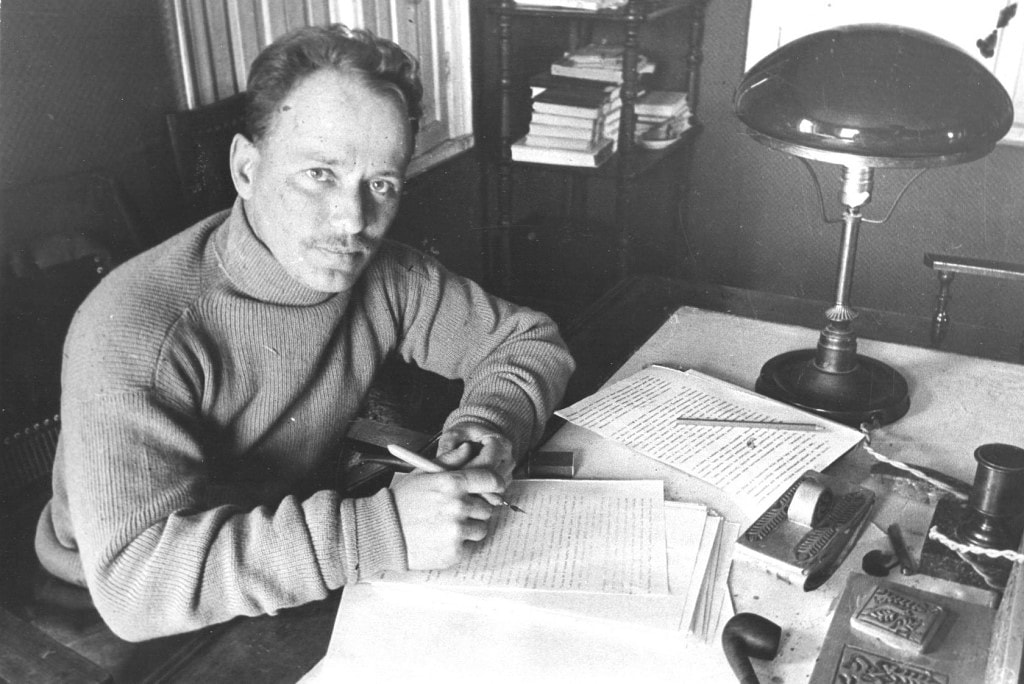
In Soviet Socialist Realist literature, throughout its course, the main themes remain revolution, civil war, Russian patriotism, and socialist construction. One of the world-renowned writers, winner of the Nobel Prize, Mikhail Sholokhov, “plows” this furrow with his pen in the novel ‘Тихий Дон’ (‘and Quiet Flows the Don’). The novel pays attention to the struggle to defend the Revolution, the years of the First World War and the Civil War, fused with the life of the Don Cossacks. The novel has often been compared to Leo Tolstoy’s ‘Война и мир’ (‘War and Peace’). Soviet criticism valued it as a model of Socialist Realist literature.
Sholokhov describes in the novel the tragic consequences of the Revolution and Civil War on the lives of the Don Cossacks, of Cossack families who found themselves hostages of events and historical turns. The events take place mainly in the village of Tatarski, Veshenskaya district, between 1912 and 1922. The novel “And Quiet Flows the Don” centres on the main character, Grigory Melekhov, a young Cossack, tied to his farm, to the quiet life of a farmer, who is mobilized into the Tsarist army during the First World War. The author describes the first battles against the German army and the constant deterioration of the situation. With the October Revolution of 1917 and the withdrawal of Russian troops from the conflict, Melekhov leaves the army and seeks to resume his normal life in the village. This becomes impossible as the Civil War breaks out in Russia.
In the circumstances of this fratricidal war, he changes his position several times, switching from the Reds to the Whites, just as he switches from one woman to another. He witnesses and participates in a series of battles and massacres, ending up on the side of the losers in 1922. At the end of the novel, Grigory throws his rifle and pistol into the river. According to the scheme of Socialist Realism, a waverer cannot be a hero and can have no other end. This novel, at the First Congress of Soviet Proletarian Writers, was valued as a “gift” to the Congress, as a “great victory of proletarian literature”. It was awarded the Stalin Prize in 1941 and the Lenin Prize for literature in 1960. In 1965 it received the Nobel Prize for Literature. By 1980, the novel had been published in 79 million copies, in 974 different editions, and translated into 84 languages. In the Soviet Union it was staged as an opera and made into a feature film.
In Soviet literature, numerous publications have been devoted to the First World War, the Civil War, and especially the Second World War. The victory over Nazism gives a place of honour to this literature. Generally, it follows the same model of stereotyped exaltation of heroism. This literature must instil in the reader’s mind the absolute idea that Russia, with a super-heroic, indisputable effort, is the country that saved the world from Nazism. It often serves more as a patriotic pamphlet than as literary creation. During the years 1941-1945, but also afterwards, there was a general mobilization of Soviet writers and poets dealing with the theme of war, such as Mikhail Sholokhov, Boris Polevoi, Sergei Smirnov, Alexander Fadeyev, Alexei Tolstoy, Konstantin Simonov, Alexander Bek, Vasily Grossman, Boris Pasternak, Anna Akhmatova, Alexander Tvardovsky, etc.
In no case, in no literary work, by any author, is there even a passing mention of the German-Soviet pact, or as it is also known, the Ribbentrop-Molotov pact, signed on August 23, 1939 in Moscow by German Foreign Minister Joachim Ribbentrop and his Soviet counterpart Vyacheslav Molotov, in the presence of Joseph Stalin. Nowhere is it reflected, even incidentally or indirectly, how Hitler’s aggression found the land of the Soviets unprepared, how the Soviet army, on the eve of this aggression, had been decapitated by the dictator’s successive purges.
In 1943-1944, Sholokhov wrote the novel ‘Они сражались за Родину’ (‘they Fought for Their Country’). The author sets the events in July 1942. Facing the German offensive, the 38th Artillery Regiment of the Red Army retreats towards Stalingrad. Exhausted by a thirty-kilometre march, the troops arrive in a small village on the right bank of the Don. The soldiers are ordered to hold the neighbouring height until reinforcements arrive. At dawn, the village finds itself facing a true apocalypse. The steppe is on fire, frightened livestock wander among the tanks, and the exhausted Soviet soldiers receive the order to cross the Don and take position on its other bank. After burying the dead, the wounded are “operated on” without anaesthesia by nurses who must do a backbreaking job for body and nerves.
On the other side of the river, the hungry troops find nothing to eat until the chairman of the kolkhoz supplies them with food, because he understands that they are not deserters but real heroes. Finally, long-awaited reinforcements join the survivors. Despite the hell they have just experienced, they are ready again to confront the enemy and bury him. Perhaps to make his novel more digestible, Sholokhov interweaves two love affairs. Perhaps he does this also to show that the man who is loyal unto death to his homeland, undefeated and victorious over the invading, barbaric enemy, also has his weaknesses – that he is a hero even with these weaknesses. ‘Они сражались за Родину’ is also a Soviet war film made by Sergei Bondarchuk in 1975. The film is an adaptation of the novel of the same name by Mikhail Sholokhov.
Boris Polevoi is another Soviet writer dedicated to the heroics of the Second World War. He is known especially for the novel ‘Повесть о настоящем человеке’ (‘The Story of a Real Man’). The novel tells the story of Alexei, a Soviet fighter pilot. The novel begins with the crash of his plane in the middle of an endless frozen forest, in combat with Nazi Messerschmitt aircraft. The novel’s hero is seriously wounded, both legs broken. Skeletal, delirious with fever and weakened to the point of losing consciousness, he crawls and drags himself to regain the Soviet lines. Thus begins a long physical and psychological journey in which this “real man” wants, at any cost, despite losing both legs, to return to the cockpit and fly again.
To survive, Alexei feeds on pine bark and birch buds, makes tea by boiling blackberry leaves, etc. In this condition, he even kills a bear. Alexei is then found by peasants hiding in the forest to escape Nazi atrocities. The hero of the novel becomes a pilot again, even with both legs amputated. He even manages to dance and, finally, to participate in and pilot a fighter plane in the Battle of Kursk. He is a Soviet man! ‘Повесть о настоящем человеке’ became a compulsory bestseller during the late Stalinist period (early 1950s), when the Russian writer’s sole objective was to mythologize the Soviet man who fought Nazism, to prove that Bolshevism produced extraordinary people whose determination, faith, strength and character, inspired by the communist ideal, could move mountains. The novel is built on an archaic structure, that of the myth of resurrection.
“The Story of a Real Man” was honoured with the Stalin Prize, etc. It has been published 180 times and translated into 49 languages, with a total circulation of 9,745,000 copies. Another novel, ‘Молодая гвардия’ (‘The Young Guard’) by the writer Alexander Fadeyev, published in 1946, is also dedicated to the Second World War. The author is among the most famous Soviet writers of the time, a friend of Stalin, whom he described as “one of the greatest humanists the world has ever seen”. He writes about the resistance of Soviet youth in 1942-1943, during the German occupation of the city of Krasnodon in Ukraine. On its pages we read that, while the Nazis occupied this republic, looting and burning villages, massacring the population without the slightest pretext, in Krasnodon, in the Donets basin, a secret organization called ‘Молодая гвардия’ (The Young Guard) was born.
Its founders were teenagers: Oleg Koshevoy, sixteen years old, the group leader, commissar of the Young Guard; Sergei Tyulenin, seventeen years old; and Ivan Zemnukhov, nineteen years old. Following their example, other young people, girls and boys, engaged in the fight against the occupiers. Despite the terror regime, they managed to install four T.S.P. receiving stations. Every day, these young guards informed the residents with the official communiqués of the Red Army, distributed leaflets containing data on the military situation at the front and called for resistance.
On the anniversary of the October Revolution, the young guards raised red flags on the city roofs. Their strike groups carried out several acts of sabotage, attacked Nazi trucks, set fire to several of their installations. The young people would be captured, brutally tortured by the Gestapo, and executed, standing heroically before death, heads high, defying it as befits the dignity of the young Soviet man, creating the emblematic image of the courageous martyr and sublime sacrifice. ‘Молодая гвардия’ is a kind of patriotic hymn. “Is there another people like ours… who possess such a beautiful soul?” exclaims the guard Lyubov Shevtsova. For his part, the author himself explained that: “Although the heroes of the Young Guard bear real names and surnames, he had not written the true history of the young guard, but a work of art, in which there was also much imagination and even imagined characters.” “The novel,” he concludes, “has this right.”
The novel, although it won the Stalin Prize in 1946 and was adapted for theatre and cinema, was criticized in Pravda in 1947 for not placing enough emphasis on the role of the Party. A new version of the novel was published in 1951. With this edition, Fadeyev strengthened the role of the Communist Party according to the standard of Soviet literary doctrine. ‘Молодая гвардия’ saw 276 editions with a total circulation of 26,143 million copies. A Soviet film in two parts was also made by Sergei Gerasimov in 1948, based on the novel of the same name by Alexander Fadeyev.
Also included in the series of Soviet literature publications dedicated to the Second World War is Sergei Smirnov’s “documentary novel” ‘Таран над Брестом’ (‘Brest Fortress’), published in 1956 and decorated with the Lenin Prize and the “Gold Star of Heroes” medal. The novel has been published in more than 5 million copies. In the Soviet mythology of the time, this fortress was captured by the Germans only after all its defenders had been killed trying to defend it. Documents from the German Staff, captured in later battles, admit as follows: “The Russians in Brest-Litovsk fought with extraordinary stubbornness and determination; they demonstrated excellent infantry training and an excellent will to resist.” In reality, thanks to their numerical superiority and the advantage given by the surprise attack of June 22, 1941, the Germans quickly captured Brest and advanced inland.
In this book, Sergei Smirnov, who spent many years in tireless research for information about the immortal garrison, tells the story of the heroes of the Brest Fortress, who, although completely cut off from their rear forces, stood until their last bullet, until their last breath. The writer, over several years, moving from one track to another, meeting one witness after another, constructs in his novel what happened in the fortress before its fall as well as what happened afterwards to its survivors.
The novel does not escape falsehoods, but nevertheless, Smirnov presents through it elements that had been carefully hidden until then by the communist dictatorship. In fact, some of the fortress’s fighters were imprisoned in Nazi concentration camps, and then they were accused as traitors by their own compatriots and ended up in Soviet camps. Similar fates had been described earlier in Solzhenitsyn’s ‘Один день Ивана Денисовича’ (‘One Day in the Life of Ivan Denisovich’), but Smirnov speaks of soldiers as part of official Soviet mythology.
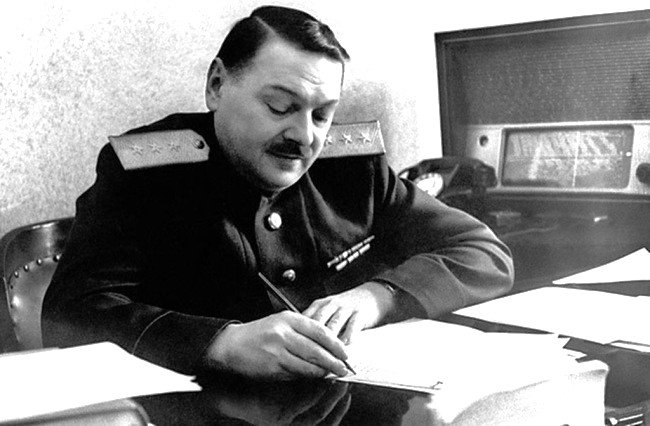
At the First Congress of the Union of Soviet Writers, on August 17, 1934, A. Zhdanov declared: “There is no literature, and there has never been any literature except Soviet literature, that has mobilized workers and the oppressed in the struggle for the final destruction of all exploitation and the yoke of wage slavery. There is no and has never been any literature that bases the themes of its production on the life of the working class and the peasantry and on their struggle for socialism.” In his speech at this congress, Andrei Zhdanov also defined the subjects that Soviet writers must treat and the manner in which these subjects should be realized. According to him, their heroes would be: “active builders of the new life, workers, men and women, kolkhoz members, men and women, Party workers, administrators, engineers, Komsomol members, pioneers.”
For the Bolsheviks, the factory, the plant, the workshops, the kolkhozes, the sovkhozes, even the gulags, are incubators of the “New Man”, who represents a model of precision, freed from selfish feelings and always bound by the duty to sacrifice him for others, even ready to die for the common cause. This is the “battlefield” of the battalion of writers and artists in general. A “true hero of labour”, the miner Alexei Stakhanov, was shown by the Soviet regime as an example to be followed so that all workers would be mobilized for the industrialization of the country. Alexei Stakhanov, on the night of August 30-31, 1935, in six hours, extracted 102 tons of coal in a mine in Donetsk, in Irmino – 14 times more than the norm. Thus the “Stakhanovite movement” was created. Just as Stakhanov was for mining, the footwear industry created its own “hero”, the automobile industry, the textile industry, and so on.
As an adjunct to this propaganda, which aims to hypnotize the reason and conscience of the individual in particular and of the people as a whole, Soviet literature also plays the role assigned to it by the dictatorship and its spokespersons in this field? It creates its own “Stakhanovites”, or Stakhanovite matryoshkas, that flood the novels of well-known and lesser-known writers of the time. This literature is charged with the task of trumpeting a “perfect and productive regime”, a natural consequence of forging human material or the “new man”, of reshaping his world, of treating him as a subject within Bolshevik frameworks and dogmas./ Memorie.al