From Skënder Latifi
– UDB Crimes and the Silence of the Albanian Victims and Witnesses –
Memorie.al / Unfortunately, as so often during the 20th century, Kosovar society manifested forgetfulness and neglect towards events that were already part of the painful history of the 1950s and 1960s, and this was seen especially in the “display of chronic forgetfulness,” and such behavior also irritated the intellectual circles of Kosovo. The lack of concrete accusations, the lack of continuous testimonies, must have irritated the head of the daily “Rilindja” so that in mid-November 1966, he published an article titled “Why Are You Silent?” and this call in the form of a revolt came because of the failure of people to appear before the relevant commissions, where they could speak about their experiences, sufferings, violence, etc., i.e., direct witnesses and experiencers of the serious events during the years 1956–1966; “We had a man who fought against Albania, so that Kosovo would not join it”!
In the following, we will present parts of the reactions that were manifested all over former Yugoslavia after the Brioni Plenum. Among the archived materials are various reactions of citizens listed under the name “Temporary Disposition,” but also of various officials, from the local level up to the high structures of the state.
“In the Autonomous Province of Kosovo, the decisions of the Fourth Plenum had a great echo. Citizens gave strong support to the decisions of the Central Committee and judged the deformations presented in the Security Service. Citizens are particularly outraged by the behavior of Svetislav Stefanović. Citizens have followed the news about the plenum with attention, but it should be noted that during those days the daily press was sold very quickly,” – it says in this document, to which is attached also a statement of a Serbian citizen from Mitrovica.
“We had a man who fought against Albania and so that Kosovo would not join it. Therefore I ask, who will protect us now from Albania?” Meanwhile, a Serb from Leposavić asked; “why was the Fourth Plenum held in Brioni and not in Belgrade,” and similarly a citizen in Ferizaj asked; “are Ranković and Stefanović aware of what mistakes they have made, since those will be reflected in our development…?” Meanwhile, an Albanian citizen in Prishtina asked; “did the plenum’s decisions apply to the Internal Affairs Service as well, or only to the UDB?” etc.
In the broad spectrum of reactions, there are also preserved reactions that are said to be on a “nationalist basis” within the territory of the Socialist Republic of Serbia (including statements of Kosovo Serbs), which were systematized on July 11, 1966. “They had a Serbian politician and they fired him,” is the statement of a Serbian citizen in Mitrovica. “They expelled the Serbs.” – etc.
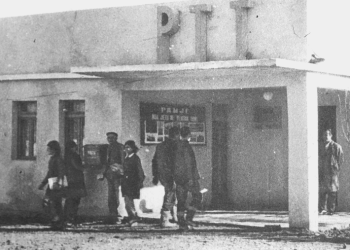
While from the reactions in the then republics of Yugoslavia, we have singled out the reactions in the municipality of Ulcinj, where Albanians raised the concern: “Will the decisions of the Brioni Plenum be implemented to the end? Because until now the UDB had lived at the expense of the citizens?” – moreover, the people of Ulcinj had also used a mocking expression that has found its place among the documented materials, and it says: “Come in, freely enter this space, because the wiretapping devices have not been installed there.”
Also interesting is the reaction from the University of Ljubljana, where among other things it is said that; “it is necessary to have as many qualified graduates as possible, who should not only be experts in the narrow sense and tied only to production machines, but they should be experts of broader knowledge.”
Whereas from the Socialist Republic of Macedonia, reactions had come from Tetovo, where it is especially emphasized; “that the discussants were courageous and their demand is that the purges begin from the level of the Municipal Assembly and continue to the highest levels. Accounts must be settled especially with the individuals of the UDB, since their activity and abuses have influenced the deterioration of relations between Albanians and Macedonians.”
Among the letters sent to the Central Committee of the League of Communists of Yugoslavia and Tito, there is also one from the State Security Service of Prishtina; “We are aware of the bureaucratic deformations that have affected the service in recent years, but we are ready to free ourselves from these troubles,” it says. Meanwhile, in Gostivar, representatives of local (Albanian) structures had demanded; “punishment for Aleksandar Ranković and Svetislav Stefanović.”
International support and threatening letters addressed to Tito
Regarding the events surrounding the Brioni Plenum, the international reactions are of particular interest. Regarding the stance of the US State Department, it was said in reaction that; “The State Department is surprised by the decisions approved at the plenum and there is full conviction that the action of the Central Committee of the League of Communists of Yugoslavia can accelerate economic processes and reforms in Yugoslavia, thereby strengthening the state’s prestige in the world.”
It was then noted by the State Department that; “it is important that the issue was conducted openly and publicly, without the use of extreme means, thus demonstrating that the democratic process has advanced in this country as well.” At the end of this reaction, it was said that; “The State Department is following the situation carefully, especially in terms of relations between nationalities”!
Meanwhile, the reaction from the Soviet Union came from a conversation that the head of state Leonid Brezhnev had at the time with the ambassador of the Yugoslav state in Moscow. “Brezhnev tried to distance himself from the possibility that Ranković had personally referred to and trusted him, and that interstate relations have been and remain good,” says the material briefly titled “Brezhnev.”
“The liquidation of Aleksandar Ranković, whom Catholic bishops have accused because of the persecution of the Catholic Church, is a manifestation of the internal crisis that has engulfed Yugoslav society in all fields of life. The Vatican had earlier received information about the ‘democratic’ currents of Kardelj and the ‘totalitarian’ ones of Ranković. We assess that this settling of accounts in Yugoslavia will not pass without consequences, especially among Serbian circles,” it was written in the Vatican’s reaction regarding the dismissal of Aleksandar Ranković.
However, we must remember that in the materials of the Verification Commission it is established that; “Aleksandar Ranković and his group showed special interest in Yugoslavia’s relations with the countries of the Eastern Bloc, therefore the aim was to achieve complete control over those relations. Thus, most of the positions in Yugoslav diplomatic representations in the countries of the Eastern Bloc were filled by people from the ranks of the State Security Service.
The Counterintelligence Service of the UDB had managed to practically achieve complete control over our foreign policy towards Albania,” it is clearly stated in one of the archived materials. Although among the large amount of materials there is no reaction from official Albania, it is nevertheless included in the rubric of international press articles regarding the events surrounding the Plenum.
“The Albanian press is using the Fourth Plenum to strengthen the campaign against Yugoslavia. The comments about the events are full of insults against the state of Yugoslavia, and in these writings the thesis of proving the correctness of official Albanian assessments in relation to Yugoslavia is present everywhere.”
Also of interest are the letters sent to Josip Broz Tito, which have been characterized as “hostile.” There are 11 of them archived, all anonymous, 8 from Serbia, 1 from Slovenia (but verified not to be written by a citizen of Slovene nationality), 1 from Croatia, and 1 from Paris.
“Ranković and Stefanović have been demoted because they are Serbs, therefore the decisions of the Plenum must be annulled as an ultimatum,” it was written in the anonymous letters, but they generally carry threatening tones and hues, “that Tito has taken the most wrong action so far, because he should not forget that the army and the police are in the hands of the Serbs. Serbia will never agree to this blow,” it was written in them.
The responsible, responsibility, forgetfulness and silence in Kosovo
However, unfortunately as so often during the 20th century, Kosovar society manifested forgetfulness and neglect towards events that were already part of the painful history of the 1950s and 1960s, and this was seen especially in the “display of chronic forgetfulness,” and such behavior also irritated the intellectual circles of Kosovo.
The lack of concrete accusations, the lack of continuous testimonies, must have irritated the head of the daily “Rilindja” so that in mid-November 1966, he published an article titled “Why Are You Silent?” and this call in the form of a revolt came because of the failure of people to appear before the relevant commissions where they could speak about their experiences, sufferings, violence, etc., i.e., direct witnesses and experiencers of the serious events during the years 1956–1966.
Undoubtedly, such a passive attitude delighted the very ideators of the “Arms Collection Action” themselves. Thus, according to the testimony of Vojin Lukić himself, the number of responsible persons of the Internal Service who were punished was very small, and even this arch-criminal complained that even those few officials who were sentenced did not bear any guilt!
Among the punished officials were: the chief of the Secretariat of Internal Affairs in Peja – Vujo Vojvodić, who was sentenced to five years in prison on the accusation that he had lured several Albanians who were killed by security forces; then the multi-year chief of the Internal Affairs Service in Gjakova and Mitrovica, Jovo Bajat, who was sentenced to only six months imprisonment, even though he was accused of killing three Albanians; the chief of the State Security Service in Gjakova, Mirko Ilić, was held in prison for only two months because he killed Rexhë Dervishaj; also with two months in prison was sentenced militia captain Vlado Dašić, even though he was accused of killing two Albanians; while the worker (inspector) of the State Security Service in Peja, Mile Vujović, was sentenced to two months in prison for “forcibly obliging” an Albanian citizen to confess to an act!
The chief of the Internal Affairs station in Peja, Mile Kostić, and the militia inspector also in Peja, Golub Dančić, were dismissed from work. Although the Executive Council of the Assembly of the Province of Kosovo had formed the Commission for the Investigation of Deformations and Abuses in the State Security Service in Kosovo at the end of September, commissions were also later established at the level of seven centers: in Prishtina, Mitrovica, Peja, Gjakova, Prizren, Ferizaj, and Gjilan. However, based on the reports, the testimonies are very few. This can be seen from the report of November 3, 1966, when the Provincial Commission handed it over to the President of the Assembly of Kosovo.
It was verified that 885 complaints or accusations had reached the commission. Of these, 814 were with name and surname, while 71 were anonymous. So, the call “Why Are You Silent?” of the daily “Rilindja” was also a call of revolt, because it was impossible that during ten years or more of the exercise of terror over Albanians throughout Kosovo, when even the implementer of this terror, Aleksandar Ranković, as well as his collaborators, testified that 26,000 weapons had been collected in Kosovo, the number of complaints did not exceed 1000! Thus, the majority of complaints – accusations were raised in Skenderaj 164, in Gjakova 114, Prishtina 112, Prizren 50, and Peja 44.
Whereas it should be remembered that in Peja, the UDB had experimented with the citizens of Peja! Therefore, and in this spirit of “silence” and somewhat of fear of Serbia’s counter-reaction against Tito himself, on December 9, 1966, after reading the report of the State Commission on the “Conspiratorial Faction of the Ranković Group” and after establishing “the unconstitutional activity of this faction, the abuses, nationalism, and anti-self-government political activity,” by decision of Josip Broz Tito, Aleksandar Ranković was abolished, meaning he was released from further prosecution./ Memorie.al
Ulcinj, 1957
Tetovo, 1960