
From Visar Zhiti
Part Six
Memory Plates and Sacks…!
Continued from the previous issue
– The Case of the Writer Martin Camaj –
– …he has been in prison, – the poet Pano Taçi told me, mentioning him in passing…!
– Really?
– He was sentenced after the Postrriba Uprising and they released him quickly as he was very young, and he fled at first.
– I believe it. Anyway, even if it’s a case of homonymy… In every poet you find his own prison, the other’s prison is…
– To be or not to be?
– We are in prison…!
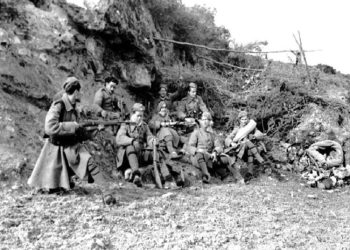
Meanwhile, the researcher Kastriot Dervishi, competent in the Archive of the Ministry of Internal Affairs, of which he has also been director, has brought out documents that reveal that Martin Camaj’s arrest at the age of 23 and his escape immediately afterwards are linked to a youth organization in Shkodra against the regime and to a group escape in the years 1947-1948.
The escapees outside Albania would do much, much more for Albanology and the Europeanization of this science, for non-politicized linguistics, for dialects, at a time when the Albanian language was being put under the bit like a torture instrument, being frozen and standardized; the victors would even create by standardizing their own language, that of the dictatorship. Albanian culture and letters were put at the service of the new system. And writers and artists had to be of the party. Otherwise, de-writerization or prison awaited them. Outside Albania, the culture and pluralism of thought of the 1930s seemed to continue more naturally; the connection of letters was preserved, without knowing whether there was or was not that achievement…
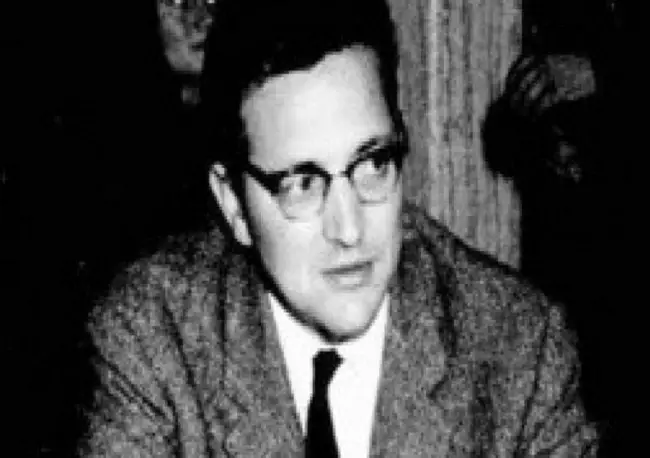
Martin Camaj
(1925 – 1992)
He was born in Dukagjin, where he learned to read, write, and do mathematics autodidactically, and his godfather, Fr. David Pepa OFM, intervened so that he could continue his studies in Shkodra. At age 10, he entered the Jesuit College. He successfully completed both schooling and tuberculosis at the same time. He opened a school in Prekal, where he would also be the teacher; meanwhile, he is also known as a participant in the resistance against the communist partisans. The victors would persecute him. To escape them, he was forced to flee to Yugoslavia in 1948, together with 35 others. He would never see his family again, while one of his brothers was arrested and would serve 30 years in prison in Albania.
Martini works as a teacher in Peja and Tuz, and in 1950 he goes to Belgrade to study Romance Philology. He marries the Serbian woman Nina Bogdanović, both in the Orthodox Church and the Catholic one.
He publishes two poetry books in Kosovo, A Flute in the Mountains and The Song of the Heather, in 1953 and 1954. He completes his postgraduate studies in Albanology in Sarajevo and defends his doctorate on “The Language of Gjon Buzuku”. And he leaves for Italy. With the support of Ernest Koliqi and Fr. Zef Valentini, he continues his studies in Rome for ‘Italian Literature’ and collaborates with the Institute of Albanian Studies that they directed. He attends lectures also by the famous poet Giuseppe Ungaretti, by whom he would be greatly influenced according to critics of his poetry, full of symbols and metaphors from our North. Also in Rome: he publishes the novel Diella in 1958.
He defends another doctorate here, on our Missal, which he publishes in Koliqi’s Shejzat: “Il Messale di Gjon Buzuku. Contributi linguistico allo studio della genesi”. He works as a lecturer at the “La Sapienza” university, meets emigrant poets from other countries, becomes a PEN member, until he leaves in 1960 for Germany. In Munich, he connects with the Ludwig-Maximilian University, obtains another academic degree, etc., and the right to teach introductory courses in the Albanian language. His wife, Nina, after teaching Russian at the “Bocconi” University in Milan, worked in Munich as a teacher and librarian, and then entered the Third Franciscan Order and as Sister Elisabeta returned to Milan.
In 1969, Martin Camaj marries the German woman Erika. Until 1990, he works as a Professor of Albanology; as a writer, he dedicates himself more to prose. He devotes himself to a long novel, parts of which, Water, Fire and Blood, he publishes in 1978 under the title Rrathë (Circles). The book with five stories Shkondullima (The Dazzling) is published in 1981. Dranja – madrigals in prose, where through pain he discovers the collective identity through changes, is, in my opinion, also a Kafkaesque monologue. In the year I was released from prison, 1987, his last novel Karpa is published in Rome, a dystopia, whose events take place in the future, in the year 2238, far away…!
In New York, in 1990, an anthology of Camaj’s poetry in English is published, Selected Poetry, and a year later in Munich & New York, Palimpsest. Such is Camaj’s entire oeuvre. Upon being released from his duties, Martin Camaj goes to live in Lenggries, a place that reminded him of his homeland. He dies in March 1992 in Munich.
In his homeland, in Temal, according to ancient rites, the “men’s lament” began for the son who could not return.
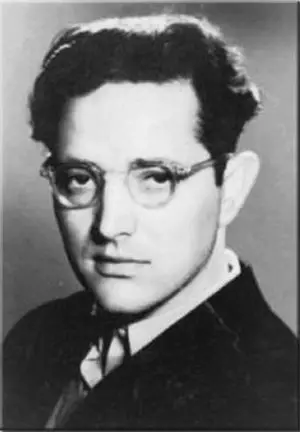
Fr. Daniel Gjeçaj
(1913 – 2002)
In that “Band of insurgents against communism”, among those 36 people fleeing to Yugoslavia in 1948, together with the writer Martin Camaj, would also be Fr. Daniel Gjeçaj.
“The professor – outlaw; the Friar – insurgent.” They were fleeing to escape prison, executions. On the difficult and dangerous path, ‘they needed a spiritual father. I would have to say Mass in caves, lead the rosary in the forests…’, recalls Fr. Daniel.
…he was from the mountains of Theth and had come down to Shkodra to enter the Franciscan College. He continues at the “Illyricum” High School. In 1932, he puts on the habit and is sent to study in Italy, in Siena, at the convent of “San Bernardino”. He is ordained a priest, they send him to Germany; after the first academic year, he returns to serve his homeland. He is appointed director of the Franciscan Library, while also pursuing studies in biological sciences in Italy.
With the end of the Second World War, when the victors close the religious institutions in Shkodra, he goes as a parish priest to Plan of Dukagjin.
Having fled, he works near Podgorica as an assistant to a German engineer, a prisoner of war, then as a village teacher in Presheva.
With the help of Ernest Koliqi, he leaves for Italy. The “Free Albania” committee elects him head of culture, and he throws himself into publishing work. He starts with Fishta’s epic. The Highland Lute and the novel of another Franciscan, Father Anton Harapi, Andrra e Pretashit (Pretashi’s Dream), both come out in 1959. He collaborates with the magazine Shejzat, where he publishes his memoirs, studies, monographs, etc.; he also used another literary name: Pal Duka-Gjini. He often spoke on Vatican Radio in Albanian. He organized conferences “for the freedom of Albania” even in the USA.
He translates the Psalms, the entire Holy Scripture, etc. He goes to work at the Holy See as a representative of Albanian Catholics in exile. Meanwhile, he continues his research, collecting manuscripts, documents about Albania, in collaboration also with other Albanian friars, especially with Prof. Luigj Marlaskaj in Bari and Dr. Paulin Markgjonaj in Vienna. Fr. Daniel Gjeçaj decides to rest. In the second year of the new millennium, from Rome he sets off for the Father in Heaven. All that work of national value is given to the new Franciscan Library in Gjuhadoll…!
Fr. Luigj Marlekaj
(1906 – 2003)
I want to remember him too…!
I met him in the city of Bari, in Italy, at the Convent of St. Anthony, where he lived until he closed his eyes forever. Small, very hunched, as if the earth was pulling him down, clean to the point of radiance, smiling, because his compatriots from the other shore, from this new other time, were coming to him; there over the desk he would ask them to bring him some of his publications, he would sign with his trembling hand…!
Linguist, historian, academician, doctor of letters. He had earned his degree at the University of Bologna, when he was studying modern literature. “La grafica Albanese attraverso scrittori del periodo 1462-1908” had been his laurea. He had graduated in theology in Arezzo. He was a student of the Franciscan College of Shkodra and of the “Illyricum” High School. From there he became editor-in-chief of the magazine Zani i Shna Ndout (The Voice of St. Anthony). He translates into Albanian the work Zemra n’udhëtim (Heart on a Journey) by the writer Milly Dandolo.
Just as he had dedicated himself to Christ, so too he dedicated himself to the Albanian language, to Albanian culture… they too seemed crucified to him. 500 years of Ottoman occupation… and now the worst occupation, by one’s own self; the Homeland had closed its door to him. He goes to Rome to “Propaganda Fide” and brings out manuscripts from the 16th-17th centuries. 400 years after Gjon Buzuku’s Missal, in 1955, Fr. Luigji wins the right to hold lectures on the Albanian language in all the universities of Italy. He publishes studies of various kinds, on Skanderbeg and the Arbëreshë, on Zef Sciró, etc., etc., and prepares for publication in Albanian and Italian Fishta’s work Jerina ose Mbretëresha e luleve (Jerina or the Queen of Flowers). He collaborated with Shejzat in Rome and when Hylli i Dritës (The Star of Light) reopened in 1993 in Shkodra, he returns with his “redeeming spirit”.
I remember when they brought him to Rome, even more hunched, almost bent double, as if he wanted to read the soil of our embassy, where we had invited him to receive the “Naim Frashëri” decoration, awarded by the President of the Republic. I was glad because I had proposed him, as well as all the heads of Albanology departments in Italy, Arbëreshë activists, etc.
Later, in that festive mess, among the many guests with glasses of wine in their hands, my son, about 3 years old then, would escape from his mother and very much enjoyed taking Fr. Luigji’s beautiful cane and walking around with it. The Father smiled…! I don’t know why I recalled the canes of Fr. Gjeçovi, of Fishta; I had seen in albums that Lasgushi and Çabej also walked with canes in Vienna, when they were students, etc., etc…! And I seemed to want to take such a cane and knock on the national memory, to show what we had lost…
DISAPPOINTMENTS AND PUNISHMENTS, RESISTANCE TO THE OCCUPATION BY ONESELF
…but the battery of weapons was much, much stronger, mixed with the noises of the work for building socialism in Albania. It continued as it had started, with vigor and great efforts, with violence and class struggle, with nationalizations, with more hatred than goodwill, with disappointments and plenums of the Central Committee, with paranoia, with constructions and with prisons, with spiritual deterioration and with the destruction of traditions, of the economy, of faith, with the party at the head and Enver Hoxha at the forefront.
The collective fall into the abyss was happening. Just as the philosopher and theoretician of totalitarianism, the German-American lady of Jewish origin, Hannah Arendt, explains: People persistently opposed any “socialization of the means of production”, but without awareness they were helping and supporting the most dangerous socialization, that of the human being. But in Albania, the people could not oppose anything. And again according to Hannah Arendt:
The issue is not whether we are cold-blooded enough to think the unthinkable, but that we do not think at all. The Party thought. You were not allowed to think. Now they were in a time where they even believed their own lies. They wanted to create the New Man. They had the virus. They themselves were infected. Its pandemic had conquered half of Europe, Asia, Africa, and across the ocean to America…!
After the break with Yugoslavia, then also with the largest communist state, the Soviet Union, and finally with the other state with the largest population in the world, China, always for political and principled reasons, for Marxist-Leninist doctrine, but which in reality were the strategy and tactics of the dictator and his dictatorship to rule as long as possible, forever, the country closed in on itself, they closed it in even more, almost completely, so much so that it seemed with empty horizons like walls with paintings removed, forbidden, while the author was sought to be captured and punished.
Anxiety everywhere…!
TWO CULTURES, the ideological epidemic in between…!
A whole as an approach and as a caution, historians and scholars of cultures, criticism and thought about the arts and literature, about aesthetics, analysts, the artists and writers themselves, examining their subject matter, culture in general, its divisions and phenomena, particular eras, rises and falls, births and disappearances and what remains forever, methods used and abused, schools and anti-schools, groupings and divisions and conflicts, mass and elitist literature, styles and authors, works of epidemics, paradigms, biographies, even of books, even of readers, etc., criticism of criticisms, idea against ideas, art for art’s sake and against art, an endless shearing, naming of right and wrong phenomena, found and not found, criticizable and prohibitable, with influence, without influence, reasons for treatment and explanations, etc., etc., where we were and were not, entered and exited according to the party’s teachings.
…for example, Dadaism comes to mind, a cultural movement whose name meant nothing. Dada… mother in many languages… ‘Dad’ is also used among us, yes-yes in Russian… What about the cursed poets? Socialist realism? Critical realism, magical realism, anti-realism, renaissance, literature of the lost generation, futurism, interwar literature, the war between two literatures, decadent, pure, dirty, verism, distortion of reality, the accusation with which they would condemn you: “ism”, you have isms in your head, which meant you were infected with the enemy’s virus, sick, People’s Artist, Merited Master, the greatest of the living, of all time, the iceberg principle, ‘Nobel’, plagiarism, Gothic style, rococo, enemy, yes, yes, enemy writer, imprisoned by the Party, to be deprived of the right to publish, metaphors, front-line trenches, teeth…?!
The impulses for such convoluted examinations, from the most grotesque to the serious and scientific, are various; from the whole one may seek to go to the part and the particular or the opposite; from the partial and specific and phenomenon one seeks to go out to the complete and the total; they make unions and weddings as a consequence and as a surprise, and they call upon categories outside categories, as in literature, which also operates with non-literature, with dramas off the stage.
In my opinion, Lenin’s theory of the two cultures in bourgeois, capitalist society is untrue, that is, it cannot be persuasive, it is tendentious, epidemic; meanwhile, it seems more accurate and remains more than true for socialist society, where the ideological pandemic had fallen, because there, alongside the official, imposing culture, another culture was born and developed, not of the party, not state, not official, evasive, even dissident in countries with more freedom, even oppositional; while in countries without freedom, it would be secret and unknown, skeletal underground, ghost above ground.
Could it be that there was some kind of covered pantheon? That worship had to be stopped. As a consequence, we may dare to reason, extracting a truth from the Leninist error: there must be two literatures also among us. Was it possible? That there was a literature of socialism, state, official, led by the Party in its service, imposed according to the method of socialist realism, with the 5 Zhdanov points, with its writers, with their works and their praises, this is known and recognized worldwide. Let us look at it first. An approach as a young writer. Memorie.al
To be continued in the next issue