From Bashkim Trenova
Part Seven
NAZIBOLSHEVISM – LITERATURE AND THE ARTS
PREFACE
Memorie.al / Historians, political philosophers, intellectuals from various schools or different positions have dedicated thousands upon thousands of pages, entire volumes, studies, and articles to the comparison between Nazism and Communism. Generally, in their publications and studies, they focus on the police control of society by these dictatorships, on the role of the dictatorial state hierarchy and the head of state as stiflers of free thought, on the omnipresent role of official propaganda in society, on mass massacres and the network of concentration camps, on the activities of the police, the NKVD in the USSR (later the KGB) and the Gestapo in the Third Reich. In his book “Le Passé d’une illusion” (The Past of an Illusion), François Furet notes that Nazism and Communism share the same opposition to liberal democracy and what they call “capitalist bourgeoisie.” Both ideologies claim to be socialist and use the image of socialism. Communist countries called themselves “socialist.” “Nazism” is a shortening of National Socialism.
Continued from the previous issue
It can be said that from 1917 to 1932, a system was established in Bolshevik Russia that turned literature into a state institution, an obedient instrument of the Bolshevik dictatorship. The Bolshevik leader, V. I. Lenin, gives instructions for the publication in the press of even an article, note, or feuilleton about one or another personality of Russian literature. It is he who, on May 6, 1921, demands to also control the commission of scientists “working on the short dictionary of the contemporary Russian language (from Pushkin to Gorky)…! Get informed and write to me accurately. Communist greetings – Lenin.” It is again Vladimir Ilyich Lenin who decides what should be published by publishing houses, how it should be published, in what format, in how many copies. He does not hesitate to order the imprisonment of those who do not act according to his demands.
On October 24, 1919, he writes to V. V. Vorovsky – State Publishing House: “After reading the brochure ‘The Third International of March 6-7, 1919,’ published by the State Publishing House, Moscow, 1919 (price 9 rubles), page 99, I make you a serious reprimand for this publication and demand that all members of the collegium of the State Publishing House read this letter and take serious measures to ensure that such an ugly thing does not happen again. The brochure is very poorly published. It is a complete mess…! I demand that these defects be corrected…!
(The guilty should be imprisoned and forced to paste the necessary parts into all printed copies). Notify me: How many copies were printed? How many have been distributed? Make a good reprint. The proofs must be shown to me. It should be established as a rule that for each publication a specific person is responsible (a book should be kept where responsible persons are recorded). Take other measures to put order in this work, elaborate them and send them to me.”
Later, on June 29, 1920, he addresses a note to the Secretariat of the Central Committee of the Russian Communist Party (Bolsheviks), emphasizing: “1 – Force the State Publishing House to publish as soon as possible (with abbreviations) Keynes’ book: ‘Economic Consequences of the Peace’. 2 – Assign some private docents to deal with the translation and summarization of the best new economic works… etc. 3 – Take Akselrod’s wife (Lyubov Akselrod) into the editorial board of the philosophical section. 4 – Publish several translations of the works of the materialists (of the 17th and 18th centuries) and make some compilations from their works.”
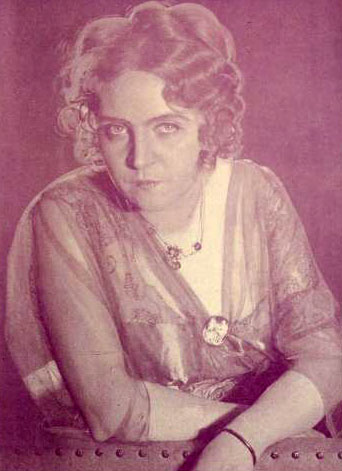
It is Lenin who has the final say even on the values and non-values of a poem or a poet. As shown by the Soviet politician, writer, and ethnographer Bonch-Bruevich: “In 1919, the Bolsheviks organized a literary and musical evening in which, among others, the artist Gzovskaya participated. Lenin decided to go and listen and also invited me to accompany him. We sat in the front row. With a defiant look, Gzovskaya recites ‘Our March’ by Vladimir Mayakovsky. She stopped. Everyone applauded. Vladimir Ilyich shook his head, openly expressing his displeasure. He had fixed his gaze on Gzovskaya without moving a finger.
‘That’s nonsense!… How can such absurdities be uttered? We fight against all kinds of prejudice and here in the Kremlin, in the theater of the Red Army soldiers’ club, they serve us such fairy tales.’ He stood up. ‘I do not know this poet,’ said Vladimir Ilyich in a harsh voice, ‘but if he always writes like this, he is not one of us. And to say such things at a Red Army evening is a crime, no more and no less than to declaim so beautifully, en masse, such supernatural donkey-like nonsense is a shame. Not a single word is understandable, a real mess!’ He said all this loudly, clearly, decisively, and went up to his office.”
It is Lenin who determines the print run of Mayakovsky’s poem 150,000,000. Replying to Anatoly Lunacharsky, People’s Commissar for Education, regarding the latter’s request to print Mayakovsky’s poem 150,000,000 in the state printing house, the Bolshevik leader writes: “Isn’t it shameful to vote for the publication in 5,000 copies of Mayakovsky’s poem 150,000,000? Stupidity, absurdity, extravagance – that’s what it all is. In my opinion, only one in ten of these kinds of writings is worth publishing, and even then, in no more than 1,500 copies, for libraries and for the insane. As for Lunacharsky, he deserves punishment for his futurism.”
In his speech, “On the International and Domestic Situation of the Soviet Republic,” on March 6, 1922, Lenin “forgets” what he had previously said about Mayakovsky and his poetry. Speaking about Mayakovsky’s poem The Sitting Ones (or The Chairmen), he says: “Yesterday, by chance, I read in Izvestia a poem by Mayakovsky on a political theme. I am not an admirer of his poetic talent, although I admit that in this field I am not at all competent. But it has been a long time since I have felt such great pleasure from a political and administrative point of view. I don’t know how things stand from the poetic side, but from a political point of view, I guarantee you that this is very correct.”
The writer, the poet is valued according to their service, not for the values they carry or convey, not for their art. Talent is nothing if it does not serve fully and clearly the dictatorship and the omnipotent dictator, as he demands and only that way. Stalin’s rise to power after Lenin’s death also marked the end of any relative freedom that had been formally granted to writers by the dictatorship of the proletariat. In April 1932, the Communist Party of Russia decided to unite writers into a single, large organization.
This was formalized by the resolution of the Central Committee of the Communist Party dated April 23, 1932: “On the Restructuring of Literary and Artistic Organizations.” The resolution disbanded existing artistic organizations and groups to form new creative bodies, divided by artistic sector, controlled and administered in a centralized manner. Socialist Realism was defined as the official aesthetic, as the “basic method of Soviet literature and literary criticism.”
The concept of “Socialist Realism” was elaborated in 1932 by a group of top Party leaders: Stalin, Kaganovich, Postyshev, Stetsky (director of the propaganda sector at the Central Committee), and Gronsky (editor-in-chief of the newspaper Izvestia). Socialist Realism was definitively embodied as a doctrine and form of official art in the land of the Soviets during the proceedings of the First Congress of the Union of Soviet Writers in August 1934.
According to the Soviet press of the time, the Congress received 41 messages and greetings from factories and collective farms, schools and universities, the Red Army, artistic organizations, as well as Party bodies. The Congress, on its part, sent greetings to Stalin, Voroshilov (Commissar for Defense), the Central Committee of the Party, the Council of People’s Commissars, the Council of Ministers, the revolutionary writers of Japan and China…! A message was also sent to the workers of the paper factory of the Soviet Union.
Officially, as written in the statute of the Writers’ Union, approved at their First Congress: “Socialist Realism, being the fundamental method of Soviet literature and literary criticism, demands from the artist a historically concrete truthful representation of reality in its revolutionary development. Among other things, the truthfulness and historically concrete character of the artistic representation of reality must be combined with the task of ideological transformation and education of workers in the socialist spirit.”
It is clear that Socialist Realism is not merely an aesthetic theory, but a tool of education, more precisely of ideological indoctrination, in the service of the Party. It turns the writer into its agent and literature into a privileged tool in its hands. Through it, the Party exercises absolute control over society “plans” or disciplines even literary creativity. Aleksandr Tvardovsky, the first publisher of Solzhenitsyn, ironically remarked in 1961: “With us, the Church is separated from the state, but we have attached literature to the state.”
The treatment of the revolution and the idealized figure of the Bolshevik revolutionary as savior, as a new Messiah, the obligatory presence of communist ideas throughout the literature of Socialist Realism, or its ideologization – it can be said that these are the basic rails on which it rests. The Bolsheviks, through the transmitting mechanisms of state dogmas, such as Socialist Realism, are the sole ones who decide or determine the themes to be treated and how they should be treated.
In the land of the Soviets, respecting Socialist Realism, no work is published that does not have as its central theme the Party or party-mindedness, that does not sing the praises of the models, paths, ways of thinking and acting of communism, that does not evoke optimism for the present and the future, for the very existence of the individual or society. The novel of Socialist Realism authors must reflect must echo the revolution, the joy in work, the paths filled with friendship and love, the First of May, the blue and cloudless sky, the Sun that shines and greets the happy life. The dogma of Socialist Realism, as a product of dogmatic, “sanctified” communism, also “sanctifies” literature and the arts in general.
It effectively aims to impose on society the political, ethical, moral norms, the Party-state’s way of thinking, to put even human feelings and passions in a disciplined military step. M. Ilyichev, secretary of the Central Committee of the Soviet Communist Party, in an article published in the newspaper Pravda on December 22, 1962, is categorical: “The Party has always defended the Party line in literature and the arts and will continue to do so…! We are strongly against any interpretation other than that of the class struggle or the replacement of militant communist humanism with false vows of peace between classes and universal forgiveness…! In ideology, the war with the bourgeois world never ceases, because this war has as its objective the spirit and the heart of people, first and foremost the heart of the youth.”
At the Fourth Congress of the Union of Soviet Writers in March 1967, the Russian literary critic L. N. Novichenko declared: “It would be ideal for the aesthetic form to match the height of the content, but if one must choose between the two, the strength of the content is preferred, even if stripped of aesthetic qualities, and not formal perfection stripped of ideological significance.” These positions are in the general flow of life in Bolshevik Russia. In fact, starting from 1917 and onwards, the Soviet state erased every boundary between the civilian and military spheres, between war and politics, between the “internal enemy” and the “external one,” between violence and war, social violence and political violence. It exercised a “culture” of violence in every cell of life, including literature and the arts.
Censorship in the USSR is completely dependent in practice not on the law, but on the policy practiced by the authorities. There is, however, one field where Bolshevik censorship has no power to exercise any control and allows the most impossible absurdities to be grasped by human logic, the most ridiculous and varied. This is seen in the countless artistic works dedicated to Lenin, Stalin, and their cult, in their characterization as the “illuminating sun of the whole country,” in the construction of monuments, the making of films, the weaving of poems, the publication of novels where Lenin or Stalin are central, even divine figures! Thus we “encounter” Lenin in the 150-verse poem Vladimir Ilyich Lenin, written by Mayakovsky on the occasion of his death.
Here, for illustration, are a few of its verses: “Yesterday, at six-fifteen minutes / Comrade Lenin died. / This year has seen what a hundred others will not see. / This day will be marked in the monotonous legend of centuries / … The wind across the whole globe howls sleepless… / and here in the frost of a small Moscow room lays the coffin of the father and son of the revolution. / The end, the end, the end.” Lenin is like Christ: the father, the son, and the Holy Spirit! Of him, as Mayakovsky writes again in the same poem, “people would leap towards death singing.”
Again citing Mayakovsky: “We say Lenin and we mean the Party / We say the Party and we mean Lenin.” The cult of Lenin had to be instilled even in preschool children. In his book for children Kolka and Lenin, published in 1927, author I. Molchanov writes these lines: “How are the cities? Asks Kolka, admiring the passing train from the window. He knows that cities can have large houses, as well as factories or trams that can withstand any weather, but whom should we thank for all these? Lenin, this elderly gentleman who has led us to victory…! And who else could it be?”
Similarly, even more grotesquely, the cult of Stalin is woven. To get a clearer idea, we can turn to some figures. Between 1917 and 1955, there were 10,045 editions of Stalin’s works. Just during the years 1946-1950, these works were reprinted 1,894 times, with a total print run of 113 million copies. In the field of literary creativity, the poet Rakhimov published in Pravda in 1936 the verses: “O great Stalin / O leader of the peoples / You who gave birth to man / You who make the lands fertile / You who renew the centuries / You who make spring bloom / You who make the chords of music tremble / You the light of my spring / Sun reflected by thousands of hearts.” In this spirit, countless poems for Stalin were published in the communist press.
In prose, Aleksey Tolstoy made Stalin the central figure in the novel The Defense of Tsaritsyn, published in 1947. Earlier, in 1929 and 1934, he had published two historical dramas through which he treated the personality of the Russian Tsar, Peter the Great, making an almost open apology for Russian absolutism and expansionism and a positive analogy with the new tsar of the Kremlin, Stalin.
Another Russian writer, Aleksandr Ostapovich Avdeyenko, being a delegate at the Seventh Congress of Soviets, held in January-February 1935, swept away by the general hysteria of dithyrambs for Stalin, would declare: “I will grow old, but I will never forget how, two days ago, we awaited Stalin. I have never been happier than when I saw and experienced the depth of love and devotion for Stalin. Centuries will pass and the future communist generations will see us as the happiest… of all the living across centuries on earth, because we have seen Stalin, the genius, wise, smiling, cordial, magnificently simple leader.”
It is this same writer who in 1935 wrote in Krasnaya Gazeta: “If my dear wife gives birth to a child, the first word I will teach him will be ‘Stalin.'” Publicly, pretending modesty, in March 1930, Stalin declared: “I am not a connoisseur of literature and, with full reason, not a critic either.” Even though Stalin admits he is not a writer or critic, in reality, in literature and the arts generally, he acts as both writer and critic, both the rain and the wind. He gives directions, raises to the pedestal and casts into the abyss works and authors. He is convinced that he is a Napoleon of communism, or of Bolshevik Russia, destined for great deeds.
As one of his later critics, Nikita Khrushchev, the First Secretary of the Central Committee of the Communist Party of the USSR, declared: “When Stalin said something, there were neither proposals nor frowns from others. A proposal from Stalin was God’s command, and a sacred command cannot be discussed.” (In the land of the Soviets, everyone is aware that Stalin makes the law, dictating the basic guidelines of Socialist Realist literature. He is the prosecutor, legislator, executor, the final word even on the professional careers and lives of the writers of the Union of Soviet Socialist Republics.)
Thus, for example, at the meeting of the Politburo on September 9, 1940, the writer Avdeyenko was severely attacked by Stalin for his film The Law of Life. Years would have to pass for Stalin personally to rehabilitate Avdeyenko again. It would be Vadimov, the editor-in-chief of the army newspaper Red Star, who would ask the Bolshevik leader to allow Avdeyenko’s reportages to be published, evaluating that the writer had atoned for his mistake during the Patriotic War. Stalin’s decision, communicated in early July 1943 to his secretary A. Poskrebyshev, is: “So is it! Let’s publish them: Avdeyenko has atoned for his mistake. Stalin.”
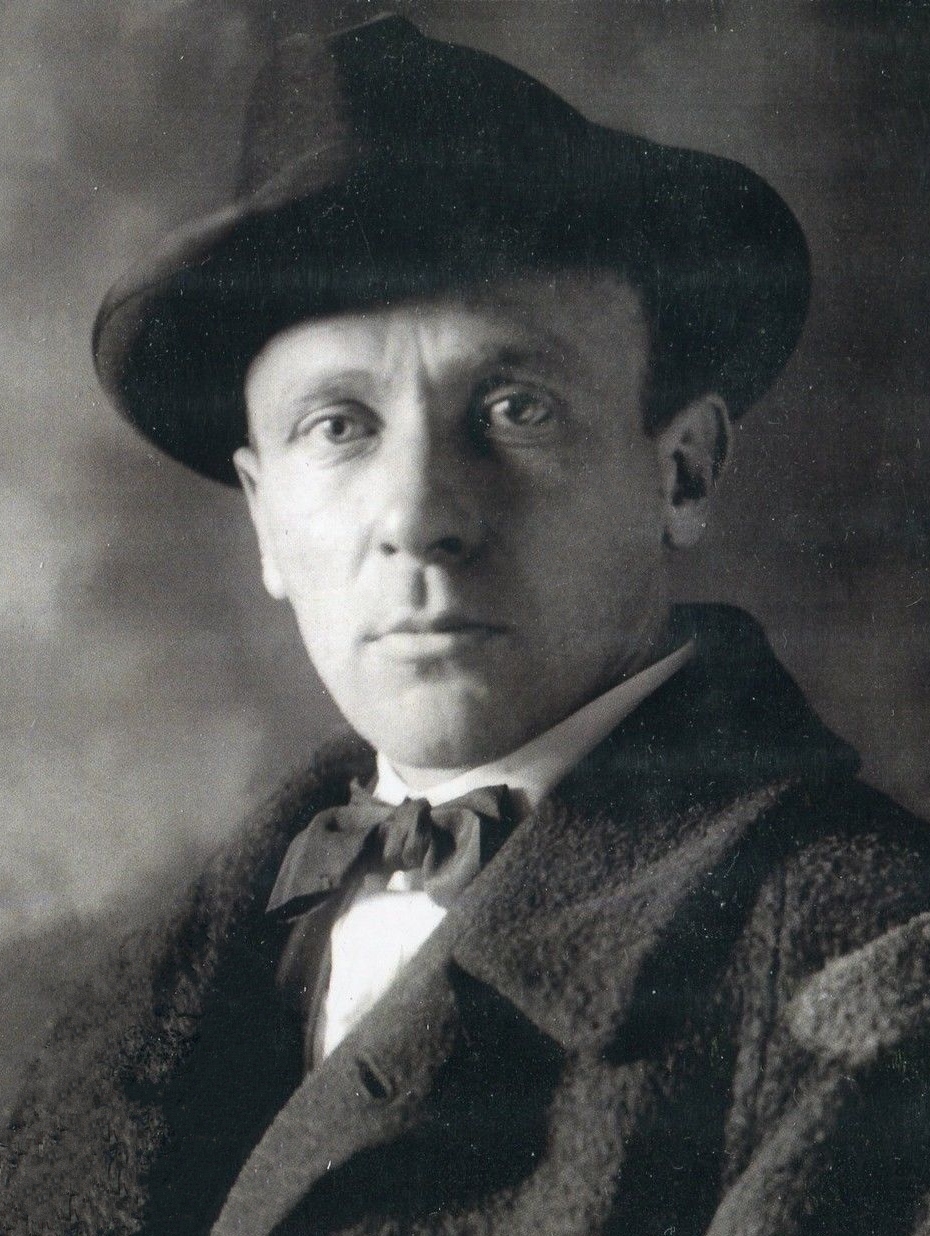
Earlier, in 1926, the poets Vladimir Mayakovsky, Aleksandr Bezymensky, and others strongly demanded and succeeded in suspending the play of Mikhail Bulgakov The Days of the Turbins. The play was severely criticized also by critics Vladimir Bumi and Aleksandr Orlinski, close to the Association of Proletarian Writers (RAPP). Terrible accusations were poured upon the author in a series of articles and public debates. Consequently, on September 15, 1927, the play The Days of the Turbins was banned as politically incorrect. On October 10, the Politburo, i.e., Stalin himself, opposes this measure. Its staging resumed with Stalin’s “blessing.”
Bezymensky, accused of being a Trotskyist, escaped Bolshevik lynching and continued to write lyric poetry, song lyrics, propaganda articles, satirical poems, etc., simply because Stalin took him under his protection. The attitude towards the writer Nekrasov Viktor Platonovich and his novel In the Trenches of Stalingrad is another example in the long line of treatment of creators, not just for their service to Bolshevism in general, to the role and figure of Stalin, service for the exaltation of his cult beyond all limits, beyond all imagination, but also, and especially, from the evaluation that Stalin himself will express towards the author and the work. This evaluation on his part is unpredictable. In this context, it was whispered in the Soviet Union at the time, under one’s breath and with sarcasm, that Stalin was the “father of the asexual erotic novel.”
The novel In the Trenches of Stalingrad was first published in the Moscow magazine Znamya under the title Stalingrad. It was subjected to powerful official criticism. The author and the novel were crucified because they had bypassed the leading role of the Communist Party and, especially, of the great leader of the peoples, Generalissimo Stalin, in the Battle of Stalingrad. Nekrasov published his novel in 1946, changing the title to In the Trenches of Stalingrad. And one fine day in 1947, Nekrasov would see, extremely surprised his portrait in Pravda: he had been awarded the Stalin Prize…!
It seems that the dictator himself added Nekrasov’s name to the list of laureates. In an autobiography published 35 years later, Nekrasov recounts, without trying to explain the irrational: “Starting from this day, my book turns into a model.” All publishing houses began to publish and republish it, translators to translate it into all imaginable languages, critics to sing its praises, completely forgetting that only a day earlier they had accused the author of “pacifism.” / Memorie.al