First part
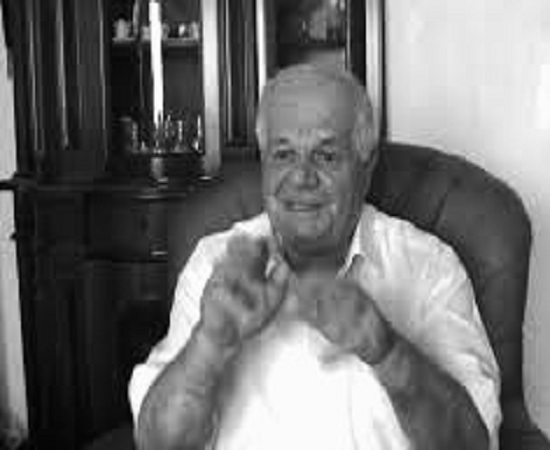
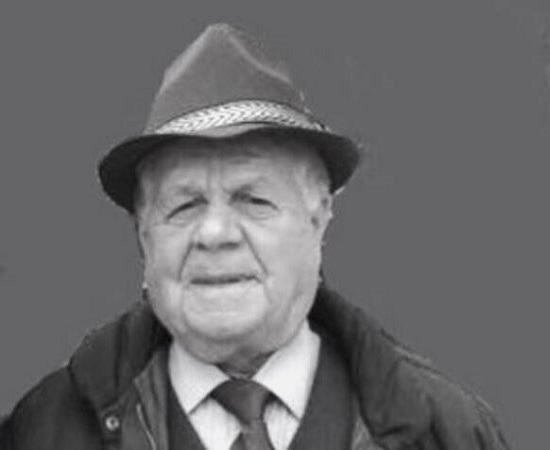
Memorie.al / As the son of an Elbasan family that had been engaged with the forces of the Balli Kombëtar during the war period, but also possessed wealth and property, he bore the label of “enemy and kulak”, so the time came when they would concoct an accusation against him and sentence him to 10 years in prison. Kristo Mema recounts the tortures of the interrogation in the cells of the Internal Branch of Elbasan, where he was taken immediately after his arrest, the tortures inflicted on him by the chief investigator Thanas Caku, etc., as well as those later when he ended up in camps and prisons, such as in the Elbasan camp, or the galleries of Spaç, where a man would freeze and thaw again, and still live, defying even medical science. For all these things, Kristo Mema introduces us to them in this exclusive interview, which we are publishing below in this article.
Mr. Mema, when were you born and what is your family’s history?
I was born on October 10, 1935, in the village of Shtërmen, Elbasan. I come from a wealthy family that clashed with communism as early as 1943. In August 1943, my father’s brother was shot by the partisans, and from that time the break occurred. Before that, they had been united in the fight against the occupiers.
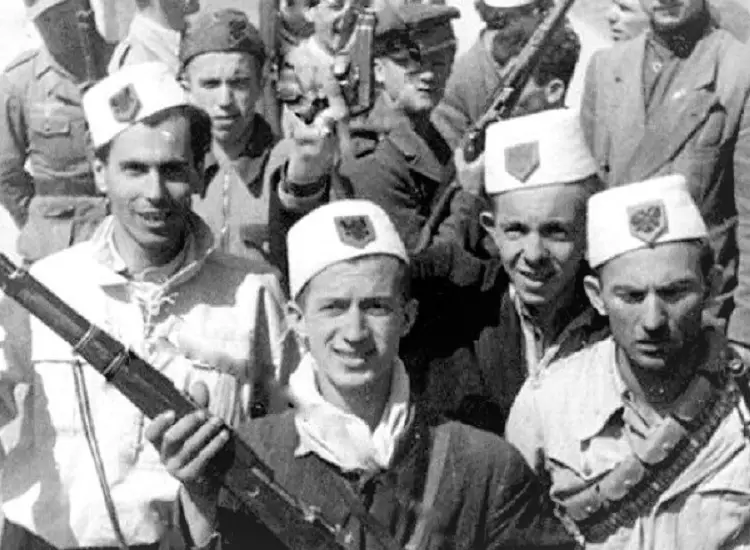
In 1944, we aligned ourselves with the forces of Mid’hat Frashëri’s Balli Kombëtar. My father’s nephew, Jorgji, was appointed general secretary of the Elbasan district for Balli Kombëtar, and others had duties to protect the dignity of the people and our clan. In 1944, we moved to Tirana, because Jorgji was wanted by the communists, and so were we as a family.
Let’s go back a little. In 1943, two houses were burned down by the partisans: the house of Stefan and the house of Trifon, both brothers of my father, and in 1944 they burned the third house, again of my father’s brother, Mihal Mema’s house. So we moved. In November 1944, Jorgji was killed in Tirana by the partisans. Then, our parents surrendered, through friendships.
The three uncles surrendered, two nephews fled, one older brother, Trifoni, was captured in Kukës and they disappeared him with torture. So there were three: in 1943, my father’s brother; in November 1944, Jorgji; and in December 1944, Jorgji’s father, my father’s other brother, disappeared due to torture…! The war had started in 1943, but it was a political war; from 1945, the economic war also began.
In 1946, the Agrarian Reform was carried out, and all our wealth was confiscated: the lands, the forests we had, movable and immovable private property. With the reform issued by the Communist Party, we benefited, in total, 40 dynyms [about 5 hectares], from the 50-some hectares we had as a core, or 300-some hectares as brothers. In 1945, I was ten years old. We continued working in agriculture and the obligations began. From these 4 hectares they gave us, we had to pay per hectare: 75 kg of meat, 1,250 eggs, and 8 kg of wool.
So, if you didn’t pay these, then…! Nevertheless, we were forced to pay them, because the tax collector would come and put red wax on the house. It went on like this until 1950. Then, we were declared complete. Plus as enemies of the people, but also as kulaks. Meaning the economic war, because being a kulak meant stripping away wealth. From 1950 to 1954, they demanded obligations from us three times a year.
If you didn’t pay these, then double would come. The 5 livestock we had at that time, they wiped them out; they managed to take the house rugs, the prayer rugs, the household items, the bedding, down to the raki cauldrons, down to the plates and cups… they were Istanbul cups, of high quality, and the trays… That’s how far they went.
What happened in 1954?
On December 20, 1954, the cooperative of our village was formed, a group, because not everyone had joined yet. Then, the Party gathered and decided that our houses should be taken to serve as offices for the cooperative, and so it happened! The police came with the chairman and the secretary of the Council. They threw us out. Since the decision had been made, we had to vacate. They took our belongings and threw them into the yard. We had two wings of the house, two-story with 4 rooms, two upstairs, two downstairs, and downstairs the hearth room for cooking and bread.
Four and four, eight rooms, and we ended up on the street. I objected, and the Secretary of the Council, Calja, being very cunning, so as not to remain under his obligation, ran off with the all-powerful Izeir Çerriku, and brought the Chairman of the Council from Shtërmen, who was also a rifleman, with a long rifle. And he comes and says:
“We need to go for a while, to the Branch, in Cërrik.” “Why? – I said to him. – I have my belongings outside.” “You’ll have to say a couple of things there.” He took me, put me in front. From Shtërmen to Cërrik is about ten minutes. There was Faik Elezi. Suddenly he grabbed me by the throat. He said: “So this is the bandit who wants to break up the cooperative? Because he doesn’t accept it, he comes from a family of criminals who have exploited this whole area, his family.”
I said to him: “I don’t know anything about what my parents did, but nevertheless I am sorry that you are hitting me, because I haven’t done anything.” “I’ll fix you,” he told me. They took me, put me in the dungeon. A policeman came and called me. Now to interrogation, to Faik. “What do you think,” he said, “that we won’t build the cooperative?” “Oh no, sir,” I said, “I haven’t said a word against building the cooperative. I spoke because you took my belongings and threw them in the yard. Where am I going to sleep?!”
He said: “Just like your parents, who exploited this area, so you will stay, wherever you want, on the streets…!” “So that’s how it is? – I said to him?! I know that the people’s government has justice.” He hit me in one eye. “Enough of that, are you going to sell me that?” He sent me to the dungeon. In the morning, two policemen, Izeir Çerriku, the all-powerful one, with Ramazan Duzha, also a policeman, give me a big axe, and there was a woodpile for the police, and they set me to chopping wood.
They sat down, then they took chairs and sat, I chopped wood until nightfall when it got dark. I was chopping wood, but thinking: “Where could my belongings be?” When it got dark, they brought me back and told me that our nephew had taken the belongings and brought them to his own house. This was the nephew whose house had been burned down, and he had taken the belongings and placed them in the burned house.
Some beams and boards had been set up, and there we placed the mats. I went there – what was there to see? Where would I stay? Where would I sleep? Strangely enough, my conscription letter had also arrived. On February 10, they took me and sent me to a work unit, at the “Rrapi i Treshit” area, near the former Kinostudio. We built the Kinostudio. We carried stone from the quarry. The quota was 12 cubic meters of shaping: transport, shaping.
If you didn’t meet this quota, you would work all night. I finished the army and returned, but my brother and father had been expelled; they had also taken the tobacco garden, because they had been told that the words from the party meeting could be heard there. We were both “kulaks” and “enemies of the people”, so the land had to be taken from us, and they were sent to a hill that produced nothing. We were forced to leave after I too returned from the army. This is about the year 1956.
Where did you go after leaving the village?
We went to Elbasan. We had nowhere to go. A maternal uncle of ours, Venemi Mëhilli, took us in. He owned a mill. He gave us a part, where the animals stayed, where the grain was collected. But the State Security, the police, would come to close down the mill. They would say: “Either you get rid of the criminals, or we will close it.” They closed it. Nevertheless, for the sake of great friendship, he kept us. But we said, before he also suffers, we are leaving. We inquired, found two rooms at the wife of Xhevit Beu.
We made the deal: 40,000 lek. We moved in, gave the money, but we hadn’t made the title deeds; she comes and says: “The police are putting pressure on me, so you must leave, here’s your money back!” We left. Then we found another house, but as soon as we moved into that other house, the year 1963 came. When we found the house, I was arrested, in August 1963. I was arrested and they formulated the accusation: allegedly that I was about to escape.
What was the arrest moment like?
As I was going home, after receiving my salary on the 20th, because that’s how NISH “Tulla” paid. Fadil Ibërshimi was the paymaster. I was coming for the lunch break, as I lived in the Fortress (Kala). It was about 7,000 lek. I took the money and left. As I was entering the gate of the fortress, on the left side there used to be the former Elektriku building. There they appeared in front of me; put a sack over my head…! “What have I done?”
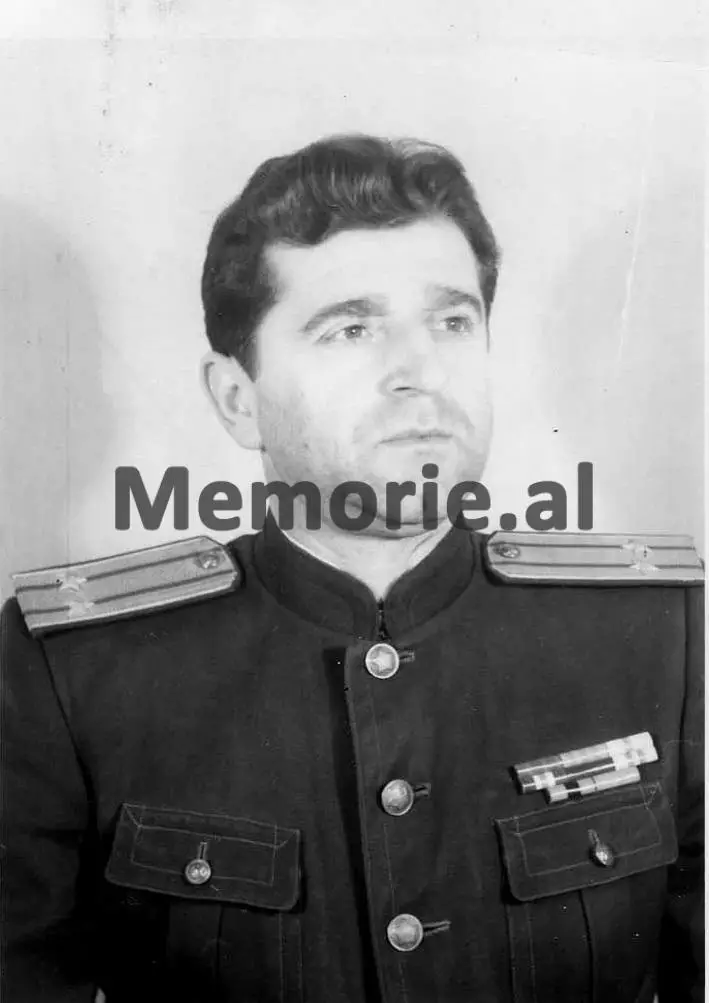
Since I had received my salary, I took a pack of “Diamant” cigarettes in a box. I also had a watch… Russian, we had bought it some time ago. They took me to the Internal Branch, searched me, found the money, the salary I had received, the watch, there was also a fountain pen, that too, personal items. They made the document, the minutes, I signed them, they called me to interrogation. It was Thanas Caku, the investigator.
He told me: “You’ve done enough meadowing [i.e., talking freely]!” “What have I been meadowing?” I replied. “You haven’t left a single bar without doing propaganda against our system,” he said. “You are mistaken, Comrade Thanas,” I said, “home and work.” I wouldn’t even go out on the boulevard, because we knew these problems. “Whether you believe it or not,” I said, “we are a family that has gone in and out of prisons, so we… don’t talk.” “You have said that in Albania there is no good life, therefore all the young forces should leave the country.”
I said: “When have I ever tried to leave? When we, even in 1944, you know very well, had the opportunity to flee, we didn’t flee, we won’t flee today, when we know well what awaits us! So, Comrade Thanas, you are the chief investigator, but I know these matters well: you send Adem Demir to watch us when we are working. And we don’t eat grass, we eat bread, we understand the traps or the surveillances you do. So, we know these things. Not that I go to clubs. Not that I can’t afford it – we earn more than others – but these are the circumstances.”
He insisted; he tied me up; he sat me on a three-legged stool, tied my feet and hands, and there was a wooden mallet, and he would hit me on the neck with it. “Confess!” he would say. “What should I confess? I never had any such intention. I haven’t talked to anyone, at all,” I would say. “You went to the military factory in Mjekës to gather information, so that when you fled, you would have ready-made information about what the communist system is doing,” he accused me. They confronted me with witnesses. I had 11 witnesses. I did not accept the accusation of these persons, because it was a constructed accusation, pointless.
Did you know the witnesses?
Yes, there were acquaintances and strangers. There were 11 people. Some of them I didn’t even know at all. “How is it possible,” I said, “that I supposedly talked to these people about escaping? Then, they would have to be accomplices. They should be punished.” The moment I objected and they had no answer, it was the uncle [i.e., the excuse], the lack of reason then.
Shim Kolli, the Head of the Branch, took me to interrogation, in the presence of… as he said how I knew him, in his office up there: “This is the commander of the execution group.” He was a dark officer. “And you, this man will execute you,” he threatened me. “We are used to this, Mr. Chairman,” I said, “we are not from yesterday, we are from 1943. Today is 1963. This pressure is useless, although if you intend to, go ahead!” Memorie.al