
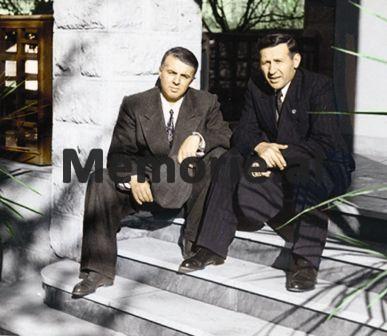
From Alma Mile
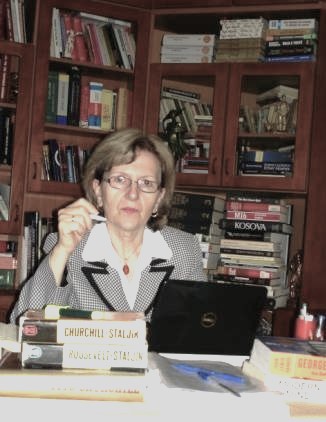
Memorie.al / It seemed as if spring was near. Many were those who spoke up, who raised their heads. Enver Hoxha was frightened. After nearly 12 years of ruling with an iron fist, his positions were beginning to waver. It was April 1956, and that event was unfolding which remained in history as the “Party Conference of Tirana.” A conference characterized by a highly critical spirit towards the top leadership of the Party of Labour of Albania and its state policies, but the consequences for the critics would come later: expulsion from the party, arrests, imprisonment…! With a telling title, historian Ana Lalaj has titled her work, dedicated precisely to this event: “The False Spring of ’56,” dedicated “To those who dared,” and opened with two verses by Kadare: “Early fruits have a dear price, / But early fruits are often brought down by frost.” The historian, with scrupulous work, undertakes to shed light on this event.
What happened during the days of the Conference, who were the critics, the questions about the political and economic state of the country, the stance taken by Enver Hoxha, the role of the Soviet advisors in Albania, and the measures subsequently taken by Enver Hoxha.
This delicate atmosphere has been brought to light by historian Lalaj through a deep analysis and a broad corpus of documents from the time.
“What does the Party Conference of Tirana, April 1956, mean for the history of the Party of Labour of Albania? An attempt at self-reform in the communist world and illusions in Tirana.
The Conference as a critical movement within the party, or a secret movement to overthrow the party leadership, as presented by Albanian communist historiography? The versions about the conference being manipulated by the Yugoslavs, but also by the Soviets. Was the conference communist dissidence or not?”
To these hypotheses and questions, Lalaj provides answers in her work, published by “Infbotues.” In the first part of the book, she lists the events, while in the second; she presents documents related to this event.
They are meeting minutes, “secret” information, reports, which reveal the main figures of the time, from Enver Hoxha, who considered what happened at the conference as a personal attack, to Mehmet Shehu, Liri Belishova, Hysni Kapo, Beqir Balluku, etc.
Through these documents, the political theatre of the time unfolds, in which the fates of many important figures of the PPSH were decided. One of these documents is that related to the arrest of Bedri Spahiu.
Everyone admits, including Enver Hoxha, that there was no fact proving that behind the Tirana Conference was precisely him, and to justify this unsupported action, an alibi was needed.
“We arrested him because he wanted to kill himself,” Enver Hoxha would say. There were no facts for Tuk Jakova either, but the party decided to transfer them, to release one and send him to Berat, the other to Elbasan…!
Excerpt from the book “False Spring” by Ana Lalaj
“We arrested Bedri for fear he might kill himself. All the critics at the Tirana Conference and in Party organizations have singled out the rehabilitation of Tuk Jakova and Bedri Spahiu as a sign of expected reflection in the spirit of the 20th Congress of the Communist Party of the Soviet Union.”
It is known that this request not only did not bring them rehabilitation but led them to be handcuffed, allegedly as behind‑the‑scenes organizers of the conference. The following material, among other things, shows how Bedri Spahiu, member of the Political Bureau, Minister of Education, had been arrested earlier, in June 1955, without criminal evidence.
(Excerpted from the minutes of the meeting of the Political Bureau of the Central Committee of the Party, Tirana, June 2, 1955).
COMRADE ENVER HOXHA: Now, Bedri’s case. What shall we do, keep him inside or release him? I discussed it with Mehmet and with Tishenko, who told me: “Do as you wish, but if you keep him inside, you will have to take him to trial, and if he goes there, judicial evidence is needed.” I told him we only have party evidence, because he denies everything else.
Tuku hasn’t told us anything either, because if Tuku had said, “We wanted to overthrow this Bureau,” that would have been another matter. Now we took this measure because we judged that Bedri showed signs of intending to kill him, which would cause a scandal.
The Central Committee’s decision was to expel him from the party and also give him a job. “But even if he kills himself,” Tishenko said, “so what?! A man who is an enemy, let him kill himself! Besides, if he wants to, he can kill himself even in prison.”
The people will ask why he killed himself, but whatever happens, they will understand, because this matter will be raised in the party. I also spoke with Gjovalin Luka. He has written a letter requesting to talk with me about several issues, because, according to him, “among us there is chauvinism, there is regionalism in cadre work, and at the Central Committee there are comrades who do not work well…”!
Today, Gjovalin’s wife called Haxhiu (Kroi) and told him that “Gjovalin is going mad and that what the Commander says is right.” Tishenko said that Gjovalin’s immunity should be removed, and we must now decide on him. But this matter we need to follow carefully.
COMRADE MEHMET SHEHU: We should also remove Gjovalin from the Society of Friendship.
COMRADE ENVER HOXHA: “I understand what the Yugoslavs have done to you,” Tishenko said. “They have pursued you, but in these matters we need cool‑headedness. Here is how our Party’s Central Committee acted. Our Central Committee knew that Bagirov was mixed up in Beria’s affairs, but it did not arrest him. After 7‑8 months, facts emerged, and they caught him and put him in prison. For these as well, surely, facts will emerge.”
COMRADE MEHMET SHEHU: Besides, we have the situation in hand, let’s not arrest them now.
COMRADE ENVER HOXHA: We consider these as headaches; we should follow them carefully to see how organized this matter was, and neutralize it. But our situation now is much stronger than in 1948. Be careful here, especially regarding the general stance towards the Yugoslavs.
He (Tishenko) advised me that in the bulletin “Notes for Agitators,” we should explain the Yugoslav issue simply and clearly, so that Party agitators have materials and guidance for their propaganda.
Then the correspondent of Pravda gave me an article to write. It would be good to write it, and I say that it guides and helps. Regarding the handling of this matter within the party, he agreed that plenums should be held in districts, where key cadres can also be called. So it should be done in the districts as well…!
Now let’s return to Bedri’s case. We told him that his cup is full. This man fully expected to be arrested. Apparently, before, I had given him books and among them was a book by Antonio Gramsci, “Lettere dal carcere,” which was dedicated to me by an Italian who came to Albania.
Apparently, he had this book at home and brought it in his bag on the last day of the plenum, Friday morning, and told Haxhiu: “Here, give it to the Commander.” By this, he meant: “I am Gramsci, and you are the fascists who arrested me.” Before being arrested, he did not take the way to go to the car, but waited in the hall, meaning he was prepared for this. Now what do you think, should we release him?
COMRADE GOGO NUSHI: I called Nedon (Bedri Spahiu’s wife) and told her where Bedri was. “The wretch me!” she said. “I had told him, ‘Respect the Party.’” She was very distressed.
COMRADE HYSNI KAPO: Nedo condemns Bedri’s attitude, and I don’t think she can express hatred towards him. She said that during this plenum, he was not prepared at all, unlike other times.
COMRADE BEQIR BALLUKU: Gogo told Nedo that “We arrested Bedri for fear he would kill himself.”
COMRADE MEHMET SHEHU: Will Tuku, before leaving Tirana, come to the base organization to account?
COMRADE RITA MARKO: That is a party rule; he must come.
COMRADE GOGO NUSHI: Let him leave first and then come back.
COMRADE MEHMET SHEHU: If so, then we must find him a job immediately, as of tomorrow. But what kind of job can he be placed in? Any of us can appoint him, but I think it’s better for him to be in Berat. There is a local industry and carpentry enterprise there.
Now let’s think: should we make him director of the enterprise or head of a department, with a salary of 4,500 lek, and Mita (Jakova) be appointed as a teacher in some 7‑year school. For now, let their salaries not be cut. Then we should take measures to give them a minimal part of their belongings.
COMRADE LIRI BELISHOVA: What belongings do they have? Let them take them, and Bedri too. If we release Bedri, we must find him a job immediately, and likewise for Nedo. As soon as Bedri is released from prison, put him straight on a truck and send him from Tirana to Elbasan or Korça.
COMRADE RITA MARKO and COMRADE BEQIR BALLUKU (in one voice): Better Elbasan.
COMRADE MEHMET SHEHU: Let’s find him the job first and then release him.
COMRADE ENVER HOXHA: An accountant in some commercial enterprise. He’s a man of cards, and in money matters he has proven honest.
COMRADE MEHMET SHEHU: Let’s assign this matter to Rita, I think. / Memorie.al