By Dr. Musa Ahmeti, Dr. Etleva Lala
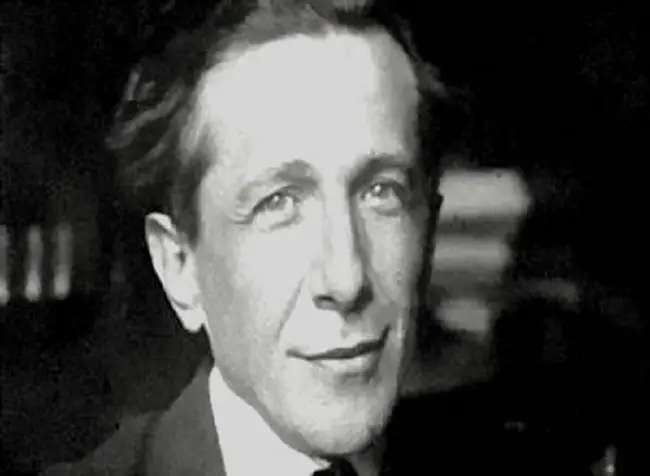
Memorie.al – Milan von Sufflay was born on November 8, 1879, in Lepoglava, Croatia. He finished elementary school in his hometown, while he completed the classical gymnasium in Zagreb, where he graduated as the best student of his generation. He studied social sciences at the University of Zagreb and earned his doctorate in 1901. Immediately after his doctorate, Sufflay set to work on systematizing, collecting, and describing medieval documents from the archives of the Dalmatian coastal cities for the “Codex Diplomaticus” (Diplomatičkom zborniku Kraljevine Hrvatske, Dalmacije i Slavonije 1101-1399). It was here that the young researcher’s first contacts with the vast and entirely unexplored material pertaining to Albania were born.
In 1902, Sufflay successfully defended his “professor” title in the auxiliary sciences of history at the University of Zagreb with the thesis: *”Hrvatska i zadnja pregnuća istočne imperije pod žezlom triju Komnena (1075-1180)”* (Croatia and the Last Efforts of the Eastern Empire under the Sceptre of the Three Comneni, 1075-1180). In the years 1902–1903, he specialized in Vienna at the Österreichisches Institut für Geschichtsforschung in Latin paleography, diplomatics, chronology, and notarial practice, under the renowned professors O. Redlich and A. Dopsch. That same year, he enrolled with Professor K. Jireček for “Albanological Studies at the Vienna College,” studies which he did not manage to complete.
In 1904, he published his habilitation study entitled: “Die Dalmatinische Privaturkunde” (The Dalmatian Private Charter) – Dr. Milan v. Sufflay. In Kommission bei Carl Gerold’s Sohn / Buchhändler der Kaiserlichen Akademie der Wissenschaften. Sitzungsberichte der Kaiserlichen Akademie der Wissenschaften in Wien. Philosophisch-Historische Klasse. Band CXLVII. (Vorgelegt am 20. Mai 1903), Wien, 1904.
In the years 1904–1908, Dr. Sufflay worked as an assistant at the Széchényi National Library in Budapest. Here, he deepened his knowledge in the field of Balkanology and especially Albanology. He managed to establish numerous contacts with intellectuals and world-renowned scientists, contacts which he would later utilize throughout his entire scientific work.
In Budapest, Sufflay succeeded in publishing a large number of scientific papers of exceptional value in various journals and newspapers. In the journal Századok, he published two papers on the Croatian Middle Ages, where he demonstrated with scientific arguments that the Rab documents of the 11th and 12th centuries concerning the Croatian King Zvonimir were forgeries. This would later cost him dearly, as he would be declared a traitor to the Croatian people, and his students would boycott his lectures! In 1908, he was appointed full professor of the auxiliary sciences of history at the University of Zagreb. Together with Thallóczy and Jireček, he published the masterpiece “Acta et diplomata res Albaniae mediae aetatis illustrantia”, Volumes I-II, in 1913 and 1918.
In 1918, he retired at his own request, and then published “Die Kirchenzustände im vortürkischen Albanien. Die Orthodoxe Durchbruchszone im Katholischen Damme” (The Church Conditions in Pre-Turkish Albania. The Orthodox Breakthrough Zone in the Catholic Dam) in: Vjesnik Kr. hrvatsko-slavonsko-dalmatinskoga zemaljskog arkiva. Urfedjuje dr. Ivan Bojničić pl. Kninski. Zagreb: Tisak Kralj. Zemaljske Tiskare, 1915, Year XVII, pp. 1-70, which would be the third part of the History of Albania, which he had planned to write together with Thallóczy and Jireček in five volumes.
That same year, he also published another study: “Politische Schicksale des Themas Dyrrhachion” (Political Fates of the Theme of Dyrrhachium), in Vjesnik Kr. hrvatsko-slavonsko-dalmatinskoga zemaljskog arkiva. Urfedjuje dr. Ivan Bojničić pl. Kninski. Zagreb: Tisak Kralj. Zemaljske Tiskare, 1915, Year XVII, pp. 273-300. In 1920, he continued his publications with the novel “Konstantin Balšić”, with a theme from the Albanian Middle Ages. He signed it with the pseudonym Alba Limi. In December 1920, Sufflay was imprisoned. He was sentenced to three and a half years in prison, which he spent in Mitrovica, Srem. In 1924, he published the science-fiction novel “Na Pacifiku 2255 – metagenetički roman u četri knjige” (On the Pacific 2255 – A Metagenetic Novel in Four Books) in the Zagreb daily Obzor.
That same year, he also published “Städte und Burgen Albaniens hauptsächlich während des Mittelalters” (Cities and Castles of Albania Mainly during the Middle Ages), presented in the session of April 24, 1918. Akademische der Wissenschaften in Wien. Philosophischen-historische Klasse. Denkschriften, 63rd Volume, 1st Treatise. Vienna–Leipzig: Hölder-Pichler-Tempsky A.-G. Kommissions-Verleger der Akademie der Wissenschaften in Wien, 1924, and “Nacionalne maglice. Sredovječna plemena Albanije i Crne Gore” (National Mists. Medieval Tribes of Albania and Montenegro), in Obzor, Zagreb, February 20, 24-25, and April 4, 1924, Year LXV, No. 49, p. 4; No. 53, p. 3; No. 54, p. 3; No. 62, p. 2, as well as “Sredovječni dinaste Albanije i Crne Gore. Državne jezgrice” (Medieval Dynasts of Albania and Montenegro. State Nuclei), in Obzor, Zagreb, April 16-19, 1924, Year LXV, No. 105, p. 4; No. 106, p. 1; No. 107, p. 4; No. 108, p. 11.
He continued his publishing activity in the field of Albanology with the publications: “Povijest sjevernih Arbanasa (Sociološka Studija)” (History of the Northern Albanians – A Sociological Study) in “Arhiv za Arbanasku starinu, jezik i etnologiju” (Archive for Albanian Antiquity, Language, and Ethnology) / Editor H. Barić / [Séminar de Philologie Albanaise – Seminar za Arbanasku filologiju], Belgrade, 1925, Book II (1924), pp. 193-242, and “Srbi i Arbanasi (Njihova simbioza u srednjem vijeku)” (Serbs and Albanians – Their Symbiosis in the Middle Ages), with a preface by Prof. Univ. in Belgrade, Belgrade, 1925, pp. III-IV, 1-142, while in 1926 he published: “Vjerske prilike u Albaniji kroz vjekove, Katolički Sjever i pravoslavni Jug u muslimanskoj državi” (Religious Conditions in Albania through the Centuries, the Catholic North and Orthodox South in a Muslim State) in Obzor, Zagreb, June 11, 1926, Year LXVII, No. 154, pp. 2-3. In 1928, he published the book of essays: “Hrvatska u svijetlu svjetske historije i politike” (Croatia in the Light of World History and Politics). That same year, he was appointed full professor at the University of Budapest, but because he was not given a passport, he was forced to refuse this appointment. Problems with the police were an integral part of Sufflay’s life.
According to some newer data discovered in the Croatian State Archive in Zagreb, Milan von Sufflay was one of the rare scientists in the world who was followed step by step by the police, and not only him, but also the people he contacted, including members of his immediate and extended family. Such surveillance had begun at the end of 1922, as can be attested by archival documents. Initially, he was observed only during the day, while later it was 24 hours without interruption. Every update from the surveillance was reported directly to the Prime Minister, Petar Živković, and later to his successor, Milorad Srškić, in Belgrade, and to the King himself, so that they would be aware of the great scientist’s activity and movements.
In 1929, the Viennese Academy of Sciences proposed that Dr. Sufflay continue collecting archival material for the continuation of the publication of “Acta et diplomata res Albaniae mediae aetatis illustrantia,” Volumes III–V. This initiative was also supported by the government of the Kingdom of Albania, which expressed its readiness to cover the expenses for such a serious and valuable undertaking. Milan von Sufflay was invited to visit Albania. After many vicissitudes regarding obtaining a passport, he arrived in Albania on January 12, 1931.
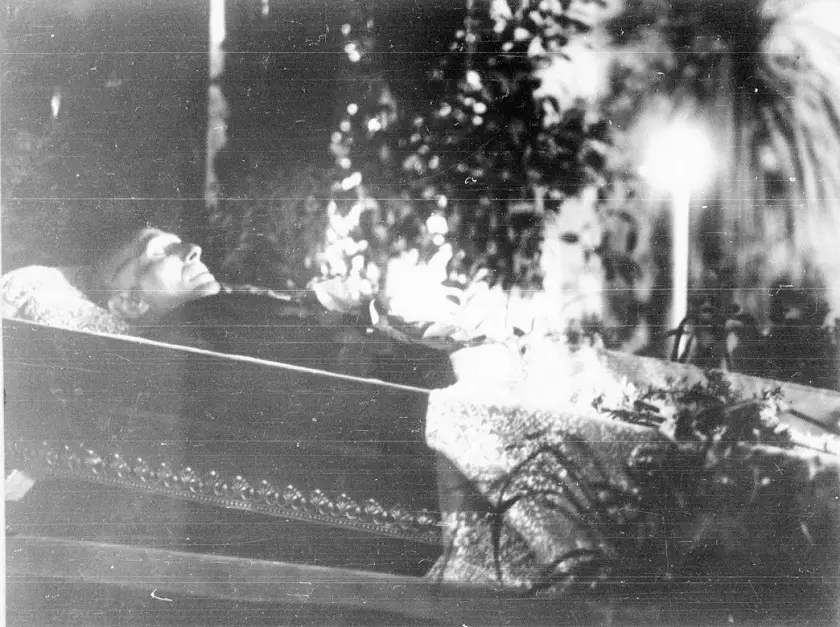
On the evening of February 18, 1931, around 8:00 PM, at Dalmatinska Street No. 6 (in Zagreb), Milan von Sufflay was fatally shot. The wounds were severe, and he died the next day, on February 19. He had returned from Albania only one day earlier, where he had been on a multi-day visit.
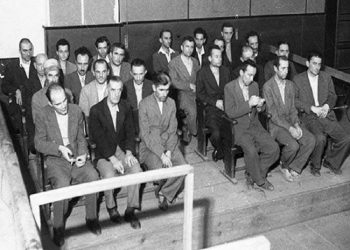
The killers were Branko Zöger, Ljubomir Bellošević, and Stevo Večerina. They declared that they had received orders from Belgrade to liquidate Sufflay. His impartiality, correctness, and great sympathy for the Albanian people, his close ties with Albania, his acceptance and scientific argumentation of the thesis of the direct descent of Albanians from the Illyrians, as well as their autochthony in the Albanian lands, were reasons that drove Belgrade towards such an action. Immediately after the assassination, the police confiscated all the manuscripts found in his apartment. A good part of these manuscripts appear to have been lost forever, because even to this day, no trace of them has been found. However, despite this fact, M. Sufflay has left us many unfinished studies in manuscript form, a good part of which are preserved in the Croatian State Archive in Zagreb.
The echo of the murder was immense. Tribuna (Rome), Berliner Tagblatt, The New York Times, Frankfurter Zeitung, Arbënia (Tirana), Vullneti i Popullit (Tirana), etc., reacted with their writings. Titans of science and letters such as Albert Einstein, Heinrich Mann, Dr. Josef Bajza, Dr. Max Hildebert Boehm, Dr. Karl Fritzler, Dr. Zenon Kuziela, Dr. Martin Spahn, Dr. Branimir Jelić, Josip Milković, Lumo Skendo, Faik Konitza, as well as the Ligue Internationale des Droits de l’Homme and the Fédération Universitaire Internationale, also reacted with a special memorandum. Thus, with Sufflay’s death, Albanology lost one of its main supporters it had at that time, whose studies, even today, are of high and almost irreplaceable value.
The Albanologist’s Passion in 980 Letters
The correspondence of the Croatian albanologist Milan von Sufflay is dispersed across many archives and libraries in Europe. A small part is preserved in America and Australia, and some other letters written by him are in private collections of several well-known Croatian personalities in Zagreb, Osijek, and Dubrovnik. To date, as far as we are informed, no attempt has been made to collect, systematize, and publish this correspondence, which holds particular value for Albanology in general and especially for Albanian medieval history. The correspondence of Milan Sufflay that we know of to date is written in German, Hungarian, Latin, Italian, French, Greek, English, Spanish, Romanian, Russian, and Croatian. We have no information that any letter was written in the Albanian language.
In this rather voluminous correspondence (we have more than 980 letters available), the issue of studying the Albanian Middle Ages dominates, but other topics of various natures—whether economic, political, social, and even intimate letters—are not lacking. Desiring to contribute our contribution to the field of medieval studies, we have selected a part of this correspondence that deals mainly with Milan Sufflay’s Albanological studies, which is preserved in the State Archive of Zagreb, in the Hungarian National Library “Széchényi” in Budapest, in the Archive of the Crown of Aragon in Barcelona, in the Historical Archive of Dubrovnik, in the Venice City Archive, and in the Central State Archive of Tirana, where all the letters preserved there are known to us, but which were intentionally not included in the exhibition prepared by the authors in 2002, which opened in Tirana with documents, manuscripts, and other items of Milan v. Sufflay.
Along with translations from the original, we also bring the facsimiles of the letters, where a good part are autographs, while the rest are typewritten, but at the end bear the signature of Milan Sufflay as well as almost regularly handwritten notes by Sufflay himself in the margins or between the lines. In general, the correspondence of Milan von Sufflay is divided into two categories:
a) Letters he sent to personalities, institutions, various state offices (mainly Albanian), archives and libraries, and some quite private ones to members of his immediate family, his sisters, etc., i.e., the letters written by him.
b) Correspondence from others to Sufflay, which is not insignificant, and there we encounter the honored names of scientists from various fields (not only history), who write with special respect and esteem, appreciating his scientific work and activity.
The First Letter…!
The letter we publish here is one of those written by Sufflay himself, destined for Tirana, specifically for his esteemed friend, Lumo Skendo. We have intentionally made this choice, i.e., we will publish the correspondence of Milan von Sufflay by following a thematic criterion, to clarify some key moments, quite discussed and still unilluminated, that relate to the publication of the sourceological series, even today irreplaceable for Albanology and our national history—Acta et diplomata res Albaniae Mediae Aetatis Illustrantia, which was published in “only two volumes” in the years 1913–1918 (reprinted under our care in 2002), which was planned to be published in 6 volumes, and not in 4 as written by Albanian scholars and historians.
In this letter, Sufflay, with his well-known pedantry, writes openly and without any complexes about all the problematic issues he must face for the continuation of the publication of the sourceological series ‘Acta et diplomata res Albaniae Mediae Aetatis Illustrantia’, and at the same time expresses his pleasure that “the Albanian Government decided to continue the publication of ‘Acta et diplomata res Albaniae Mediae Aetatis Illustrantia’, by providing financial means,” and he also feels very valued for the trust shown by the Albanian Government, on the occasion of his appointment as the author of the publication of this sourceological work, as well as of the “History of Albania,” which will be encountered in subsequent letters.
It is definitively clarified that Sufflay had not prepared the third volume of Acta et diplomata res Albaniae Mediae Aetatis Illustrantia at all, as is still persistently claimed today (referring to the year 1929) to this day. From the letter we publish, it is stated that “from 1918 until today [he] had not worked on anything regarding the continuation of the publication of the AA work” and that a part of the documentation he possessed from the Archive of the Crown of Aragon in Barcelona he had lent to the Serbian academic Jovan Radonić, who, after Sufflay’s death, in 1942, publishes it in Belgrade. / Memorie.al