
By Mr. Sc. NUE OROSHI
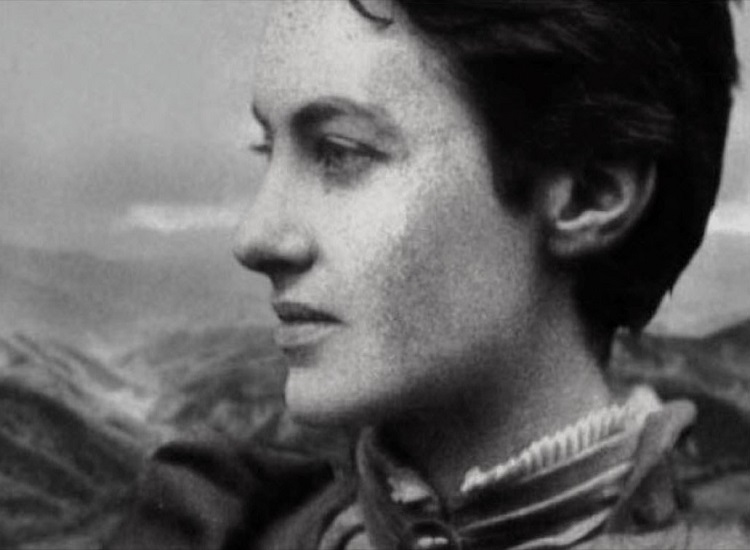
Memorie.al / The German Baroness Marie Amelie von Godin, until now, is completely unknown in Albanian-language publications. While many of our Albanian scholars have focused on another writer, the Englishwoman Mary Edith Durham, the German Baroness Marie Amelie Von Godin has remained in the shadow of oblivion. I truly feel privileged to be the first Albanian scholar conducting a study on the great friend of the Albanian people, on our friend, who took the Albanian flag from the drawers of Ekrem bey Vlora’s house and gave it to the Albanian patriots so that it could fly precisely on this day, November 28, 1912, in Vlorë. The German Baroness never ceased, until her death, to work for the culture, language, and history of the Albanian people.
For about three consecutive decades, 1908-1938, she visited Albania and stayed for about six months each year in Albania. The Albanologist Robert Elsie would declare about Baroness Godin: “She has been one of the most important authors in the field of Albanology, even though her writings have partially remained undiscovered. It is a shame that no scholar has yet taken up her biography. The dictionary was not the first, but it was the first dictionary that surpassed all other dictionaries that had appeared up to that time.”
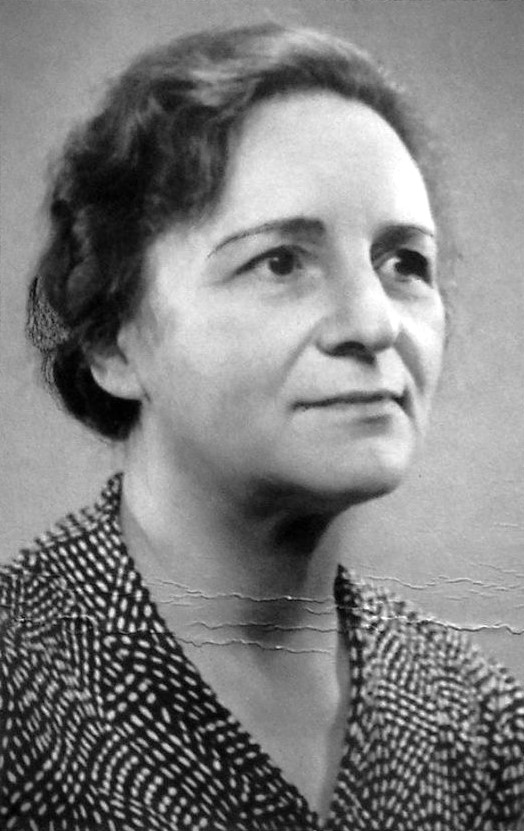
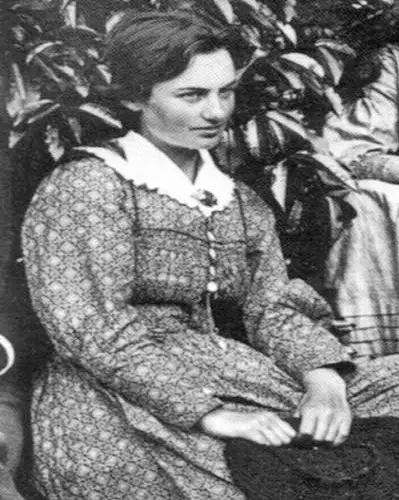
Baroness Marie Amelie Julie Anna Freiin von Godin was born on March 7, 1882, in Munich and died in 1956, and was sometimes also called Amalia Maria. She was a Bavarian writer, an activist for women’s rights, a translator, and a researcher of Albanian culture. Marie Amelie Freiin von Godin, as the daughter of the Royal Bavarian Justice Councilor Bernhard Freiherr von Godin and his wife Julie, née Eichethal from Munich. With great love, she began her life in her homeland of Bavaria.
She was a very interesting character, and, she did not show much interest in feminine virtues; she also had a desire to study in Zurich, where women studied at that time. But her parents, Julie née Eichthal, and her father, the Justice Secretary Bernhard Karl Gottfried Freiherr Godin, did not allow her such a thing. Godin continued her life at home, where she also began to write her first pieces. As early as 1902, she began writing for the newspapers Kölnische Volkszeitung and Tägliche Rundschau.
Despite frequent movements and stays abroad, she had a permanent residence at Rindermarkt 3 in Munich. Together with her three brothers and sisters, she initially received her education at her parents’ home, and she also attended a religious school, Sacre Coeur, in Riedenberg, as well as continuing her schooling in Austria, in the town of Vorarlberg, where she studied foreign languages and Art. After her many visits, many of her drawings and sketches have also been seen.
In her youth, she had decided to travel together with her brother Reinhard, and the two of them traveled to Trieste, and by ship went to Athens, Constantinople (Istanbul), and Jerusalem. In 1906, aboard a ship traveling to Constantinople, she met an Albanian for the first time, Avdi Bej Delvina, who invited her to visit Albania. In 1908, she finally came to Albania, where she also met Ekrem bey Vlora.
Of all the countries she visited at that young age, she was most fascinated by Albania, which at that time was still part of the Ottoman Empire. Over a continuous period of thirty years, she would travel and stay in Albania, during which time, upon the arrival of the German Prince Wilhelm Von Wied, she served as his advisor, translator, and companion. Also, during this period, in Durrës, she helped many sick and poor people who were afflicted by various diseases.
But later, she was impressed by a later Albanian politician named Ekrem Bey Vlora (1885-1964), who earlier had been a fighter for the defense of Albania. For religious reasons, both were initially deterred from marriage. But until her death, they remained very closely connected and in close contact, working together on a joint project on the History of Albania (an unfinished project), as well as on another project, a German-Albanian Dictionary, the first part of which was printed by the “Harrassowitz” Publishing House in Leipzig in 1930.
The Memoirs of Marie Amelie von Godin on the Occasion of the Declaration of Albania’s Independence on November 28, 1912
Marie Amelie von Godin had the fortune to be there in Vlorë on November 28, 1912, when Albania’s Independence was declared. Moreover, in her memoirs, she clarifies very well how the flag that Ekrem Bey Vlora kept was given by her to the Albanian politicians, and this flag flew on November 28, 1912, in Vlorë. In various notes published in Germany, it was said that Marie Amelie von Godin also greatly helped the Albanian fighters who fought against the Ottoman Empire. Vlorë, a small nest with barely 5,000 inhabitants, saw its population double overnight. During this time, Ekrem Bey Vlora, four weeks before his uncle arrived, led a group of soldiers for the defense of Labëria, to avoid falling under Greek invasions.
And after the call for Albania’s Independence, he himself was not present—writes Amelie von Godin, who had been staying as a guest in his house in Vlorë for several weeks, and who had followed the events with attention and directly through her own eyes. “For two whole days we awaited his arrival,” she wrote in her memoirs. “For an Independent Albania, he came at night when everyone was asleep. The next morning, on November 28, I will never forget it. I got up normally in the morning, when a man called me from the corridor: There I met Hydai Effendi from Vlorë.
He told me, ‘We know, Baroness that Ekrem Bey has an Albanian flag; please give it to me, so that this flag will fly tonight, and we will be independent, and we will declare Albania’s Independence.’ I brought the flag, the first Albanian flag that Ekrem Bey Vlora, for eight years, even during his travels through Albania, kept close to him, at a time when keeping the flag was strictly forbidden, as was the use of the Albanian language, which constituted a risk of imprisonment or internment.”
And then she continued: “On that day, I was filled with immense joy, because I was convinced that Ismail Qemal Bey did not take this step without knowing and carefully weighing Turkey’s loss to Europe, and from my accounts, it appears that this man could not have done it merely for adventurous reasons, to destroy his country, but this thing produced something good for Albania. On the same day, at the entrance of Xhemil Bey Vlora’s house, the Albanian flag truly flew. On the balcony where the windows were open, Ismail Qemali stood, together with the deputies of Albania who had come with him, Avdi and Murat Bey Toptani, Sali Efendi Gjuka, Mithat Bey Frashëri, Dom Nikollë Kaçorri, Riza bey Gjakova, and many others.
In the garden, head to head, were the gathered Albanians, where among the Tosks there were also the Ghegs with their traditional plis caps, who stood there calmly. All the white-plis men there held their weapons in their arms. When the flag was raised there, even the women who were inside were happy. An old man near the door of the house called out to me in a loud and full voice; ‘Now that I have seen this day, I want to die right now.’ Because this event, which occurred just moments ago, has been paid for very dearly with the blood of many generations and there have been many victims. When the flag flew, they all sang the song together, ‘For the Motherland,’ and for the Albanian flag, and then Ismail Qemali, Dom Nikollë Kaçorri, and Murat Bej Toptani spoke in turn.”
Baroness Godin also gives appraisals of Albanian patriots in her writings. In a piece about Don Nikollë Kaçorri, she would write: “Nikollë Kaçorri was a man who did not back down from his path; he alone always had the strong character and courage to oppose Ismail Qemali, and we can say with full confidence that in the composition of the Provisional Government, he was the representative of Justice. I am sure that this man, although in the religious sphere he is a believer, accepted tolerance for the sake of Albania, because otherwise, one would not think of a satisfactory progress for one’s homeland. Every action of his is logical, and he never steps on a rotten plank, nor does mud cling to his feet.”
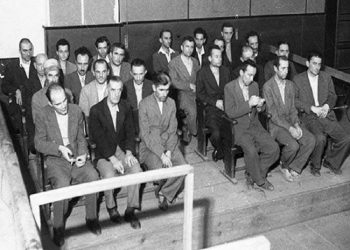
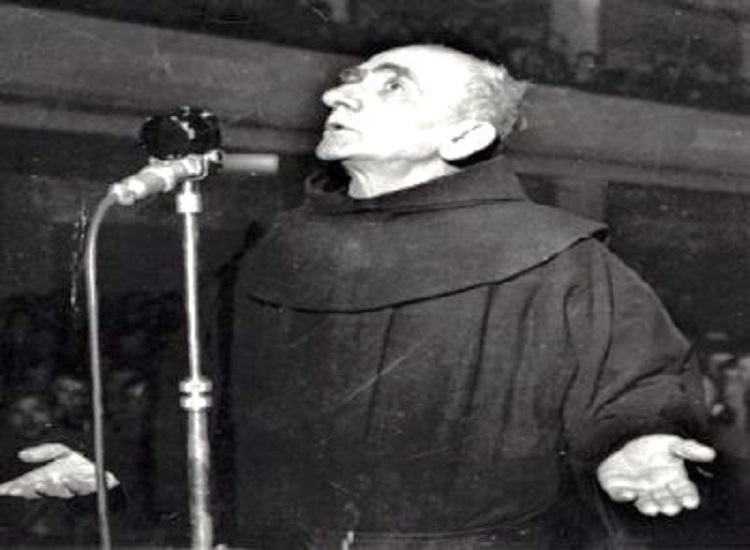
It is very interesting the appraisal that Baroness Godin gives for Father Anton Harapi, where the words of Father Anton Harapi spoken before the Communist Court, she would publish on the cover of the historical novel that she would exclusively dedicate to Father Anton Harapi. “Power and strength are short-lived and transient—said Pater Anton Harapi, opponent of Enver Hoxha.—I have been and am your opponent. Being free, I would always engage against you again, I would gather others to drive you out. What do you need witnesses for? What I have done, I do not deny, and I do not need a defender. I know how this trial will end. I am not afraid of death, and I expect nothing else from you.
Shame and shame upon me would be your mercy; dishonor and shame upon me is your grace. I will not survive the collapse of Albania. My beloved Albania, as I have planned it, as I have planted love for the homeland. You are corrupt and deceived through an insane teaching, that today you are fully in the service of the Slavic world, which is digging the grave of your homeland. For this madness of yours that you are doing in the service of Slavism, I am crying with bloody tears.” (Excerpt from the judicial process against Pater Anton Harapi).
“These were the final words of a man and a person who had dedicated his life to Albania, whose motto was to lead Albania towards a happy future,” concludes Baroness Godin. She also says in the historical novel about the work and life of Pater Anton Harapi, at the beginning, that Pater Anton Harapi is the successor of the great Albanian writer At Gjergj Fishta. She writes that everyone knows Pater Anton Harapi, from Sarandë to Shëngjin, from Durrës to Pejë; he was the State Governor of the Albanian Government for two years, until he resigned with the arrival of the communists in power. This novel was published in 1963, by the “Steyer Verlag” Publishing House; seven years after Baroness Marie Amelie von Godin passed away, and has a total of 207 pages.
The Published Works and Studies of Baroness Godin on Albanians
Besides the writings and studies she wrote and published in Germany on the Albanian issue, Baroness Marie Amelie von Godin was also involved in the protection and rights of women in Germany, and at the same time, she was also a member of the Association of Bavarian Writers. Among her works on Albania are also these publications of hers:
- Aus dem Land der Knechtschaft. Albanische Novellen. Wien: Josef Roller 1913.- 465 s.
- Aus dem neuen Albanien. Politische und Kulturhistorische Skizzen. Wien: Josef Roller, 1914.-126 s.
- Befreiung Roman aus dem modernen Albanien. Regensburg: Habel 1920.- 544 s.
- Die Bessa der Jakub Schara. Albanische Erzählung. Jena: W. Gensch, 1921.-17 s.
- Wörterbuch der albanischen und deutschen Sprache. Teil I. Leipzig: Harrassowitz 1930.- IV und 419 S. (German-Albanian).
- Auf Apostelfpfaden durch das schöne Albanien. Werl: Franziskus Druck, 1936 (Franziskanische Weltmission. Berichte und Erzählungen 5). -48 s.
- Der Tolle Nureddin. Roman aus Albanien. Köln: Bachern, 1936.- 167 s.
- Das Opfer- Roman aus Albanien. Paderborn: Verlag der Bonifacius Druckerei, 1937.- 188 s.
- Gjoka und die Rebellen. Geschichtlicher Roman aus dem Albanien.
- Der Überfall. Ein Roman aus Albanien. Rothenburg a.N: Pfeiler Verlag, 1955.- 143 s.
- Die Drei Kolaj. Gefährliche Wege im aufständischen Albanien. Würzburg: Arena Verlag 1961.- 140 s. (2. Aufl.)
- Vergessen, Roman aus der jüngsten Geschichte Albaniens. St. Augustin über Siegburg: Verlag, 1963. – 207 s.
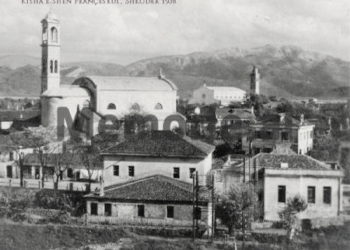
In April 1930, Marie Amelie von Godin visited the Franciscans in Shkodër. The Franciscans of Shkodër asked Baroness Godin to translate the Kanun of Lekë Dukagjini into German. Together with the Franciscans and Ekrem Bey Vlora, for whole months in Shkodër, they worked on translating the Albanian Customary Law, the Kanun of Lek Dukagjini. These translated parts of the Kanun of Lek Dukagjini into German would be published in Scientific Journals published in Germany on legal matters, such as the journal “Zeitschrift für Vergleichende Rechtswissenschaft” published in Stuttgart.
On February 22, 1956, the German Baroness Marie Amalie von Godin was found dead in her residence in Munich, Germany. Besides the contribution she gave to the preparation of the Declaration of Albania’s Independence, Baroness Marie Amelie von Godin dedicated her entire life to Albanian culture. To date, 12 works written about Albania have been discovered, and simultaneously published by prestigious publishing houses of the time in Germany, Austria, and Sweden. She also published hundreds of scientific and informative articles about Albania and Albanians, about their traditions, customs, and generous Albanian hospitality.
Was the coming of Marie Amelie von Godin truly a coincidence, or was she the envoy of German politics to prepare Albania’s Independence, since from 1908 to 1912, a full four years, she stayed and worked with Albanian fighters, as well as with Albanian political leaders, and precisely these years were the years of the great Albanian uprisings for Albania’s Independence? To this question, we cannot answer momentarily, until we have completed all the books, studies, but also many other interesting things that still remain in manuscript form of the German Baroness Marie Amelie von Godin, who dedicated her entire life to the support of the Albanian Nation.
But the time has come for a street in Vlorë or Tirana to be named after her, while the Albanian Scientific Institutions should collect her work, translate it, and publish it also in the Albanian language, so that we have the opportunity to fully know the work of the German Baroness Marie Amelie von Godin who helped Albania’s Independence, and was the most devoted voice in Europe for the defense of the Albanian cause. / Memorie.al