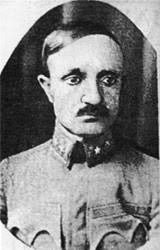
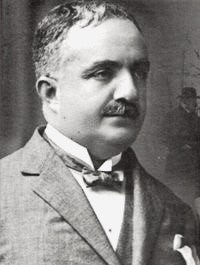
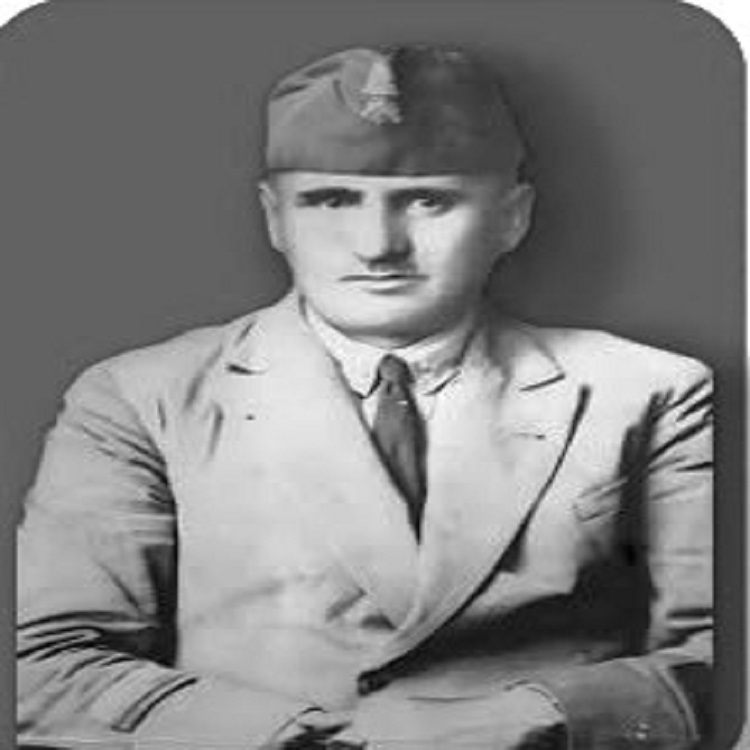
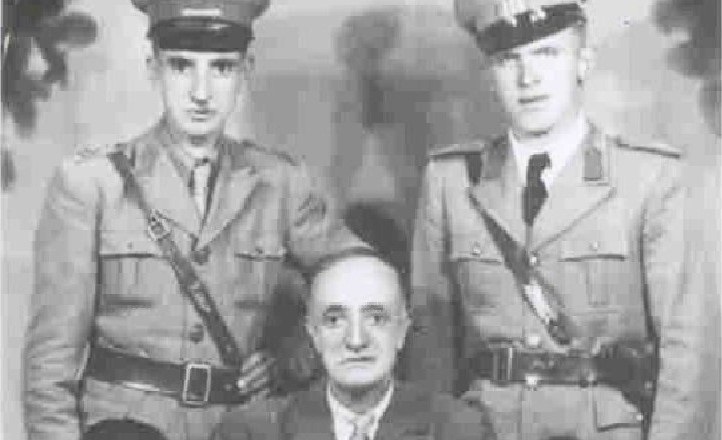
Memorie.al – At the end of April 1913, a 30-year-old Albanian, charming, with a high forehead and a pointed mustache, disembarked from the sea towards Vlora. Just as if his arrival alone had been awaited, the Provisional Government of Vlora would appoint him to the high office of Chief of the General Staff of the National Army. A General Staff that had both to lead in war and to raise the armed forces, and especially the regular army, from scratch. This 30-year-old was Major Ali Shefqeti (Shkupi), a formed personality, a known patriot, and a talented military man. The son of a patriot from Peja, Hysen Shefqeti, and of an Albanian woman from a wealthy family in Skopje, Ali was born in that very city in September 1883.
He had brilliantly completed the civic school of Thessaloniki and the military high school of Monastir, had distinguished himself at the higher military school (Mekteb-i Harbiye) and then at the Academy of the General Staff (Erkan-i Harbiye) in Istanbul, which he had finished in 1905 together with Mustafa Kemal (Atatürk). Upon graduation from the Academy, he had earned the rank of Captain of the General Staff. Subsequently, he had served in various duties in the Third Army in Macedonia. Tied to the Young Turk movement, he had been among the group of officers who, in 1908, attacked the old absolutist sultanate regime.
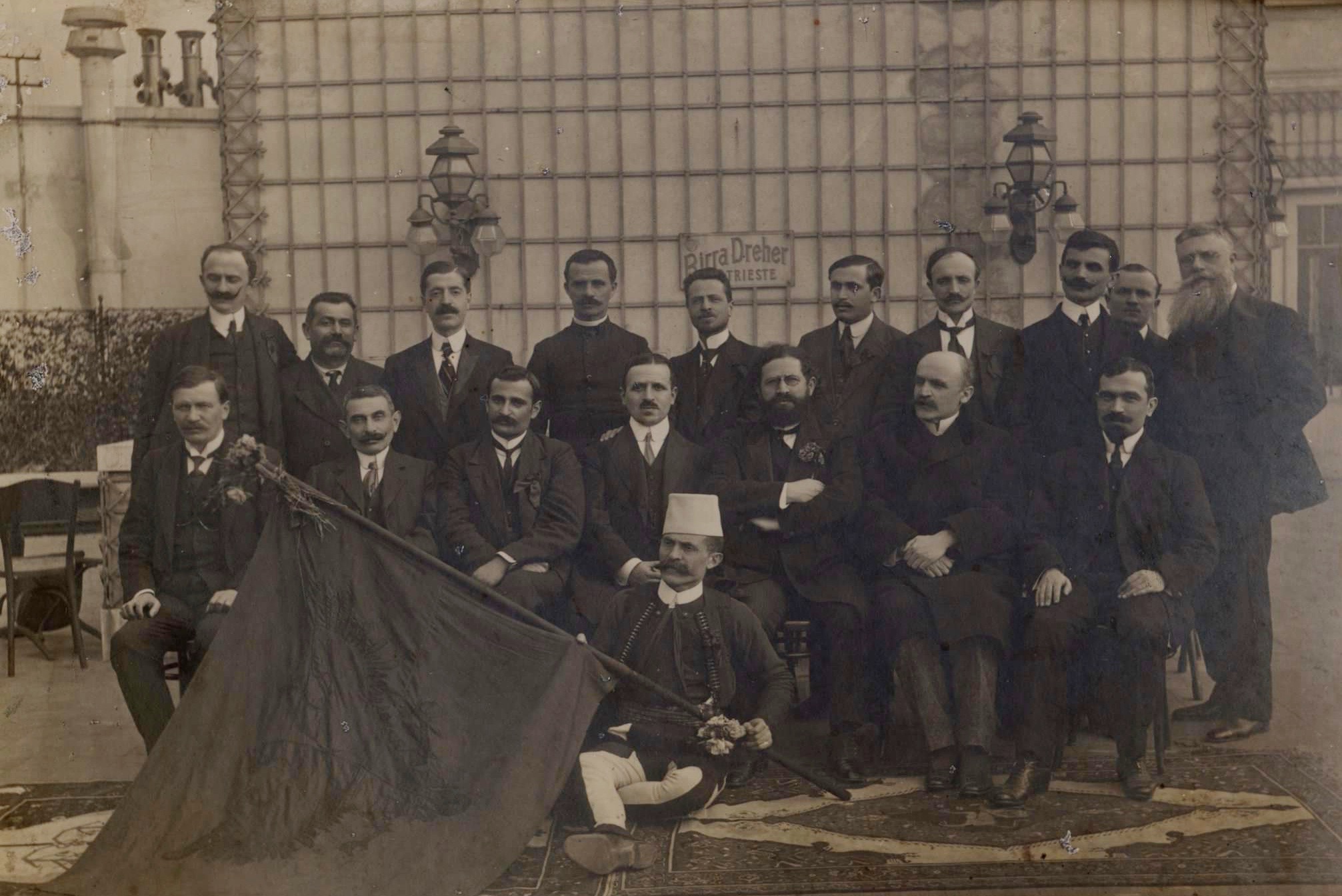
Soon Ali Shefqeti would become disillusioned with the Young Turks, and taking advantage of his post in Thessaloniki, he would bind himself even more closely to Albanian patriotic circles. In his duty as commander of the garrison of Istanbul, after the general Albanian uprising of 1912, Major Ali Shefqeti was informed that the Ottoman government was preparing to arrest him. With the support of the Albanians of Istanbul, he escaped to Romania, from where he went to Trieste, where in March 1913 he participated in the Congress of Trieste alongside many distinguished patriots of our diaspora.
He had wanted to come to Vlora, where the Government of Ismail Qemali Vlora was operating, but it had been impossible because the Greek fleet kept Vlora blockaded. At the end of April, he took advantage of an opportunity and disembarked from an Austro-Hungarian ship at the mouth of the Seman River, and from there to the Vlora of Independence and of great patriotic enthusiasm.
As we said above, upon presenting himself, due to the recognition and credibility he enjoyed, Ali Shefqeti would be tasked with organizing the Ministry of War, which, it seems, he did very quickly: on May 5, 1913, the Provisional Government of Vlora would discuss and approve the Regulations for the temporary organization of the Ministry of War, which would include the General Staff. Major Ali Shefqeti would immediately be appointed to the high and honorable post of Chief of this Staff. The Ministry of War would also have the Office of the Rear (the rear area), the Office of Organization and Personnel, and the Health Office.
In the second section of these Regulations, the internal structure of the General Staff itself was also defined, which, on its part, consisted of circles (let’s say directorates or departments), its secretariat, the regulations commission, the commission for the treatment of police and gendarmerie matters, and the construction (or engineering, as one might say) commission.
The Regulations also succinctly fixed its duties and rights. In May 1913, the General Staff had begun its concrete duties, drafting regulations and issuing orders. The name of Ali Shefqeti (Shkupi) appears everywhere in these documents kept in the state archive.
The fact that the Ministry of War of the new Albanian state was conceived and built with a General Staff, as early as 1913, shows that the construction of the regular Army began from the top down, a characteristic of a lawful, modern state. The very idea and structure of an Army with a General Staff were the most advanced European idea and practice.
On May 31, 1913, the Chief of the General Staff informed the Ministry of War about the work being done to create the model company of the Army, according to which the National Army would be built. There, the need for the near-term start of compulsory military service was also raised. On June 3, 1913, Major Ali, on behalf of the General Staff, forwarded for study to the Minister of Internal Affairs, Myfit Libohova, the first draft of the “Regulations of the Albanian Militia,” before it was discussed in the Council of Ministers.
In his duty as Chief of the General Staff, Major Ali Shefqeti communicated by telegraph and transmitted Government decisions or orders and instructions from the Ministry of War and from the Staff itself for military actions in various territories of the country, in the south against the Greek invading forces and in Dibër where the September 1913 uprising was taking place.
The Staff led by him had suggested to the Government, and it had ordered abroad, especially in Austro-Hungary, cannons, machine guns, uniforms, and what is more surprising, also “a number of service books and various works that would serve the military administration of the Government.”
In this work, Ali Shefqeti would also successfully cooperate with the group of Dutch officers who would come to our country according to the decision of the Conference of Ambassadors of July 29, 1913, for the organization of the gendarmerie. Let us recall that the gendarme of 1913 was both a keeper of order and a soldier of war, a force still undifferentiated.
As early as 1913, under the leadership of Ali Shefqeti, the General Staff had undertaken a special effort regarding military terminology. For this matter, he had engaged a special commission composed of cultured officers such as Mustafa Maksuti and Kamber Sejdini (“Martyr of the Homeland”) from Elbasan, a former professor of French at the military high school of Monastir.
Many of the terms we use today in the military field belong to the activity of this commission. This activity is another indicator of the culture of the General Staff, and of its Chief, Ali Shefqeti, who, in such difficult conditions of a new state fighting for existence with arms and diplomacy, managed to appreciate the value of military culture as part of the struggle for freedom and independence.
Major Ali Shefqeti, even after the resignation of the Government of Ismail bey Vlora on January 22, 1914, held and exercised high leadership posts in our National Army. With the start of the First World War, Ali Shefqeti was arrested by Montenegrin forces in the city of Shkodër and was imprisoned until 1916, when Austro-Hungarian troops entered Montenegro.
An active supporter of the Congress of Lushnje, the Government that emerged from it (January 1920) would appoint Lieutenant Colonel Ali Shefqeti first as commander of the General Command, and then, with the creation of the Ministry of War, again to the post of Chief of the General Staff. A patriot and democrat, closely linked to Hasan Prishtina, Ali would be among the most active in the June Movement of 1924 and would once again be entrusted with high duties at the head of the National Army.
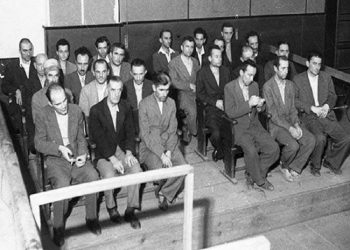
After two internments and his dismissal from the army, the monarchist regime sentenced Ali Shefqeti to death as the initiator and head of the secret organization for the overthrow of Zog through an armed uprising in 1935. Following powerful protests from within and abroad, the regime did not dare to execute him, and he was released from prison in 1938.
Ali Shefqeti condemned and opposed the fascist occupation of his homeland. The German Nazis burned his house in Tirana. Afterwards, he settled with his family in Shkodër, where he lived on a pension of three thousand lek. He died on December 3, 1953, and was buried there. In the 1980s, he was reburied in Tirana. In 1992, Ali Shefqeti (Shkupi) was decorated with the order “For Patriotic Activities, First Class.”
Ali Shefqeti left behind two daughters and a son: Fatbardha, Liria, and Skënder. This modest writing is homage to the fervent patriot, to the talented military leader, on this 104th anniversary of the Declaration of Independence and the creation of the Armed Forces of Albania. / Memorie.al