

Second part
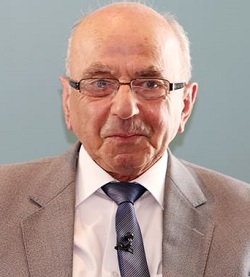
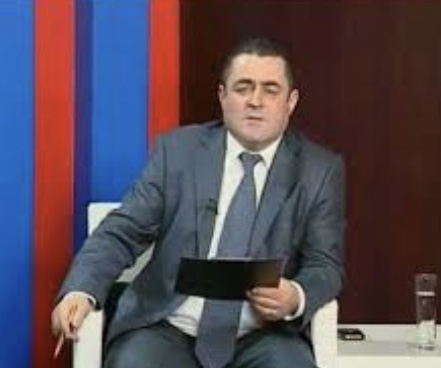
Memorie.al / In the program “Live to Tell” produced years ago on Shijak TV, the well-known journalist and moderator Nebil Çika also invited former political prisoner Gëzim Peshkëpia, a distinguished intellectual and scion of a large and very well-known family in Albania, with contributions from the early beginnings of the Albanian state idea to the present day. A former political prisoner and the son of one of those executed in the bomb massacre at the Soviet Legation in Tirana in 1951, where 22 well-known intellectuals of the capital were executed without trial.
Continued from the previous issue
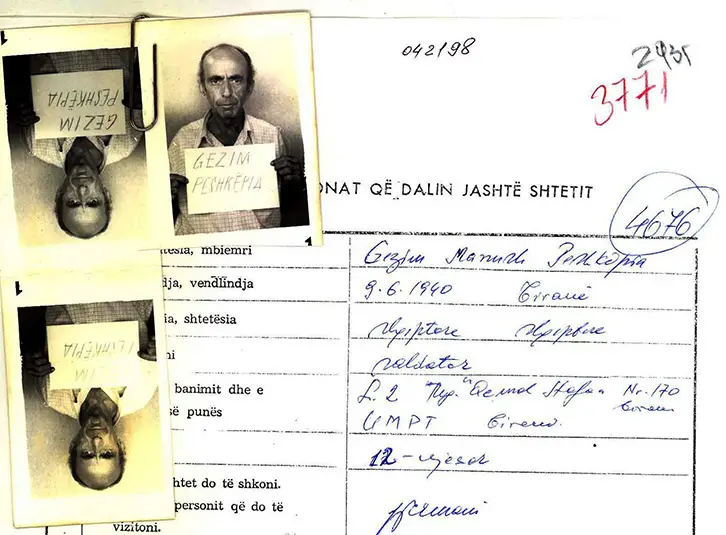
NEBIL ÇIKA: Gëzim, I have here a copy of your internment order. I am struck by a note at the end, which says: “Take care to place them in a building, also find them a job just to keep them breathing.” Very cynical, macabre…?!
GËZIM PESHKËPIA: And there is a name at the bottom, ironically called Kasapi (Butcher), Kiço Kasapi. Worthy of a dictionary that butchers might use. This is about a real terror.
NEBIL ÇIKA: Was Kasapi’s order carried out?
GËZIM PESHKËPIA: Yes, to the end. We spent the first night in an inn, then they took us to the castle of Berat, where we stayed in Miti Sanija’s house. Miti Sanija was a carriage driver, a very good man, a very honorable family, who felt sorry because they saw how meaningless the internment of an old woman like my grandmother was, of a woman with two small children, especially since our father had been executed.
Before that, Markagjoni’s family had been there, and for them there might be some justification, because they had a fugitive who could come from abroad, but for us, we posed no danger, there was no one left to come for us, the heads of the families had been executed.
There were us, there was also Fadil Dizdari’s family and Hekuran Troka’s family, together with a single woman named Maria Rashkoviç, the wife of Lluka Rashkoviç. In internment we were deprived of the right to move outside the town. We had the right (to move) only as far as the Vajgurore Bridge. For any movement we had to notify the Internal Department.
We had to report twice a day to the chairman of the People’s Council. After we did this for two days, he – a very good man – said that we shouldn’t move because he would come to the house to see us himself, as it was pointless.
On one hand, there was a woman in childbirth with a small child, like Hekuran Troka’s wife who stayed with an old woman, with Lluka Rashkoviç’s wife; on the other hand, there was an old woman who stayed with her son’s wife and two small children, posing no danger. There is another aspect that has stayed in my mind:
Once, one night, we found a loaf of bread at the door – which now seems nothing, but at that time our joy was extraordinary. We racked our brains as to who could have done this; we ruled out the owner of the house because occasionally he gave something to the little children, but it was still beyond his means.
The bread was two and a half tries (old Albanian coin). My guess is that it came from the chairman of the Council, because others found it a bit difficult to approach us. Simple people loved us, supported us, and in a way this was also a display of dissent.
NEBIL ÇIKA: After Berat, where did your family go, Gëzim?
GËZIM PESHKËPIA: My family then went to Kavajë.
NEBIL ÇIKA: Were you interned again?
GËZIM PESHKËPIA: There we were called by another term: “urbanized.” There too we had to get permission from the Internal Department if we wanted to go to Durrës or Tirana.
NEBIL ÇIKA: Did your situation change in Kavajë?
GËZIM PESHKËPIA: I am very indebted to the people of Kavajë. We found a wonderful environment. There were several families.
NEBIL ÇIKA: A wonderful environment?
GËZIM PESHKËPIA: A wonderful environment because of the warm people – that’s what I call environment. There were us, Anton Delhysa’s family, Shyrete Jegeni with her children, Nadire Kasoruho with her son Amiku, and Fadil Dizdari’s family.
NEBIL ÇIKA: Let’s pause a moment on your uncle, a very well-known figure, one of the leaders and ideologues of the Balli Kombëtar (National Front), with an activity that never ceased in the diaspora. From what I’ve read, he was also a member of the Assembly of the Organization of Captive Nations, an organization that brought together all countries under communism?
GËZIM PESHKËPIA: Yes, that’s right. For a period he was also Albania’s representative to that assembly. He was also a member of the “Free Albania” Committee. That’s regarding the political side, which has its origins in the fascist period, at a time when he was a teacher in Tirana and, together with my father, refused to wear the black shirts, as ordered for all civil servants back then.
For this they were interned in Elbasan, although they worked in their respective professions there as well. Their political activity did not cease there either, which is why my uncle was arrested. After major protests, they were forced to release him. “In prison,” Dashnor Mamaqi told me, “he organized us against fascism.” Meanwhile, once, in a statement made by one of these old veteran cronies, he called him a fascist. He was an anti-fascist.
NEBIL ÇIKA: How much did your uncle’s activity against the Albanian communist government affect your treatment inside Albania?
GËZIM PESHKËPIA: Many link my uncle’s activity with my father’s killing, but my father’s stance was that of a nationalist, and I don’t want to minimize it to portray him more as a victim than a martyr.
NEBIL ÇIKA: Nexhat’s (uncle’s) activity continued long after your father’s killing, and the treatment of your family grew harsher. Did that have an effect?
GËZIM PESHKËPIA: Naturally. The most predisposed contingent for the communist prisons were we, their sons.
NEBIL ÇIKA: Mr. Gëzim, did the pressure the communists put on you aim to restrain your uncle?
GËZIM PESHKËPIA: Naturally. I know a friend of mine (Maçi’s son) who would write to his father saying: if it’s for our sake, continue the line you’re on, don’t compromise. Once they called my uncle’s wife to the Internal Department and told her: “Write a letter to Nexhat to come back.” My father drafted the letter. They understood as much, shortly before he was re-arrested. That was a painful story…! When I had the chance, I tried to tell it after I left Albania; they found it unbelievable…!
How can a poet be killed?! That only happens here, among us! A man who never held a gun in his hand – you take him from his home, execute him, and send word to his family that he was killed as a terrorist. The terror was done by others, the persecutors, not the persecuted. This wave of terror was felt strongly in Tirana. Tirana was small back then, and to arrest 150 people and execute 22 in one night – that was pure terror. The Albanian St. Bartholomew’s Night.
NEBIL ÇIKA: Gëzim, I want to focus on your fate. It seems that internments were not enough; you were also arrested yourself for political crimes, as an opponent of the regime.
GËZIM PESHKËPIA: I belonged to the most likely contingent to be targeted. That came in 1974-1975, during a mass crackdown.
NEBIL ÇIKA: Where were you at that time?
GËZIM PESHKËPIA: At that time I was working as a painter at OMT (maybe we can find the full name). I had just gotten married; I was three months married when I was arrested. I was sentenced to 8 years and sent to Ballsh prison.
NEBIL ÇIKA: What were you accused of?
GËZIM PESHKËPIA: For agitation and propaganda in the field of art and culture.
NEBIL ÇIKA: What specifically was the charge?
GËZIM PESHKËPIA: They found some books by Fishta in my house, including “The Highland Lute.”
NEBIL ÇIKA: Was Fishta enough to convict…?
GËZIM PESHKËPIA: A legend was woven; someone came out and said: “Take care, because this is the book of our true poet,” etc. I came out as the greatest propagator of Fishta as a poet. That is undeniable, but they could weave unimaginable accusations. They could make you a poly-agent, etc.
NEBIL ÇIKA: Eight years for Gjergj Fishta?!
GËZIM PESHKËPIA: It wasn’t only Fishta. Allegedly I had also spoken about painters who were decadent, or about literature, e.g., about Kadare’s book “The Wedding,” as if I had said that this book was like reading a newspaper. In fact, I had said that, but in terms of the literary style of that book.
NEBIL ÇIKA: Were they well-known people who testified against you?
GËZIM PESHKËPIA: No, the accusation was backed by a couple of people without personality.
NEBIL ÇIKA: How did the investigation treat you?
GËZIM PESHKËPIA: The investigation was inhuman. I denounced several times the behavior of the interrogators Nasho Gjikopulli and Kosta Gazeli. Kosta Gazeli tortured me, hit me, made me bleed, and despite my denunciation, instead of him being put in the dock, they sent him as a diplomat. He was the number two person in Athens after the establishment of democracy. Later he joined the Human Rights Party.
Both (were) Greek-speakers. They condemned me as if I were an enemy of my own country during that investigation, where they spoke Greek to each other. It was a paradox, as if you were not in your own state’s offices. Together with them in that “choir” also chimed in the arch-criminal Kadri Ismailati, also Greek-speaking. They left me in the middle of winter with a thin canvas apron, which caused a lung condition.
NEBIL ÇIKA: You are a character (in the memories) of several people who passed through prisons, starting from your fellow sufferer Patër Zef Pllumi, and also others. In your books, you too have mentioned several prominent figures of today’s history. What do you remember of these prison friends?
GËZIM PESHKËPIA: I singled out Patër Zefi, because I was bound to him by a close friendship, which continued until the last days of his life – a pure friendship between two people not necessarily linked by religious faith, but by a spiritual connection beyond concepts of religion and political convictions, which in prison takes on such an incomparable form of friendship.
NEBIL ÇIKA: Let’s go back to Patër Zef Pllumi. What kind of figure was he?
GËZIM PESHKËPIA: I met Patër Zef Pllumi when I was in Tirana prison; Patër Aleks Baqli had spoken to me about him. I knew the Franciscans; I had as a friend Father Viktor Volaj, who served at Cape of Rodon, where I had been a teacher. Later, Father Aleks described him (Father Zef Pllumi) as a hero, an unyielding man, of superhuman proportions in terms of enduring suffering, and indeed it turned out that throughout the prison period, I had many conversations of various kinds, and I can say that I read little new in his books, because they had been said and over-said in the conversations we had together.
There were fields where I listened exactly like a student; I could not debate with him, because he was unique; I could not talk about Fishta with Patër Zef Pllumi, because his knowledge was vast. As is known, the Catholic clergy, especially the Franciscans, had the greatest representatives in Albanian literature.
NEBIL ÇIKA: In this book, it strikes me that he speaks little or not at all about himself. Was that how he was in there too?
GËZIM PESHKËPIA: That is correct; they were dedicated to their ideal, and the stance they took was not surprising. I have mentioned an episode in my book about Aleks Baqli, who was a close friend of Patër Zefi, when the commissar ordered him to break the statue of Christ and smash his rosary.
He refused. It was a moment as simple as it was heroic, and it astonished us all. It was our first contact with prison, with those who rightly understood what dissent is, what opposition is. They were ready to be martyred. /Memorie.al