First part
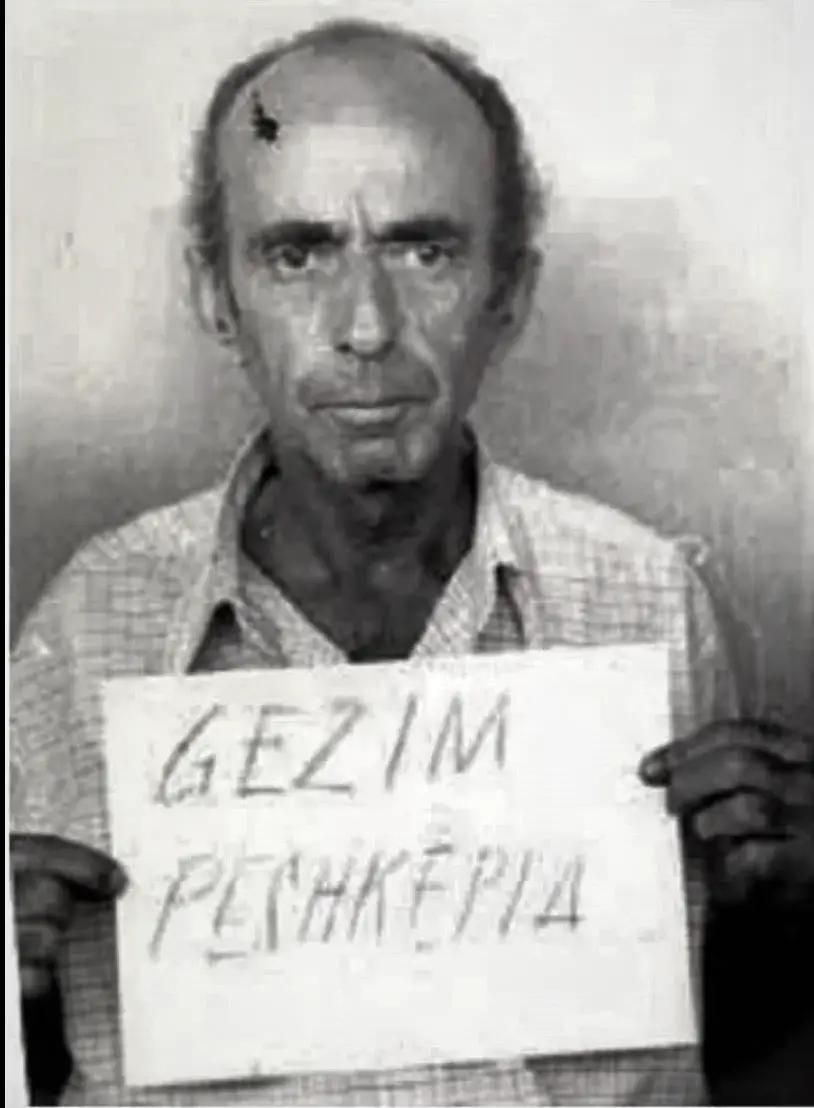
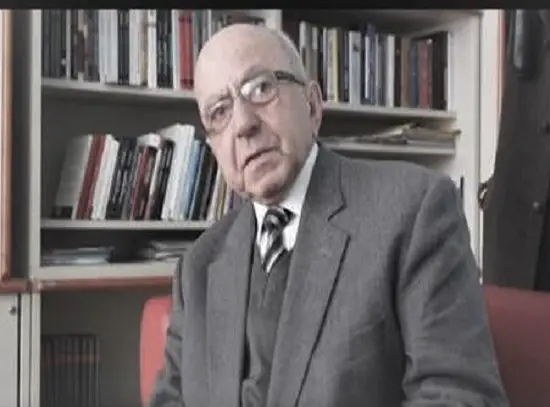
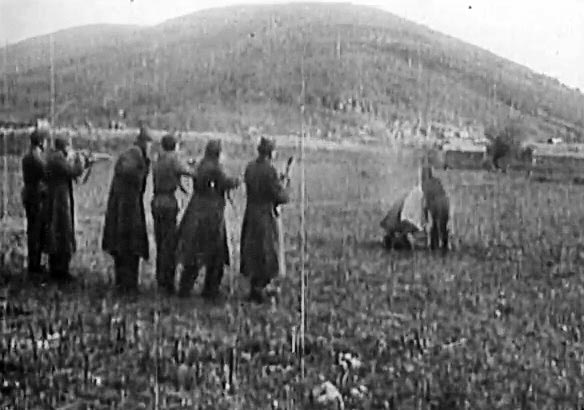
Memorie.al – In the show “Live to Tell” (Rrno për me tregue) broadcast several years ago on Shijak TV, the well-known journalist and moderator Nebil Çika also invited former political prisoner Gëzim Peshkëpia, a prominent intellectual and scion of a large and highly respected family in Albania, one that has contributed from the very beginnings of the idea of the Albanian state up to the present day. He is a former political prisoner and the son of one of those executed in the bomb massacre at the Soviet Legation in Tirana in 1951, where 22 well-known intellectuals of the capital were shot without trial.
NEBIL ÇIKA: Mr. Gëzim, for the sake of public interest, I would like to start with the history of your family – a family that, from your grandfather onwards, has been engaged in the efforts to create Albania, to build this state, or rather to rebuild it, and it seems that parallel to this activity, a kind of persecution also began. From what I have read, your grandfather was among the first to be punished by the Ottoman Empire as an Albanian nationalist. A brief history of your family…?
GËZIM PESHKËPIA: I will try to state it as briefly as possible, to give a summary of the activity of the Peshkëpia family, which originally had the surname Tajaraj, branched off from the city of Gjirokastër and split into two branches. One of these branches settled in Vlorë. My grandfather was Tahsim Peshkëpia, a doctor in Vlorë; his brother, Talip Peshkëpia, was a jurist.
Both were involved in the national movement, members of the “Labëria” group in Vlorë. They had a prominent activity, and my grandfather paid for this. After an assassination attempt against the Turkish garrison in Vlorë, he was imprisoned, and through the intervention of his study friend in Istanbul, Ferid Pasha Vlora – who came from the Vlora family and had influence as a pasha – his imprisonment was commuted to exile in Jeddah, Arabia.
When his time for release came, a cholera epidemic broke out, and he was mobilized as a doctor of the empire. It was on the threshold of the declaration of independence. Doctor Tasini, infected with cholera, died in Jeddah, Arabia, where he is buried. To this day, unfortunately, we have no news of where he might be buried in that country. Later, his minor children, Nexhati and Manushi, were raised by Talipi, their uncle.
NEBIL ÇIKA: They too were very engaged. Talipi, we might say, and the rest of the family was very active at the moment of the declaration of independence, and also in the government of Vlorë.
GËZIM PESHKËPIA: Yes, Talip had once been interned on Sazan Island. There they suffered from an epidemic, but fortunately he survived. With the declaration of independence, we find him as a jurist, legal advisor in the government of Ismail Qemali. For this I have a document from the archives, where a letter of his has been found. I also have another document which states that he may have been not only a legal advisor, but also one of the compilers of the Declaration of Independence. Unfortunately, the archival sources are not very rich to shed light on the full activity of both brothers.
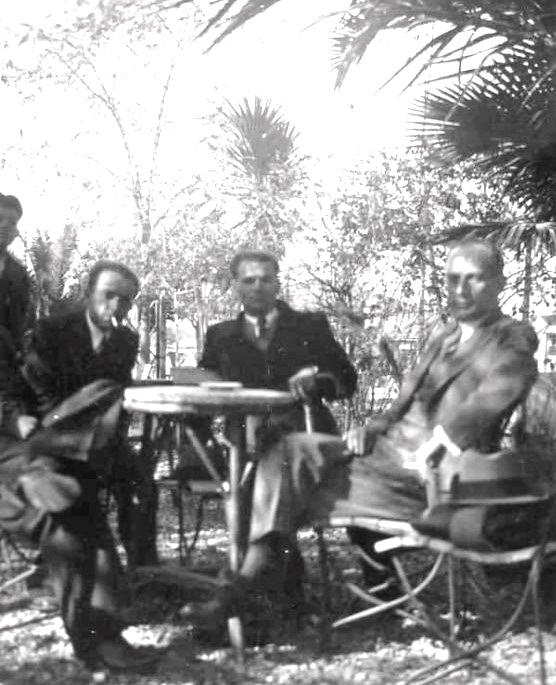
Later, the Peshkëpia family, consisting of the two brothers (Nexhati and Manushi), left Vlorë and came to Tirana. Naturally, they continued the family tradition, because the Peshkëpia family counts six generations of intellectuals, and their activity was noticeably seen at that time in Tirana. My uncle, Nexhat Peshkëpia, was a mathematics professor at the Tirana high school, while my father was a financier at the National Bank. My father was known as a representative of the new generation of men of letters of that time.
NEBIL ÇIKA: I have a document here. A very interesting description of Manush Peshkëpia, dedicated to the poetry of Mitrush Kuteli, prepared in the 1940s. In 1944, he directed a very famous literary program on Radio Tirana…?
GËZIM PESHKËPIA: My father’s literary activity is well known in literary circles of that time. That document you have in your hand is evidence of his activity at Radio Tirana, where his friend Gjergj Bubani was director. He directed Radio Tirana’s literary program. This program dealt with the writer Mitrush Kuteli and also contains a commentary on his poem about Saint Naum.
Later, when I was in emigration, I came into contact with the diaspora press, where I encountered my father’s name several times. Abaz Ermenji sent me a memorial he had published in a newspaper in France. In the magazine ‘Koha Jonë’ (Our Time), directed by Hiqmet Ndreu, there was again such an article; I found in periodicals writings about my father’s activity, as well as the regret of all the emigrants when they learned of his execution.
NEBIL ÇIKA: Mid’hat Frashëri has some memoirs, Arshi Pipa as well, where they value him as a man of letters, when they were in political emigration outside Albania…! Your father – he (Mid’hati) presents him as a steadfast man, as a virile man, etc. I have the idea that Mid’hati is referring to the virile stance that Manush Peshkëpia took at the Special Trial.
GËZIM PESHKËPIA: That is correct.
NEBIL ÇIKA: From your perspective, even a memory, although you were young, but nonetheless a memory about your father’s stance, as well as that of his comrades?
GËZIM PESHKËPIA: To tell you the truth, although I was small, I remember that we went together with my mother to the Juba camp, where the Juba canal was being built. I remember him; we walked a long way…!
NEBIL ÇIKA: After he had been sentenced?
GËZIM PESHKËPIA: Yes. He was in a tent with Osman Saraçi. I also remember from the Tirana prison – I was there on Bajram day; they let us go inside the yard, where I also had the bad luck to walk in that yard years later (as a prisoner). I don’t remember more from that period, except that, as the people at home, my cousins or friends mentioned to me from time to time, they told me about a debate that had taken place with Koçi Xoxe. (Xoxe) was chairman of the Special Trial; the prosecutor was Bedri Spahiu.
His lawyer, who unfortunately also found death later (Myzafer Pipa), addressed him: “Will you, a tinsmith, measure yourself against an intellectual like Manush Peshkëpia?” That caused his death later; he died under torture, staging an escape – allegedly he was killed while trying to escape. He (Xoxe), among other things, addressed my father with the words: “Pup of Mid’hat Frashëri.”
My father stood up, and although he was short, he seemed gigantic at that moment, saying solemnly: “I am proud to be his student!” This was remembered even up to the period when I entered prison. Years later, when I met Father Zef Pëllumbi for the first time, he said that Manush’s words, which he spoke with great courage in court, circulated among all the youth of that time.
NEBIL ÇIKA: One must bear in mind that Mid’hati was the communists’ main opponent, the chairman of the Balli Kombëtar (National Front)?
GËZIM PESHKËPIA:My father was a simple member of the Balli Kombëtar, as he himself declared; his brother (Nexhati) was more active.
NEBIL ÇIKA: Even if not very active, he still stood by his own idea.
GËZIM PESHKËPIA: Many people say he paid the price for his brother, but that’s not so. My father was just as nationalist as his brother, even though politically he was not as engaged as Nexhati – he was an idealist.
NEBIL ÇIKA: How many years in prison did your father serve?
GËZIM PESHKËPIA: The first time, my father served nearly 5 years and was released before an event that proved fatal.
NEBIL ÇIKA: This is an event that speaks of one of the most monstrous crimes, not only in Albania but in the entire communist East: the execution of 22 intellectuals. Prominent people who had survived the first wave of communist terror.
With a staged bomb at the Soviet embassy, the communist leadership, headed by the dictator, selected 22 intellectuals in Tirana who were shot without trial, among whom was your father…!
GËZIM PESHKËPIA: It is interesting to point out another connection. The majority of them, with the exception of two or three, had personal acquaintance with Enver Hoxha.
NEBIL ÇIKA: A good part of them were from Gjirokastër.
GËZIM PESHKËPIA: Yes, from Gjirokastër. It began with Sabiha Kasimati – a woman – an indescribable terror, unparalleled even in other dictatorships in all the Eastern countries. Even Lenin, who was a criminal, did not execute an assassin; he did not kill him. But this one (Enver Hoxha) killed his classmate, because he was truly sick; he did not forget even the most insignificant details.
NEBIL ÇIKA: And with your family, he had some kind of acquaintance…?
GËZIM PESHKËPIA: No, it wasn’t just some kind of acquaintance – it was a full family relationship. Nexhati’s wife was Enver Hoxha’s first cousin. It is exactly as you say, as he writes in his memoirs, in his books: “I entered the Peshkëpia house as if it were my own. I came and went, I drank and ate lunch, and sometimes I even took money as a loan.” Loan – I have said it another time – they say that to the one who returns it, but he had a different habit. He converted the money into bullets, to return the debt with bullets.
In 1951, he seized the opportunity and with his own hand he singled out all those who were to be shot from among the arrestees of that night, who numbered about 150. He singled out 22 of those who were presented. After the ’90s, I had a friend of mine at the Supreme Court, and I took an interest in the file and I saw it.
I was impressed, and even now I shudder, at how a man was killed. At the head of a list it was written: “List of persons I propose to be shot.” Not to be arrested, not to be interned, but directly to be shot.
NEBIL ÇIKA: Who made the list?
GËZIM PESHKËPIA: He was called… Dedja, the surname, with the rank of captain, a directorate director.
NEBIL ÇIKA: How do you remember that day?
GËZIM PESHKËPIA: I was in the sixth grade. My father had the habit of checking my lessons. That night I played a trick, going to sleep earlier than the time he would come. I fell asleep, and I remember waking up from noise. I saw unfamiliar faces; there were two people, one in uniform. I also remember my father being surprised, not understanding what was happening.
He took me and turned me toward the wall, saying: “Sleep, daddy’s dear.” That was the last parting with him. The next morning, the police station was nearby; I went and asked the guard officer for my father. Two days later, while I was visiting a cousin, Estref Kërçiku, in prison, two officers curtly told my mother and grandmother: “Manush Peshkëpia has been shot as an enemy of the people. On March 3, you will be interned, so get ready.”
All our belongings had already been taken. They did not even let my mother take our spare clothes. Neighbors – one a blanket, someone else something else – helped us. On March 3, in a car together with the families of Kaceli and Thoma Katundi, they set us off and left us in Berat. / Memorie.al