
Part Three
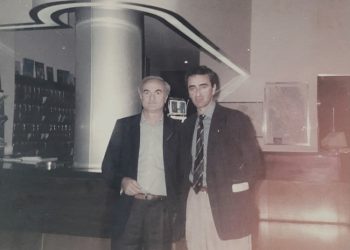
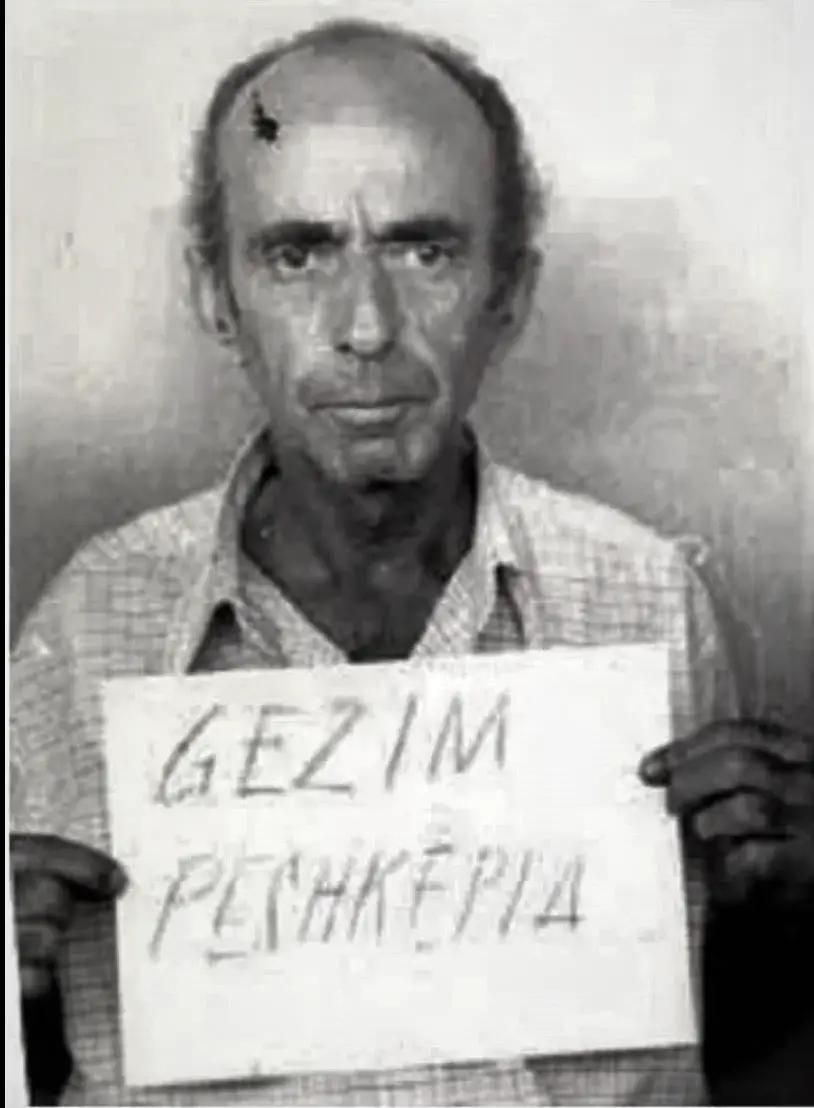
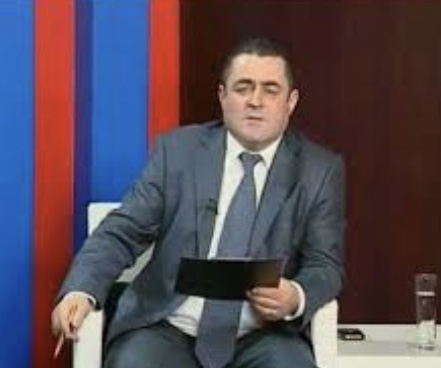
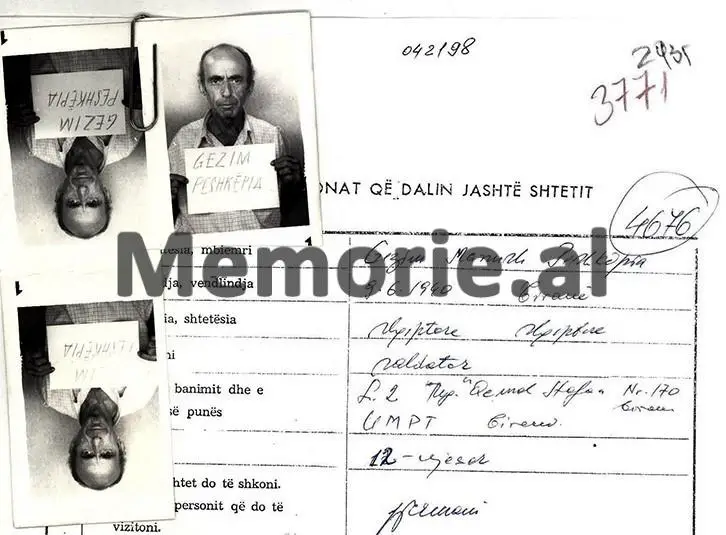
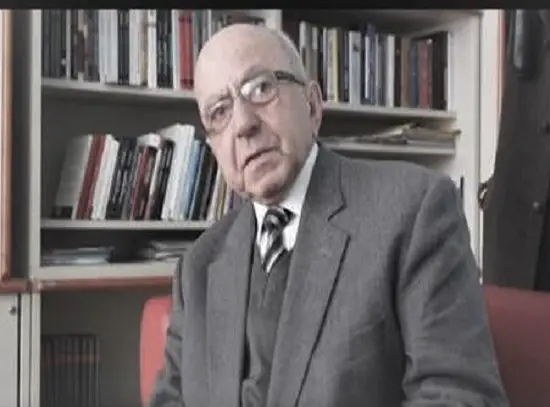
Memorie.al / In the programme “Live to Tell” (Rrno për me tregue), broadcast several years ago on Shijak TV, the well-known journalist and moderator Nebil Çika also had as a guest the former political prisoner Gëzim Peshkëpia, a renowned intellectual and scion of a large and very famous family in Albania, with a contribution spanning from the early ideas of the Albanian state to the present day. A former political prisoner and the son of one of those shot in the bomb massacre at the Soviet Legation in Tirana in 1951, where 22 well-known intellectuals of the capital were executed without trial.
Continued from the previous issue
NEBIL ÇIKA:Mr. Gëzim, in your book I was struck by one of your considerations regarding the prison director. You have a very tragic, very moving moment, yet you found the strength to rise above that personal moment to appreciate a man of the regime. Could you once again recount that tragic, but also manly, situation – on your part as well as, I believe, on his?
GËZIM PESHKËPIA: Not everyone bears responsibility for the crimes in the same way. The dictatorship had huge repressive gears, and there were also some small ones set in motion for survival’s sake, I would say. I remember a guard from the prison. He knew how to apply the regulations. He used to say: “I work here for my kids’ bread,” he didn’t know more than that. They called him Qatip, whereas the commander, Xhevdet Caka, came from the army…!
There is an amusing episode that Zef Pllumi wrote about. As soon as he entered the prison, his first contact with the prisoners – he found me with Zef – and being from the army, he started talking as if we were soldiers, asking us about our families. But we were enemies to them, and he had to distance himself from us. He seemed like a good man and, in fact, he showed himself to be so until the end.
I have described the moment when my mother died. He took it upon himself to give me the news. He called me and began to tell me that prison is for men. “I too have a sick mother, and I am just like you, far away from her,” he told me. It was true that a week later his own mother died. Finally, I understood. There was a pause, and then I exploded. To tell you the truth, I never cursed Enver Hoxha – not for any particular reason, but I couldn’t bring myself to curse him, let alone those who play the hero today.
But that day I cursed Enver Hoxha. I said to him: “Commander, until a few days ago I had it in mind to write a letter to Enver Hoxha, because my mother was in hospital. Where would I write? ‘Please, give me the chance to meet her in the hospital, just to kiss her hands – those hands that once served you too.’ Now that she’s dead, I’m glad I didn’t write to that pervert, that criminal.”
I left no word unsaid as I cursed Enver Hoxha in front of him. He was surprised, his face turned red. After he composed himself from that – he was shocked and blushed – he told me: “Go outside.” I went out. At the camp entrance, Ismail Farka, a friend of mine, was waiting for me. I told him to leave because at any moment I could be arrested again, and I explained what had happened. He said: “Pull you together. You did well. Whatever happens happens!” I waited a day, two days, all that time passed, and I was not re-arrested.
So, (the prison commander) did not report me. To convict me, they would have done so based on the testimony of some ordinary people, let alone the prison commander. He told me later: “If I had had my pistol with me and had killed you, no one would have said a word to me; on the contrary, they would have given me a decoration.” So, you see, there were also people – not that he wasn’t a communist, he was what he was – but something that seems like it shouldn’t work, did work: humanism and communism intertwined.
NEBIL ÇIKA: This story reminds me of a German film, *The Lives of Others* – it’s similar. In every dictatorship, there are also good people.
GËZIM PESHKËPIA: That’s life. Alongside criminals, there were also good people.
NEBIL ÇIKA: Do you remember anything special from prison? Difficult moments, since you spent several years there?
GËZIM PESHKËPIA:I would mention a saying of Gomułka, the former First Secretary of Poland. When asked, “What do you think of prison?” he replied: “Prison is no big deal; you can get through it. But people make it boring and difficult.” The same tactic was followed here. Among us, you could find people who had nothing to do with politics at all – ordinary people, perverse people. For example, I had such a person in my cell.
He had raped a little girl and had tried to escape. I asked for him to be removed from my cell, knowing that this was done deliberately, to make prison as hard as possible for you. Nevertheless, a man there had certain privileges that he did not have in free life. There you could choose your true friends, because you couldn’t talk to just anyone. Out of 100 prisoners, I had 10 or 15 with whom I could speak freely.
NEBIL ÇIKA: After you were released from prison and came to Tirana, you were among the first to leave Albania through the embassies during the events of July 1990. As a family, you entered the German embassy. That was a courageous move on your part, despite the shock the communist system had suffered, not only in Albania but throughout the East. How do you remember that moment?
GËZIM PESHKËPIA: I recalled a moment in Cuba back then, when Fidel Castro gave dissidents 48 hours to leave Cuba. I had seen the movement at the German embassy in Hungary a year earlier and began to dream, to hope, and that’s how we got through that whole period. I started dreaming that one day this could also happen, and the day and moment came.
I was going to work with a friend of mine, Pjetër Rodiqi, and I told him I was going to enter the embassy. “Have you lost your mind?” he said, looking me in the eye. “You have two small children!” “Now or never!” I said, explaining my reasons. I didn’t prolong it and entered the German embassy. I met directly with the embassy secretary and spoke to him in German.
NEBIL ÇIKA: You spoke German, also having the German culture from your mother?
GËZIM PESHKËPIA: No, my uncles spoke it better than she did. German was like a family language, as they had studied there. So, I spoke German to the secretary and told him that I had come to seek political asylum. A conversation ensued, and I said: “I only want to know one thing: is it certain that we will get out?”
He told me: “Yes, you will leave Albania, and once you are out, others will take care of you. Do you believe it?” he said. “When a German says it, I believe it,” I replied. When I arrived in Brindisi, I gave a very emotional interview to several Italian journalists and the Spanish and German press. I described the situation.
NEBIL ÇIKA: I was struck when you said that in the embassy courtyard there were also Sigurimi officers. Did they come with you?
GËZIM PESHKËPIA: Yes. We recognised some of them by face, but I cannot say whether they came with us or not, as the escape took place at night.
NEBIL ÇIKA: There came a moment after the 1990s when you were active in many activities – not only to denounce communism but also in defence of the national cause, the Kosovo cause, or the Cham issue.
GËZIM PESHKËPIA: I was active in defending the national cause. I mobilised many Albanians, mainly Kosovars, in a demonstration held in the city of Soest, Germany, which surprised the Germans. I was supported by the SPD party, both materially – with banners, flags, and a podium. We demonstrated by marching from the train station to the centre, to the Marktplatz.
Several speeches were held there, by us and by Germans, always in support of the Albanian and Kosovo cause. I have also written about Chameria. I spent my holidays in Greece and wrote my travel impressions in two newspaper issues. I have also been involved in humanitarian issues.
I want to recount one event. In Germany, there was a woman living in Hamm (about 30 km from my town). She gave birth to five children. She was showered with gifts. I used this opportunity. That night, there was a meeting of the “Jürgen Wahn” foundation, and I told them that in Tirana, a woman had also given birth to five children, but under conditions not equal to this one. Right there and then, 500 German marks were collected for the Albanian mother.
I took those 500 marks and gave them to the mother who had the five children. This was a very small action, because later larger initiatives were taken in the healthcare field, which I carried out through the “Jürgen Wahn” foundation. They were especially in the field of healthcare. They took medical professionals from here (Albania), specialised them over there (Germany), and brought back many highly skilled ones.
For example, Doctor Artan Gjika, a well-known radiologist, or a surgeon, Edvin Koshi. I want to single out Dr. Schneider, who is a great friend of Albania, as well as other contacts with German personalities to sensitise the German press. I had [a meeting] with Genscher, the former Foreign Minister, etc.
NEBIL ÇIKA: It seems you were also much respected in Germany, appreciated by German institutions.
GËZIM PESHKËPIA: I had the fortune to work in the district archive and as a teacher of the Albanian language in the district of Soest, in Werl, etc. The greatest honour was given to me on the occasion of my 60th birthday by the mayor, where many friends and comrades from Albania were invited, including my prison friends. (What honour was bestowed upon Mr. Peshkëpia is not stated, neither in the corrections had he made.)
NEBIL ÇIKA: After democracy, how much appreciation has your family received?
GËZIM PESHKËPIA: I feel very honoured by the decoration given to my father, with the title “Honour of the Nation” – he was decorated twice. My greatest satisfaction came when I was given the title “Honour of the City of Kavaja”, for which I have tried with flesh and soul to come to its aid in various fields, such as medicine, etc.
I tried, through the foundation as an intermediary, to help the city of Kavaja as much as possible with aid. The most recent aid was the laboratory that the city’s high school [in Germany] where I was, donated to the high school of Kavaja.
NEBIL ÇIKA: A final question. You are a member of the board of directors of ISKK (Institute for the Study of Communist Crimes and Consequences). Albania is one of the most backward countries in the process of uncovering, denouncing, and punishing communist crimes. How much hope is there that this institute will do something to establish social justice, some kind of punishment for that half-century crime?
GËZIM PESHKËPIA: I have always discussed the lustration law. This is a necessity; we must start with this, taking into account the experiences of other countries…! I would like the German experience to apply to us as well.
NEBIL ÇIKA: What measures did the Germans take?
GËZIM PESHKËPIA: The Germans equate the two dictatorships – the communist and the Nazi one. It is enough that (someone) has been a member of an SS battalion or an activist of the Nazi party; they are excluded from any opportunity to exercise professions related to state administration, including education. For example, you cannot be a teacher.
When I worked in the archive, I saw the documents of a village where, after the war, they held a meeting, a referendum, on whether that teacher who had previously been a member of the Nazi party should or should not be a teacher again. So, he underwent that process.
NEBIL ÇIKA: Is the same thing applied to former communists?
GËZIM PESHKËPIA: Yes. For example, a person who, after the opening of the files, is proven to have been a collaborator of the Sigurimi, cannot be a rector. The rector of the University of Düsseldorf lost the right to practice his profession as a lecturer. As a Stasi (Sigurimi) collaborator, even the coach of the Olympic team was not allowed, because he had spied on his own athletes.
NEBIL ÇIKA: Do you think that applying the German law would work in Albania?
GËZIM PESHKËPIA: I say yes, it would be efficient. I say we should start this work once and for all, so as not to go backwards again. / Memorie.al