Second part
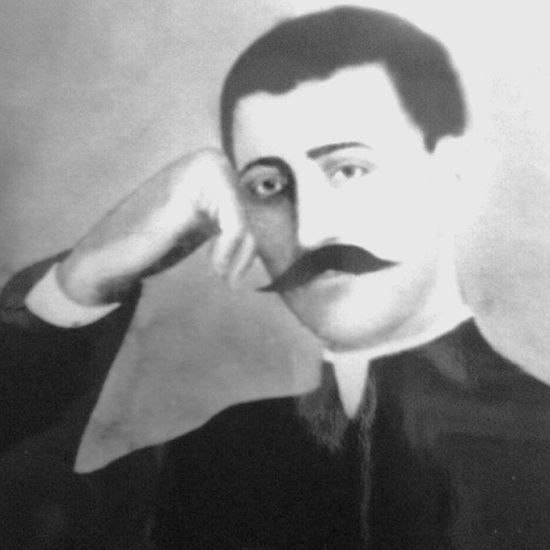
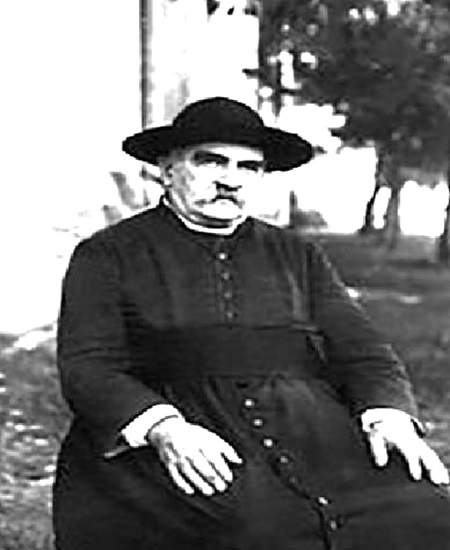
Memorie.al / We have very little information about the childhood of Dom Zef Ramaj. Dom Zef was born on January 8, 1882, in Stubllë e Epërme (Viti municipality) and died on December 25, 1914, in Skopje. His parents were father Pal and mother Çila; they had six sons and two daughters. Zef was their fifth child. In the year Dom Zef Ramaj was born, Stublla e Epërme had 24 houses and 149 souls (inhabitants), the majority Albanian Catholics, except for 2 houses that were Crypto-Catholics with 10 souls. At this time, Stublla belonged to the parish of Cërngora – Letnica, or as it was called; Montenegro di Scopia. Zef must have attended his first years of school in Prizren. He then attended another nine years in Shkodra: 5 years at the ‘Normal’ school and another 4 years at the Xavierian College, studying philosophy and theology, until the year 1905.
Continued from the previous issue
The Honorable Lord D. Nikoll Mazreku, the priest of the Pezrend parish, together with D. Pashko Krasniqi, had gone out to receive him in Kumnovo, to tell him in the name of all: “Welcome, may God bless your coming”. The honorable Lord D. Nikoll Glaznoviç, D. Mikel Glaznoviç, Vice-Consul of Germany (Lord Korclla was not here), Gjergj Adamkievitz, Vice-Consul of Italy, Lord Galanti, Vice-Consul of France, together with all the people, as was said, were gathered at the Railway Station.
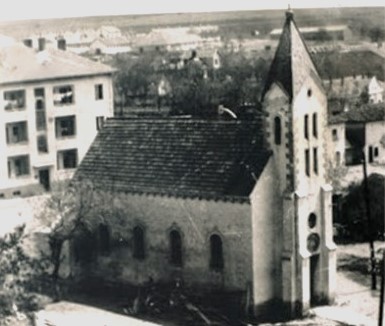
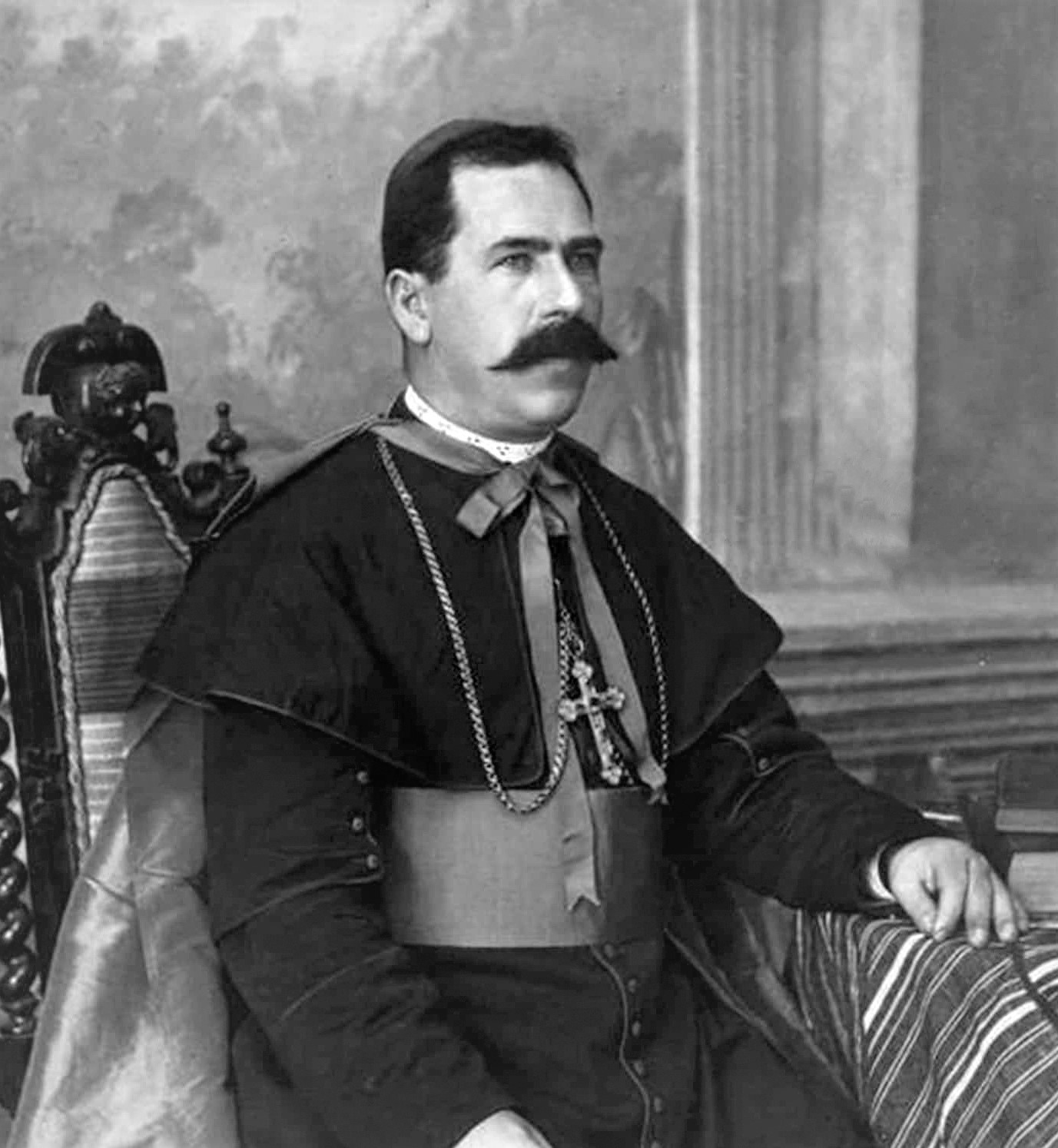
That bright moment arrived, when the illustrious new Archbishop would set foot in his Archdiocese. After everyone kissed his hand, they all set off towards the Church, where communion was to let the rest of the city know that the Catholics had a special joy. From the gate of the yard to the door of the Church, it was decorated with bushes, flowers and flags, and before the church door a beautiful arch, and in it the coat of arms (stemma) of the Illustrious Lord Monsignor Lazër Mjeda…”!
The Balkan Wars, in 1912 and 1913, were very harsh for the Albanian population in Macedonia and Kosovo. This harsh situation was followed by the First World War, in 1914. The Albanian population in Kosovo and Macedonia had been left more at the mercy of the European states and certain persons than anything else. In these circumstances, a very positive role (for this population) was played by Dom Zef Ramaj and the Albanian Catholic Clergy of the Archdiocese of Skopje, headed by Monsignor Lazër Mjeda.
The Archbishop of Skopje, Monsignor Lazër Mjeda, together with Dom Zef Ramaj, would also play an important role in the “declaration of Albania’s independence”. Before leaving for Vlorë, Ismail Qemali was in Vienna. Being without money in his pocket, more precisely with an invalid bank cheque (none of the Viennese banks took it into account), Ismail Qemali had no way to travel to Vlorë to declare Albania’s independence.
Aware of the situation, Monsignor Mjeda mobilized the friends he had near the Austro-Hungarian government, and enabled Ismail Qemali to reach Durrës on an extra ship financed by Vienna. Mjeda was also supposed to participate in the declaration of Albania’s independence in Vlorë.
The Austrian official of the consulate in Skopje, on November 29, 1912, sends a letter to the center, informing that the teacher of the local Catholic parish school, Logoreci, together with the parish priest Dom Zef Ramaj, had informed him that Logoreci and Archbishop Monsignor Mjeda had today received a letter from Durrës, sent by the Albanian delegates of Northern Kosovo.
They were requested to send a delegate from Skopje for the planned meeting in Vlorë, organized by the leaders (notables) from all parts of Albania, concerning the declaration of Albania’s autonomy. They would also consult on taking eventual measures, depending on the situation that would be created after the declaration of Albania’s autonomy.
Logoreci was asked that, in case the delegate could not travel, at least to send a supportive letter on behalf of the Albanians here for this matter, mediated through the local consular entity of the monarchy. Regarding this, Heimroth says that he explained to them (Logoreci and Dom Ramaj) that for the moment he was not sure if such a thing was possible.
From a telegram of the Austro-Hungarian consul in Skopje sent to Vienna, in November 1912, we learn that the Albanian delegates had asked Archbishop Lazër Mjeda, the parish priest of Skopje, Dom Zef Ramaj, and the teacher Logorezi, to form a delegation for participation in Vlorë, to discuss the situation of the Albanians and possibly even to declare the “autonomy” of Albania.
It is sometimes said that the writings sent to the Austrian newspapers of the time were by Lazër Mjeda. That is, some of the information on the situation of the Albanian population was also sent by Dom Zef Ramaj and Dom Pashk Krasniqi, as Lazër Mjeda himself reports when he writes to the Vatican (on January 24, 1913) the well-known letter about the situation in the Archdiocese.
In this letter, it is very clear that Dom Zef Ramaj and Dom Pashk Krasniqi reported especially on those places that were near their parish. Dom Zef reported on the situation in the region of Skopje, Kumanovo, Kisela Voda, Tetovo (Kalkandelen) and Gostivar, while Dom Pashk Krasniqi reported on Prizren, Peja and other surrounding places.
That is, Dom Zef also had good information about Karadak in Kosovo, since he came from that area, from Stublla. A report of the Austrian consul in Skopje informs about the horrors and massacres against the population (Albanians without distinction of religion) of the Karadak region.
The report informs on the basis of information that Dom Zef had given to the consul, and the latter had received from Mitat Aga from Gjilan. Heimroth, the Austrian consul in Skopje, mentions a letter from Mjeda to the Austro-Hungarian minister Leopold Berchtold on February 9, 1913, and adds that the information (contained therein) was given by Dom Zef Ramaj.
That Dom Zef Ramaj had reported to European countries about the situation of Albanians is also shown by the publication of private letters of Albanian theologians (from the University of Innsbruck) in the Austrian newspaper “Allgemeiner Tiroler Anzeiger” dated March 28, 1913, and then that the place from which the writings came was Skopje, where Dom Zef was already in service, where he writes among other things:
“At the moment I am not able to send you a detailed report. You must bear in mind that we are in a state of war… you cannot imagine what has been committed against our compatriots in this war… my heart is full, as to what I can write to you further. I would rather die than see Albania in this condition, in which it finds itself.”
In the newspaper article “Reichspost”, the massacres committed against the Albanian population (without distinction of religion) in the territory of Kosovo and Macedonia are given in detail, starting from Skopje, Kalkandelen, Ferizaj, Prishtina, Prizren, General Jankovič, Trstenik, Peja, etc. The Reichspost gives importance to this dossier and writes three pages in the issue of January 17, 1913. In this writing it is stated that the dossier is authentic and from an Albanian personality and that there is a witness for everything that happened in Skopje.
And this, without doubt, is Dom Zef, the parish priest in Skopje, while Monsignor Mjeda was in Vienna, in contact with diplomatic circles there, but also with the media, regarding the Albanian issue in Kosovo and Macedonia, and that Leo Freundlich, in his book “Albanian Golgotha”, describes the killings in the Karadak region, such as in Lubishtë, Smirë, Komogllavë, Shashare – all these places near Stublla, Dom Zef’s birthplace, which the latter often visited to be well informed about the general situation.
The author had taken the events presented in the book from the aforementioned newspaper of January 17, 1913. In the reports of January 24, 1913, Mjeda states that the information given there on the situation of Albanians came from Dom Zef and Dom Pashk Krasniqi. On February 9, 1913, the Austro-Hungarian consul in Skopje, Heimroth, writes to official Vienna that Monsignor Mjeda reported by invoking the information of Dom Zef. Even Heimroth himself, on one occasion, writes: “As Mjeda writes in his letter about the horrors (against Albanians), I have also heard them. The parish priest of Skopje, Dom Ramaj, told me that he was a witness and mentions a Serbian soldier named Çiçeriç.”
The consul continues further, saying that these things had also been seen by the Catholic nun who worked in the Skopje hospital and who was also a teacher subsidized by Austro-Hungary. The reference is to the nun Protegjena Bekes from Stublla, a fellow villager of Dom Zef. She had seen many corpses of Albanian Muslims in the Vardar River. Later, the consul writes that another source of information for Dom Zef was Luigji Naraçi, who knew Dom Zef Ramaj very well. In this report, the consul mentions Dom Zef’s name no fewer than seven times for gathering information on the massacres against Albanians.
Even the English vice-consul, W. D. Peckham, informs official London about the horrors against Albanians. He writes that the report is based on data provided by the parish priest of Skopje, Dom Zef Ramaj. The data given in this report completely coincides with the information given by Consul Heimroth, and also coincides exactly with the time of publication of the data in the Austrian press (mentioned above), dated February 28, 1913. The Memorandum of the parish priest of Skopje, which Peckham had sent to London, titled “Memorandum on Massacres of Albanians – Statements of Catholic Cure of Uskub”.
Dom Zef Ramaj, the Bojaxhiu family and the baptism of Mother Teresa
Thanks to Mother Teresa’s dedication to the poorest of the world, the Bojaxhiu family became known worldwide. Gonxhe Bojaxhiu was born in Skopje on August 26, 1910, and one day later (on August 27) she was baptized by Dom Zef Ramaj. Apparently, the Bojaxhiu family had moved from Prizren to Skopje before 1903. In a photo taken on the occasion of the consecration of the Cathedral of the Sacred Heart of Christ in Skopje, in 1903, we also see Kolë Bojaxhiu.
The Bojaxhiu family was one of the old families of Prizren, as evidenced by some documents from the archive of the Prizren parish. Numerous documents about this family are also preserved in the state archive in Lucerne. Even Lazër Bojaxhiu himself had sent data to the Swiss Eugen Vogt, among other things, about father Kolë and mother Drana. Dom Zef Ramaj provides some data on the Bojaxhiu family, on their life in Skopje, as reported by Austrian sources.
Documents on the figure of Kolë Bojaxhiu are preserved in the Austrian State Archive. Here we mention one of the documents we possess: On July 26, 1911, the Austro-Hungarian consulate in Skopje, specifically Vice-Consul Lejhanec, among other things, writes to his government: “As the local parish priest, Dom Zef Ramaj, and the Jesuit Father Genovizzi unanimously report, some local Catholics – led by Luigj Naraçi and Kolë Bojaxhiu, who are known as friends of the Italians – have these days addressed a request to the Italian Consulate, asking it to build a separate Italian-Albanian school.”
As a reason, they emphasize that the parish school (near the Catholic Church, my note), due to the lack of teaching staff, functions insufficiently and cannot offer the students the necessary schooling…!” Further in this document it is said that these two (Luigji and Kola) would collect signatures from the local Catholic population.
Based on this source, besides the fact that Kolë Bojaxhiu wanted the establishment of a separate school, a school that would be financed by the (then) Italian government, and not by the Austro-Hungarian one (like the one near the Skopje parish), it is confirmed that Kolë Bojaxhiu was a Catholic and at the same time very committed to the education of the Albanian population in Skopje. Skopje at that time was not only a larger commercial center than Prizren, but was also a center of Albanian culture./ Memorie.al