By Gilmana Bushati
Part Two
Continues from the previous issue
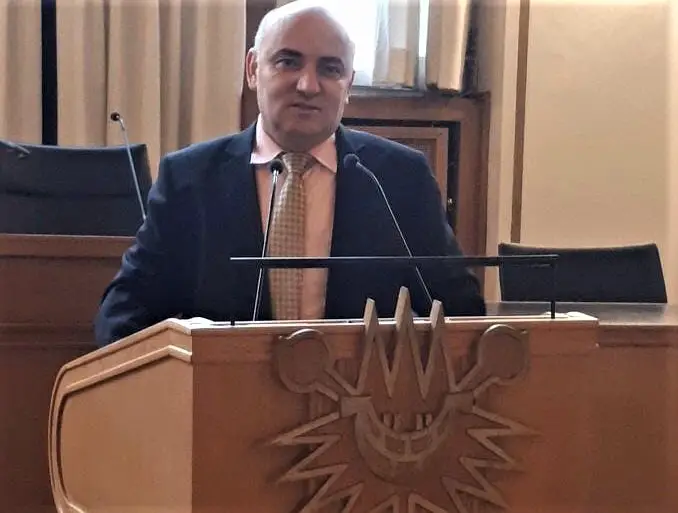
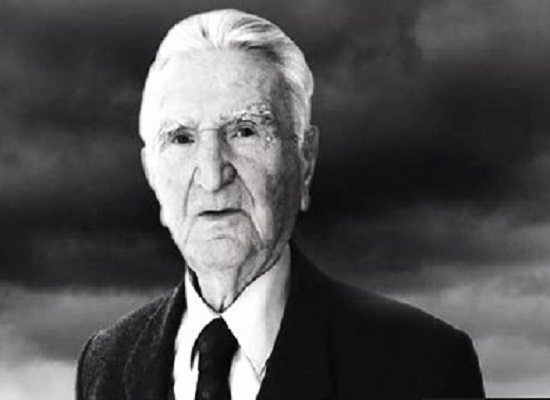
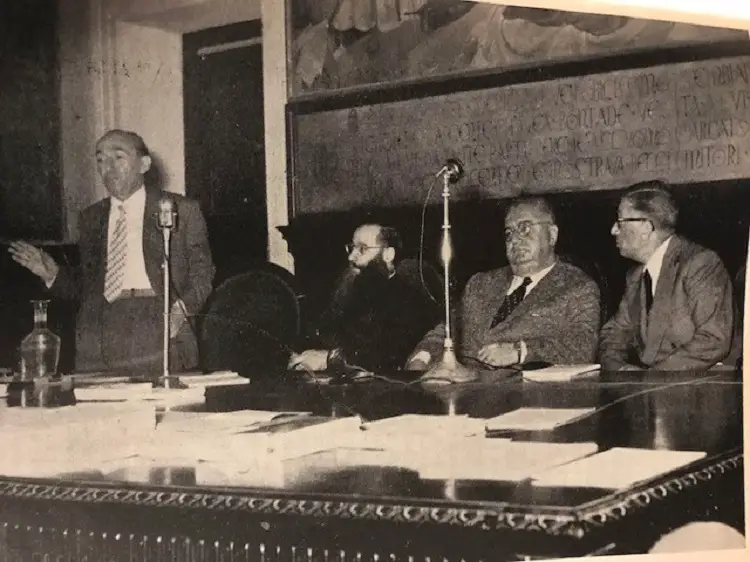
– Interview with historian Ndue Oroshi, Vice-President of the Association of Albanian Intellectuals “Trojet e Arbrit” –
Mr. Oroshi, in Albania a debate has been opened, as always initially by politics for its own reasons, on the revision of Albania’s history, a debate that has divided historians into right and left. Since you have not been involved in these ‘divisions,’ could you please tell us where Albania’s history needs to be revised, which figures can be evaluated, which can be devalued, or to whom should be given the place they deserve with their good and bad sides?
Certainly Mr. Arben Puto has possessed documents that he has hidden until now, about the killing of 4,310 Albanians in Tivar by the Serbo-Montenegrin occupying forces, because these Albanians from Kosovo were killed with the permission and knowledge of Enver Hoxha, Ramiz Alia, Mehmet Shehu, Rrahman Parllaku and many others. So I make a public appeal to Mr. Arben Puto that, before stirring up the polemic about the 86 Albanians killed in Tirana, he should show us where the 4,310 Albanians killed in Tivar were shot, in this mass grave of Albanians.
Because, a part of these Albanians from Kosovo were also killed along the way by the joint Yugoslav-Albanian partisan-chetnik forces. Since back then the years of the common honeymoon of their criminal political marriage, Enver Hoxha and Josip Broz Tito, were passing, fighting Albanian patriots. As for the second part of the question, the patriotic figures that should be evaluated are all these patriots who worked until their last breath for the making of Ethnic Albania, and these are: gathered around the Second League of Prizren, the National Front, the Independent National Group, the National Besa and other nationalist organizations. But who were the nationalists who fought for the unification of the Albanian nation in a common state.
They are numerous, but this time we will mention only some of them, starting from Kapidan Dr. Mark Gjon Marku, Mid’hat Frashëri, Professor Ernest Koliqi, Kapidan Gjon Marka Gjoni, Ismail Vërlaci, Xhevdet Blloshmi; Xhevat Korça, Shaban Polluzha, Ndue Përlleshi, Mehmet Gradica, Gjon Serreqi, Prenk Cali, Gjelosh Luli, Muharrem Bajraktari, Alush Leshanaku, Gjon Gjinaj, Haki Tahaj, Hysen Terpeza, Hysni Rudi, Kapidan Ndue Gjon Marku, Xhafer Deva, Marie Shllaku, Aqif Blyta Haxhiahmeti, Rexhep Mitrovica, Pater Anton Harapi, Mulla Idriz Gjilani, Xhem Gostivari, Pater Bernard Llupi, Mulla Nuredin Gjinovci, Prof. Dr Rexhep Krasniqi, Kapidan Llesh Gjon Marku, Tahir Shaban Zajmi, Ukë Sadiku, Zef Gjidoda, Adem Gllavica, Luan Gashi, Ibrahim Lutfiu, Qazim Komani, Fuad Dibra, Ibrahim Osman Kelmendi, Ajet Gërguri, Bedri Pejani, Halim Spahia, Tahir Deda, Kajtaz Ramadani, Rexhep Kabashi, Stak Mark Shkorreti, Miftar Bajraktari, Mulla Ilaz Broja, Bedri Gjinaj, Tahir Kolgjini, Xhelal Mitrovica, Kol Parubi, Gjergj Martini, Demë Ali Pozhari, Kolë Margjini, Mulla Ramë Govori, Esat Berisha, Qazim Bllaca, Ahmet Selaci, Bislim Bajgora, Adem Voci, Hajredin Vidishiqi, Sherif Terstena, Ukshin Kovaqica, Gjon Destanisha, Mustafa Kruja, Mulla Jakup Kombi, Musa Shehzade, Hysen Lepenica, Halim Begeja, Pater Danjell Dajani, Patër Gjon Shllaku, Mark Ndoc Çuni, Faik Quku, Hasan Dosti, Shuk Gurakuqi, Stak Fazlija, Imzot Zef Oroshi, Karl Gurakuqi, Zhuk Haxhia, Kol Bib Mirakaj, Pashuk Bib Mirakaj; Jahja Fusha, Njazi Alishani, At Lorenc Mazreku, At Daniel Gjeçaj, Rexhep Xheli, Miftar Bajraktari, Hazir Gjakja, Sulejman Vuçitërni, Mehmet Agë Rashkoci, Mufaili the Small, Mufaili the Great from Zajazi, Vasil Andoni, Prof. Dr. Isuf Luzaj, Mark Staka, Sylë Hotla, Bardh Isufi, Col Bajraktari, Bajram Gashi, Osman Bunjaku, Shemsi Mramori, Rifat Krasniqi, Hajdar Planeja, Qazim Bajraktari, Lec Kurti, Ymer Lutfia, Zef Pali, Gasper Pali, Seit Kazazi, Dom Ndre Zadeja, Ndoc Jakova, Ndue Pali, Qazim Rroji, Zef Kuka, Xhelal Hardolli, Xheladin Kamata, and many, many others.
It is worth emphasizing that many of these nationalists had a high educational preparation, having completed their studies in Western universities, mainly in Italy, Austria and Germany, but also in other countries. Apologizing to many, many other nationalists of ethnic Albania, before whose work I bow, and whose names I am not recording in this interview, because we cannot expand due to the nature of the newspaper.
At one point in the book where Mr. Puto mentions Mr. Deva, he reaches the conclusion that he “was a terrorist minister.” Was he really such?
Look, I am sorry that Mr. Arben Puto, even though two decades of pluralism have passed, has remained still a historian of the communist mentality. Xhafer Deva was not a terrorist, but was one of the most devoted patriots of Ethnic Albania. He tried with all his forces for the unification of the Albanian state into a common state. But the greatest misfortune occurred when the Albanian communist Brigades were placed in full assistance of Yugoslavia. Here it should be emphasized the fact that the Albanian communist, both in Albania and in Kosovo, comes out in support of the Slavic communist, only because they had the same ideology, against the brother of language, blood and flag.
So, the Albanian and Slavic communists fight against Albanian nationalists, since history wants facts, then for this we rely on the book of Tahir Zajmi, “The Second League of Prizren and the heroic struggle of the people for the defense of Kosovo” (Brussels 1964), which writes: “In order to suppress and completely destroy this strong resistance with stubbornness that was just extinguished on one side, suddenly exploded on the other, the contribution of the black Albanians is again sought, who, incorporated into three Brigades, one (the V-th) under the command of Shefqet Peçi and the other (the III-rd) under that of Rrahman Parllaku, which had as political secretary Gafur Çuçi, run to the aid of the Yugoslav Marshal Tito, who did not feel himself at all capable of mastering the situation.
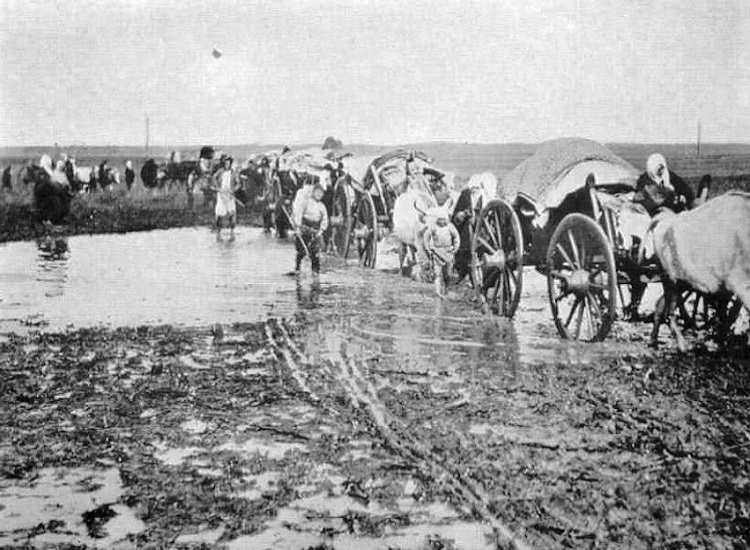
The Brigades which arrive faster, the first set out from Elbasan and passing through Librazhd-Klenjë-Zerqan-Peshkopi, Kalaja-Dodës in Lusa of Luma, where the rifle explodes and after a bloody encounter 14 martyrs from Lusa remain, while on the other side 180 are killed from the effectives of the partisan Brigade, which passes through Topojan, Shishtavec, and from there to Gjemashicë-Bellushë-Prizren, from where to Gjakova, Peja and other regions of Kosovo, where it stays for a period of two years, and the other set out from Shkodra, and passing through the mountains of Dukagjin, and through the Highlands of Gjakova, in Junik and from there to Peja and other places of Kosovo, while yet another brigade under the command of Haxhi Lleshi, sets out from Peshkopi and passes to Dibra e Madhe, Kërçova, Gostivar, Tetova and Shkup, to hand over to the patron-ally the regions of Albanian Macedonia.
The Macedonian communist forces that until the end of 1944 had been destroyed and paralyzed by the commander of the nationalist forces Xhemë Has Gostivari, after the country was trampled by the Albanian brigade, began again to strengthen and spread in that sector, where they massacred hundreds and thousands of Albanians, among whom only in Tetova 4,000, in Gostivar 700, and in Kërçova 500 people.
That the communist regime in Albania acted identically with the communist regime in former Yugoslavia and in full cooperation in the war against Albanian patriots, is also shown by the case of two Albanian patriots, Colonel Fuad Dibra and Professor Kolë Margjini. Both these patriots had Albanian citizenship but the communist forces from Albania handed both over to the Yugoslav communist forces, and where both were subsequently killed. Professor Kolë Margjini was arrested by the Albanian communist authorities, which handed him over to the Yugoslav organs. The court sentenced him to heavy imprisonment while the UDB liquidated him in the infamous prison of Mitrovica e Sremit, in 1949. His grave is not known where he was shot after the liquidation.
Colonel Fuad Dibra on November 14, 1944, was accompanied by the forces of the V-th Brigade of the Communist Army of Albania to Tirana, where he was arrested and handed over to the Yugoslav authorities. He was sentenced to death and executed in Korisha of Prizren, on October 9, 1946, to this day his grave is not known. In total, according to the data of Tahir Zaimi and other historians, 47,300 Albanians were killed by the Slavo-communists in the ethnic Albanian regions outside London Albania. It is worth singling out the fact that the Albanian Nationalists of Kosovo have called in their writings all the Albanian regions which have remained outside the Albanian state, that is, approximately in the ethnic borders of ancient Dardania.
This geographic extent is also used by Tahir Zaimi when he gives the data for the killing and massacre of Albanians in these provinces. Here it is clearly seen that the terrorist was not Xhafer Deva, because our American friends have never worked with terrorists, but only with serious politicians and with pure national concepts and ideas. Therefore the facts show that the terrorist was not Xhafer Deva, but the terrorist was Enver Hoxha, but here I give right to Arben Puto, who with the faithfulness of an incorrigible communist, defends his former boss, the terrorist Enver Hoxha, because he has been one of the two most trusted researchers of the criminal Enver Hoxha, and has a debt and a great sin in the falsification of Albanian History, especially toward the national figures who served the Albanian nation.
What is Xhafer Deva’s position, as far as the February 1944 massacre is concerned, where according to the official historiography of the communist regime, it is said that 86 Albanians found death?
The communist regime has always been based on falsifications for political opponents. This is now a known fact, especially now when we have the opportunity to browse the documents either in Western archives or in the archives of Albanian organizations and parties opposing the communist regimes, or the press and other publications of the Diaspora and the writings and studies of Albanian intellectuals who have worked and acted for the national cause in the civilized world. Here I remind Mr. Arben Puto that the action of February 4, 1944, which the Communist Government of Tirana pinned on Xhafer Deva for fifty years, it is not true that this action was carried out by Xhafer Deva.
According to the testimony of Professor Rexhep Krasniqi, published in the book of Idriz Lamaj “Xhafer Deva in the light of his own letters and other revelations of the Diaspora” New York 2002, p. 30, he says: “The actions in question everyone knows were carried out by a group of fighters who were not in the service of the Government and were headed by Xhelal Staravecka, a former Albanian officer who has been among the most active leaders of the communist partisans on a par with Mehmet Shehu and Enver Hoxha.” So as can be seen this was a settling of accounts within their own kind of communists.
For the resistance that Deva made in the service of the Albanian nation, a Serbian prime minister would declare for Xhafer Deva: “Deva cannot be bought with money, because he is rich, Deva is our sworn enemy, Deva must be killed,” and what Serbia could not do, to physically liquidate the patriot Xhafer Deva, because he was under the protection of our American friends, who worked with him politically, and the impossibility of the physical liquidation of Deva remained a great concern for Serbia, what Serbia could not do was done by Albanian-speakers, insulting and accusing him for 50 consecutive years, as well as the descendants of the Albanian communist Pan-Slavism.
Here I want to give also a fact that is very valuable for Albanian history. For the overthrow of communism in the ethnic Albanian regions, special missions of paratroopers were engaged, led by Xhafer Deva, Kapidan Gjon Marka Gjoni, Professor Ernest Koliqi, Ismail Verlaci etc. The patriot Xhafer Deva in this mission was supported by American policy, and was helped by two American generals, Roger Hollingshead and Hart, as well as the admiral of the Italian Navy Talarigo and Count Karabio. So Xhafer Deva was early on a friend and collaborator of the Americans, and for several years created the strong Albanian-American friendship base that achieved success with the support that America gave and is giving to the Albanian cause in general.
What role did Xhafer Deva have during the Nazi occupation in Albania?
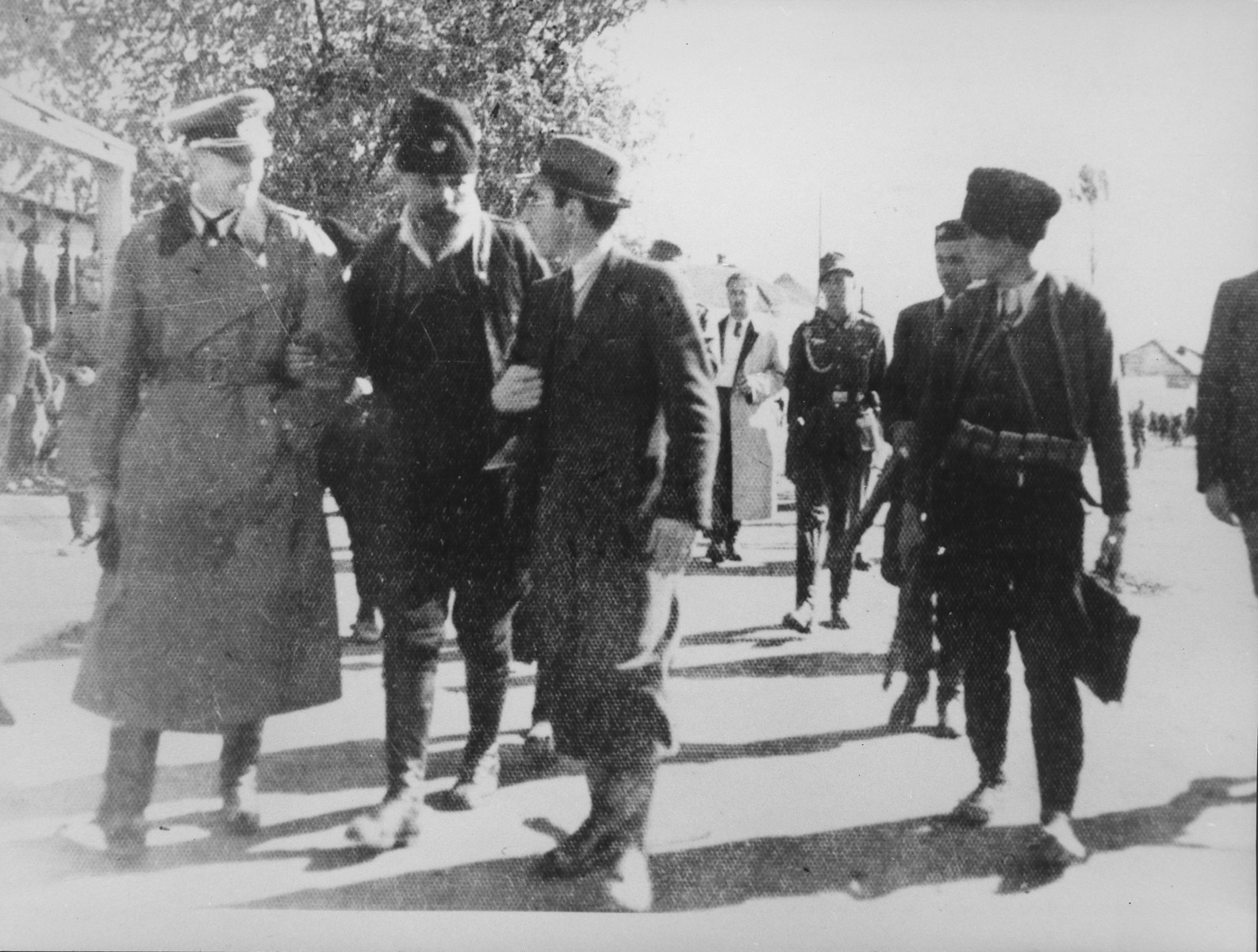
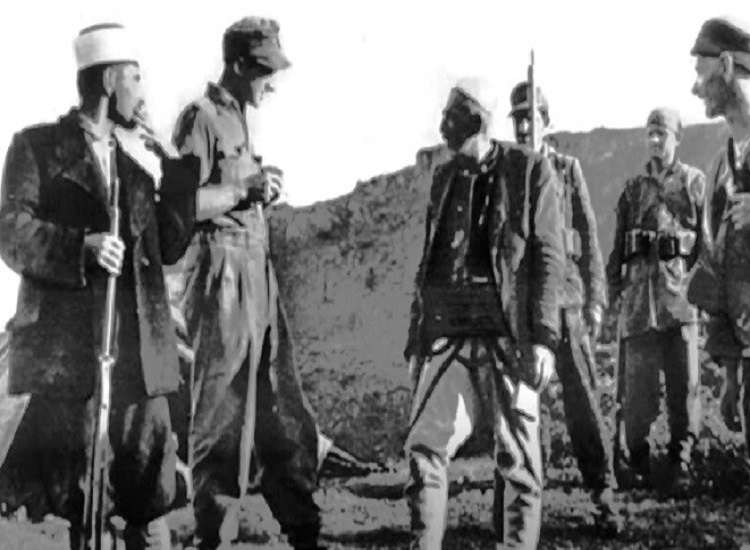
First I want to tell you that, before the arrival of the German forces in Kosovo, Kosovo was a classic colony occupied by former Yugoslavia. With the arrival of the German forces the Albanian patriots proved very far-sighted. They made very good use of the popular saying, that “the enemy of my enemy is my friend.” And indeed during these years for the first time Kosovo began to breathe Albanian. The first Albanian schools were opened, by the then Minister of Education, the honored Professor Ernest Koliqi, the entire administration was kept in the Albanian language. The unification of the Albanian nation into a common state was done and a common Parliament and Government was formed.
In that Government Xhafer Deva was Minister of Internal Affairs. But, afterwards the communist forces headed by Enver Hoxha, Mehmet Shehu, Koçi Xoxe, Shefqet Peçi, Ramiz Alia, Rrahman Parllaku and many others, returned Kosovo to Serbia again with the force of arms, but this return cost us Albanians 47,300 killed. Their graves are not even known where they are. Naturally, in this return of Kosovo to Serbia, a great betrayal was also done by the Albanian communists from Kosovo headed by Fadil Hoxha, Ali Shukriu and many other communist remnants. They on July 7-8- and 9, 1945 in Prizren, made the great anti-national betrayal, by signing the annexation of Kosovo to Serbia. This was done after the rout of the nationalist military forces in Kosovo, which were led by Mehmet Gradica, Shaban Polluzha, Ndue Perlleshi, Professor Ymer Berisha, Marije Shllaku, Ukë Sadiku, Ahmet Selaci, Patër Bernard Llupi, Mulla Idriz Gjilani and many other patriots. / Memorie.al
Continues in the next issue