Part Twenty
Memorie.al / The CIA have shown the great role that the Soviet Union played in communist Albania. In several “Top Secret” documents, declassified years ago, it is shown that the USSR built several important military bases, especially in the South of the country. There, the submarines that Moscow had on the island of Sazan and in the Bay of Vlora is shown in detail, as well as air bases, such as those of Rinas, Kuçova, etc. Afterwards, a panorama of political developments is given, where the dismissal of Defense Minister Beqir Balluku in the summer of 1974 from all functions in the army and party is mentioned. Likewise, a special place in the documents that the CIA has declassified is also occupied by those that speak of Albanian political emigrants in Yugoslavia, who are incorporated into the Committee of Prizren, initially led by Apostol Tanefi and under the pressures of the UDB, which recruits them with coercive measures, such as return to Albania, etc.
Continues from the previous issue
November 1960
Albania Turns Its Eyes toward China
During the congress of the Communist Party of Romania in June 1960, where the China-USSR rift became public for the first time, Khrushchev mentioned the support of communist delegates for the Soviet Union. One of the contrasts of the conference was the stance of Albania, one of the smallest and until then most loyal countries to the Soviet line, which at the Romanian Congress not only did not give its support to Khrushchev’s proposals, but expressed sympathy for the radical stance held by communist China.
Unlike the other speakers, the Albanian minister Hysni Kapo did not declare conviction in Khrushchev’s words and did not mention at all the idea of “peaceful coexistence,” but attacked with his comments imperialism and Yugoslav revisionism, in the typical political line of Albania, and also of China. Even the resolution of the Central Committee of the Albanian party in July 1960 supported Kapo’s stance at the Bucharest congress, formalizing the policies of Chinese and not Soviet viewpoints.
The Albanian regime needs to preserve the attacking momentum against Western imperialism and Yugoslav revisionism, and this brings about their rejection of any opening or proposal for peaceful coexistence, which could lead to the improvement of relations with the West or to the softening of their Stalinist regime. The Albanian leadership continuously uses the anti-Yugoslav line to identify itself as a defender of national interests or to justify other internal policies.
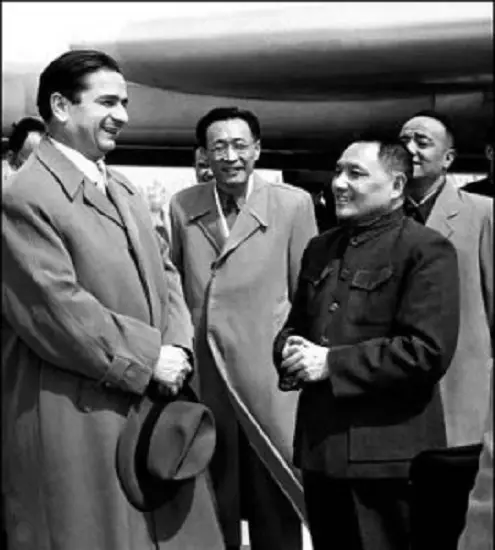
In recent years the Soviets had allowed Albania to maneuver in its policies to confront internal problems, but now Tirana has publicly cast doubts on the Soviet leadership of the Bloc and is seeking another source of authority, which will bring about a Soviet reaction to return it to line. Recently the Albanians have used the 11th anniversary of the Chinese republic to reaffirm support for China’s ideological stance. Albanian delegates are lavishly praising their Chinese colleagues as “defenders of the purity and principles of Marxism-Leninism.”
The Chinese too, in their responses, have raised high the “militant Marxism-Leninism” of the Albanian communist party and have declared close friendship with words such as: “neither mountains nor deep oceans can separate the Albanian and Chinese people in their friendship.” This clearly seems to worry the Soviets, as in the listing by the newspaper “Pravda” of delegations in Moscow on September 7, Albania was not mentioned at all, while Prime Minister Shehu, who led the Albanian delegation, was received coldly by the other Eastern European delegations and did not meet with Khrushchev.
January 1962
Albania-Yugoslavia-USSR
The 1948 break with the Soviet Union was not desired by Tito, but he was forced to become part of it. If in 1949 he had been given the conditions for rapprochement, which Khrushchev consequently offered him but very late, Tito would have accepted them. But from the momentum of the split, new habits, ties, and policies had been created, and therefore the price for Tito’s reunification with the Bloc had increased. We do not believe there will be any further rapprochement between the two sides, since this would mean capitulation of one side or the other.
In 1956 Khrushchev made a capitulation to Tito, but this was not accepted by the other satellite countries near Yugoslavia, and indeed brought revolts and unrest. According to Kennan’s analysis, Tito is a man of good character, neither a gangster nor an intriguer. He considers the Soviet Bloc as his political family but demands that the Bloc recognize his socialist integrity. At the same time he likes the Americans too and has no tricks against us.
Regarding Albania, the Yugoslavs are quite nervous and consider it a source of threat to their security. They rejoice whenever there are problems in Hoxha’s regime, even though they consider the Albanian communist party as their own offspring, which they in fact created themselves and convinced to become part of the Comintern bloc.
They are also concerned about the Albanian minority in Kosovo, which reaches several hundred thousand people. But the Yugoslavs will not undertake military steps except in cases when they are initiated by someone else. They would be happy to overthrow Hoxha from power, just as Khrushchev would too. But Hoxha is a true Stalinist and knows how to defend himself from internal enemies, since he has eliminated almost every opposition and for the moment cannot be overthrown.
The current situation is the most optimal for the USA, since the less we intervene and the less we do for the Albanians, the more difficult it becomes for the Chinese. If the Chinese give considerable aid to Albania, it will become a burden for them. But if the Chinese do not give considerable aid to this new ally, they lose their prestige. But the situation may change; therefore we must follow developments with vigilance.
Hoxha’s Measures against Koçi Xoxe’s Sympathizers
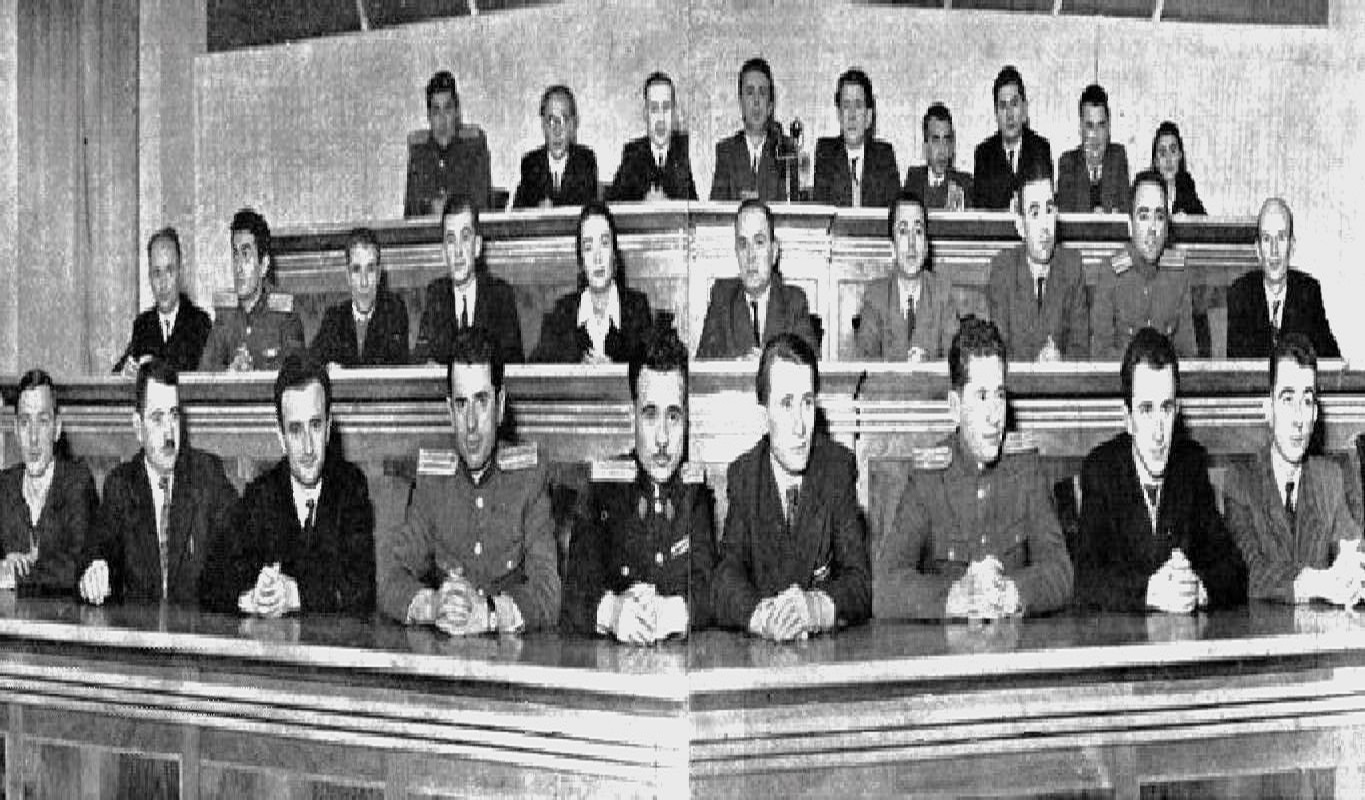
In early March 1949 the Albanian parliament discussed the proposal to remove the immunity of Koçi Xoxe and Pandi Kristo, but no decision has yet been taken due to several incidents that reflect the sympathy of many members of parliament for Xoxe, and the hidden indignation toward Enver Hoxha’s regime.
On March 15, 1949, 20 members of parliament supported by senior officials of the Communist Party submitted a memorandum to leader Hoxha for the release from prison of Koçi Xoxe and others imprisoned with him. At the same time, officers who sympathize with Xoxe and share the same views as him debated fiercely and clashed physically with security forces in Elbasan.
They are said to have resisted the attempt to arrest them as Xoxe supporters. According to subsequent reports, about 10 people were killed in the clashes by both sides. General Hoxha, realizing the growing reactions to the measures against Xoxe and his followers, both from the masses and from the ranks of the Albanian army, has intensified propaganda against Xoxe, to convince the army that these individuals are traitors and responsible for the miserable economic condition of the people.
April 1950
Greek Communists in Albania and Romania
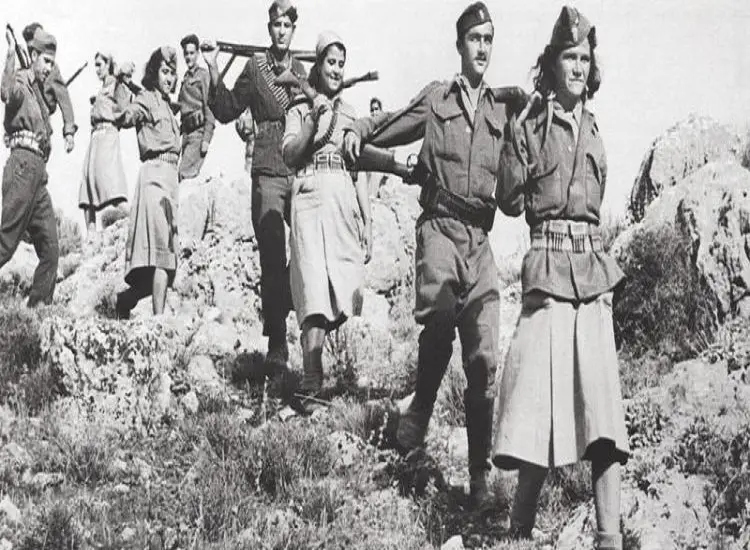
“Eleftheris Apostou” is the pseudonym of the representative of the Greek rebel government in Budapest. While their headquarters in Romania is located at “Strada Ana Ipotescu,” in the building where the Japanese embassy previously was. The organization publishes a newspaper titled “Elas Press” and also prepares material published in Greek broadcasts. The radio programs are aired on Greek wavelengths from the Timisoara station.
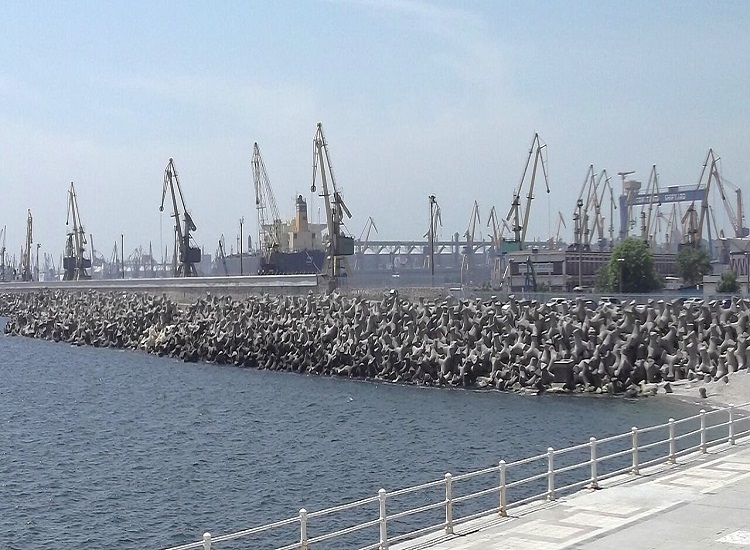
Among the speakers of the program called “Free Greece” are Eleftheris Apostolu and a certain Giorgiadis, a student born in Sulina. In August and September 1949, about 5,000 Greek communists came to the port of Constanta in Romania from Albania. They were distributed to several locations, while some of the most important communist rebels, such as a certain Kokalis, and have been seen at the “Strada Ana” headquarters in Bucharest.
May 1951
August 1963
Port and Ship Activities
Based on reported statistics, the flow of ships in Albanian ports has marked a significant increase in the last five years. The number of foreign ships arriving in Albania has marked continuous growth with an average of 1,200 tons unloaded per day, mainly from China. Last month five Chinese ships unloaded in Durrës, while this month only one Chinese ship (Xin Hua) has arrived in Albania with a cargo of 3,500 tons.
There have also been some ships arriving from East Germany, Czechoslovakia, and Bulgaria, but these stops should be considered coincidental since they had previously stopped at Yugoslav ports and in Durrës took on few goods for the return journey. Only the East German ship “Falke” came to Durrës to unload about 300 tons of materials that it had loaded at the Romanian port of Constanta. The Romanian ship “Oltenia” came to Durrës from Ravenna to unload 1,063 tons of synthetic rubber, but it is not known whether it unloaded it in Albania or continued with it to Romania.
17 February 1965
Albania’s surprise move yesterday in the Security Council Assembly caught the members and UN officials unprepared, who most likely are now searching for the rules of procedure to contest Tirana’s request for a vote regarding a return to the previous procedures of the peacekeeping forces. Most delegates speculate that communist China is responsible for the Albanian move, with the aim of discrediting the organization by confronting the USA and the USSR over a backward issue.
Since December 1, when the 19th session opened after several postponements, the assembly has avoided holding the vote in the hope of resolving the old issue of the peacekeepers through negotiations between the two camps. This scheme had the support of all members, but Albania’s request forced the postponement of the session until February. Unfortunately, this postponement gives Albania time to confront the rule that requires copies of proposals no later than the day before the meeting.
As things stand now, the General Assembly may remain suspended for some time, in search of procedures such as (1) the possibility that the president does not call the meeting, (2) the chairman denying Albania the right to speak, (3) or a demonstrative boycott by members so that there is no audience.
But even these strategies may discredit the Assembly in the eyes of the world, in fact achieving what Albania seeks, together with China as is supposed. The Soviet delegate Morozov told Ambassador Yost yesterday that he believed the President of the Assembly, Quaison-Sackey, could handle the Albanian problem through consultations among members. Thus, after the opening of the next meeting, the president reports that no country supports the proposal, or only one or two countries.
Morozov said that a delegation should not be allowed to disturb the Assembly and that the president should ignore the delegate, even if he rises many times. As far as can be foreseen in this delicate situation, American officials are anyway prepared for the confrontation if the requested vote cannot be avoided. Both the USA and the USSR are taking a large share of the blame for the division of the UN. Most members are asking the USA to withdraw, as the most responsible and reasonable member.
June 1975
New Name in the Bureau
On June 1, in the Political Bureau of the Party of Labor of Albania, the new name of Llambi Gegprifti was listed, but no more was shown about his full status as a member. Gegprifti became deputy minister of defense last year after the departure of former minister Beqir Balluku, while his admission to the Bureau was promoted during the plenum of the Central Committee in early May. Prime Minister Shehu has also taken the portfolio of Minister of Defense.
Several other cabinet moves have been signaled in the Albanian press. Deputy Prime Minister Petro Dode now holds the post of chairman of the State Planning Commission, replacing Abdyl Këllezi who has most likely been purged, since the Albanian press has not mentioned Këllezi at all since January 28.
Party organs have also announced that Pali Miska has become Minister of Mines, taking the place of Koço Theodhosi who has left. Meanwhile the chief ideologue and cultural expert of the party, Ramiz Alia, reappeared on June 16 in Tirana, at the reception of the Foreign Minister of Cambodia. Alia had been absent from the public scene for three months, which had prompted speculation and rumors that he might have been purged! / Memorie.al
Continues in the next issue