
By Gilmana Bushati
Part One
– Interview with historian Ndue Oroshi, Vice-President of the Association of Albanian Intellectuals “Trojet e Arbrit” –
Mr. Oroshi, since you are a well-known researcher of Albanian history, you have also published a book, “In the Footsteps of Historical Truth,” which discusses falsifications of history by the communists. Please, within the context of a newspaper, can you list for us the greatest falsifications of the communists, and what do you base yourself on – that is, on what facts and documents – to prove the opposite?
During the rule of the communist dictatorships, both in Albania and in the Albanian Ethnic lands in the former Yugoslavia, we have the creation of two political and cultural blocs among Albanians in general. We have the Western political and cultural bloc that was led by organizations and political parties in exile, as well as by great political, scientific, and national personalities, and the Eastern political bloc, which oriented Albanian politics, culture, and literature toward the Russo-Yugoslav ideology. And, throughout all these years, besides the political and military confrontation, we also have the historical and cultural confrontation between these two political currents.
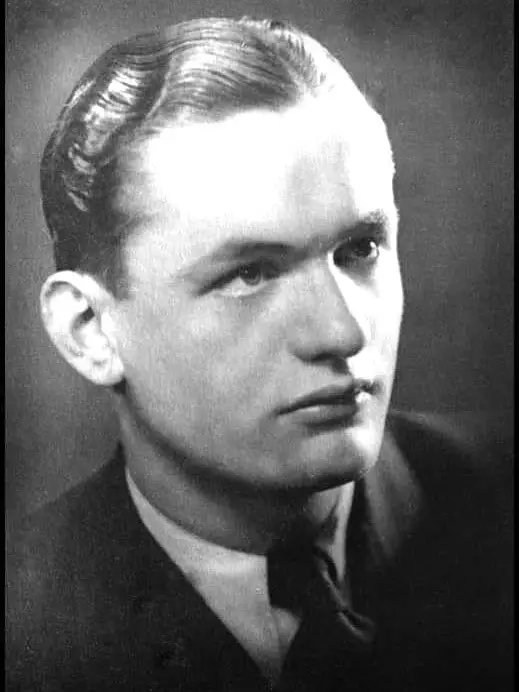
Inevitably, during this time of the rule of communist dictatorships in the Albanian Ethnic lands, two histories were created, two literatures were created. One was the true national history written by researchers with a national foundation, but with scientific rigor, such as Professor Dr. Ernest Koliqi, Prof. Dr. Zef Valentini, Prof. Dr. Athanas Gegaj, Prof. Dr. Isuf Luzaj, Captain Ndue Gjomarku, Dr. Halim Begeja, Monsignor Zef Oroshi, Mit’hat Frashëri, Tahir Kolgjini, Martin Camaj, Arshi Pipa, and many others. While on the other side was the bloc of Eastern historians, who falsified Albanian history with Russo-Yugoslav methodology.
Every political opponent they called a traitor, collaborator, revisionist, and many other terms that only the mind of communist ideology orientation knows how to spawn. While the former had as their political orientation the concept of building the state with pluralism, Western democracy, political and economic cooperation with the West, the latter – the communists – had directed their orientation around the building of a dictatorial state, the one-party system, the killing of Albanian patriots, the imprisonment of their families and internments, and as a final tool there were also historians with communist views who were expressly educated in Moscow and Belgrade, for the falsification of history for all those patriots who acted in the Western orientation of Albanian politics and state. Time proved that the politicians who acted on the right and for national unity were right.
Because they had early on created connecting bridges between Albanians and Western states in Europe and in particular in America. And we now, as young historians, have before us two kinds of histories: one is the falsified one, especially during and after the Second World War and partly also during the declaration of Albania’s Independence and other historical periods, and the other is the one written with Western-level scientific methodology. During the comparison of these two variants of writing history, it is clearly seen that communist historians falsified history for the needs of their daily politics.
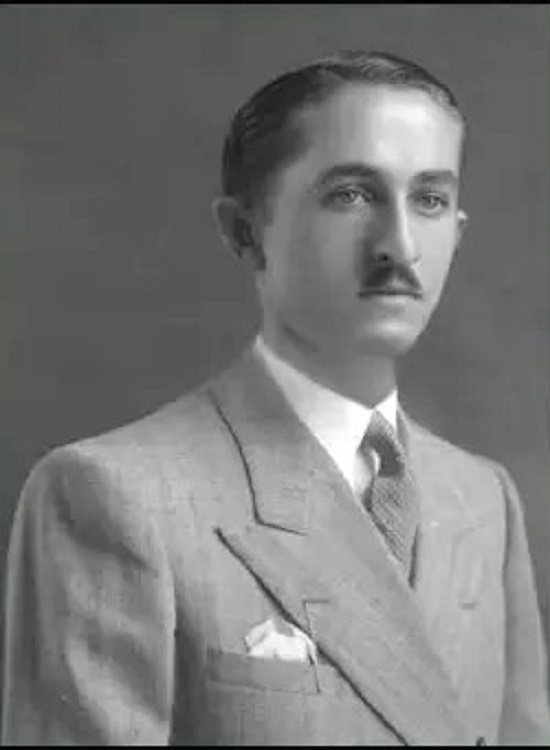
One of those falsifications was also the fact that communist historians committed against the great national house of the Captain of Mirdita, a house which for 500 years was in the service of the Albanian nation. One of those falsifications is also that of the killing of the patriot Ded Gjon Luli. These untruths about the killing of Ded Gjon Luli, the red communist historiography made deliberately in order to diminish the national value of the princely family of Captain Gjon Marka Gjoni, for three reasons:
To throw as many stones and wood as possible upon the patriotic family of Captain Gjon Marka Gjoni, which for five hundred years led Mirdita in war against the Ottoman Empire.
To destroy by all methods this patriotic family, since the two sons of Captain Gjon Marka Gjoni, Captain Dr. Mark Gjon Marku and Captain Llesh Gjon Marku, had led with full success the anti-communist war not only in Mirdita, but in all of Ethnic Albania until they fell heroically.
To sow hatred between the two heroic Albanian regions, Mirdita and Malësia, regions which always cooperated with one another for the good of the Albanian nation? For this speaks also the fact that the brave man of Malësia, Ded Gjon Luli, had not fallen into the hands of Knjaz Nikolla of Montenegro after the end of the Malësia uprising, but had found shelter and hospitality precisely in heroic Mirdita. In Mirdita, which in defense of Ded Gjon Luli gave seven of its best sons?
The historical truth of the killing of Ded Gjon Luli stands in this: Ded Gjon Luli was killed by the hand of the Serbian criminal, Captain Gjura. The historical truth of the killing of this hero of Malësia and all Albanians is as follows: The Serbs, after entering Mirdita, began acts of violence and terror. They plundered and burned the Abbey of Orosh and the villa of Monsignor Doçi, at the top of Mount Shëlbuem in the Holy Mountain. The people of Mirdita began to live under terror. Seeing these acts of terrorism, Ded Gjo Luli thought that he could convince the Serbs not to terrorize the people, and without asking anyone, he decided to go to the Serbian army command to tell the commander to stop his hand.
Despite the advice of the council of elders not to go there, that the Slav is treacherous, he decided to go. Since he could not be persuaded to withdraw from that stance, the Mirditans gave him seven men to accompany him, and their names are these: 1. Mark Llesh Doda, 2. Ndue Kol Pjetri, 3. Zef Ndue Gjoka, 4. Preng Çup Deda, 5. Preng Gjok Skana, 6. Bib Marlula, and 7. Llesh Deda. As soon as they arrived at the Serbian command, which was stationed in the Abbey, before leaving him a path to present his complaint, they disarmed and bound them, and Ded Gjo Luli they took to the plateau called Sheshas, and there they shot him, while the seven men they took to Breshten (the Forest) of Orosh, in the Holy Mountain, and there at the mouth of the Ice Cave, which is 15 meters deep in the ground, they took their souls by stabbing them with bayonets, and thus alive they threw them inside where they died frozen.
I gave only one fact of this falsification, because this family under the communist regime had this tragic balance: the two sons of the family Mark and Sandër (Llesh) Gjon Markagjoni killed in 1946-1947, at the age of 33 and 27, 40 years of prison, 254 (two hundred and fifty-four years of internment), and three dear mothers died in internment. Their properties were nationalized, confiscation of everything, razing of the family towers in Orosh-Mirdita; there only the stones remained.
For about 50 years continued torture, prisons, internment, and denigration of the family through radio, book, stage art, film, television, to infinity slander, the art of lies at the highest stage, it is said in the book “Dhembje” (Pain), by the Shkodran researcher Fatbardha Mulleti Saraçi. Other falsifications are made against many historical figures such as the patriots Mit’hat Frashëri, Mustafa Merlika-Kruja, Xhevat Korça, and many, many other patriots with Western political concepts and actions.
In Albania a debate has been opened, as always initially by politics for its own reasons, for the revision of Albania’s history, a debate that has divided historians into right and left. Since you are not involved in these ‘divisions,’ can you please tell us where Albania’s history needs to be revised, which figures can be evaluated, which can be devalued, or to whom should be given the place that belongs to him, his good and bad sides?
Often people are divided: those who serve the good, the beautiful, and the magnificent, and those who serve the evil, the diabolical, the cursed, and the Mephistophelian. So even Albanians in the Second World War were divided into two camps. Into the Nationalists who served the Albanian nation and sacrificed themselves for it, and the communists or the diabolical who served Slavism, and placed themselves in the service of the devil, the evil Mephistopheles, serving proletarian communism which recognizes neither nation nor faith. While the communists, even though they served the devil and Pan-Slavism, their children enjoyed many privileges, as well as had the opportunity to raise for their parents a lapidar with the sign of Mephistopheles, the devil, and the cursed – that is, to place the red communist star on their grave.
A large part of the children of nationalist patriots had no opportunity at all to raise a lapidar for their parents, because their bones were missing – that is, the nationalists who fought for Ethnic Albania remained killed, insulted, despised, and their bones today and to this day rest in common graves, while the children of these nationalists today and to this day seek their bones and have no possibility to at least raise a lapidar where they would write the words: here rests the Warrior of Ethnic Albania.
While the former, the children of the communists, carved on lapidars the communist star, the symbol of the devil, for their parents, these latter, the children and relatives of the nationalists, are still today in search of their bones even after more than six decades, so that at least on a lapidar they might carve the two-headed eagle, the symbol of Albanians, for which the Albanian patriots sacrificed themselves.
In search of finding the bones of their parents and relatives, there are many patriots and honest nationalist families, but today and to this day we have no reflection from those who killed them and threw them into common graves, we have no awareness at all from the former communist leaders of Kosovo and Albania, and from their children and relatives, to at least show us the places where the nationalist patriots were massacred so that we may bury them, because they too had the right to have a grave where their descendants may go and send fresh flowers and say the words: we remember you with longing for ever and ever.
In this direction, even Arben Puto, as the most trusted man of the criminal Enver Hoxha, can do much to tell us where the bones of the patriots killed in Tivar were thrown, where, as Azem Hajdin (Xani) writes in the book “MASAKRA E TIVARIT” (MEMOARE), Prishtina, 1998, pp. 17-18: “On 31.3.1945, 4,310 Albanians were massacred by the Serbs and Montenegrins in Tivar.
Selected sons and men from all Albanian ethnic lands: from Mitrovica, from Shala e Bajgorës, from Drenica, from Skënderaj and Gllogofc, from Vushtrri, from Podujeva, from Llap and Gallap, from Kamenica, from Presheva and Bujanovc, from Vitia, Gjilan, Prishtina, from Lipjan, from Kaçanik and Ferizaj, from Suhareka, Prizren, Dragash, Opoja, from Peja and Gjakova, from Klina and Istog, from Tetova, Manastir, Gostivar, Shkup, and other regions of Kosovo, call upon our politicians, historians, poets, writers, and all Albanian scientific institutions, with all the voice they have: Where is our blood, where are our bones?” / Memorie.al
Continues in the next issue