By Bashkim Trenova
Part Fifteen
NAZIBOLSHEVISM – LITERATURE AND THE ARTS
PREFACE
Memorie.al – Historians, political philosophers, intellectuals from various schools or positions have devoted thousands and thousands of pages, entire volumes, studies, and articles to the comparison between Nazism and Communism. Generally, in their publications and studies, they focus on the police control of society by these dictatorships, the role of the dictatorial state hierarchy and the head of state as suppressors of free thought, the omnipresent place of official propaganda in society, the mass massacres and the network of concentration camps, the activity of the police, the NKVD in the USSR (later the KGB), and the Gestapo in the Third Reich. In his book “Le Passé d’une illusion” (The Past of an Illusion), François Furet notes that Nazism and Communism share the same opposition to liberal democracy and what they call “capitalist bourgeoisie.” Both ideologies claim to be socialist and use the image of socialism. Communist countries called themselves “socialist.” “Nazism” is a shortening of National Socialism.
Continued from the previous issue
Chapter II – MUSIC
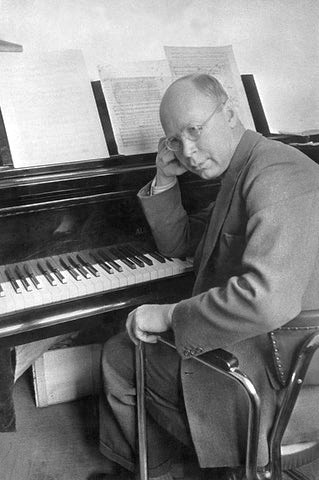
Prokofiev spent his life under the tyrannical control of Stalin and the repressive mechanisms of the dictatorship in his service. Even his death would be overshadowed by Stalin’s death. He would die on the same day, March 5, 1953, in the same way; both are victims of a cerebral hemorrhage. Eclipsed by the Bolshevik dictator, the composer’s body was not moved for nearly three days. The streets of Moscow were overflowing with Soviets paying their last respects to the “father of peoples.” Not only that, but the composer’s death was made known to the Russian people only after six days. Meanwhile, news of his passing circulated around the world. For Prokofiev’s lifeless body, not a single flower could be found in all of Moscow.
In 1957, the reassessed Prokofiev would be awarded the “Lenin Prize,” thus becoming the first Soviet composer to be honored with this prize posthumously. Among the three Great Russian composers of the time, alongside Shostakovich and Prokofiev, stands also Nikolai Yakovlevich Myaskovsky. His work is monumental: 27 symphonies. He is one of the founders of Soviet symphonic music, but less well known than the first two. Much respected in musical circles, Myaskovsky, this special, unsubmissive man, is described by them as the “artistic conscience of our music.”
Prokofiev, known as his friend, speaking of Myaskovsky’s music, said: “Everything Myaskovsky wrote is deeply personal and with admirable psychological intuition. This music is not of the kind that quickly becomes popular…! His music is full of wisdom, passionate, dark, and deeply observant, searching, analyzing thought, feelings, and spiritual states. In this regard, he is close to Tchaikovsky, and I think he is his deep heir.”
Myaskovsky composed, among other works, Symphony No. 12 on the theme of collectivization and the transformation of village life. Through it, he wished to reflect the transition of the Russian peasantry from the old life and arduous slave labor to the joyful life on the kolkhoz. This work of Myaskovsky was condemned as “a symphony without text, while the music simply as ‘too bourgeois’ and to be rejected… among other things, the village under the Tsarist regime depicted by Myaskovsky is too beautiful, so beautiful ‘that one cannot see against whom it had to fight’!”
Following this failure, Myaskovsky worked hard to “change.” This is seen in Symphony No. 16. This symphony is clear, optimistic, with heroic pathos, lyrical phrases, and moments of sadness. The composer seeks to present the world around him in all its diversity, to convey the “pulse of the era.” With this symphony, the author treats the heroic theme of Soviet aviation. He paid homage to Soviet aviators after the crash of the “Maxim Gorky” aircraft in 1935, in which 49 people lost their lives. Soon after this crash, a “legend” was spun, according to which Stalin he was supposed to have traveled on it, which added even more pathos to this tragedy.
Despite this composition, Myaskovsky’s works were generally condemned and banned by the Bolsheviks. Among them, one can mention Symphony No. 6. Its sin is “abstract humanism.” Symphony No. 7 was cursed for “immersion in a subjectivist wasteland.” Symphony No. 10 suffers the same fate for its “sick expressionism.” Symphony No. 13 was catalogued as a “symphony of great sufferings,” while Symphonies Nos. 24 and 25 were judged as too “far removed from popular reality.” The cantata “The Kremlin in the Evening” was annihilated by censorship, being smeared as “sad, mystical.”
In 1948, placed in the dock of accusations made against Soviet music for “formalism,” Myaskovsky, unlike Shostakovich, Prokofiev, etc., did not respond to Zhdanov’s call to go to the Bolshevik Canossa and make self-criticism, to repent for his activity. He did not attend the process known as the “meeting of Moscow composers and musicologists.”
Following the above, one can also see the creativity and trajectory of another great Soviet composer, Aram Khachaturian, valued in his country, Armenia, as a “national treasure.” Aesthetically, he is completely in line with the demands of Socialist Realism. Ballets such as ‘Gayane’ or ‘Spartacus’, concertos, symphonies, and vocal works such as, for example, ‘Poem about Stalin’, ‘Ode in Memory of Lenin’, testify to this, particularly regarding the national character of the music.
Khachaturian bases himself on folk music, giving it a more perfect form. He is inspired by the folklore of all Soviet republics, especially Armenian folklore, the peoples of the Caucasus, and to a lesser extent also by the folklore of the peoples of Eastern Europe, Central Europe, and the Middle East. His melodies are characterized by a variety of technical variations and the imitation of timbre effects of oriental instruments.
For his activity, Khachaturian was awarded “Hero of Socialist Labor” in 1973, the “Order of Lenin” in 1939, 1963, 1973, the “Order of the October Revolution” in 1971, the “Order of the Red Banner of Labor” in 1945 and 1966, and the medal “For Useful Work.” On the occasion of the 100th anniversary of the birth of Vladimir Ilyich Lenin in 1970, he was awarded the medal “For the Defense of Moscow.” In 1944, Khachaturian was also awarded the medal “For the Defense of the Caucasus.” In 1975, he was awarded the jubilee medal “Thirty Years of Victory in the Great Patriotic War.”
He was given several honorary titles such as: “Honored Artist of the Armenian Soviet Socialist Republic” in 1938, “Honored Artist of the Russian Soviet Federative Socialist Republic” in 1944, “People’s Artist of the Russian Soviet Federative Socialist Republic” in 1944 and 1947, “People’s Artist of the USSR” in 1954, “People’s Artist of the Armenian Republic of the Union of Soviet Republics” in 1955, “People’s Artist of Georgia” in 1963, “Honored Artist of the Uzbek Soviet Socialist Republic” in 1967, “People’s Artist of Azerbaijan” in 1973. In addition to numerous decorations, Khachaturian also received several prizes, including the “Stalin Prize, 2nd class” in 1941, the “Stalin Prize, 1st class” in 1943, 1946, and 1950, the “Lenin Prize” in 1959, and the “USSR State Prize” in 1971.
Despite his more than disciplinary adherence to Socialist Realism, for which he was honored with so many titles, medals, and state orders by the Bolshevik authorities, despite even their great displeasure, even Khachaturian could not escape accusations of “formalist” tendencies, just like Prokofiev, Shostakovich, or Myaskovsky. From January 10 to 13, 1948, at the Conference held in the Kremlin in the presence of seventy musicians, composers, orchestra conductors, etc., Zhdanov would condemn Shostakovich, Prokofiev, Myaskovsky, Khachaturian, Kabalevsky, and Shebalin as the main figures of the erroneous formalist tendency in music, as adherents of formalism, i.e., of a music deemed difficult for the masses to understand, of an “anti-people” music.
During this Conference, the new head of the Union of Soviet Composers, Tikhon Khrennikov, implementing the orders conveyed by Zhdanov, Secretary of the Communist Party of the Soviet Union, attacked Khachaturian’s ‘Symphonic Poem’, adding that his ‘Concerto for Cello and Orchestra’ was played in a half-empty hall and that “everyone thought Khachaturian’s Cello Concerto was a zero.” For his part, Zhdanov himself, when Khachaturian sought to explain, accused him of “extreme individualism.”
The ‘Symphonic Poem’, which caused the fury of the Bolsheviks, was composed by Khachaturian on the occasion of the 30th anniversary of the October Revolution, to hymn it and honor it. He himself declared, years later: “I wanted this work to express the joy and pride of the Soviet people for their great and powerful country.” In 1948, Khachaturian was sent to Armenia for “re-education.” This punishment ended with Stalin’s death in 1953. Also targeted by the anti-formalism campaign was the composer Vano Muradeli, Honored Artist of the Russian Soviet Federative Socialist Republic, “People’s Artist”, twice holder of the “Stalin Prize, 1st class”, the “Order of Lenin”, the “Order of the Red Banner of Labor”, “Honored Artist” of the Kabardino-Balkarian Autonomous Soviet Socialist Republic.
Muradeli is known for several cantatas dedicated to Stalin, such as ‘Poem-Cantata – To the Leader’, ‘Cantata about Stalin’, ‘Toast Song’. He is also the author of the cantata ‘Lenin is with us’ and ‘Song about Beria’, ‘Symphony No. 1’ (in memory of Sergei Kirov), the ballet ‘Zoya Kosmodemyanskaya’, ‘March of the Militia’, ‘Black Sea March’, ‘Hymn to Leningrad’, ‘Song of Victory’.
For all his activity, in accordance with the demands of Socialist Realism, he deserved the series of decorations, orders, and medals mentioned above. His misfortune begins with the opera ‘The Great Friendship’. At the Composers’ Conference where Shostakovich’s opera ‘Lady Macbeth’ was condemned, as well as other composers, Muradeli’s opera ‘The Great Friendship’ was judged as formalist, “reactionary and anti-artistic.” Its condemnation is made by Zhdanov.
In his speech, he emphasizes: “Comrades, the Central Committee has decided to call you for the following reason. Some time ago, the Central Committee attended the premiere of Muradeli’s new opera ‘The Great Friendship’. You can imagine how impatient we all were to see this new Soviet opera, after more than ten years during which our country had not produced any opera…! Unfortunately, I must tell you that our hopes were disappointed. The new opera is a failure. Why? Let us first look at the music. There is no melody in it that you can commit to memory. The music simply does not reach the listener’s brain.
The hall – more or less 500 forewarned and attentive people – did not react at any moment. The lack of harmony, the mismatch between the music and the emotions of the characters, the cacophony of many transitions, are disheartening for us. The orchestration is poor. Most of the time, only a few instruments are heard, and then, suddenly, the whole orchestra starts to bellow. During some lyrical moments, trumpets and percussion explode; conversely, heroic passages are accompanied by an elegiac and sad melody. Finally, while the opera’s subject is the history of the peoples of the North Caucasus at one of the key moments of their history – to put it more clearly, at the moment of the establishment of Soviet power in the region – the music completely ignores the folk music of these peoples and is not inspired by it.”
Even Dmitri Kabalevsky, a four-time laureate of the Stalin Prize, was accused by Zhdanov in January 1948, together with Aram Khachaturian, Gavril Popov, Sergei Prokofiev, Dmitri Shostakovich, Nikolai Myaskovsky, and Vissarion Shebalin of “formalism”, i.e., with the heaviest accusation that could be made against an artist in Soviet Russia. Under these conditions of terror, the reaction of Soviet composers, who withdrew, isolated themselves, did not compose, did not take risks, is understandable. This means a lack of creativity, a lack that risked diminishing even the propagandistic service, which needed endless hymns to communism and the Soviet leaders, cheers for the “new life”, for the heroism of the new man, of the Russian spirit.
After 1948, a complete failure of works inspired by Soviet reality is observed. “The Soviet people,” writes Pravda on April 19, 1951, “expect composers to create new operas that faithfully embody the characters of our era, revealing the beauty and richness of the spiritual life of Soviet people.” Some new operas were even staged on the largest and most famous stages of the Soviet Union during the three years following the condemnation of Muradeli and other Soviet composers. Officially, about 20 such operas are known. “According to the claims of the Moscow press itself, they are of extreme mediocrity. Most of the operas inspired by ‘Soviet reality’, even those by talented composers, after a few performances, were forced to be withdrawn from the billboards.
In short, at this time there is no modern opera that can win the hearts of the public. The failure is complete. Kolkhozes, large hydroelectric plants, irrigation canals, and grandiose projects for transforming nature became subjects for oratorios and cantatas, but no composer managed to produce an opera in an acceptable manner reflecting the achievements of the Stalinist era.” What about ballet? First, it must be said that Russian ballet is more than a spectacle or a dance. It is the heart of Russian culture. In the world of Russian art, ballet has held a special place since its beginnings in 1672, when it was first performed at Maslenitsa for the court of Tsar Alexei Mikhailovich.
What was the policy of the Bolsheviks? How did they practice Socialist Realism even in this field? Ballet could not and did not escape the efforts to adapt it completely according to the demands of Proletkult. The first ballet with “proletarian” demands is ‘The Red Whirlwind’ by Fyodor Lopukhov, with music by Vladimir Deshevov, composed in 1924. The work was a complete failure. It was performed on stage only three times. Then other attempts, more or less delirious, continued to create proletarian ballet. In 1929, Fyodor Lopukhov staged the ballet ‘The Nutcracker’ with music by Tchaikovsky.
The ballet wavered between classicism and modernism and caused a real storm of criticism. ‘The Nutcracker’ was labeled as “an artistic bankruptcy” and was placed in the dock for “a complete lack of understanding of the tasks facing the Soviet theater.” (42). According to the critics, “Lopukhov did not follow the path of creating the figure of a ‘modern Soviet doll’, did not reflect social aspects – in short, did not follow the rhythm of revolutionary art.”
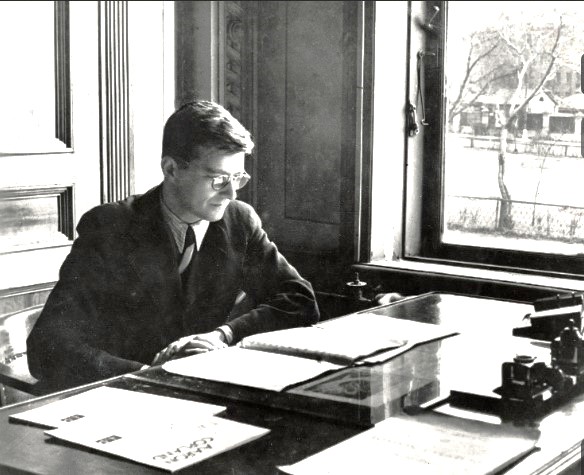
In 1930 and 1931, Dmitri Shostakovich composed the music for the ballets ‘The Golden Age’ and ‘The Bolt’. “The Golden Age” depicts a boxing match in Western Europe with a racist referee. “The Bolt” deals with sabotage in a factory. Even with these ballets, the failure for “Proletkult” was complete. In 1935, Prokofiev’s ‘Romeo and Juliet’ was composed and staged.
This ballet, with monumental sets, was expected to be a symbol of the Marxist movement. The author was denounced by the Political Bureau of the Communist Party of the Soviet Union for “inappropriateness to the needs of the people.” Also in 1935, Fyodor Lopukhov choreographed and wrote, together with Adrian Piotrovsky, the libretto for the ballet ‘The Limpid Stream’ with music by Shostakovich.
In Pravda dated February 6, regarding the above, an article was published with the title: “Falsifying Ballet.” This article states: “We have before us a ballet in which the action and the authors have tried to depict the collective life of our days on the kolkhoz…! The ballet is filled with the light and festive joy of youth.” Adrian Piotrovsky was sent to the Gulag. / Memorie.al