Memorie.al / The signal from the Albanian secret services abroad about the start of the mission to return Xhevdet Mustafa to the homeland together with a group of saboteurs put all military personnel along the coastal line on their feet. A witness of those times and at the same time one of the main responsible for border protection, recounts those exhausting months when 10,000 troops stood at alert level No. 1 to defend the homeland from a handful of saboteurs. In an exclusive interview, Fitim Hakorja, former commander of the coastal artillery regiment in Durrës, recounts how he presided for three consecutive months over the highest level of alert along the entire coastline from Cape of Rodon to the Castle of Turra. Four full generations of soldiers and reservists guarded and monitored the entire length of our coastline 24 hours a day. The heavy artillery was on the highest alert. The army was engaged as if the country was preparing for war, because the life of the communist leader Enver Hoxha and the regime of that time had to be protected at all costs. Besides border violators, such as saboteurs trained by foreign spy agencies, Hakorja recounts that Albanian waters were violated several times, but those were kept secret. Moreover, on one occasion, the violation of the border was committed by the Ministry of Defence, which at that time cooperated with foreign smugglers. The story of the bag of dollars found on the coast of Durrës, the discovery of the illegal activity of the Defence ministry, the collection of propaganda materials dropped by foreign planes and ships, or the meetings with the then ministers, such as Haxhi Lleshi or Beqir Balluku, bring to light details that surprise, especially when he recalls the years when they took place.
Mr. Hakorja, you were the commander of the coastal artillery regiment of Durrës, during the period of the landing in Divjakë of Xhevdet Mustafa’s group. What do you remember from that period?
“Xhevdet Mustafa was expected to come out somewhere on the coast of Durrës. At that time, I was the commander of the heavy coastal artillery regiment based in Durrës. It was 1982. The radio operator came to my office and delivered the phonogram that had arrived from the Ministry of Defence. It was top secret. It was about taking quick measures and putting the personnel of several brigades of our regiment on alert number one.
There it was stated that on the coast of Lalëzi Bay, which is located in the northern part of Durrës, a group of saboteurs led by Xhevdet Mustafa would land. I heard this name for the first time. I knew nothing about him or his activity. The Minister of Defence at that time was Kadri Hazbiu, while the Minister of Internal Affairs was Feçor Shehu.
Through secret communication channels, we were told that the mission of this group of saboteurs was to eliminate the leader, Enver Hoxha, and that all the information had been obtained through counter-intelligence and Albanian agent services abroad. Mustafa was from Durrës, but had escaped years earlier.”
So it concerns the activation of many active and reserve forces?
The situation and the information that came from the Albanian agent network abroad were highly valued. Such things were no joke. About 10,000 soldiers and reservists were mobilized, creating an impassable fence. Vigilance and alert level No. 1, day and night. Lalëzi Bay was put under control inch by inch. There began the first belt of the encirclement, while the fourth belt was placed in Vorë, somewhere near the Gjola Bridge. The first two belts were 200 meters apart from each other. According to the information, Xhevdet Mustafa and his group, to penetrate into Tirana, would follow the itinerary of landing in Lalëzi Bay and then head towards the mouth of Maminas to come out in Vorë.
The personal weapons of the soldiers and reservists were rifles, pistols, and submachine guns, while the artillery had taken its positions to open fire. The coast was controlled every meter by radars. As a regiment, we had radars in Currila, at the Durrës Hill, the Castle of Turra, and Bisht-Pallë, while the navy had its radars in Shetaj, a remote village in the Ishëm commune, Bisht-Pallë, and Currila.
Every signal was analyzed and recorded in a logbook. The line from the Castle of Turra to the Cape of Rodon was under control, while many checkpoints were set up. This situation lasted a long time, until September 25, 1982, the date when Xhevdet Mustafa came out in Divjakë, on the opposite side. That ended the three-month alert of 10,000 personnel, the fatigue, and the great psychological burden.
Thousands of leks were spent to keep all these forces on their feet. There had been other times when the entire regiment went to alert level No. 1, but with fewer forces and for a very short time.
Did you as a regiment command the forces in the field, or was everything directed from Tirana?
Orders for us as a regiment, as well as for the brigade headquarters of Durrës, Sukth, and Manzë, came from the Chief of the General Staff, Kiço Mustaqi. He was in the field in a tent. The defence headquarters was set up in Sukth, and we were called there from time to time to report. We had been informed by our superiors that a group of saboteurs with terrorist tasks would land on the coast of Lalëzi Bay, but without giving us specific names. We did not know if it was one or several persons, known or unknown to us. The tasks and orders passed in a chain.
They came from the General Staff for all of us. After Kiço Mustaqi in terms of duties and responsibilities came the Tirana corps, with Commander Naim Muho. Like us, the Manzë brigade headquarters with Commander Hasan Çela, the Sukth headquarters with Commander Colonel Novruz Zejnati, and the Durrës brigade headquarters with Commander Faik Kolaci were in the field. All in tents for three months, without seeing home. It was a very complicated situation. The public opinion knew nothing, nor did the reservists.
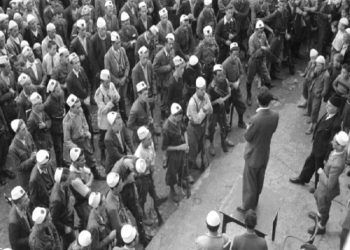
They had been called for training. During the three months, the 10,000 forces stayed in tents, which were somewhat camouflaged not to be noticed by the group that would land on the coast. Each tent held up to 20-25 reservists. Meetings with the Chief of the General Staff were held daily in his tent. There we reported and there we received new tasks. For all of us, the alarm was of special importance, as we had gone to alert number one, which meant sleeping with one’s coat and boots on.
Do you remember any other such case of border violation?
A few years later, in the spring of 1989. It was not a group of saboteurs but traffickers, smugglers. The alarm signal was real. It was a speedboat with four engines, with powerful reactors. Our four torpedo boats could not catch it even though they cruised at 20 miles per hour. The alarm came in parallel for us as a coastal regiment and for the military navy. Two border guard hunting vessels and eight torpedo boats went out to sea.
The speedboat came from Italy and had smuggled cigarettes. We activated four battery guns at Bisht-Pallë, Currila, Shkëmbi i Kavajës, and the Castle of Turra. The torpedo boats had sea-to-sea torpedoes. The control arc was created, up to neutral waters. The Fleet commander was Petrit Llaftiu, while I directed the operation. The foreign speedboat, used by the smugglers, measured 18 x 6 m, a modern vessel. After several hours of effort, we managed to bring them into our arc, and after capturing all four speedboat operators, we handed them over to Tirana. The order this time came from the Ministry of Internal Affairs; while a few days later, we learned that the smuggling was being done by the Ministry of Defence.
They were cigarettes preferred in the West. They had exchanged the goods, the cigarettes, in neutral waters. It was not the first case, but this time things had not gone as they should. During the exchange, a suitcase with dollars had fallen into the sea. It was found by some shepherds on the coast of Kallmi, west of the city of Durrës, who later handed it over to the Internal Affairs Branch. Not long after, it was learned that Albanian government officials had smuggled with foreigners, an unbelievable case for that time. For many years, we had to collect materials at sea, leaflets, or even chewing gum that were intentionally dropped by foreign planes.
The leaflets generally had religious content, but in no case did they fall into the hands of citizens. It was not the first time this had happened. The coastal guard and the navy had encountered the phenomenon of agitation with religious and political propaganda several times. I cannot say for sure who was more interested in doing this kind of propaganda, but based on some intelligence information, both inside and outside the country, it turned out that the Vatican was directly interested. In not a few cases, the violations were justified as human errors by foreign fishing vessels, while there were also cases of weather influence.
Due to waves or strong winds, there have been cases where mainly fishing boats and small vessels have been caught in Albanian waters, entering our waters because of strong winds. In such cases, based on agreements with neighbors, they were assisted and returned to their ports. Our waters were patrolled without interruption, day and night, in calm and rough weather. Our regiment was in function of coastal defence. We also helped and supported the Fleet in possible combat actions.
The range was 127 km to 147 km, so everything was under full control of the water space. Uninterrupted monitoring extended to neutral waters. Readiness at every moment was at the highest levels, and this was never questioned for any reason. Today things have changed, and we have different situations, a different political climate in the region. But back then, things were completely different. Vigilance was at the highest levels, so intentional violations of the maritime border were few.
Do you think that the entire Albanian coast was under full control and security?
The entire coast from the sand to the neutral waters was monitored daily. I can speak for the sectors and the geography of the area where our military duty was extended, but I am sure that the situation was the same everywhere along the 180 km coastline. There were four regiments. The Durrës coastal artillery regiment was among the main ones, due to its position and the fact that the capital was very close. Then there was the Fier-Divjakë-Vlorë regiment, the Vlorë-Sarandë regiment, and the Lezhë-Velipojë regiment. The heavy coastal artillery had 130 mm, 120 mm, and 152 mm guns. The range was 127-147 km, coastal defence.
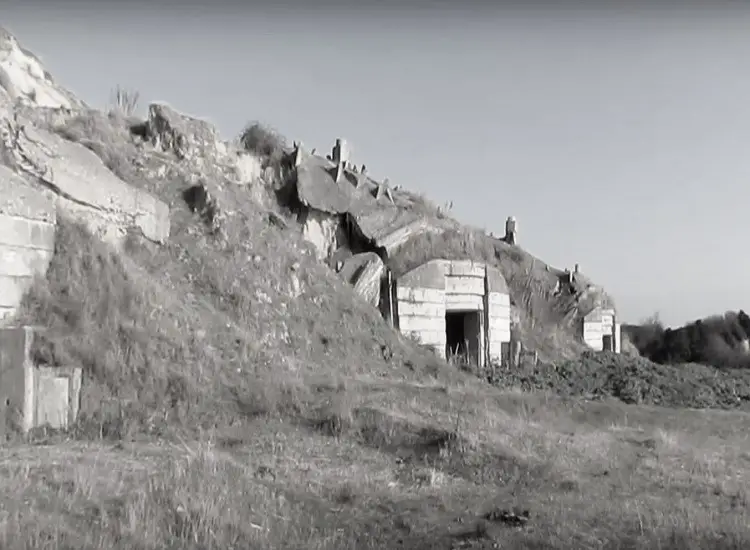
At points such as the Castle of Turra, Shkëmbi i Kavajës, Bisht-Pallë, and Currila, there were 130 mm electric-direction guns. There were coastal batteries at Rodon, Hetaj, Bizë, Shkafane, Bisht-Pallë, Currila, Shkëmbi i Kavajës, Karpen, and the Castle of Turra, all with advanced technology and four combat sets. The equipment was motorized and with radar. Now, all that military wealth, technology, and armament, together with the hinterland and auxiliary sectors, are no more.
Did your regiment have capable cadres to direct a defence, in case the coast became the target of an attack from abroad?
Today things are seen with a different eye. I do not want to undertake to speak about Albanian military technology and the technology of foreign armies. That is one side, not very important, even decisive for the outcome of a combat confrontation. But on the other hand, without qualified military potential, not only the war, but even the training would not have success. The staff of the Durrës regiment had very capable, very skilled cadres, such as; Aleksandër Bellani, intelligence chief, Vladimir Duda, operative chief, Myzafer Ismolli, personnel chief, Gëzim Islami, Eqerem Hysolaka, training chief, Mehmet Zeqiri, and other qualified cadres.
You have known several high-level military figures, some of whom were later declared enemies by Enver Hoxha or even executed. What do you remember from your encounters with them?
I have known up close Kadri Hazbiu, Beqir Balluku, Feçor Shehu, Petrit Dume, Haxhi Lleshi, Alfred Moisiu, and others. With some I have met or even stayed long, with others the meetings were official, short. Even at that time, I was not convinced that Beqir Balluku was an enemy. In 1973, he served as Minister of Defence. It was the period of his cooling with Enver Hoxha, and from day to day, he was expected to be handcuffed. I met him while I was a student at the United School. Because I finished my studies with an average of 10, my diploma was given to me in a ceremony, precisely by Beqir Balluku.
In August 1973, I saw him at the Reception House in Peshkopi. I was going to my birthplace, Brezdhan. As soon as I approached, I saluted him as a soldier. He recognized me and motioned for me to come closer to him. For an hour we drank coffee and brandy at the tourist locale. He was very interested in everything related to the security of the country, military art, the education of the youth, and everything. He asked me in detail about how the service was going and asked me to always be dedicated to my duty.
We parted amicably, and for me, it was a very welcome meeting. That was the last time I saw the minister. He was living semi-isolated, although we did not know it. In October, he was arrested. As soon as I parted from him and took the road to Reshtapaj, four civilians stopped me. They were employees of the Internal Affairs Branch who had followed all my movements and the meeting with the Minister of Defence. I told them I was an officer and that I was going to my father’s house in Brezdhan. They turned me back to Peshkopi, to the Internal Affairs Branch, and after questioning me at length, they let me go.
What is your memory of the meeting with Haxhi Lleshi?
Haxhi Lleshi had a meeting with intellectuals in Durrës. When it ended, he asked if there were any people from Dibra in the hall. They called me, also telling me about the request of the head of the Assembly. Haxhiu, after asking me where I was from, what education I had completed, and what people I had in my family, affirmed that he would come to my house for dinner. When he came to us, we stayed long talking. Mostly the rest of us only listened and agreed, while he talked and ate. There I learned that Haxhi Lleshi did not respect Tefta Çami. He praised her father for the war period, while he did not look favorably upon her. Then he began to talk about himself and his family.
I had heard rumors that his family had helped the state, but that night I heard that they had given 3 mules loaded with gold. Moreover, according to him, Haxhi Lleshi’s father had said that “these will be the first”. They were a well-known family in Dibra, with land and great wealth. The gold they gave to the state is also the initiative for the opening of the state bank. We stayed late listening to stories from the war. But he also spoke about his family, even telling that he had divorced his wife in 1983.
The wife was from Dibra e Madhe and received aid secretly. Without Haxhiu’s knowledge. Enver Hoxha had found out about this fact before him, and had called him, telling him everything about the aid. Realistically, the aid consisted mostly of clothes and household items. On that occasion, he had divorced his wife and never remarried. At least that’s what he told us in my house. We were hearing it for the first time. He also affirmed that he had not told this conversation anywhere else. Memorie.al