By Fatmira NIKOLLI
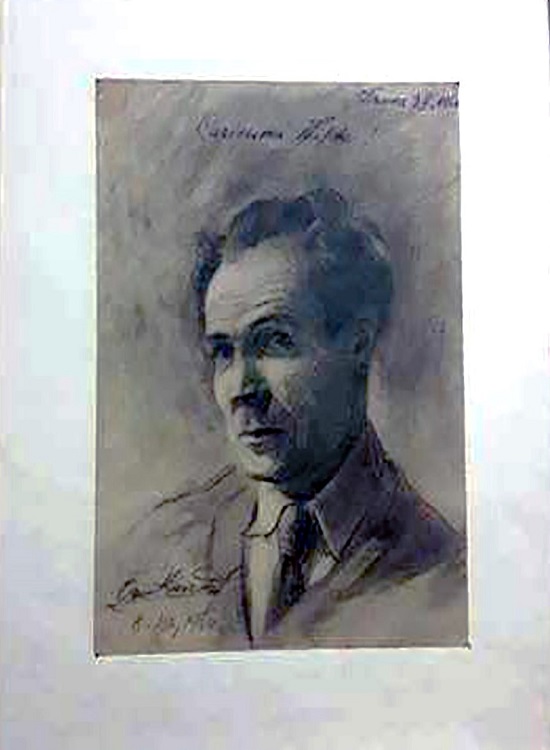
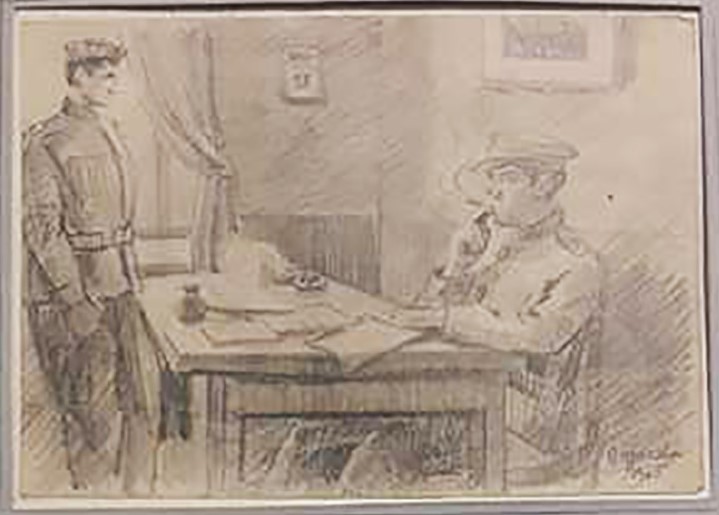
Memorie.al – At the police station, 1965. Pencil on paper. This note on the side of one of Qamil Grezda’s drawings in the exhibition opened some time ago at the National Gallery sheds more light on the painter’s life. I ask the exhibition curator, Oltsen Gripshi, what is the story behind the drawing? “This image relates to a personal story between Qamil and Ermir Grezda and the police of the time.” According to him, while Qamil would leave and return from his studio, he always carried paintings in his hands. The police would accuse him of being a “rogue engaged in secret activities against the party.” According to the curator of the exhibition “Qamil Grezda, the predator of nature’s beauty… 1917–1992,” these drawings immortalize moments from one of his many summonses to the police station to give testimony.
“There was a constant persecution of the painter, to the point that day by day they influenced him toward the landscape genre, so that he would not portray the dictator (a constant demand of the authorities of the time), and this turned into a punishment for him. But, at the same time, it made the artist immortal precisely through his cultivation of this genre (landscape),” says the curator about the renowned painter Qamil Grezda, and concludes the activities dedicated to this anniversary. Curated by Oltsen Gripshi, the exhibition is based on a retrospective concept of Qamil Grezda’s oeuvre. A total of 55 works are on display, most of which belong to the family collection and are presented to the public for the first time.
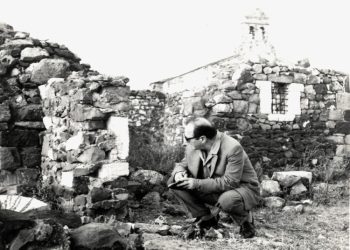
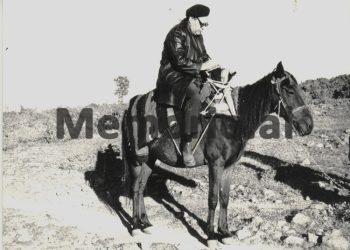
Alongside Grezda’s art, original items belonging to the artist himself are also displayed in the hall, such as: the jacket or hats he wore when painting outdoors, his easel, two palettes, the suitcase with brushes and paints, photographs of the painter during his studies, his diploma from the Academy of Fine Arts in Rome, correspondence between him and the great artist Ibrahim Kodra, a video of Ibrahim Kodra’s visit to Qamil Grezda’s home after the latter’s death, a sketchbook and drawing pad, a gold pocket watch that he carried with him everywhere he went, his personal diary, and a plaster death mask of the painter taken shortly after his death.
At the press conference, the Director of the National Gallery of Arts (GKA), Artan Shabani, described Qamil Grezda’s art as a national treasure and thanked the Grezda family for their contribution. “The exhibition dedicated to the 100th anniversary of the birth of painter Qamil Grezda is important for the National Gallery of Arts and deserves the public’s attention. Fifty-five works are presented, of which 12 are part of the GKA’s permanent collection, and the rest come from the family collection. In this context, I would like to thank Ermir, Qamil Grezda’s son, and his family for their fanatical preservation of the artist’s works.
The exhibition attests to a painting style in which one feels the strength and depth of the Italian academic tradition. It is a family legacy, but above all a cultural and national one,” said Shabani.
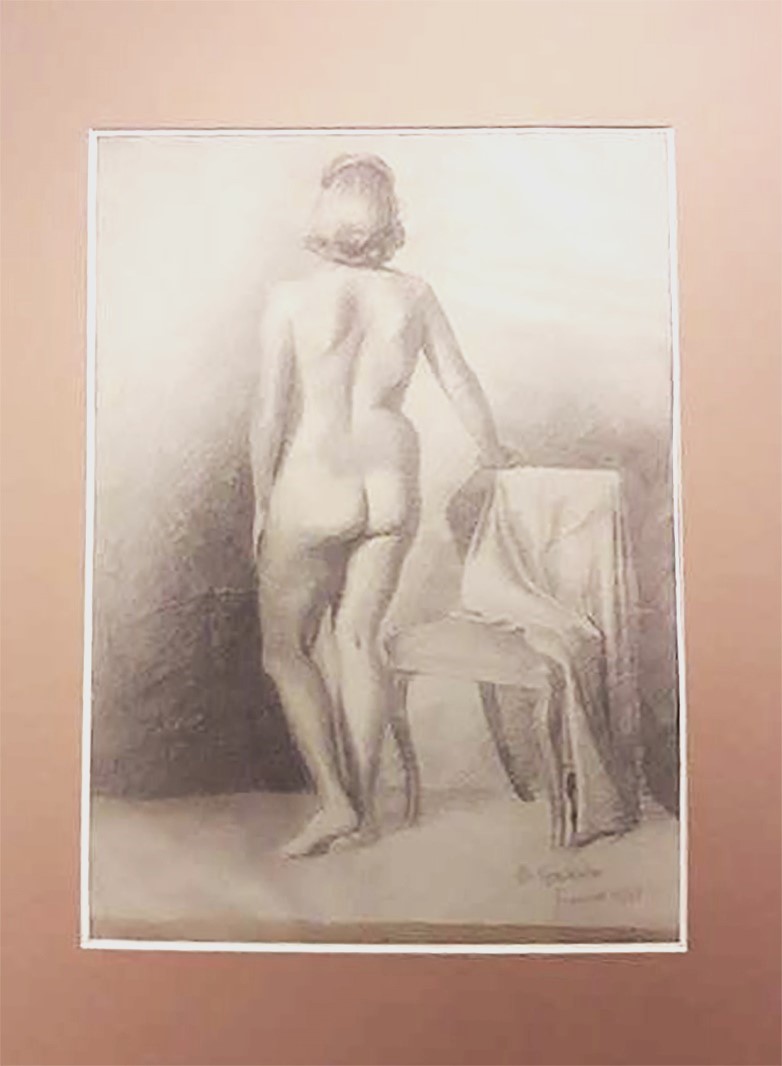
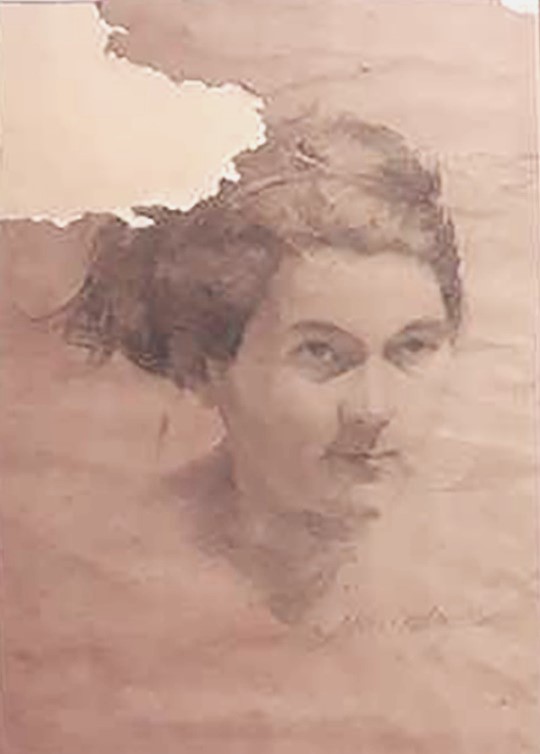
Oltsen Gripshi, the exhibition curator, explained the artistic concept to the media, adding, among other things: “The curatorial concept of this exhibition has been built by touching, step by step, upon the artist’s oeuvre, from his first drawings in sepia and charcoal technique. Then, by contemplating within this space, we touch step by step upon various moments of this artist, such as his paintings. It should be emphasized that artist Grezda, besides his art and artistic values, was to some extent a persecuted painter.
At one time this was a misfortune, but it turned into a value for our visual arts, because it created (after Vangjush Mio) a tradition of landscape painting. Thus, Qamil Grezda completes and codifies his character through the landscape genre in Albanian painting, interweaving different schools. Among the painter Qamil Grezda’s personal exhibitions, this one stands out, as it has been enriched with the painter’s life elements as well.”
At the press conference, the artist’s son, Ermir Grezda, shared some details about Qamil Grezda’s artistic formation: “My father’s nostalgia was for Rome, but above all for Florence. In his painting, one feels the difference between the academicism of Rome and that of Florence. For him, Florence was always more liberal, more impressionistic, more open. There he felt a different brushwork, a different artistic atmosphere,” said Grezda. / Memorie.al