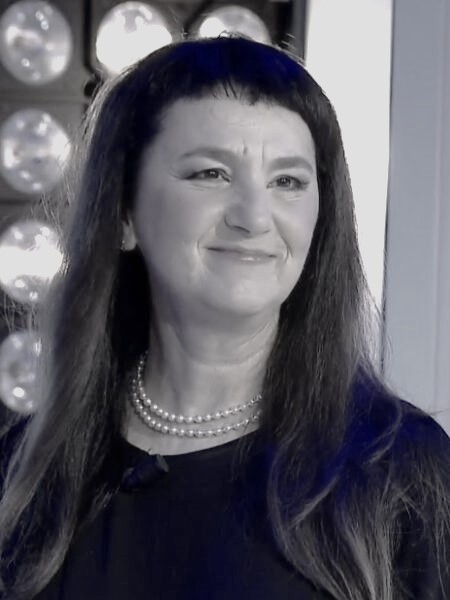
By Raimonda Shundi
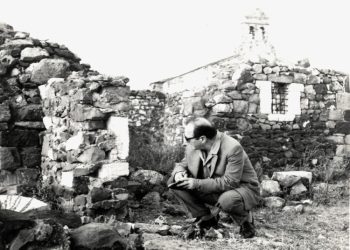
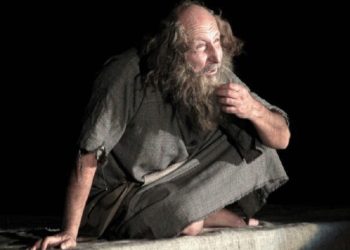
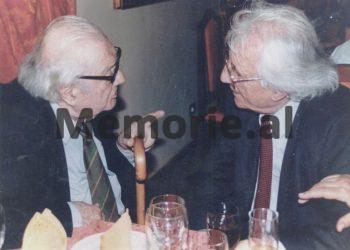
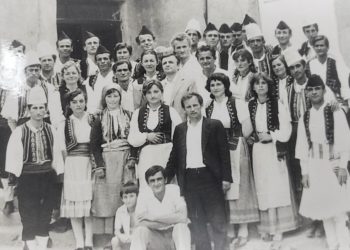
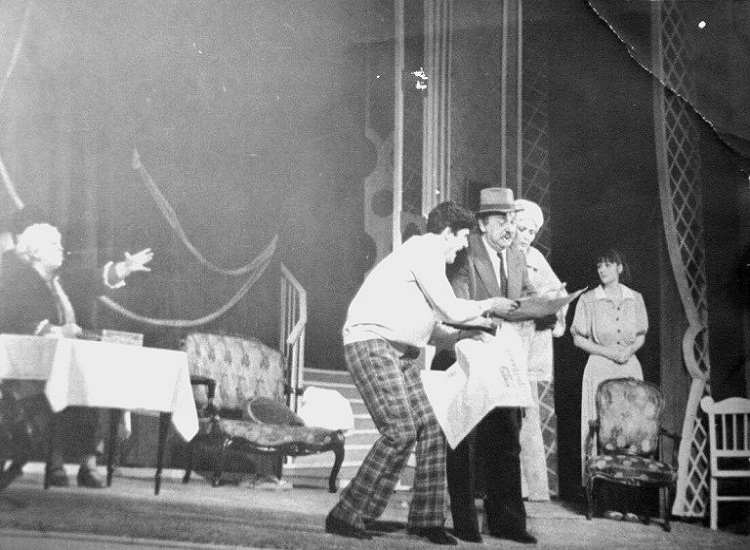
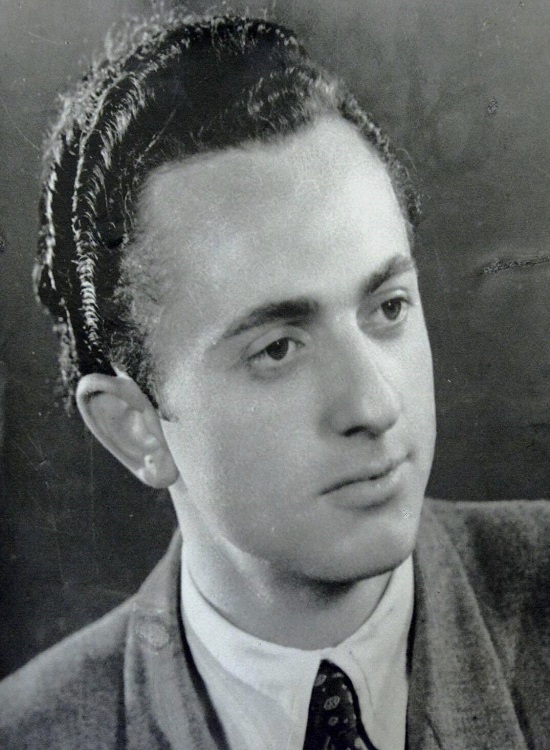
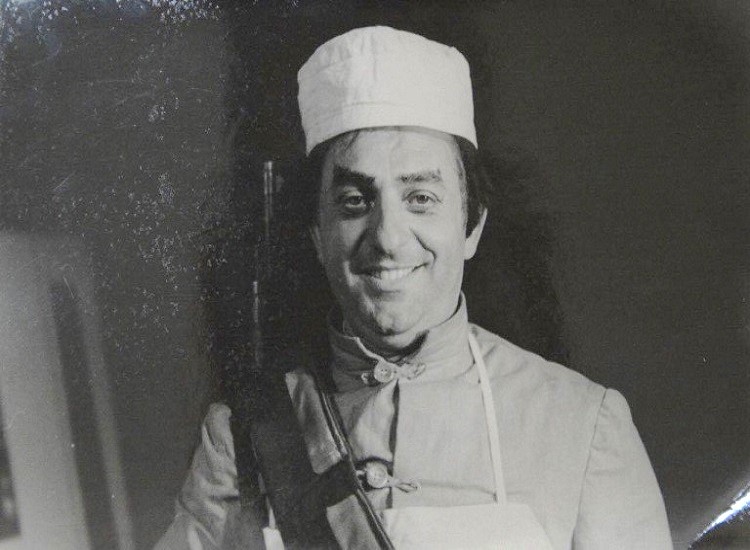
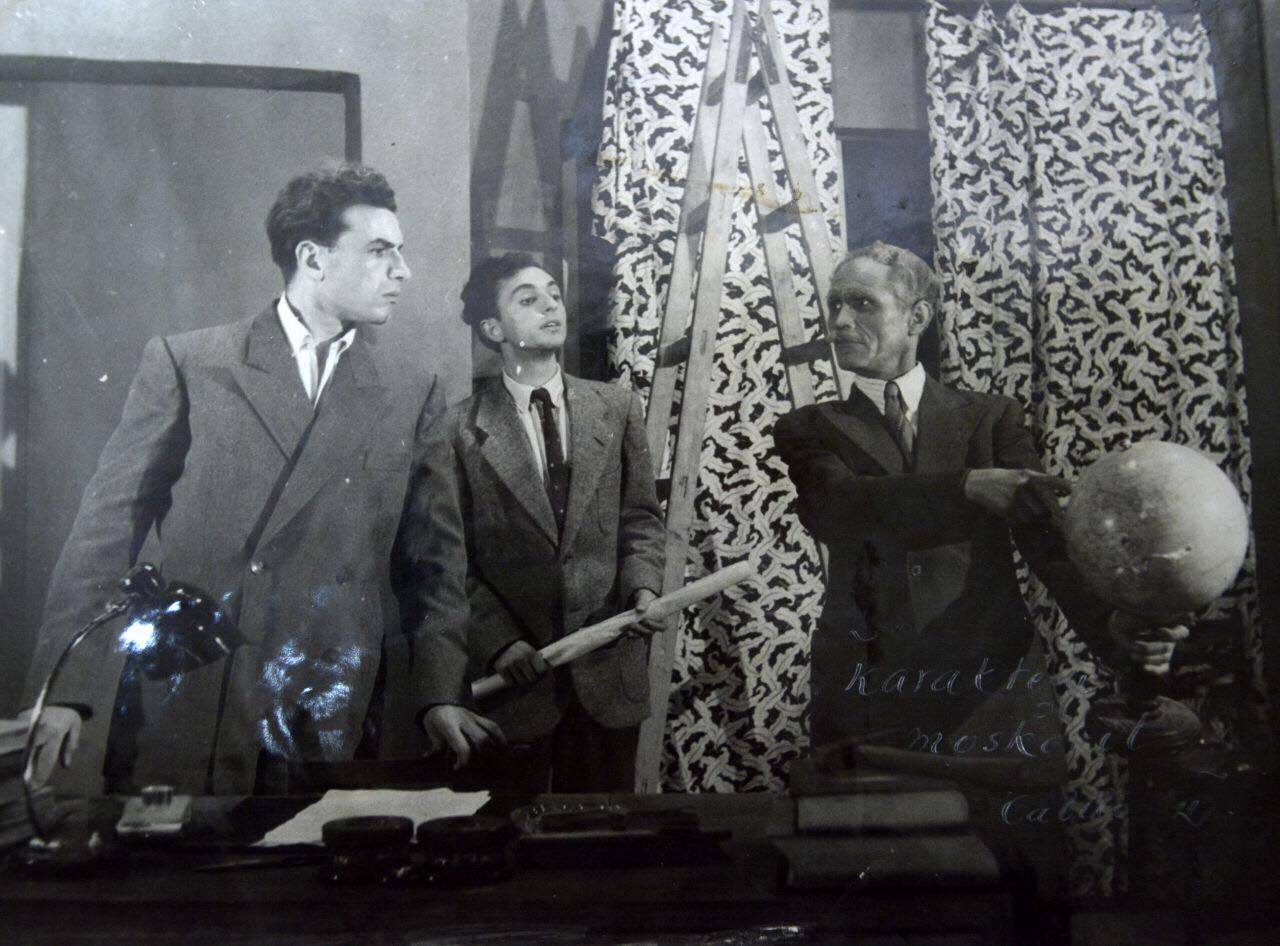
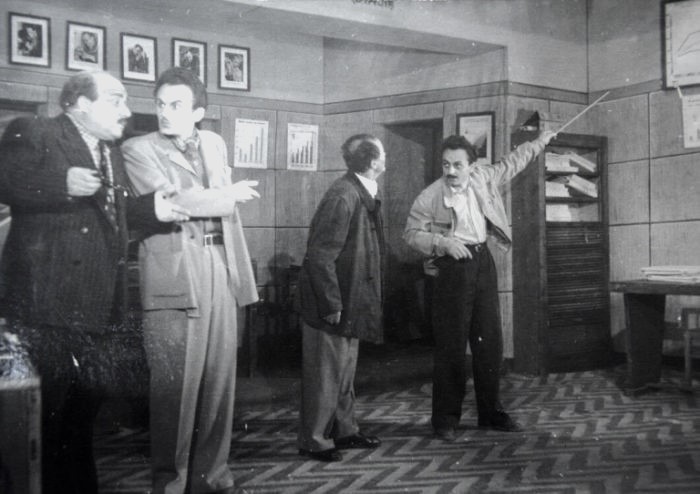
Memorie.al – “People’s Artist” Viktor Gjoka was born on July 4, 1922, in Tepelena and died on October 26, 2007, in Italy. He began his artistic activity in his youth with amateur movements. In 1946, he started working at the People’s Theater (now the National Theater) and worked there until 1971. Before turning 20, he performed his first roles, and he recalls how hopeless the confrontation with the audience felt at the time. The single punchline he had could not be articulated by him, even after numerous rehearsals with his idol, Mihal Popi. Among his most successful roles, we mention Khlestakov in Gogol’s The Inspector General (1952), The Merry Wives of Windsor, The Second Face, and The Carnivals of Korça. After about 13 years of working in theater, in 1959 he managed to obtain a scholarship to study directing in the Soviet Union for two years.
When diplomatic relations were severed in 1961, he returned to Tirana to continue his studies at the Tirana Conservatory. He returned to the People’s Theater in 1991, at the insistence of director Artur Zheji, where he took on the role of Spirake in the Romanian comedy The Titanic Waltz (the premiere was performed by Roland Trebicka; Gjoka performed on the second night, as he was the understudy). Later came the return of the comedy that had brought him success at the beginning of his theater career – The Inspector General – this time directed by Gjoka himself.
Feature films were less explored by him, but even there we have a number of characters, both in the comedy genre and in drama. We recall here Who Is the Killer?, The Death of the Husband, The Women’s Deputy, The Student’s Father, and The Historian and the Chameleon. From his theater works, only audio recordings of some of the staged productions exist, and they are kept in the archives of Radio-Television Albania. We remember Besim Levonja’s The Slide, Caragiale’s Pristanda, A Lost Letter, Carlo Goldoni’s The Servant of Two Masters, Mayakovsky’s The Bathhouse—in which he played the role of Mayakovsky’s Ivan Ivanovich, etc.
In Xhemal Broja’s work Majlinda, Viktor had a small role as a persecuted character, but the presence of a Polish critic led his pen to write about “that brilliant nurse, who resembled Alexander Moissi.” He managed to receive the title “People’s Artist,” but he could not protect himself from what was to happen to him. He was punished and expelled, but his spirit never severed itself from the stage. His love for the theater and his spontaneity as an actor proved stronger than the prison of artistic and human persecution.
I got to know Viktor around the 1980s, when he was serving his sentence in Bërzhitë. The village near Tirana was known for the many stories about the actor, who was spending his art in the modest activities of that area. At that time, he wanted to stage the drama Luisa Miller, and he saw me as a possible alternative. This is where my interest in acting began. I remember the passion and the sea of depth he conveyed from our very first meetings. I had not heard anything up to that point about his deeds or who this charming and cheerful man was, nor about the People’s Theater (as it was called in the years I am referring to). Viktor was exactly as we have rarely seen him in his later films.
Of average height, roundish, energetic, talkative, and curious, but with a smile that occasionally gave way to sadness and tears when discussions about his past began. We are used to hearing about young, talented actors and their routine appearances on all cultural programs (and not only) when it comes to new premieres or artist profiles. We hear so much about them in every cultural chronicle that other names fade into the silence of tight-lipped archives. Actors like Viktor or many others are of no interest (only if their deaths or scandals are mentioned). This is the era of all-pervasive consumerism and “fence-top roosters,” where the wise are violently crushed.
He had so few “friends” left from that collective battered by the regime that he only briefly discussed the latest performances. This is why Viktor did not often set foot in that building. He enjoyed conversations and small pleasures with amateurs or aspiring actors. – “I am more at ease with them,” Viktor would tell me, “they do not judge me for my past; they see me in the light of the future.” With them, he would relive the forgotten emotions in stories that never left him. The past in the theater was everything to him. The absence from the stage was compensated by reliving the “hit” fragments that brought him the success we are now able to bring to the attention of our readers. He spoke with sorrow about the collective meetings, the accusations, or the “friends” who rubbed their hands at the prospect of the actor’s departure.
His eyes would light up when he recounted fragments from his roles, encounters with admirers, or collaborations with Albanian and Russian directors. But let us recall what happened to Viktor in those years.
The Atmosphere in the Theater of the 1960s–70s
In the 1960s and 70s, the theater was the most preferred refuge for art lovers, since the regime’s controlled activities had suffocated the country with state propaganda. The performances, actors, directors, repertoire, attention, and even a little of the freedom of romanticism or more normal relationships could be felt by the spectators who filled the hall every night. Tickets sold weeks in advance could not meet all the demands of the fortunate Tirana citizens. The actors fought a silent battle until the moment they won or secured a role, because the flow of performances meant many were double-cast. The best group got the premiere, but the understudies also had the fortune to do their best, since performances were plentiful.
The well-known names of the theater fought hard to be part of the premiere, thus also securing their places in the subsequent performance groups. However, they were not on the same side (some were even fanatical supporters of the people’s regime) as the censorship, party directives, or “moral purity,” causing many heroes to shrink under dangerous pressures and compromise for their survival. A silent war had begun against the two most important issues of the time: “agitation and propaganda” and “moral problems.” Many actors’ names were threatened by the party, setting in motion the mechanisms of the party committee, who scrutinized every actor, no matter how beloved by the public, through the eye of a needle.
Passing through this sieve were many important theater names, such as Sandër Prosi, Naim Frashëri, Kadri Roshi – but we will speak about specific names in future writings. This same fate befell Viktor Gjoka. It was the time when the magic of the seventh art – cinema – had become the ambition and dream of the entire acting troupe. The first cinematic adventures had begun (Tana in 1958, Echo on the Coast, Open Horizons, The Silent Duel, Old Wounds). This development made actors immortal in their creativity, but at the same time it sharpened the knives behind their backs. Gjoka at this time had not managed to have any of his theater performances filmed, as that had not yet become a tradition.
Meanwhile, the name of the young man from Tepelena had begun to attract attention thanks to his dedication, spontaneity, improvisation, and work on his artistic persona. When the play The Inspector General by Gogol was being staged, the work had started with other actors. But this did not stop Gjoka from secretly rehearsing for the role of the protagonist, Khlestakov. Viktor had not yet studied acting, so the director’s hesitation made him work on his own. And the success was immense. His persistence and work received the reward he had dreamed of. This character automatically placed the young actor at the center of attention, and from then on, he became the most favored by directors, especially in the comedy genre. His spontaneity, improvisation, and typical playful handling of the character made Viktor the king of the audience.
In Albania at that time, admiration for artists was the only free and unconditional emotion. After the super-successful performances, Gjoka – who was by then happily married with children – would be accompanied during his walks through the city by the punchlines from his roles or requests for autographs. After this performance, other successes followed, which also became the school for many of our actors.
The Scandal
At this time, whispers began about a “scandalous” and disturbing “story” – the renowned actor of the People’s Theater had left his home, his wife, and children, and had married a high school girl, a friend of his daughter. After this, Viktor was thrown into the “production” [forced labor], also being deprived of the right to perform on stage. He was now one of those removed to “the warm bosom of the working class.” But he did not leave that beautiful young girl who had clung to him so badly. She was 17, and her verbal infatuation with “Khlestakov,” “Uncle Halil,” or “Mihallaq” became the subject of much talk.
She, Elena – defiant of a fearsome public opinion, rejecting her family and society – was blinded by a great actor, and also by a man nearly fifty years old, far from handsome. This young woman never left his side, despite the hardships she had not imagined their love would bring. In one of his interviews, Viktor states: “A man falls in love as if into a dark pit and looks for something to grab onto to climb out. But I stayed inside and couldn’t get out. But I took her as my wife; I didn’t keep her as a mistress like many others.” On one occasion, he even tried to go to the party committee offices, hoping that after so many years there might be hope for a return to the theater. They replied to him: “Ah, you Viktor Gjoka, what have you done to us?! Why did you do this to us like a cow? You gave the udder a kick and spilled the milk!”
“But I spilled the milk,” Gjoka replied, “but let the cow live, because the cow will give more milk.” “Ah, you’re good at that, but what you did… you will suffer for it.” “Why do you pick on me because I took a young bride?” Gjoka says. “I committed this sin. And what about Baba Myslym?! ‘Why, man, are you Baba Myslym?!'”
The decision to expel him from the theater came after several collective meetings. But could the actor ever detach himself from that theater that had given him so many emotions? – It was said that when it rained and people took shelter in their homes, from the New Tirana neighborhood where he lived, a couple would come out hand in hand, wandering the streets to keep their feet heading toward the People’s Theater under the pines of darkness, with a shadow of sadness.
They would walk together; one would break away, the other would remain standing, and the one who had broken away (Viktor) would kiss the doors and walls of the theater, and then fall to his knees, whisper, and cross himself. This was the period when the “enemy” Viktor Gjoka could not even provide bread for his home; he himself has stated that he would go and rummage through garbage cans for crusts of bread, clean them, and serve them as the day’s meal.
Word spread that the harassment by police officers (earning 80 lekë per shift) was a regular occurrence during their nights, as shameful comments shouted aloud were accompanied by pounding on doors and insulting words meant to provoke a reaction from the couple. Their children were rarely seen, while his young wife went out little and never alone. After this, a sort of “rehabilitation” of the Gjokas began. His wife started working as a bread seller, while Viktor began to be sporadically active in some films. This was also the calmest time for them to plan for their own children.
Departure
In 1997, he left for Italy, where everything began anew. Camps, struggles, and new friends… until the moment he met Countess Romane, who was captivated by the electricity of our actor, and in return, she provided shelter for him and his family as a reward for his beautiful art. After that, a calmer story was written for Viktor. He began to be free in the activities he carried out with emigrants, founded the retired artists’ association “DEA,” staged plays, and attracted the attention of everyone interested in theater. He made the feature film *Tirana in Europe*, never losing contact with Albania.
The “Dea” association gave him the opportunity to achieve the impossible from his past, and although at a not very optimal age, he continued to dominate. He performed in Albanian, Italian, and Greek. “I am sure that theater can do without me, but I cannot do without theater,” says Kadri Roshi, and Viktor shared the same sentiment. To be close to the theater, he accepted every challenge.
Was he theatrical?
The theatricality that was mainly felt in actors of that period was also driven by the raised voices and exaggerated mimicry, since the large hall lacked proper acoustics, and the audience needed help to understand the text of the work. Meanwhile, actors involved in film were gradually moving away from this phenomenon. Film taught the cast actors to be more truthful and believable, making their performances more natural. Viktor, not having had the opportunity to appear in any films, was more exposed to this stylistic risk, which we can partially see in the few films he managed to make.
But as we listen to the recorded audio pieces, we see that this performance style was natural for the entire acting troupe. Viktor did not have the chance to have his performances filmed or to have something special organized in the theater where he trained and left so much; in fact, not even a pine tree has been planted in his name, as some of his theater colleagues have, since the trees were planted in that courtyard while he was still alive – where the hours he spent were countless. Nevertheless, we still talk about his characters thanks to what has reached us through the accounts of colleagues or spectators who were able to experience Viktor Gjoka’s craft.
The audio tapes recorded on radio and the modest film collection can only remind us that once there was also an actor who, for banal reasons, was persecuted and forbidden from practicing the profession he loved so much – theater. – “It was my fellow actors who told me: ‘How beautifully you played that part,’ ‘How well you nailed that role,’ and with a keen critical eye, they showed me the details of my acting philosophy,” says Viktor. On the other hand, politics has always been in rivalry with the artist. It has bypassed him, constantly undermining him through a lack of investment. Fortunate are all those who were able to see him on stage; unfortunate are those who could not, and there will always be those who wish they had.” / Memorie.al