By Uvil Zajmi
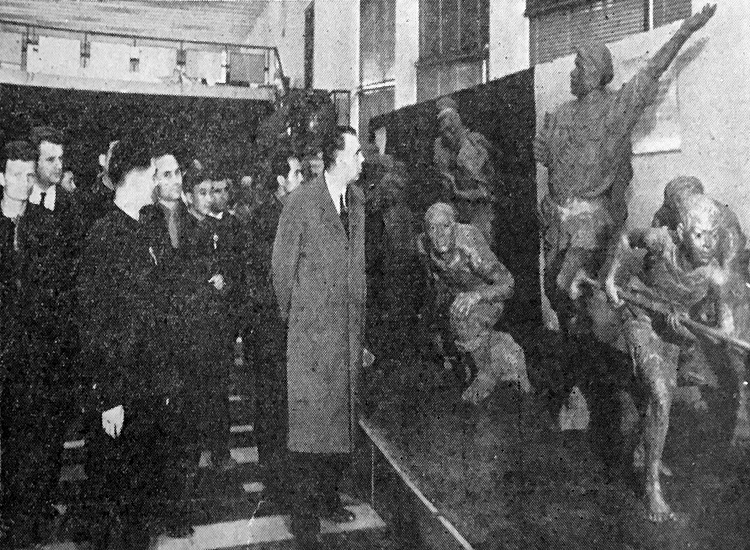
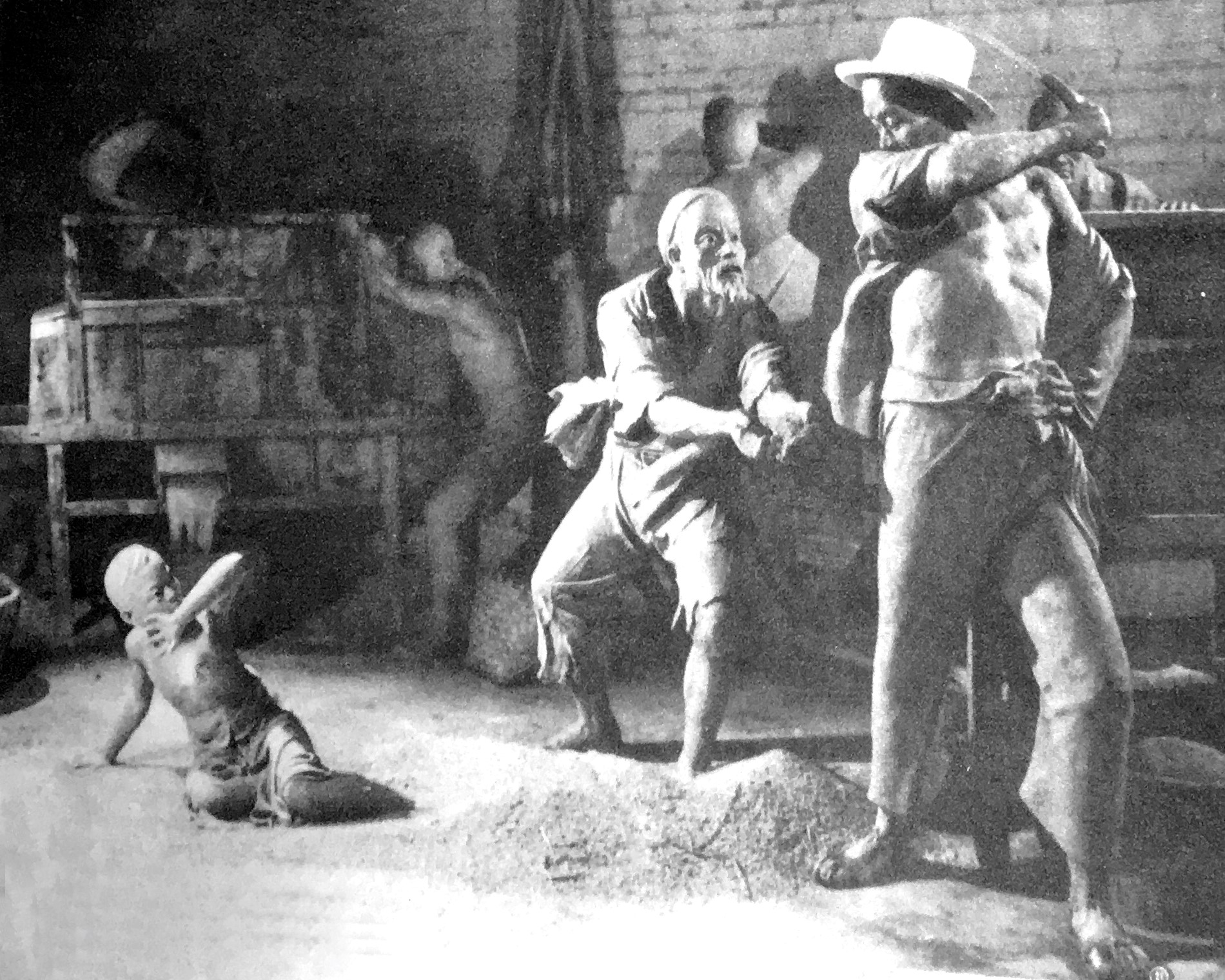
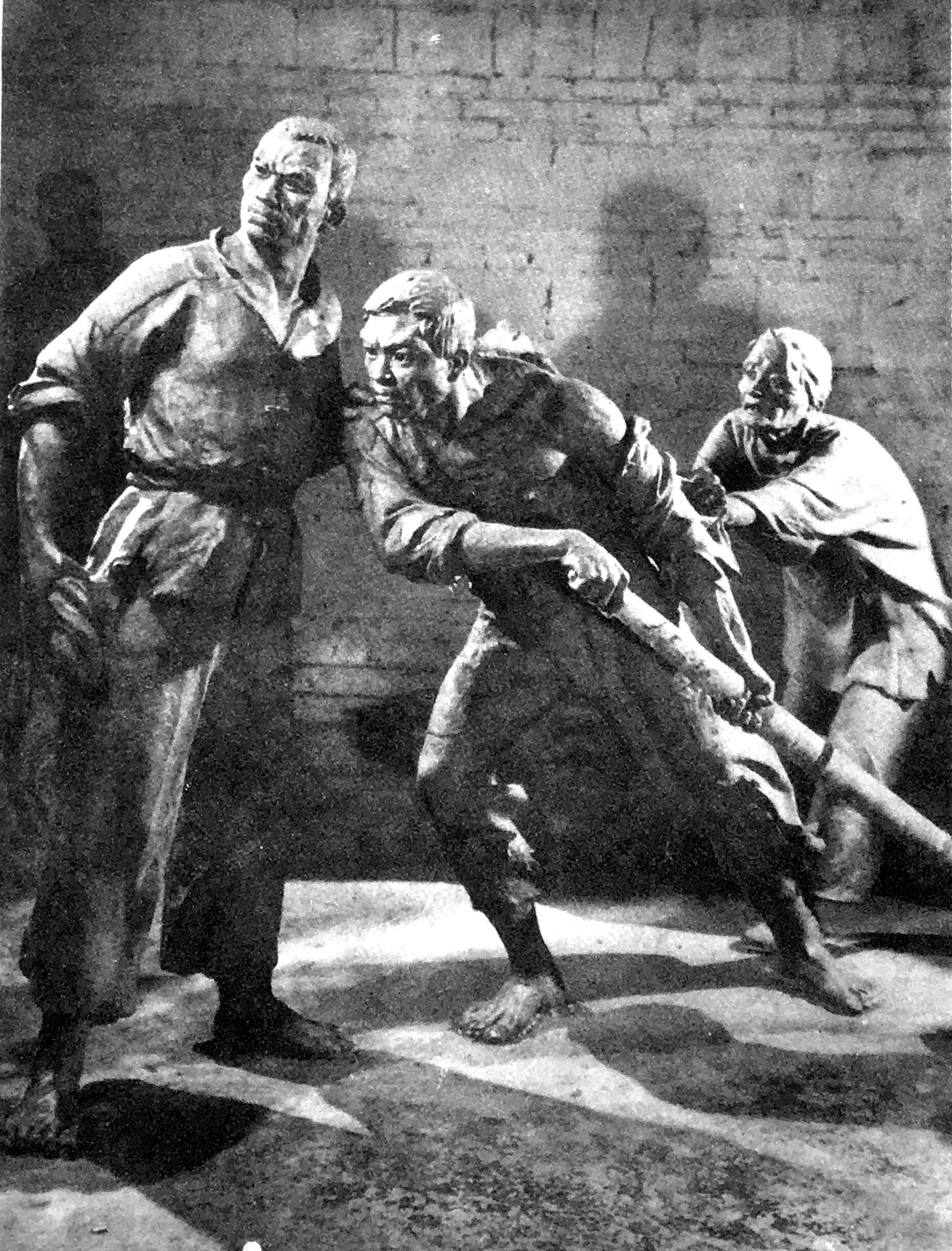
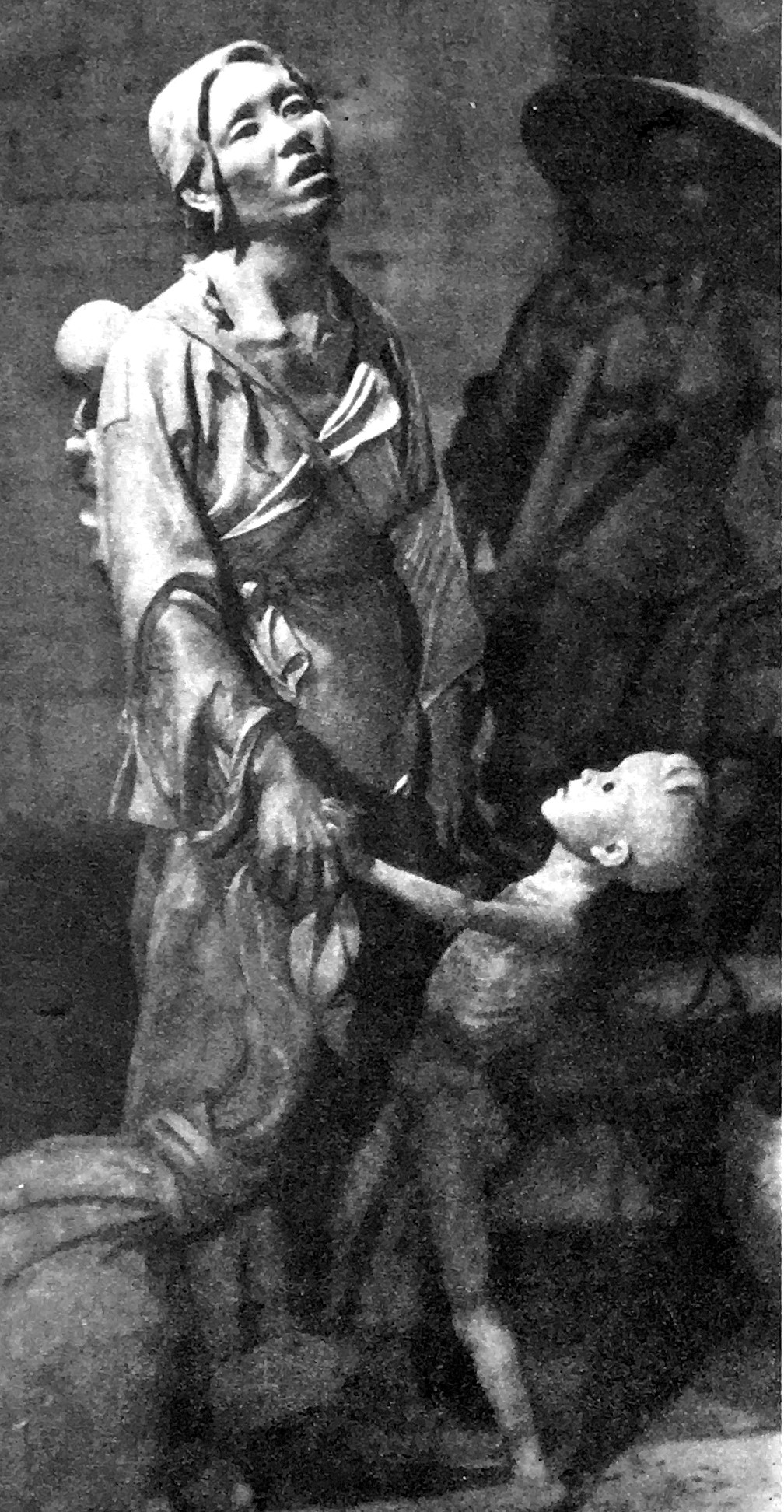
Memorie.al / That exhibition opened on Friday, April 26, 1968, in Tirana, at the Grand Palace of Culture, attended by Enver Hoxha, members of the Politburo, government officials and ministers, the diplomatic corps, etc. Titled “Rent Collection Courtyard,” it was a colossal sculptural group created by Chinese artists – unlike anything brought to our country before – which naturally constituted a major artistic event for the time. Kujtim Buza, then head of the Visual Arts section at the Ministry of Education and Culture, recalls its arrival, the intensive labor, the difficulties, problems, and concerns that arose during the assembly and placement of those magnificent figures. From the act of donation, to their unknown fate, and where those 114 works ended up after the Sino-Albanian split.
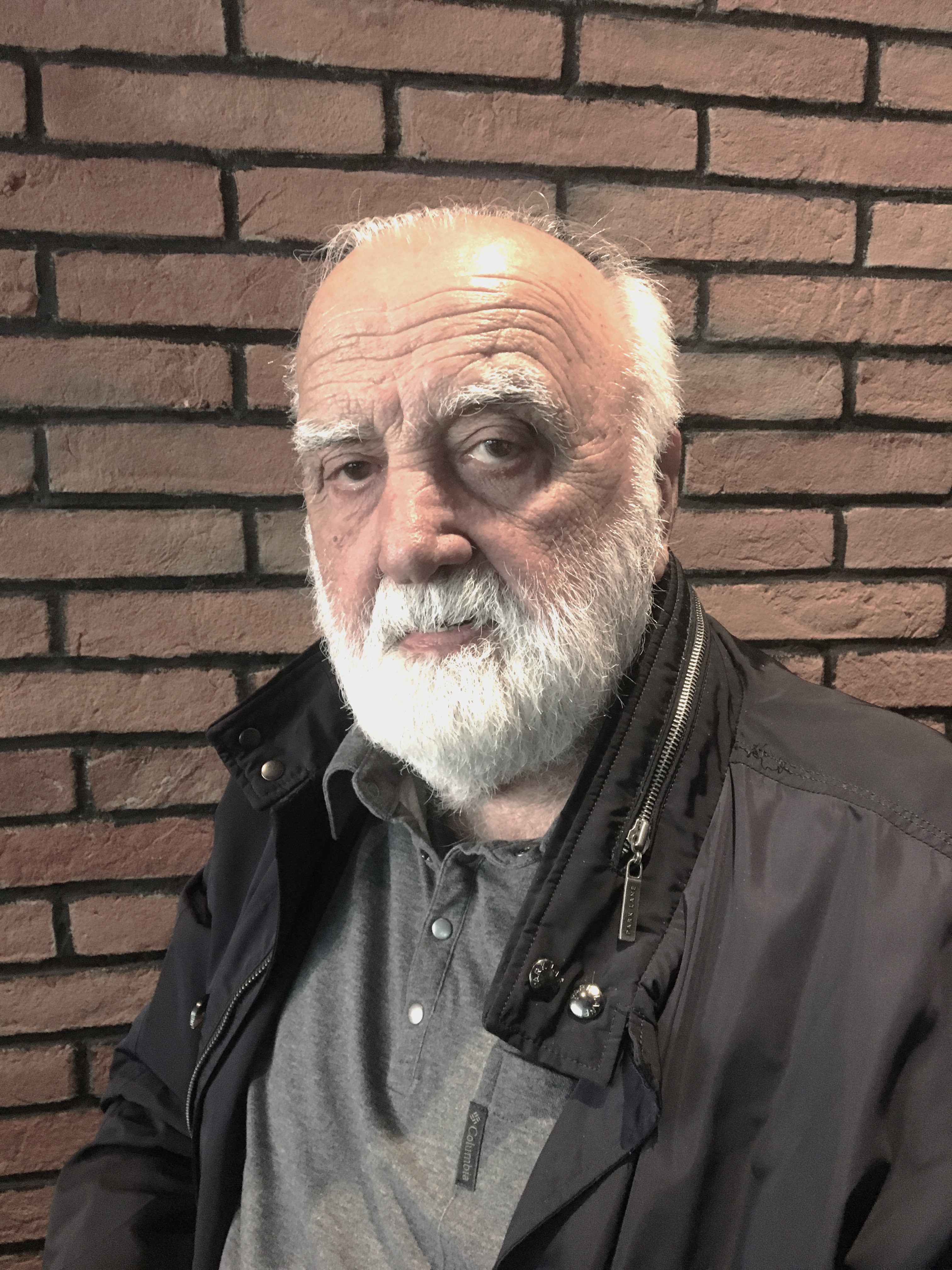
Related to these events and more, we are introduced through their interviews by Prof. Dr. Abaz Hado – a well-known painter, researcher, and art manager, former director of the National Gallery of Figurative Arts (after the 1990s) – and Mr. Kujtim Buza, a renowned painter who graduated in art criticism in Leningrad (1958–1961), former director of the National Gallery of Figurative Arts (1966–1969), inspector and department head at the Ministry of Culture, secretary of the League of Writers and Artists (1973–1987), as well as professor and department head at the Higher Institute of Arts.
Mr. Hado, what was that exhibition and what did it represent?
From the press of the time, we learn: It opened in 1966 in the Dayi County of the People’s Republic of China, created by a group of sculptors from Sichuan who executed a striking reconstruction in 114 clay sculptures. These reminded visitors of the misery that prevailed before liberation in that land where previously Liu Wencai – a major, ruthless landlord famous for his atrocities and violence, a despot over his domain – had forcibly seized over 120,000 hectares of land from poor peasants.
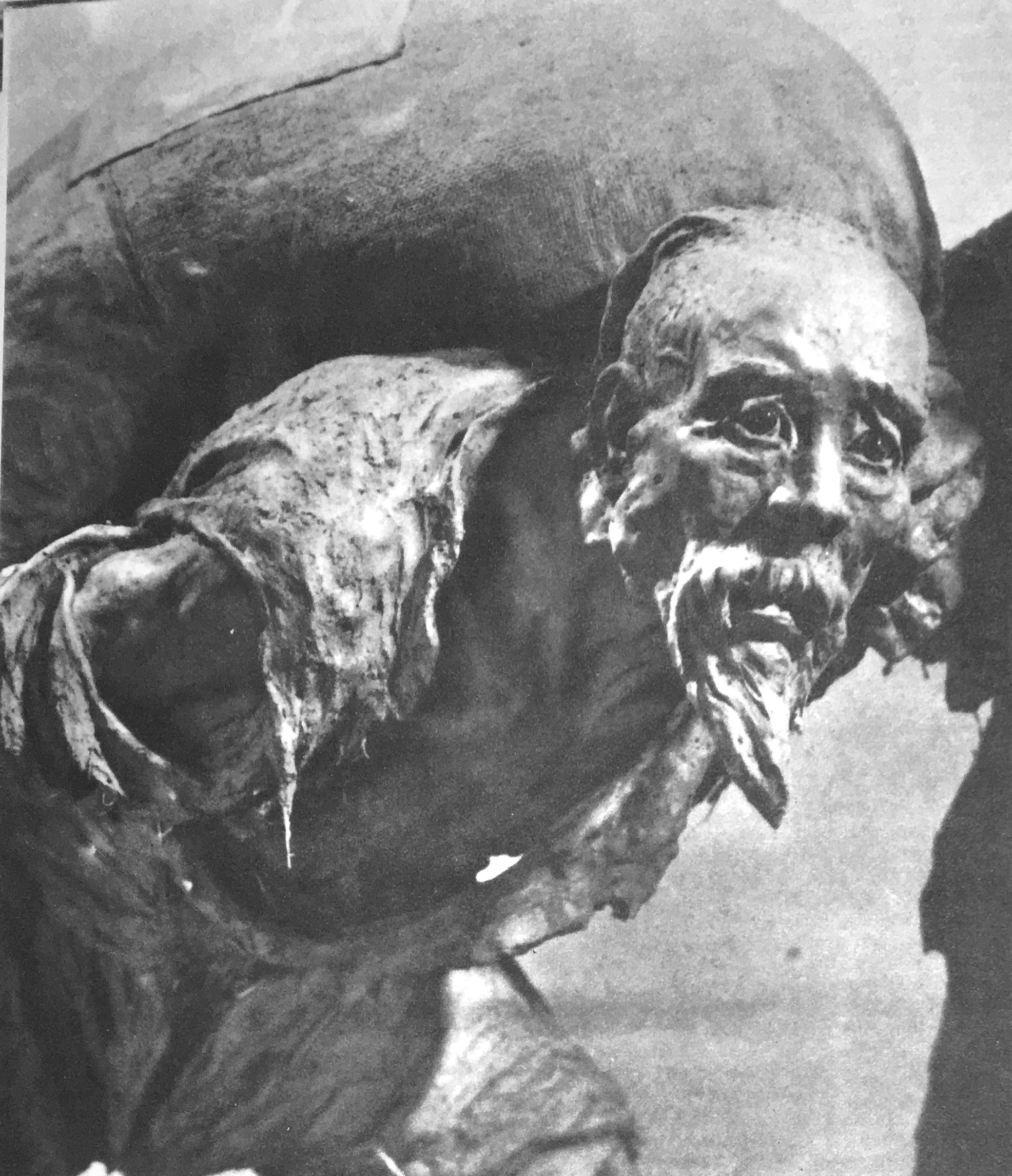
In the courtyard of one of his estates, he gathered the grain tax that peasants were forced to bring him. After running the accounts, under severe torture, he forced them to pay even more. After the liberation of the country, his infamous residence – at the exact spot where he collected taxes – was turned into a museum as a testament to the brutality and immorality of the Liu family, and the barbarity with which peasants were treated. The sculptures, with their poignant beauty and immense power, express the lives of poor peasants as they once were.
The sculptures are divided into four parts: The Arrival of the Peasants, Delivering the Grain, The Accounting, and The Revolt. In the first two parts, peasants – young and old, men and women – enter that courtyard in sadness; to them, it is a living hell. They carry their children along with the heavy load of grain on their shoulders: the tax to be paid. Even if the harvest was bountiful, they had no hope of keeping anything for themselves.
Each of them reflects on what must be handed over, but on every face, resentment and deep anger can be read. The third part is a terrifying indictment of the tyranny of that landlord who exploits, persecutes, and humiliates them. From all this, the flame of revolt ignites among the peasants – which, in the fourth part of this sculpture series, awakens the oppressed and leads them to rise up.
This theme was chosen because it uniquely represents the dynamics between landlords and laborers. The artists turned to group sculpture – a very popular and traditional genre that allows for poignant dramatic effects. The scenes of these sculptural groups are tightly interconnected, and the collective effect constitutes a remarkable achievement. Naturally, without class consciousness, the artists could not have realized the suggestions offered by thousands of peasants who observed their work; without a deep understanding of life, they could not have condensed the misery and revolts of former Chinese peasants into a single group scene.
The sculptors analyzed the past from a Marxist perspective, imparted a revolutionary meaning to their work, and – having felt the class struggle and past hardship themselves – managed to produce these deeply moving works. The sculptural series is part of the 114 works begun in June 1965 and completed within a remarkably short period of four months.
The group of sculptors who created these works received valuable assistance from spectators, peasants, and educators who, besides offering feedback, also served as models. This proves once again the accuracy of Mao Zedong’s theory that: The revolutionary artist must unite with the people and become their mouthpiece if he wishes to impart genuine emotion to his work. The Sichuan artists bestowed a political value and a traditional form upon their characters.
Interview with the Renowned Painter Kujtim Buza
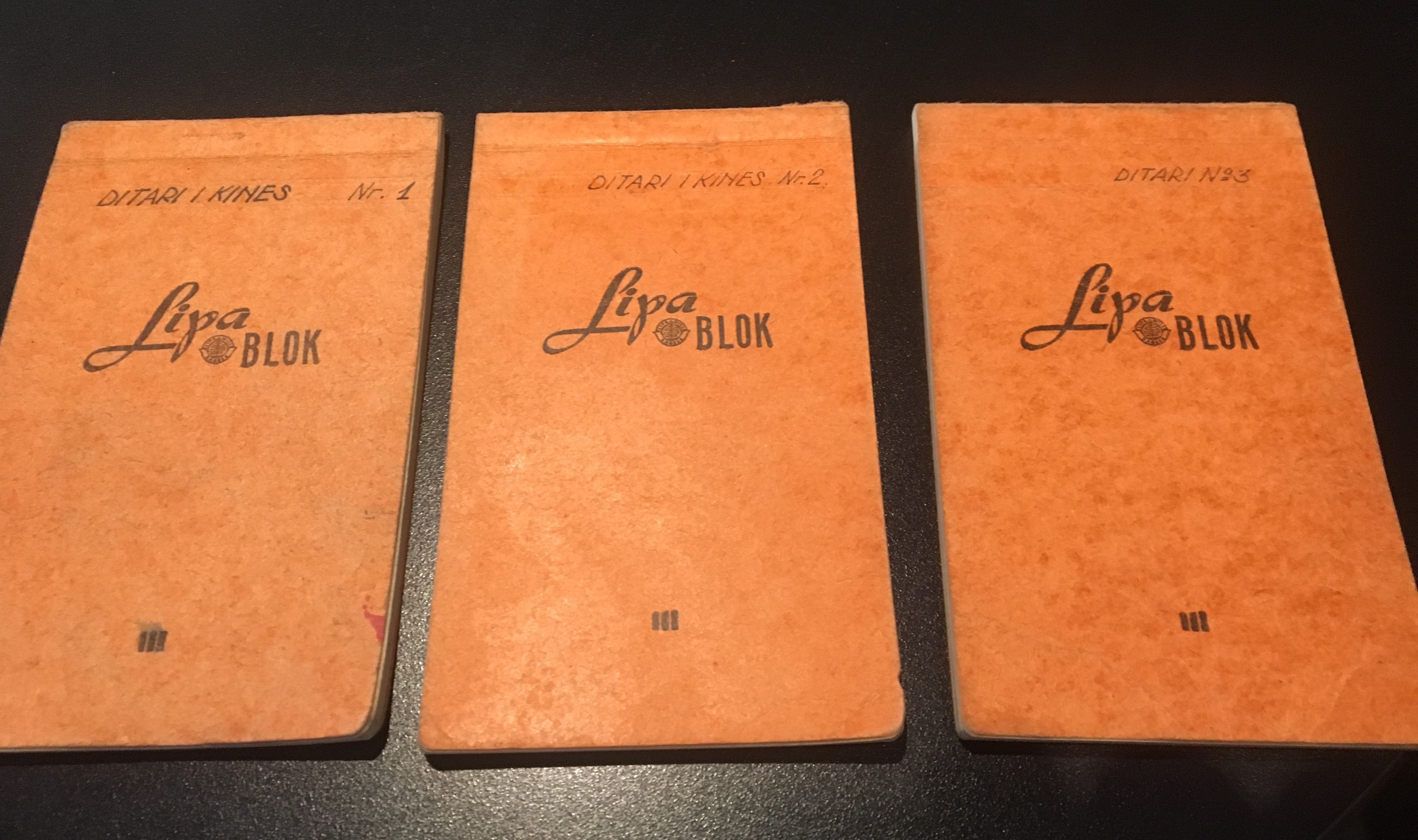
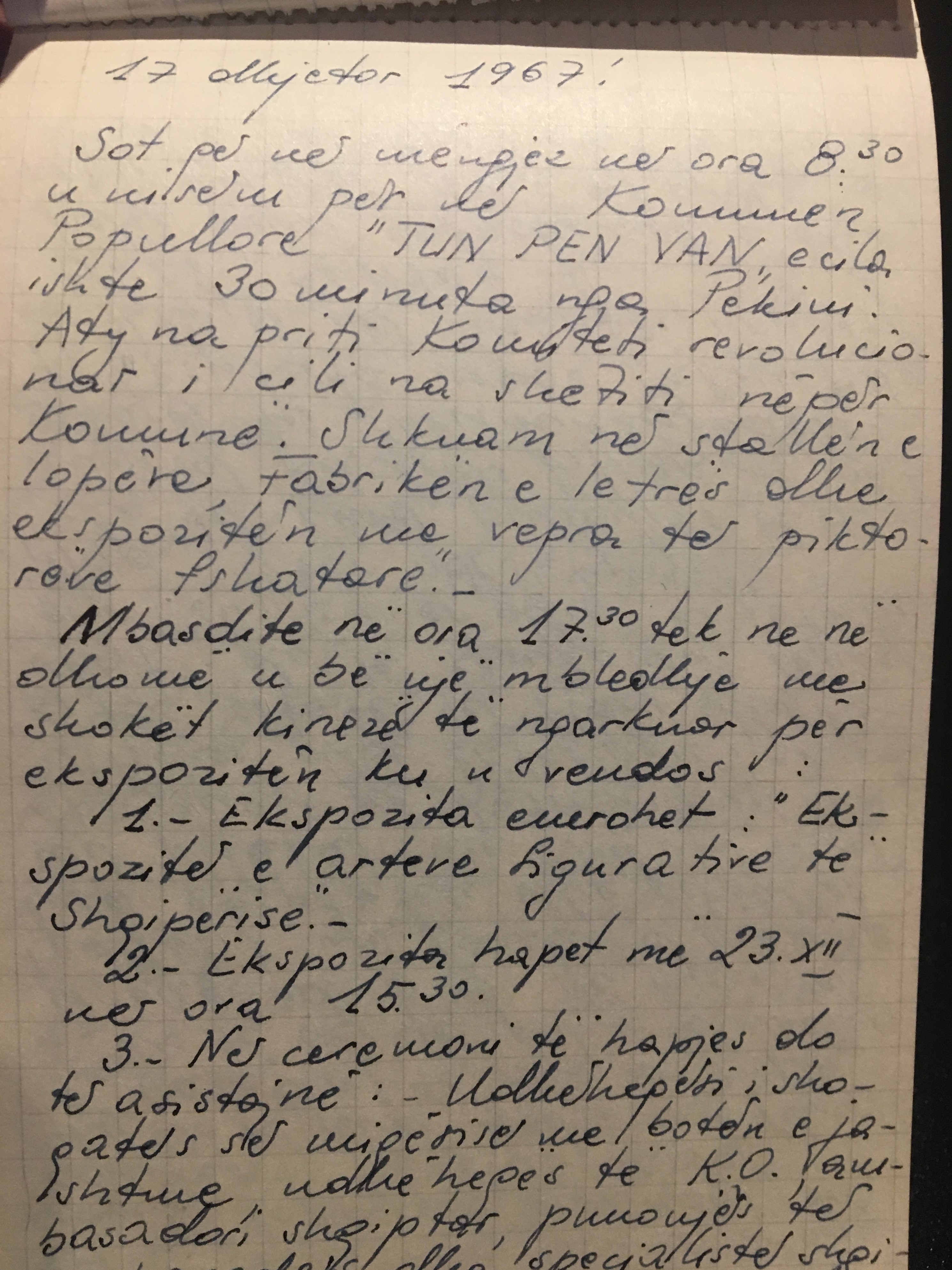
Serving as the head of visual arts at the Ministry of Education and Culture during those years, assigned directly by Minister Thoma Deliana, Kujtim Buza – a painter by profession – was the person directly responsible for the assembly and arrangement of that giant exhibition upon its arrival in Tirana. Today, half a century later, master Buza revisits that intensive labor with never-before-told details. He preserves three rare notebook diaries filled with notes, photographs, and numerous episodes – from accompanying an Albanian visual arts exhibition to China, meeting Mao Zedong, to the state-level commitment for launching the “Rent Collection Courtyard” in the capital.
Mr. Buza, how were the relations with Chinese art at that time?
Relations and exhibition exchanges with the Chinese, especially in the visual arts, were not frequent at the time. What held value were artisan crafts, ivory carvings, and less so easel art. Nonetheless, Chinese visual art during that period was represented by artistic figures among which Qi Baishi and Xu Beihong stood out as prominent painters.
In your diary, I read that you also met Mao Zedong?
In late 1967, along with Shaban Hadëri – a sculptor and Dean of the Higher Institute of Arts – we accompanied an art exhibition that opened in January 1968 at the Central Gallery of Beijing, and later in Shanghai and Canton. These were works by Albanian authors. Meanwhile, as you can see from the notes, the meeting with Mao Zedong took place on December 18. We were part of the Chinese People’s Friendship delegation, and the audience with him lasted about an hour and a half.
Did you also view the “Rent Collection Courtyard”?
During our stay in China, they also took us to see the “Rent Collection Courtyard” – a massive sculptural group, an extraordinary body of work that amazed us with its new style; the sculptures were remarkably lifelike.
Were you informed that the “Courtyard…” would also come to Tirana?
A few months after we returned from China, Thoma Deliana called me in and said: “You have been to China and seen the ‘Rent Collection Courtyard’ exhibition, which is coming to Tirana. You will handle it, and you know best what needs to be done to organize the work for its opening.” We looked each other in the eye; the message was clear.
An immense responsibility, wasn’t it?
Of course. They assigned me, but a sculptor was also needed. It occurred to me to call Uran Hadëri, a sculptor who unfortunately passed away a few months ago. He had studied in China, and he was the one who bore the brunt of the organization – an intensive, exhausting, highly responsible, and delicate job.
How was their transport handled?
By ship, from China to Albania, through the Port of Durrës. A long journey. There were over 100 large crates, like beach cabins. Then we brought them to Tirana using heavy transport vehicles. The sculptures were packed extremely well; when we opened them, not a single one was damaged. They brought a replica variant of the original here in plaster, along with an accompanying catalog.
Why was the Grand Palace of Culture chosen?
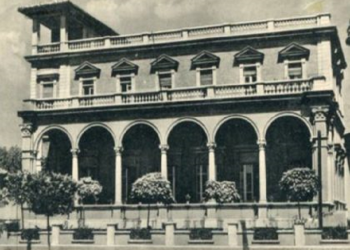
It was decided to open it on the ground floor of the Grand Palace of Culture because it had ample space, whereas the Gallery of Arts at the time on Fortuzi Street was small. The Palace had been built just two years prior, and being in the center of Tirana was another factor. The exhibition began with the front of the courtyard, continued with dynamic movement, and the composition required a longitudinal layout so the visitor could follow it chronologically.
Was arranging it a massive undertaking?
Naturally, placing the “Rent Collection Courtyard” sculptural group properly without any damage required meticulous commitment and work, for many reasons. Unloading took place in the plaza behind the palace, as did transport into the hall. But the problems that arose were not small.
Do you recall any specific detail?
During the month of assembly, workers from the municipal services were brought in, though they were presented as volunteers. Black dust or sawdust taken from the “Stalin” Textile Combine was used as carpeting rather than the mud over which the figures were originally set. The figures needed a dark background, which Uran suggested. The dust arrived by dump trucks, and I recall the anxieties – whether the truck would arrive or not.
Did other issues crop up?
One day, while inspecting the work, we noticed that one of the sculptures – representing a positive hero – was missing its glass eye. We thought it had fallen out, or perhaps the workers were careless, or someone had taken it; the fact was, it was lost. Together with Uran, we wondered: “What do we do now?”
How was it resolved?
We called the workers and their foreman, Gafurr. Doku, one of the workers, suggested as a justification that we attribute it to humidity or that it had detached from the plaster, offering a solution: “Let’s take an eye off a negative character and put it on the positive one.” And that is what we did. We found a negative character whose face was turned toward the wall, removed one of his eyes, and fitted it onto the one that was missing it. We left the negative figure one-eyed; we couldn’t make proper corrections or repairs even though Uran was ready to try. There simply wasn’t enough time.
Did it end there?
No, because when the Chinese representatives accompanying the exhibition arrived, during their inspection they stopped, noticed that one sculpture was missing an eye, and as soon as they saw me, they asked: “The eye, the eye, where is the eye? Who did this?”
A delicate situation, right?
Put in a tight spot – where we could have easily ended up in trouble – I explained what happened, presenting our worker’s version. They liked the solution he had provided, calmed down, and even called Doku, the “creative” worker, took photos of him, and conducted an interview for the Xinhua Agency regarding “what drove him to take this stance.”
Did Enver Hoxha attend the inauguration as well?
Yes, he came. Enver Hoxha was present along with part of the leadership of the time: Politburo members, Central Committee officials, ambassadors, public figures, art personalities, etc. He even met the two Chinese artists accompanying it, painter Lao Cun Pin and sculptor Can Su In, even though they were not the original authors. During the walkthrough, as we were walking, Hysni Kapo approached me and carefully asked: “Kujtim, what was the story behind that eye?” I explained it to him, and we passed it off with humor without drawing attention.
By the way, who were its actual authors?
From the information we had, the creation of that colossal group had taken about five months of intensive work by 18 artists – amateurs and professionals – producing 114 figures, portraits, and characters. But we never learned who its true authors were.
Do you remember some of the compositions?
There were several, such as Tax Inspection, Weighing the Rice, The Accounting, Woman with Two Children, Girl with a Basket, Old Man with a Staff, The Blind Man, Child Being Sold, Man with Tied Hands and Blindfolded Eyes, as well as group sculptures like The Revolt, Seizure of Power, etc.
Then on to Fier and Elbasan?
From Tirana, the exhibition later traveled to Fier. Transport was carried out using open-bed “Skoda” trucks. Imagine transporting 114 large-format works of art along roads that were blocked for hours, though always escorted by traffic police. In Fier, it was set up at the “Janaq Kilica” school, where Uran worked alongside Sotir Kosta to arrange it. It was guarded by police.
You mentioned that they donated it to us?
It was a replica of the original version, which they gifted to us. After Fier, it opened in Elbasan, and after it closed, I believe they remained there and were not returned to Tirana. It remains an enigma to this day where they were stored. So much time has passed; had they been placed somewhere, they would have resurfaced over the years.
You preserve an intriguing notebook diary?
Yes, there are three small notebooks, as you can see where I kept notes. I have kept them carefully – from the trip to China, the opening of the Albanian exhibition there, the meeting with Mao Zedong, to the commitment to organize the opening of the “Rent Collection Courtyard” in Tirana.
Interview with Former Director of the National Gallery of Arts, Abaz Hado
Interest in that exhibition – and even more so in the artwork, the sculptures, and where they ended up – has sparked curiosity. In fact, it is the Chinese themselves who are asking about their fate, hoping that if possible, they might be preserved somewhere for repatriation. While visiting China, the former director of the National Gallery of Arts, renowned painter Abaz Hado – surprised by the Chinese artists’ questions regarding the “Courtyard…” – relates:
Mr. Hado, Chinese surprise regarding the 1968 “Courtyard…”?
It was in the year 2002; I was in Beijing on business as the former director of the National Gallery of Arts. It made a great impression on me that they insistently inquired about the location of the “Rent Collection Courtyard.” They knew it had opened in Tirana in 1968, then in Fier and Elbasan, but had no information as to where the works ended up afterward.
Specifically, what were they seeking?
It was the director of the Beijing Gallery of Art himself, along with his entourage, who was deeply interested and expressed it openly. They asked what information I had regarding that sculptural group, which according to them could – and should – still be in Albania. Naturally, I remembered that exhibition opened in the Grand Palace of Culture in 1968 very well; beyond its artistic value, it was a source of great curiosity for us when we saw it.
Ready to repatriate them?
Their goal was to find it, hoping I might know where that exhibition and those sculptures might be today, and whether there was any possibility of locating and repatriating them.
What did you tell them?
Naturally, I replied that no, I had no information, which was the truth. Following the Chinese Cultural Revolution in the 1970s and the Sino-Albanian split, they vanished. Either they were left abandoned in some long-forgotten warehouse, or they were destroyed – the point remains that over long periods, their fate was lost without a trace.
Why all this interest?
That exhibition – or that sculptural group – was made in very few copies, as they told me. Driven by the friendship of that period, they gifted one of them to the Albanian government. That is why they were trying to see if that gifted copy had survived in Albania. I do not know whether they possessed another copy like it or not./Memorie.al