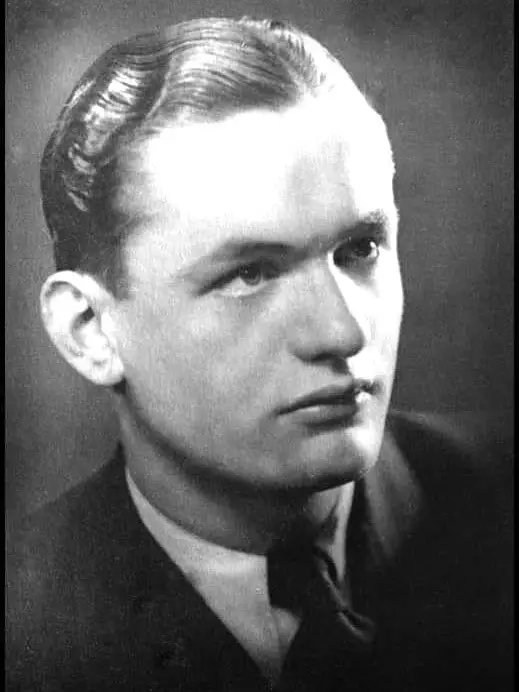

Memorie.al / Often, our folk tradition has spoken and told realistically about the events that have occurred within our nation. This folk tradition, passed down from generation to generation, has left an indelible mark on our national orientation. And precisely these verses of the Mirdita folk song, *“Mos të na shajnë kto male tjera / Se Mirdita kjo e mjera / Se Mirdita kjo e Shkreta / Strukë ndër ferra e ndër kepa / Me pushkë n‘dorë i ka shkue jeta / E kanë njoftë sulltana e mbreta / Me Gjon Markun për sa të jet jeta”* /, show very clearly how deeply rooted in the marrow and national gene was the centuries-old tradition, a tradition that was led by the great House of the Captains of Mirdita, from Pal Dukagjini to the present day. A continuer of this centuries-old tradition to protect the trampled national honor is also the third son of Captain Gjon Marka Gjoni, Captain Llesh Gjon Marku.
Captain Llesh Gjon Marku fell heroically at the age of 28, but although young, for one year and three months after the heroic root of Captain Mark Gjon Marku, he led the fight for a united and democratic Ethnic Albania.
SHORT BIOGRAPHY OF CAPTAIN LLESH GJON MARKU
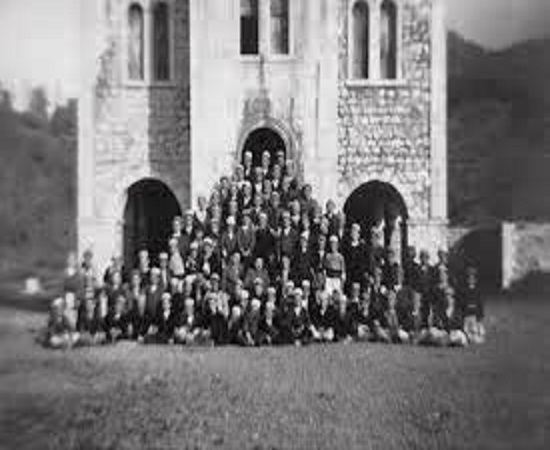
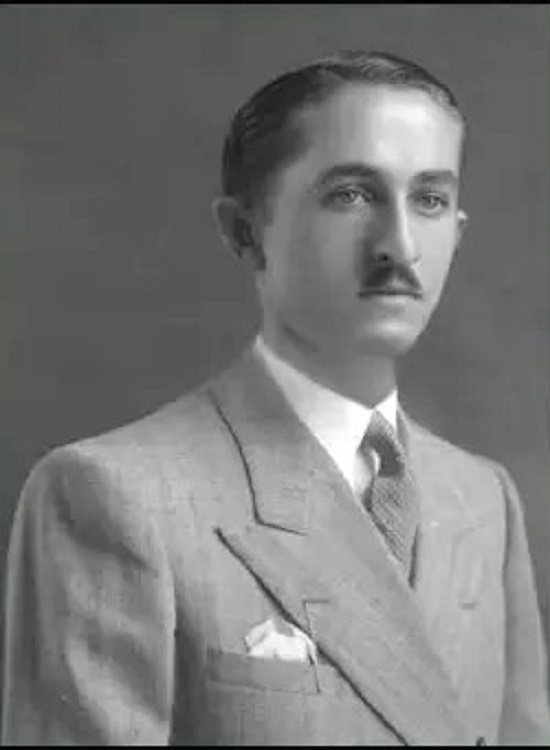
Captain Llesh Gjon Marku, the third son of Captain Gjon Marka Gjoni, was born in 1919 in Grykë e Oroshit. He completed primary school (five grades) at the “Mirdita” Boarding School. From there, he continued his education at the state gymnasium until finishing the fifth grade of high school. In 1937, together with his brother, Captain Ndue Gjon Marku, he was sent to Vienna to the renowned Teresianum School, where he completed his matriculation. In 1940, he was sent to Italy to the University of Florence, where he enrolled in the Faculty of Law. From 1943, he lived near his brother, Captain Mark Gjon Marku, in Tirana, strengthening his social and political experience.
In Shkodër, he created a wide circle among the city’s youth, where he was well-received and respected. His social qualities highlighted his character, generous behavior, and mutual respect with everyone. Gentle but energetic, measured in expression but reasonable, careful in dress so as to stand out from everyone else. In Mirdita, in Orosh and in the summer in Nenshejt (Mali i Shejtit), an athlete, he roamed the meadows there like a mountain bird. He attracted everyone’s attention for his physical agility, and everyone loved him, approached him, and delighted in his presence. A good storyteller, cheerful and sweet in expression, a narrator of events, he drew everyone’s sympathy.
Lleshi was the true prototype of the Mirditor. Always by his Brother Captain Mark Gjon Marku’s side in Tirana, meeting and getting to know political personalities, so much so that he built his own personality and was ready to discuss any problem, strengthening his social and political experience. Laden with the traditional rules of his house. As early as the beginning of 1943, he stood out as anti-communist, and was waiting for the time to go into action against them. In November 1944, when Captain Dr. Mark Gjon Marku took to the mountains to create national resistance there, Lleshi joined him, decided to face every difficulty of the mountain, and with determination not to be taken alive, with a gun in his hand, against the murderous, anti-national communists with Enver Hoxha at their head.
With the freedom fighters, he coexisted in absolute harmony, and encouraged them to persevere, while also trying to take away the sadness that befell them for their interned families in the internment fields, malarial swamp zones where the black leeches sucked their blood. Together with them, his own family (of Captain Gjon Marka Gjoni) as well. His fiery words, meaningful expressions, his logical reasoning based on concrete facts of communist rule caused great misery in the fighters’ hearts, but at the same time they became enthusiastic, strengthened, and emboldened to stand like men above men, even though they were spoken to by a distinguished comrade-in-arms, a person of suffering and misery, a nobleman of the Gjomarku house and of Mirdita.
Time passed swiftly with the seasons, one after another they set like light at dawn and dusk. Night and day changed with lightning speed, leaving no time for the freedom fighters to rest. A truly cruel life. During the bloody rule of the communist regime with Enver Hoxha at its head, Mirdita had become a square of persecution, and the misery catastrophic, so much so that more than 300 families had been displaced and sent to prisons and concentration camps in southern Albania, to the infamous camp of Tepelena, where old men and old women died, even infants at their mothers’ breasts. To express such sadness, the people of Mirdita put it this way: may the evil one not suffer in the end, for he leaves nothing undone.
In Mirdita, against the freedom fighters, 10,000 communists loyal to the regime were on the move day and night to capture at least one freedom fighter alive, but they did not succeed, because: the given Besa (pledge of honor) not to surrender alive with a gun in hand bore its fruit: to be blessed with a bullet in the forehead, but: not to be disgraced. Trained with mountain life, huddled among thorns and crags, and passing through blind paths, the freedom fighters roamed everywhere in Mirdita. And despite all those checkpoints, they were awaited and followed with cordiality by the people.
This moral power, this traditional generosity, these centuries-old virtues, based on besa, honor, and manliness, renewed the history of Mirdita with marvelous impetus, through which the new generations – their descendants – will walk with national pride. With the killing of Captain Mark Gjomarku on June 14, 1946, at the age of 33, the freedom fighters gathered around Captain Llesh Gjon Marku, who, crossing through the superhuman difficulties of the mountain, tried to maintain connections and to urge them to persevere. His fiery words, passionate expressions, determination to persevere, spirit of sacrifice, to face every attack of the communists – enemies rabid against the people and the nation – had ignited the hearts of the people, who had hung their hope of freedom in him.
Unfortunately, while he was defending the house of Gera, he was suddenly surrounded on August 9, 1947, in Munegj; gunfire erupted. For six hours he fought fiercely, but there he remained. He was 28 years old. With him were killed the son of the Gera house, whom he was protecting, and Tunë Nikolli from Orosh. This black news saddened everyone’s hearts. A black cloud spread in the clear sky of Mirdita, and the people mourned the young Captain, but did not weaken. Mirdita, the fortress of the national center, a strong lookout on the mountain crags where the freedom fighters were entrenched, led by their Captains, Mark Gjomarku, with his brother Llesh Gjon Marku, strengthened the spirit of sacrifice of the people, to face with honor every fury of the wild pan-Slavist beast.
To show the whole world the incurable moral and traditional values, and bravery, a historical fact to be melted away, but: not to be disgraced, as evidenced by the killing of the son of the Gera house, who gave his life in the trenches with his Captain. This marvelous historical fact proves the blessedness and pride of the people of Mirdita, not the bastard deeds and empty offspring of those who, with such fury of a wild beast, rush against 14 dead nationalists at Qafë e Valmerit, to give them the final bullet in the forehead. But Mirdita, the first Albanian hearth, foundation of towers rooted on cliffs that bend but do not break, a fertile field of pure virtues, proud and with open forehead, will walk through the ages before history, in the footsteps of the Captains, Mark Gjomarku and Llesh Gjomarku, who melted away in the flower of their age with the people and for the people of Mirdita.
Meanwhile, the patriot and researcher Eugen Shehu, in an article titled “THE NATIONAL LEAGUE OF THE MOUNTAINS. IT MUST BE CALLED AGAIN”, describes the heroic fall of Captain Llesh Gjon Marku and his resistance as follows: – “The heroic death of the Prince of Mirdita, Captain Mark Gjon Marku, was followed with pain not only among the ranks of the nationalist guerrillas, but throughout all the northern Albanian territories. Although the communists disappeared his body, the people of Mirdita, irritated once more, according to local customs, dressed in mourning. Meanwhile, the leadership of the ‘National League of the Mountains’ places at its head the brother of the Prince of Mirdita, Llesh Gjonmarkaj. For his part, Lleshi tried at first to keep alive the idea of a general anti-communist uprising, but by now this anti-communist guerrilla movement had lost its great ideator, Marku.
While the uprising was approaching, unprecedented terror was carried out against the innocent population in the districts of Mirdita and Shkodër. In the inner pocket of the vest of a killed nationalist, the communist Security organs found a circular signed by Llesh Gjonmarkaj, whereby the plan for the general uprising was also revealed. Immediately from Tirana, two other brigades of National Liberation Army troops went to Mirdita, pouring out relentlessly against the blood of the local people, supposedly because they were sheltering Llesh Gjonmarkaj. Numerous documents prove that capturing Llesh Gjonmarkaj was a dream of the bloodthirsty communist brigades and the murderous staffs of Slavic-Bolshevik Tirana, because even Belgrade was interested in him.
Tito’s clique would not forget how the ranks of the brave nationalists of the Gjonmarkaj family had their gun barrels aimed at the Miladins and Dushans. Llesh Gjonmarkaj spent the harsh winter of 1946–1947 in the rocky cliffs of Mirdita and Lurë, where, despite reprisals, the communists could not enter. In June 1947, because he wanted to organize the guerrillas of the ‘National League of the Mountains’, he came down to Laç, 40 kilometers from Tirana. But here the terrain for action was very difficult. The so-called People’s Defense Brigades had in their staff composition, besides modern mobile means of the time, also Yugoslav advisors.
Captain Llesh Gjonmarkaj’s base was discovered here, and only after an act of bravery by the master of the house could the nationalist leader escape, armed. After this, an entire battalion of soldiers and officers of the National Liberation Army was put in pursuit of Llesh Gjonmarkaj. On the night of August 9, 1947, these forces, in cooperation with a member of the National Liberation Council of Gëziq in Mirdita, surrounded Llesh Gjonmarkaj, alone with two others.
Terrified that he might escape, the Pursuit Battalion sought to capture the leader of the ‘League of the Mountains’ alive. To the treacherous call to surrender, Lleshi answered with the song of the patriotic rifle. After several hours of unprecedented fighting, the brave man, patriot and anti-communist nationalist of the Gjonmarkaj family, gave his spirit on the field of honor. Another great loss would overwhelm the Albanian anti-communist resistance. It was going through its most difficult moments,” concludes researcher Eugen Shehu. Captain Llesh Gjon Marku, with great devotion, fell on the altar of freedom, for the defense of Ethnic Albania.
He is one of the torches of liberty who saw Albanians oriented toward the West, saw Albania as a beautiful and dignified lady, and his birthplace, Mirdita, as the center of Ethnic Albania, since for 500 years this region had been isolated because, at every time and in every century, it took up the arms of freedom to stand up for the land and soil, for the young and old, children and women, not to fall into the hands of Asian and Carpathian rulers, and later also against the red devils who had begun to massacre brothers of language and blood, with the sole purpose that they are against the communist star and that they are God’s people and want nothing to do with the devil.
It is high time that these patriots of Ethnic Albania, from all ethnic Albanian regions, be given the deserved epithet: “Hero of the Nation”. While chivalrous Mirdita, a place of honor, besa, and manliness, should be lit up and place the nation’s heroes, Captain Dr. Mark Gjon Marku and Captain Llesh Gjon Marku, as well as many other fighters who were sacrificed for Mirdita and Albania, in their deserved place. They were sacrificed for Albanianness with the sole purpose that Albania is oriented toward Western values and cultures and not toward Eastern and Asian ones, as a part of Albanian-speaking communists worked for, whose evil spawn of the devil, unfortunately, is trying to rehabilitate the “red devils”.
While the sons of Ethnic Albania are left again in oblivion. But times have changed and now the time of the nation’s sons is coming, the time of Captain Dr. Mark Gjon Marku and Captain Llesh Gjon Marku, who were defenders of the centuries-old heritage of honor, besa, and manliness, enriching these genuine national values with the progress of modern Western values – values they had studied during their studies at Western universities and states. / Memorie.al