

By Xhevdet Shehu
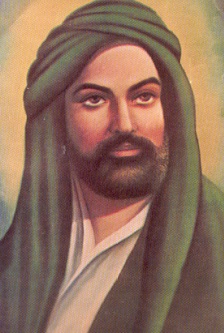
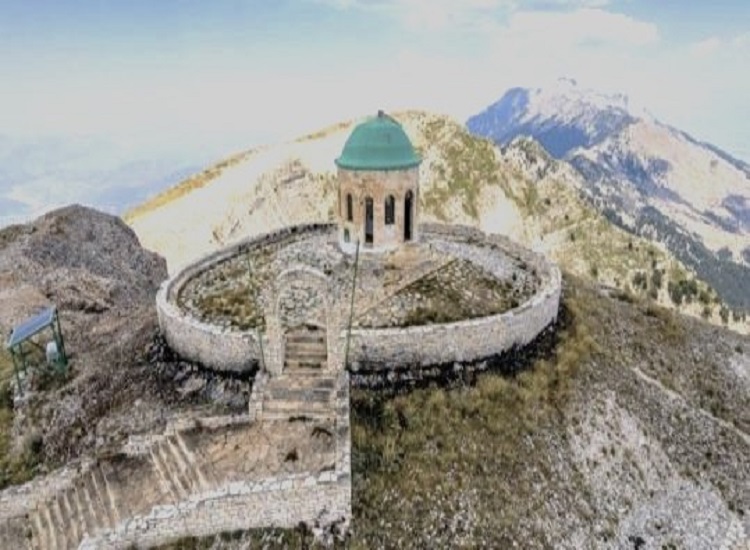
Memorie.al / The annual five-day pilgrimage to Mount Tomorr, where the cult object dedicated to Abaz Ali is located, gather hundreds of thousands of people every year. It is one of the most curious and impressive celebrations that Albanians hold for a personality who belongs to a history more than 1,400 years old and who, moreover, was not Albanian. However, in the news given in the press or on TV, inaccurate information is often provided out of ignorance. For example, it is constantly said that there, in the Kulmak tekke, is the grave of Abaz Ali, etc., continuing with folk tales that are not true, down to blunders. For instance, one of the orators at this year’s pilgrimage said that Abaz Ali fought for democracy (?!).
However, the annual ritual of ascending Tomorr and the honor paid to a foreign hero has a reason…! How did the legend of Abaz Ali come this far and how was his myth immortalized? Why do Albanians, and especially the Bektashi community, pay this homage? Who is the first Albanian who went to Karbala and brought the name and deeds of Abaz Ali to Albania and raised his cult on a majestic mountain like Tomorr? There are many arguments and speculations that I will try to elaborate below, based on one of the rare books dedicated to Abaz Ali and his deeds.
Abaz Ali was a real person and a martyr of his faith. His grave is located in Karbala, Iraq, where one of the bloodiest conflicts took place 14 centuries ago and where Abaz Ali became a hero. Naim Frashëri, our national poet, dedicated a magnificent poem to the battle of Karbala and its most famous hero. One of the reasons why Albanians chose and praised his figure can be explained by the great need they had for such a hero and that they needed such a humanistic and self-sacrificing figure in a journey with very dangerous uphill struggles in history.
The temporal and geographical distance of Abaz Ali in this case did not matter. He was immune to attacks, denials, and defilements. Praises for the figure of this martyr could not be contested by anyone. He was spoken of only with praise and was transformed into an admirable and flawless hero for Albanians. Regardless of beliefs. That is why not only Bektashis but also many others ascend Tomorr every year. The height they climb is mesmerizing…!
From the lands of an unparalleled literature of world dimensions, from one of the cradles of the oldest and most essential civilizations of humanity, from Iran, then, from the homeland of Ferdowsi, Saadi Shirazi, Omar Khayyam, and Jalaluddin Rumi, a book about Abaz Ali came to Albania ten years ago. The World Bektashi Headquarters enabled the publication in Albanian of this work on the 1,400th anniversary of the birth of this distinguished personality. Because the book, as much as it is a cultural testimony, is also a monument of eternity and an inviolable bridge of friendship between peoples.
With Iranian culture, we have early and enduring ties due to the conjunctures of the times. There has been a surprising preference among Albanians, especially for the poetry of famous Persian authors, who have exerted a noticeable influence on our national culture. The fact that our great Renaissance figures knew how to select the sumum of Persian culture, I believe, has been decisive in the development and enrichment of our literature. Abaz Ali has entered and remained in Albanian memory as an extraordinary and miraculous personality. Muslim believers in general, but in particular the Albanian and worldwide Bektashi community, hold Abaz Ali as an emblematic figure adored beyond measure.
But I wanted to add here that Abaz Ali is a hero beyond times and communities. He is an emblematic figure of humanism. Rarely has any other personality in human history been able to survive the ages and be remembered with such veneration after 1,400 years. Perhaps this fact is enough to call him a timeless hero, an eternal hero, a hero of the highest human ideals. But we must admit that, mostly to date, Abaz Ali has been considered a mythical hero, a legend, and less a real hero of a specific era. He was naturally and inevitably shrouded in the mists of about 14 centuries, and very little was known about his life and deeds.
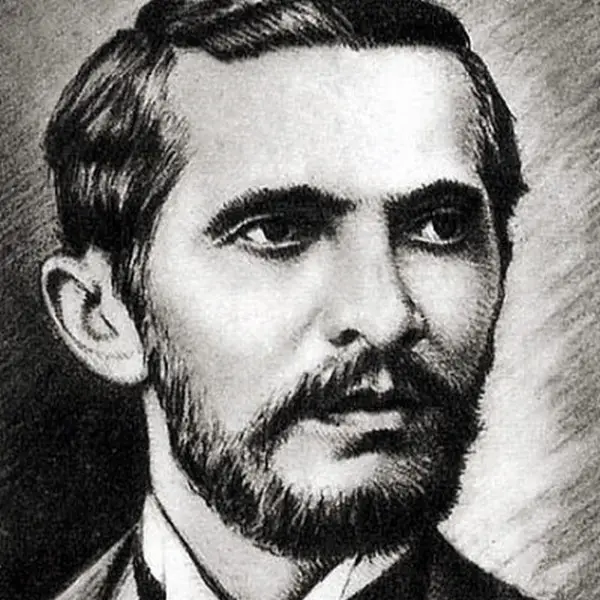
It is precisely a contemporary author, Bedri Shahini, who dispelled the mists of time and brings Abaz Ali to our days as a living hero, as earthly as he is immortal, as legendary as he is tangible. Bedri Shahini’s book thus brings to the Albanian world one of the most sympathetic and inspiring heroes of humanity – Abaz Ali. This book was published about 20 years ago in Iran, first being translated into a global language such as English. For the Albanian edition, the English version was used, thanks to the attention and care of our well-known poet Xhevahir Spahiu, who brought us a copy of this book from Iran during a work visit to Tehran.
I want to emphasize here that the translation into Albanian is among the first made of this book about Abaz Ali. The author of the book informs us in his preface about the difficulties he encountered in compiling this work. When he embarked on the task of drafting this work, the author saw that, despite the extraordinary popularity of Abaz Ali in the Muslim world, authentic documents and materials about the legendary hero of Karbala were quite scarce and that there was no proper book about him.
Thus, the author had to do a very painstaking scholarly and research work, digging through archives and libraries to shape the portrait of Abaz Ali, to give him as credible a portrait as possible and as close as possible to the image created of him. Abaz Ali is indeed the central character of this work, but in its background is an entire era, the beginnings of the Islamic faith, and the conflicts that arose and ended in bloody battles like that of Karbala in the year 61 AH.
To understand the commendable work the author has done for this work, it is enough to take a look at the bibliographic notes at the end of the book, where there are 143 references to works and authors that give their testimonies about Abaz Ali. Author Bedri Shahini had to do a proper scientific work to ensure the success of his work, which in the future can only be enriched, but not altered. For instance, in the Albanian version of this book, we thought to insert Naim Frashëri’s wonderful poem about Abaz Ali.
Had the author known this fact, he would surely have included it in the original edition as well. But we must say that the author has also done a genuine artistic work in the composition of the work. Adding the love the author harbors for his hero, the work has entire fragments and passages of poetry, with a pure language understandable by a large audience. In particular, the description of the battle of Karbala is among the most beautiful and most substantiated in this work.
Abaz Ali is a multidimensional hero
First of all, the book praises Abaz Ali’s devotion and loyalty, down to self-sacrifice, on the path opened by the Prophet Muhammad for humanity. In this loyalty and devotion, it is not so much the fact that Abaz Ali was the son of Imam Ali and the grandson of the Prophet Muhammad, but rather that in the Prophet’s teachings, Abaz Ali shrewdly grasped the opening of an era that would bring values and progress to human society. That is why he resolutely sided with the Prophet and the defenders of the teachings of the glorious Qur’an, against its distorters and enemies. This is the essence of Abaz Ali’s personality: loyalty to the Prophet’s humanistic ideals, manifesting this loyalty at every step of his life until martyrdom.
Secondly, the book emphasizes Abaz Ali’s extraordinary love for his brothers, the glorious Imams Hussein and Hasan, as well as for all his other relatives. Naturally, an irreplaceable human value emerges here, one that never withers under any circumstances. If we were to adapt this love of Abaz Ali to our time, we would say precisely these words: The greatest hypocrites are those who allegedly swear by party ideals and the homeland, but on the other hand deny their parents, brothers, and sisters—that is, their closest people. These are the most prominent features that make the portrait of this hero attractive and beloved to us.
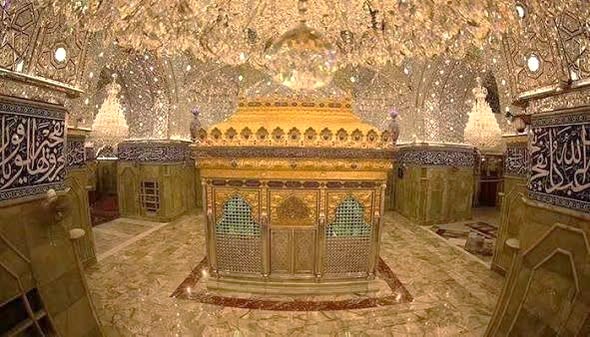
In the name of these ideals, Abaz Ali sacrificed himself in Karbala at the age of 36. And he won eternity. It has already been proven and clearly expressed by philosophers and writers that sacrifice for the highest human ideals is, in fact, eternity itself. In Karbala, he has three graves where three cult objects have been erected: where his left hand was cut off, where his right hand was cut off, and where he gave up his spirit after his head was severed. Karbala was the culmination of the conflict that had begun to appear ever more clearly after the Prophet passed away.
The book on Abaz Ali gives the shocking moment of the treacherous murder of Imam Ali, the Prophet’s son-in-law. This happened on the 19th night of the holy month of Ramadan. Imam Ali went to the mosque to lead the collective Fajr prayer. When he raised his head after the prostration, the traitor struck him on the head with a sword. As soon as the Imam felt the blow, he smiled and said: “By the Lord of the Kaaba, I have won!” And the glorious Imam won, in the true sense of the word, and is remembered with admiration generation after generation, while the traitor’s name is not even remembered.
I will add another argument, mostly folkloric, but nevertheless true and undeniable about the righteousness of the ideal for which Imam Ali, as well as the other Imams and Abaz Ali himself, were sacrificed. Even today, after about 14 centuries, there are those who put forward theses for and against, who was right and who was not, but there is one quite meaningful and indisputable fact: The names of the Prophet, the glorious Imams, and Abaz Ali, who defended with their lives and blood the teachings of the Prophet and the Glorious Qur’an, are immensely widespread in the Muslim world, while the names of their opponents are almost extinguished.
Yazid and Muawiyah, who led military campaigns against the devout believers and caused all that bloodshed, are remembered with contempt and have become synonymous with wickedness, baseness, treachery, and infidelity. We have never heard to this day of anyone bearing the name Yazid or Muawiyah. I think this is a quite meaningful fact of the stance human society holds toward the wicked and injustices. It is, after all, history’s inevitable punishment for evil people without ideals in their lives. In other words, from the distance of 14 centuries, Abaz Ali reminds us that the homeland and ideals begin with the family, with the dearest people around us.
When Abaz Ali was sacrificed, Imam Hussein burst into tears and cried out: “Oh! Oh! We have lost you and lost everything, O Abaz Ali!”
This is also the phrase that closes the book. A most shocking phrase that forewarned of the subsequent downpours that would have no end, even to this very day…! The martyrdom of Abaz Ali is neither more nor less than awareness at the highest level of sacrifice and self-denial for a great and enlightened ideal – first and foremost human. In the name of this ideal, all the great idealists who, with their deaths, gave powerful impetus to human society were subsequently martyred.
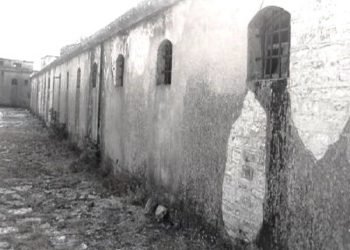
In the 1930s, one of the best publicists and one of the most progressive men of the time, Ismet Toto, an hour before being hanged by the rope in Gjirokastër prison, wrote a poetic sketch that can also be considered a human hymn. Ismet Toto’s sketch closes with these testamentary words: “As long as you live, burn, and through those fires, emit light and warmth. The world does not belong to those who warm themselves. The world belongs to those who burn.” We are used among ourselves to call the hero of this book “Abaz Ali of Tomorr” because of the wonderful portrayal and description given to him by our national poet Naim Frashëri.
“Abaz Ali took Tomorr,
Came near us,
Albania shall not remain wretched,
For God so willed it.”
Thus says Naim in one of his most beautiful creations, the poem “Karbala.” Times come and go, governments and systems change, but Karbala remains; it cannot be forgotten. This is the Albanian perception of an epochal event, but viewed more closely, it is much broader. About 1,400 years ago, Karbala took place, for which we Albanians, like few other nations in the world, are fortunate to have an artistic work, a poem written by one of the greatest poets of all times in Albania, Naim Frashëri. And Karbala, therefore, is quite well known among us Albanians.
When we want to describe an apocalyptic situation of extraordinary proportions, we say: It became like Karbala! This means that we have sufficient knowledge of what happened there 14 centuries ago. We know more or less why that battle occurred, why that carnage happened, who were the instigators of the tragedy – that is, those responsible whom human history must punish – and who were its true heroes. We remember and honor Abaz Ali because in his portrait we see the image of the hero admired by everyone and in all times: a rare brave man, an extraordinary humanist, a devotee of peace and warmth, an unparalleled icon of the most essential human values. / Memorie.al