By Jason Tomes*
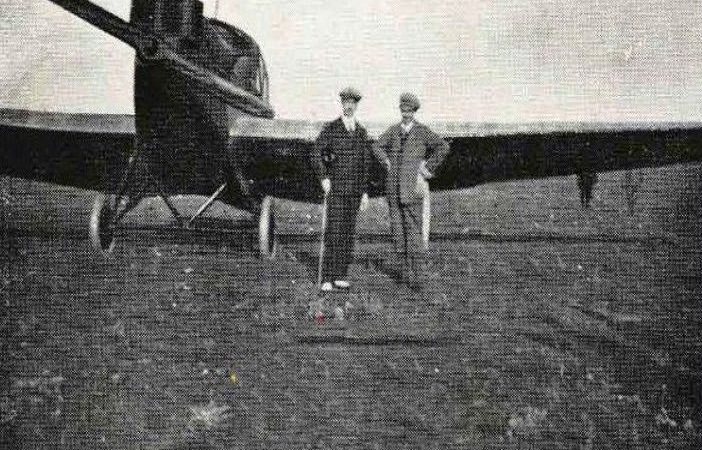
Memorie.al/ The most forgotten corner of Europe, Albania. In the 1930s, ferries docked daily from the Italian coast, and a five-seater plane of “Adria-Aero-Lloyd” flew three times a week to Tirana’s airport, but the services were below usable standards and could not be operated without subsidies. In the smallest Balkan country, foreigners were so rare that they immediately became famous. A respected Englishman, Frenchman, or American who showed sufficient interest in the country could relatively easily obtain an audience with the King-politician.
There was a story that when Zogu was bored, he would call hotels to find some interesting foreigner to exchange a few words with. His palace was less than five minutes away, and a common language was easily found. The King was not cosmopolitan, but he spoke Turkish very well, German well, and French well enough to converse.
English was not an option; he refused to waste time on a language that obeyed grammar only ten percent of the time.
A guard with a bright “Z” on his cape accompanied visitors through the red-brick road to the royal complex, southeast of the central square. A secretary – perhaps Sotir Martini, or the energetic adjutant Zef Sereqi – would appear before the guests to inform them of a few points of protocol.
Twelve steps further appeared the two-story villa with yellow stucco, which had been built for a Turkish merchant before the war.
Ushered into the small reception salon with bright mirrors and Venetian chandeliers, the visitor could see the court usher through the curtains before the glass doors appeared.
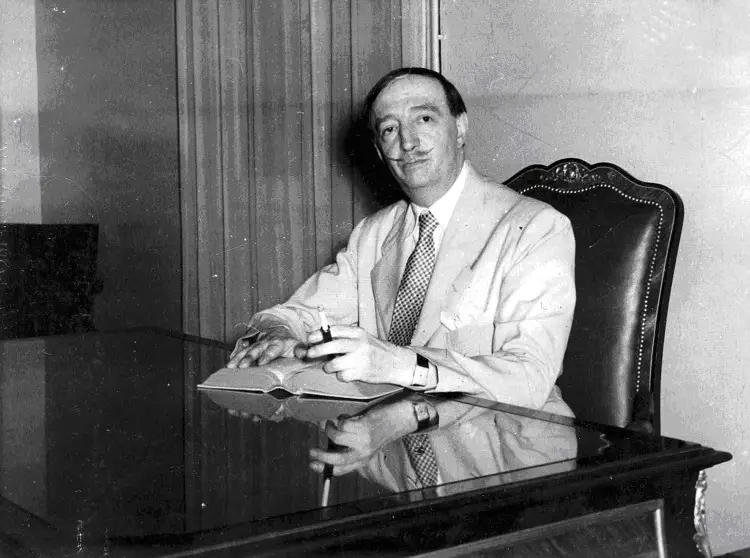
A brown-haired man immediately came into view, seated at the far end of a long, well-lit room, furnished in modern style with green wallpaper.
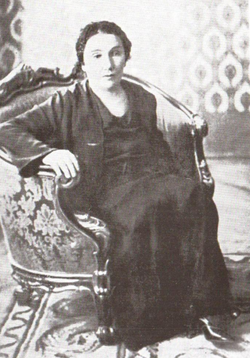
The King appeared small and almost invisible between the large red-wood desk and the large portrait hanging on the wall behind him. The desk surface was neat and shiny. The painting showed a stern middle-aged woman with a not-so-regal appearance.
The visitor entered the room and bowed slightly.
There was always a cloud of cigarette smoke and rarely an open window. He bowed three times (as instructed) and walked forward with careful steps. Those less fortunate often tripped on the decorative rugs laid over the polished floor.
As he approached the desk, his eyes focused on the most extravagant feature on the horizon: the King’s mustache.
Though very large, they were always well-groomed and styled with thin, tidy tips. The temptation to stare at the mustache had to be subdued as the King slowly rose and whispered a few greeting words in a low, clear voice.
He was about 1 meter 80 tall, with an erect posture and a lean figure. He made every effort to appear well-kept: a double-breasted gray suit from Savile Row, a white shirt from Sulka, Paris, hand-made shoes from Italy. A calm smile accompanied the firm handshake, and the visitor sat down.
“A cigarette?”
With a dismissive gesture, the King offered a range of cigarette brands from his desk. He always took one for himself (apologizing to non-smokers), and while the cigarette holder kept him occupied for a moment, the visitor could mentally scan the King. He had a long rosy face, not with Mediterranean features, tapering conically from a broad forehead to a narrow chin.
The forehead was high and could have been higher had it not been for the hair combed to the left. Then, however strange it may seem, one noticed that the chin was not as sharp as it appeared in photographs. The most striking feature was the straight nose, which in profile merged with the forehead in a straight line. From time to time, his drooping eyebrows gave him a gloomily suffering look that appeared sympathetic and easily comical.
The visitor then wondered whether the 38-year-old aristocrat was truly the ruthless highland leader who had destroyed his rivals and founded a kingdom. Zogu sat back in his chair, smiled again lightly, as if revealing to the visitor the shadow of a secret that only he himself knew. Despite the languor that appeared in his portrait, his blue-gray eyes were always on alert. “Fire away your impertinent questions,” he said with a laugh, before continuing to give completely measured answers.
Why had he turned Albania from a republic into a monarchy a few years earlier?
There was only one reason for this. The change had been made in accordance with the spirit and desire of the Albanians, whose political foundation had always been the division into chieftains and barons, each led by a supreme leader. The intonation of his voice seemed surprisingly young; a kind of adolescent dandyism that immediately dispelled the idea of a schemer.
“The only difference for me is that, instead of working eight hours a day, I now work 18 and bear responsibility for the entire state. I am a sole worker doing my job. That is the meaning of kingship for me,” he said with a comic grimace. The King certainly did not deny the fact that Albania had major financial problems. How can a royal family be afforded by such a poor nation? This objection was politely deflected by the atmosphere. “Financially, a King does not cost a country a penny more than a President.” Both need a palace.
Both need guards. With another smile – tinged with a hint of inappropriate romantic melancholy – Zogu referred to his white uniform with gold trim, closely associated with him. It had been bought before he took the throne: “When I was president I had to dress as my position required, but even the poorest Albanian has a regal nuance, so now that I am their king it is not necessary to emphasize it in any particular way.”
In a stubborn manner, he seemed to seek approval, even intimacy. He had an intimate intonation alternating with the utterly impersonal content of his answers, and he kept his eyes fixed intently on the guest, oblivious to the buzzing of his aides penetrating through the glass doors. It was a common mistake to consider Monarchy as luxurious, he continued.
“Adopting a regime that suits the country better guarantees greater internal stability, which in turn guarantees greater foreign support?” A Balkan republic had never been an anomaly. Of course, the King of the Albanians did not think he possessed divine right. He was a constitutional monarch who understood that his power came from the people.
Did this mean a free and democratic regime?
Zogu was ready to nod in approval when he remembered that foreigners had the confusing habit of nodding their heads up and down to affirm and shaking their heads sideways to deny. He strained to move his head up and down. “As king of my people, I have no interest in which party wins the upper house, through constitutional methods. This will help educate the people along democratic lines, as in the USA, and will ensure greater freedom for all.”
Were there political parties in Albania?
Not in the formal sense at the moment, he confessed. For the moment, the King of the Albanians had to be the leader and teacher of his people. Genuine political development would take time. “You cannot teach a five-year-old child the same way you teach an adult.
Only with the continuation of the fight against illiteracy can the powers and responsibilities of elected representatives be increased.” Considerable progress had been made in education, he emphasized. Not long ago, no more than two thousand children attended school. Today, that number was around sixty thousand.
When would Albanian women gain equal political rights?
“The high status of women is one of the key factors in strengthening a state,” Zogu declared with conviction. “I think I will feel the fulfillment of the greatest mission of my life when the status and culture of women in Albania reaches the heights, first to the level of other Balkan countries and then to the level of women in the Western world.”
Political rights were only one segment of the process. “I want to educate women, but I also want to teach them to be good mothers and housewives. I want Albanian women to be good women like her.” He turned his chair and leaned slightly toward the portrait hanging on the wall behind him—the only portrait in the room, in fact.
King Zog with the Queen Mother and three of his sisters, dressed in national costume; “That is my mother,” he explained with feeling, and paused for a moment to collect his thoughts and light another cigarette. Polygamy and cradle betrothal had already been banned, and very soon the veil would also be abolished.
“It will be a long process because we need to uproot many prejudices, and immediately after that the right to vote for women will come. Women’s suffrage is a new phenomenon even in the most advanced societies, remember.” “We are centuries behind Europe in terms of civilization,” observed the King with a frown.
Anyone could tell that his subjects of conversation were ignorance and progress. It was not their fault. Turkish rule until 1912 had left them with the sentiments, morals, and agricultural methods of the middle Ages. If the visitor traveled to the mountains, he would be shocked by the poorest living conditions to be found in Europe. “I am very ashamed of this sometimes,” he sighed. “Our only justification is that we cannot do everything at once.”
Five hundred years of occupation had to be undone in some way. “It is my goal to civilize my people and to do my utmost to make them acquire Western customs and traditions.” Blood feuds might still be present in various parts of the kingdom, but law and order had made great progress recently.
The King said coolly that he himself had been the object of much hostility, and none of it had succeeded. At one point in the interview, the King put down his cigarette and leaned slightly with a reflective look in his eyes.
Placing his delicate white hands on the desk, he spoke softly and honestly: “I will remain faithful to the interests of Albania and the welfare of its people, even if I must sacrifice my life. If these words do not justify my actions, then everything I have done so far for my country is merely pretense.”
Anyone who had not been convinced of Zogu’s sincerity by this point would perhaps never be convinced. Nevertheless, the courteous visitor wished him success in his mission. Minister of the Interior at the age of 24; Prime Minister at 27; President at 29; and King at 32 – he had certainly worked hard to consolidate the Albanian nation.
The satisfied sovereign then thanked the visitor for his perceptiveness. Foreign governments, unfortunately, were not always so quick to appreciate his work. Albania was a small country, roughly the size of Wales or New Jersey: 354 kilometers long and 144 wide. But Zogu insisted that its position at the entrance to the Adriatic Sea gave it important strategic significance.
“Albania’s independence is essential for peace in Europe,” he asserted. “It must be a neutral state, permanent like Switzerland.” This comparison could be taken even further. His dream was that one day, the new and beautiful roads and hotels would turn his “Cinderella” into a coveted tourist destination, offering both alpine skiing and Mediterranean beaches. / Memorie.al
*Excerpted from the book “King Zog: self-made monarch of Albania” by scholar Jason Tomes.