

Part Fifteen
Memorie.al – The CIA has highlighted the major role that the Soviet Union played in communist Albania. In several documents marked “Top Secret” but declassified for years, it is shown that the USSR built several important military bases, especially in the south of the country. There, details are given about the submarines that Moscow had on the island of Sazan and in the Bay of Vlorë, as well as air bases such as those at Rinas, Kuçova, etc. This is followed by an overview of political developments, including the dismissal of Defense Minister Beqir Balluku in the summer of 1974 from all his functions in the military and the party. Likewise, a special place in the declassified CIA documents is given to those dealing with Albanian political emigrants in Yugoslavia, who were incorporated into the Prizren Committee initially led by Apostol Tanefi and under pressure from the UDB [Yugoslav secret police], which recruited them through coercive measures, including their return to Albania, etc.
Continued from the previous issue
There are also many hidden enemies within our government who work according to direct Soviet orders, as well as dissident movements that exist in the mountainous areas of the country. But our great fear is the possible abandonment by the West. We hope that former Slavic citizens in the United States will maintain maximum pressure on the US government to continue its support and save Yugoslavia from a catastrophic future.
The United States wants us to form a coalition government, but that is difficult at a time when we are fully engaged in defending the country from the Soviet Union.
We have seen pro-Soviet elements in our country that have joined with Italian communists to carry out terrorist activities. We are certain that the sabotage of the ship “Partizanka” would be carried out in cooperation with Italian communists, and in the face of these new threats we must prepare our army for any eventuality. Under Tito’s leadership, we must be ready to face every enemy, both from outside and from within.”
After Marković’s comments, a certain Major Stojan Brujić began telling those present that Yugoslavia had already begun taking measures against enemies for several months. He reported that army morale was high, but nevertheless there remained some residual sympathy toward the Soviets. The army’s political emissaries were working to reorient the forces toward a pure nationalist line. Brujić said that the Soviet Union was giving great assistance to neighboring Albania.
According to him, Albania was also growing weary of Cominform domination, and with Yugoslavia’s help it would come to understand the immense exploitation carried out by the Soviets. Yugoslavia was currently setting an example for the Soviet satellite parties and countries, showing that a country could simultaneously be communist and preserve its freedoms.
The Soviet Union was very concerned about this, since the impression Yugoslavia had made on the surrounding countries had forced it to take special measures to keep its dependent states under control.
Labor force problems in Albania
December 1952
There is a shortage of qualified labor personnel in Albania, according to media reports. Koço Theodhosi, president of the State Planning Commission, stated that the industrial, mining, transport, and agricultural sectors had failed to secure the trained personnel necessary for their expansion.
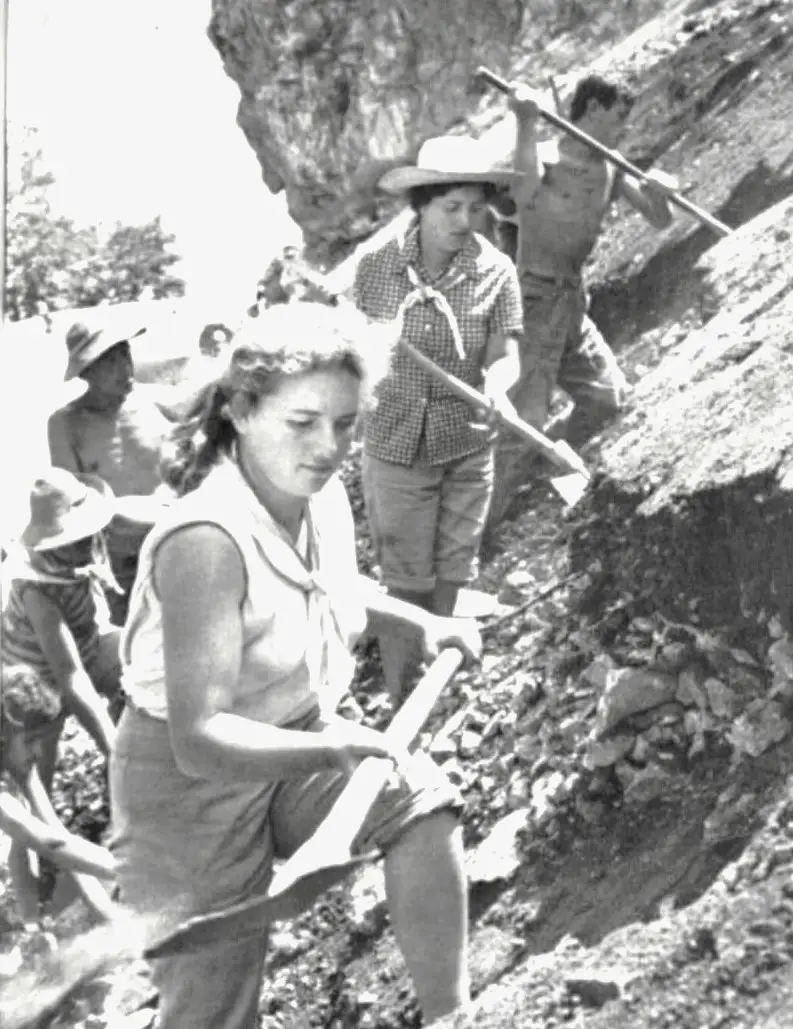
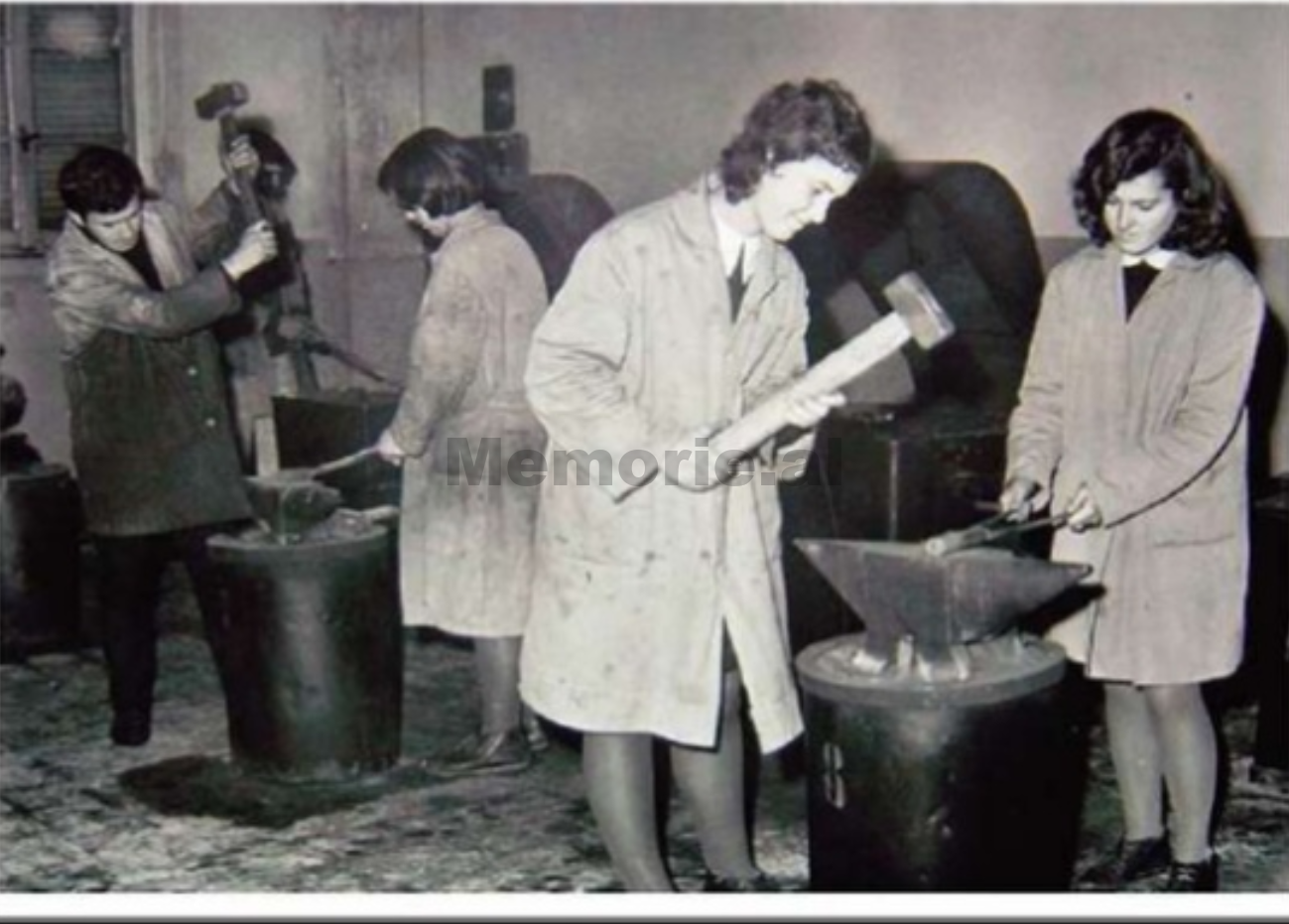
Rrapo Dervishi, Minister of Construction, suggested employing women in this sector. Several examples of women’s employment in agriculture were cited, as well as the fact that 16 percent of the workers at the “Stalin” Oil Combine were women.
Koço Theodhosi, speaking before the People’s Council on May 20, 1952, announced that during the first two years of the five-year plan, 6,700 qualified employees had been trained. But he added that despite efforts, the work of personnel training had not been sufficient.
Although there had been significant growth in industry, mining, transport, and agriculture, personnel needs had not been met, especially for highly qualified workers. There was also insufficient technical middle-level assistance for mastering the techniques of the machinery coming from the USSR.
This shortage of qualified personnel, Theodhosi said, had become evident in 1951. For example, qualified workers in one field were removed from their enterprises to open new ones, and this caused organizational disruptions.
Theodhosi said there were numerous examples of uneven development across industry, mining, communications, and agriculture, as well as the insufficiency of qualified workers. Due to these deficiencies, the Stalin oil combine used only 50 percent of its machinery in the first quarter of 1952, and its drills operated for only 55 percent of the working day.
For the same reason, the sawmill factory in Tirana operated at only 49 percent of its machinery capacity, and the same applied to the pasta, soap, and rubber factories. The deficiencies also cause poor quality of goods. Roads had been paved with low-grade material. Theodhosi stressed that the problem of personnel training was essential for fulfilling the plan but had not been treated as such.
He also mentioned that in many factories there were illiterate workers. To overcome this disproportion between industry’s demands for qualified or unqualified labor, the five-year plan had programmed technical training of the workforce at 81 percent by 1955, compared with about 31 percent in 1950.
The Minister of Construction, Rrapo Dervishi, speaking before the People’s Assembly on the five-year plan on May 20, 1952, said that within five years an additional 5,300 workers and specialists needed to be trained. But he added that so far, progress had been insufficient. He urged enterprise personnel not to wait for ministry approval to undergo training in cases where such approval was not necessary.
More initiative should be shown by enterprise directors, he said, and the ministry should also reduce obstacles which, masked as a coordination framework, only restricted their rights. Without eliminating these obstacles in the construction sector, he said, it would be impossible to achieve the objectives of the five-year plan.
Women in agricultural production (“Zëri i Popullit”)
Women in the Kukës district are an example of agricultural labor. In the villages of this district, during the planting season, 1,118 women took part in 47 collective farms, most of who worked alongside men in the planting.
Others collected waste used to fertilize the soil. The women of the village of Surrel fertilized their lands with 1,210 barrels of organic fertilizer, while those in the villages of Barje and Zagori fertilized about 90 percent of their lands.
At the “Stalin” Oil Combine, 16 percent of the workforce is women. The participation of women in the industrial sector is increasing day by day. Compared with 1950, in 1952 the percentage of women in industry increased by 300 percent. Today, 92 women at the “Stalin” factory hold work titles, and 27 have been decorated with the “Medal of Bravery.”
Labor force in agriculture
The creation of a labor force is one of the most important problems in the realization of the five-year plan. For this reason, the party and the government have paid special attention to this problem in agriculture. The Executive Committee of the Kolonjë district sent a three-month plan for filling workforce positions.
But the village of Qinan did not realize the plan in the first quarter of 1952. Even in the first two months of the second quarter, the village failed to send the 11 workers required of it. The reason for this situation lies in the lack of personal examples from local communists, as well as the weak political work of the party organization in Qinan.
The failure of the party organization secretary, Ramadan Ibrahimi, to take the necessary steps exerted a negative influence among local communists as well as among non-party members. His own family could have supplied the 11 required workers – five men and six women but not a single one was registered for work. This is also true for other communists in Qinan.
The lack of personal examples from the communists themselves has resulted in weak political work among the villagers, who are not fighting sufficiently against the wrong mentality among farmers such as Qani Zylfo. Also lacking in this regard is the spirit of self-criticism. Fulfilling the labor force also involves including women in the workforce.
The Second Party Congress considered this as one of the main tasks. But the party organization in Qinan remained neglectful and did not set the proper example, such as the failure to register any worker from Ibrahimi’s large family. The kulak Sulo Tefiku did not register any of the women of his household for participation in agricultural work, saying they were housewives and not field workers.
These words spread to other villages, and as a result, Zeni Mesareja and Gani Veterniku also prevented women from registering for agricultural work. It is worth noting that the party committee in Qinan also did not help with the situation that had arisen, so it must analyze the situation and practice self-criticism. It must then take measures to strengthen the political unity with the villagers, since it is the communists who must set the example first.
The Executive Committee and the labor force (“Zëri i Popullit”)
The problem of the labor force is also not being viewed with due seriousness by some district executive committees. Consequently, there is a shortage of labor in industrial centers to the detriment of production. The usual justification given is that the season is for work in the fields, but the real reason is the lack of organization. Some executive committees have succeeded in finding the necessary labor force for industry and agriculture, but there are still deep differences between districts.
Gramsh, Rrëshen, Skrapar, Berat, and Elbasan have been poorly organized, whereas the districts of Krujë, Gjirokastër, Sarandë, and Durrës have yielded more satisfactory results. Since the village is the main source of labor, the duties of local authorities are of great importance in solving the problem. But nevertheless, the greatest responsibility lies with the district executive committees. / Memorie.al