By Adela Kolea
Memorie.al / Considering the turbulent history of religious faith in Albania during the years of the dictatorship installed in 1944 with the rise of communism under the leadership of dictator Enver Hoxha, it is essential to dwell on the ill-fated year of 1967, when the communist regime declared Albania de facto “the first atheist state in the world,” banning every religious practice as “dangerous foreign imports or influences.” This was formalized in 1976, when state atheism was written into the Constitution. Article 37 stated: “The state recognizes no religion and supports atheist propaganda to instill in people the scientific-materialist worldview.”
During this period, instead of the Bible or the Quran – given that three main religions existed in Albania: Catholic, Muslim, and Orthodox – the publication and distribution of works written by the dictator and his bibliography praising communist doctrine began.
And in 1977, Article 55 of the Penal Code assigned a prison sentence of three to ten years for religious propaganda, distribution, or possession of religious texts and literature.
By direct order of Dictator Enver Hoxha in 1967, Albania began prohibiting the celebration of religious holidays, such as: Christmas and Easter for Christians, and Eid al-Fitr, Ramadan, and all corresponding holidays for Muslims.
Celebrating Easter in Secret under the Dictatorship…
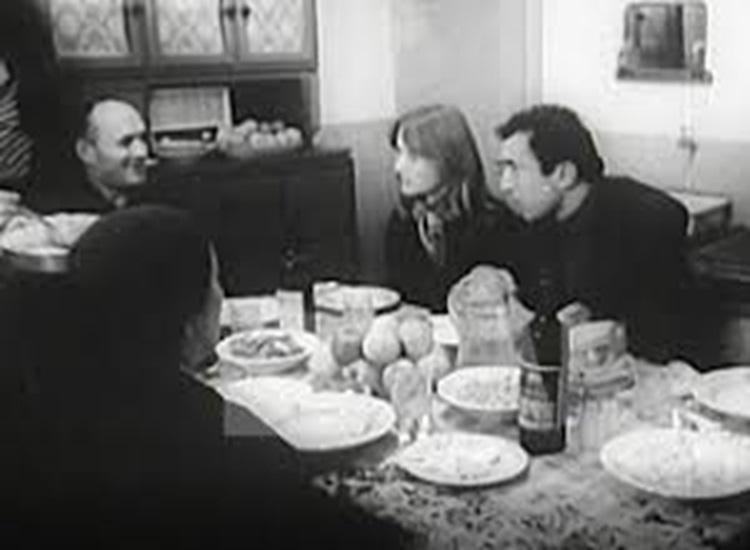
When Easter knocked on the door, for any of the respective branches of the Christian faith – Catholic or Orthodox, whatever their specific belief – our grandparents or parents kept it within themselves, without expressing it and even less praising it as such. Instead, they celebrated this holiday secretly within the family, with relatives or the most trusted friends…
We can calmly affirm another truth: our Albania has always been a country where three religions coexisted: with a Muslim majority, Orthodox, and Catholics. Within our own families and relatives, without prejudice, some of our uncles and aunts were married to people of a different faith than their own.
Or rather, some prejudices from older, more conservative generations regarding these marriages still existed, but among the youth, this happened a little less.
As a result, with this union, we managed to live together in peace, respecting each other’s traditions and customs.
We must also say that the intensity of religious faith was higher among the elderly, among those who had once been able to frequent religious institutions, practice worship, and pray. But for our generation – the youngest and last, that of the 1970s-80s – who had never had the chance to see a church or a mosque, the difficult discourse of faith was something vague and hard to understand.
All of this, for the reasons mentioned above and which we all know very well: due to the time in which we lived, the regime under which we lived, and its ideological line – factors that hindered the very possibility of knowing, and even less practicing, religion.
Having said that, to commemorate the occasion of Easter, everyone, apart from the relative factor that connected them to prayer, also tried to celebrate at the table, with typical dishes according to tradition and, most problematically, according to economic possibilities.
But the most humorous and special aspect for me, then a child, was the moment of coloring the boiled eggs at home!
How happily I helped my grandmother in the kitchen and stained my hands with dye! But be careful: could we ever have defined them as industrial food colors? In reality, in this discipline we didn’t have today’s conveniences, ready-made elements and preparations, or accessories. Instead, we relied on plant-based dyes.
Excluding completely, on the other hand, chocolate eggs. These were another separate deficiency…!
So, coloring eggs was not at all easy and became a real challenge! An undertaking for another, even more important reason: because before starting the “coloring process,” we had to obtain the raw material, meaning the eggs themselves!
They were “hen’s eggs,” so sought-after and limited in the market that to succeed in celebrating this occasion, as far as eggs were concerned first and foremost, you had to organize in advance.
Once you had the eggs, you couldn’t go to local grocery stores for coloring materials, let alone a supermarket (the latter didn’t even exist), not even to a pastry shop. It was necessary to put imagination and creative ingenuity into action!
So, grandmother began to work. To dye the eggs green, she had me gather nettles in a field near my house, which would later burn my hands and fill them with blisters, causing an annoying itch, before I brought them home. She boiled them to extract a green liquid, with a strong, bright color. In this way, we would have managed it for the green-colored eggs!
For the red eggs, she boiled beets, which produced a dark red liquid, close to ‘Bordeaux,’ and this version was also fantastic!
Obtaining the yellow color was a bit more complicated, as she tried to get it from wild mushrooms. But mushrooms weren’t easy to find, and then you had to be able to recognize them.
Later, she sought the help of a dear old family friend, a gentleman who had a passion for exploring nature and its flora. He would wander through the surrounding fields and hills of the city to gather medicinal herbs, which he used for cures and traditional folk medicine. And so, after gathering the wild mushrooms, he boiled them and obtained the yellow color for the eggs!
In practice, these preparations took on a special form of enchantment – not only because it was difficult to secure all the necessary materials for this so-called “mission,” but also because everything unfolded in secrecy. We relied only on people whose trust was earned, only on those people who we knew wouldn’t betray us and make us pay heavy consequences for ourselves and our family. We were aware of the constant violations of the rules of that time, since religious faith and any manifestation of its celebration were prohibited by law.
Ah, one more details! I liked the eggs not only colored but also decorated with some drawings on them! Back then, we couldn’t use pastels or other colors because, after all, we had, at most, colored pencils for school…! Of course, stickers for this type of decoration didn’t even exist.
Then, my grandmother’s imagination expanded to drawings: she took some parsley leaves, pressed them onto the eggs before dyeing them, tied them with a piece cut from stockings or tights, and after boiling them in the colored water, the spot covered by the parsley leaves remained white – and there you have the drawing…!
Wishing you all a Happy Easter, I send from afar a greeting and a thought to our grandparents and all our loved ones who are no longer physically close to us, but who were the protagonists of unforgettable moments of our childhood, thus managing to remain forever in our hearts. /Memorie.al