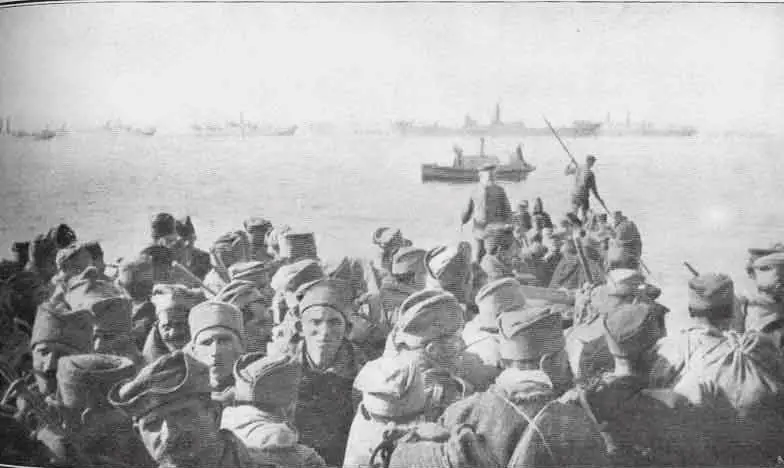
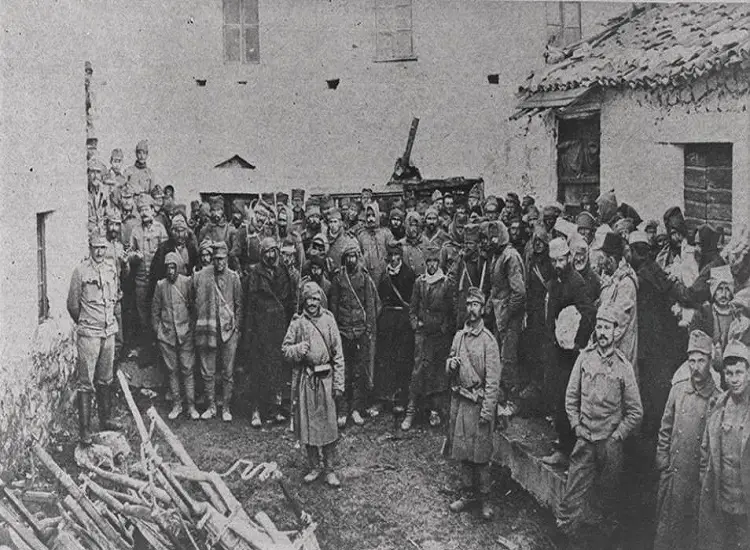
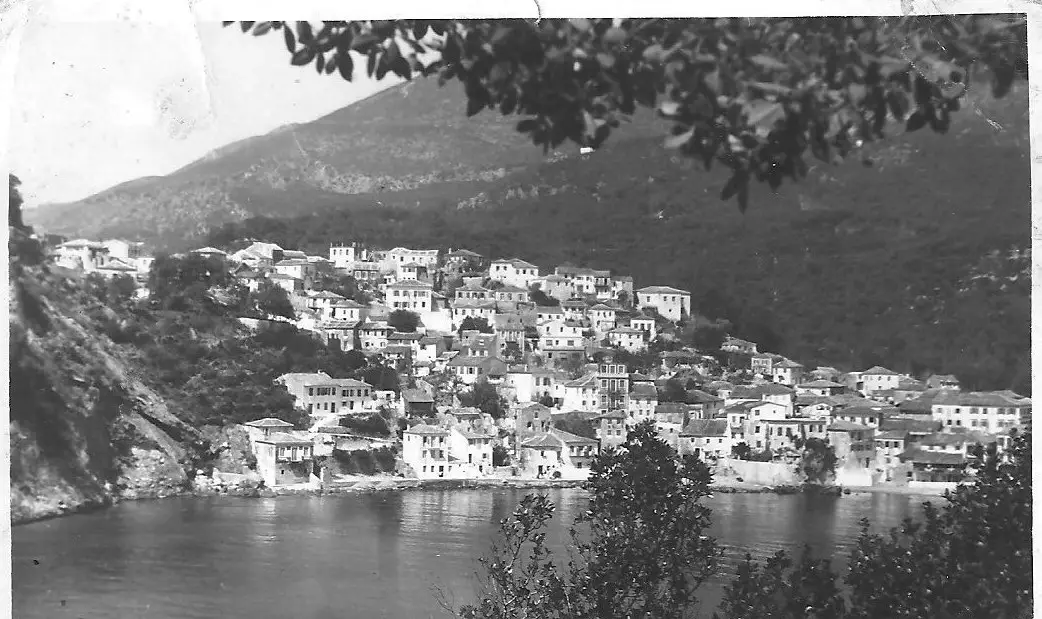
Memorie.al / In 1938, the government of the Kingdom of Yugoslavia signed a convention with the government of the Republic of Turkey for the emigration of the Turkish population (in reality, it was a matter of relocating the Albanian population of the Muslim faith, as reported by KP), from the southern part of Serbia, namely from Kosovo and the other Albanian territories that lay within 3 banovinas: the Zeta, Morava, and Vardar banovinas.
THE CONVENTION
On the rules of emigration of the Turkish population (The matter concerns the relocation of the Albanian population of the Muslim faith) from the region of Southern Serbia in Yugoslavia. The Government of the Republic of Turkey and the Government of His Majesty the King of Yugoslavia establish:
– The emigration (relocation) of Muslims from the region of Southern Serbia, and
– At the same time, they assess that this population, on the other hand, has generally lost the rights of free regime in Yugoslavia, and together they have decided to abandon the territory of the Kingdom, with their legitimate desire, in order to join their natural ethnic kin in Turkey.
They expressed the desire to sign the Convention according to which the methods of relocation are determined, as well as the respective pre-requisites of:
His Majesty, the King of Yugoslavia;
His Excellency, the President of the Republic of Turkey.
They shall communicate and fulfill their wishes, according to the methods determined by the following provisions:
Article 1
By this convention, Yugoslav citizens of Muslim faith, culture, and nationality, and who speak the Turkish language, are identified.
Whereas, by this Convention, those persons for whom entry into Turkey is prohibited according to the laws and regulations of Turkey currently in force are not identified, namely: the nomadic population and the Roma (Gypsy) population.
Article 2
The regions which are subject to emigration under this Convention are as follows:
The region of the Vardar Banovina:
The Shar Mountain region (Prizren); Gora (Dragash); Podgora (Suhareka); Nerodimja (Ferizaj); Donji Pollog – Lower Pollog (Tetovo); Gornji Pollog – Upper Pollog (Gostivar); Galica (Rostusha); Dibra (Dibër); Struga (Struga); Graçanica (Prishtina); Kaçaniku (Kaçanik); Gjilani (Gjilan); Presheva (Preshevë); Prespa (Resnja); Poreçi (South Brod – Makedonski Brod); Prilepi (Prilep); Bitoli (Manastir); Kavadarci (Kavadari); Marihovo (Manastir – Marihovo); Negotino na Vardaru (Negotino of Vardar); Skopje (Shkupi); Kumanova (Kumanovë); Velesi (Veles); Ovçe Pole (Ovçe Pole); Radovishte (Radovisht); Strumica (Strumicë); Dojrani (Valandovo); Gjevgjelija (Gjevgjeli); Kriva Pallanka (Kriva Pallankë); Kratovo (Kratovë); Carevo Sello (Carevo Sello); Malesi (Berovo).
The region of the Zeta Banovina includes:
Peja (Pejë); Istoku (Istog); Mitrovica of Kosovo (Kosovska Mitrovica); Gjakova (Gjakovë); Podrimja (Rahovec).
The region of the Morava Banovina includes:
Llapi (Podujevë); Vuçiterna (Vuçitërnë); Drenica (Srbica).
The Yugoslav government would determine from which region the emigration (relocation) would begin.
Article 3
The number of families which the Turkish government undertakes to accept from the regions mentioned in Article 2, under the conditions of this Convention, consists of 40,000 families. This includes common families and their members (persons) and children of the same blood, who at the moment of the signing of this Convention live in an undivided family community and under a common roof.
Article 4
The repatriation of these 40,000 families shall be carried out over six (6) years, according to the following proportions:
– In 1939 – 4,000 families
– In 1940 – 6,000 families
– In 1941 – 7,000 families
– In 1942 – 7,000 families
– In 1943 – 8,000 families
– In 1944 – 8,000 families
If this number of families cannot be achieved according to the predetermined years due to possible obstacles or difficulties, the two contracting parties shall reach an agreement, according to the relevant legal provisions, on the number of emigrants (relocated persons) who shall be evacuated by one side and accepted by the other, three months before the start of emigration. However, it is understood that these possible annual changes in the number of emigrants (relocated persons) cannot be extended beyond one year during the six (6) fixed years determined for emigration (relocation). The emigration (relocation) period for each year shall last (shall begin) from May until October 15, except for the contingency of the first year, which shall begin at the start of July 1939.
Article 7
The Yugoslav government shall pay to the Turkish government the amount of 500 Turkish liras per family, while the total amount shall be 20,000,000 Turkish liras for 40,000 families, on the basis of which amount these families shall be taken into consideration. Notwithstanding this global payment, all rural immovable property belonging to the relocated persons, in accordance with Article 6, remains the property of the Yugoslav Government. As regards the movable and immovable rural property belonging to the Muslim nationality or to the Evkaf (Waqf/Vakëf), it is understood that this Convention does not prejudice the provisions of the existing Law which regulates them.
Article 8
The Yugoslav government, on April 1st and October 1st of each year, shall make the periodic (semestral) payment, which shall be in proportion to the families being relocated, who shall be evacuated during the year, and which may be reduced or increased in proportion to their number. The payment, the total amount of which is determined in the previous article (Article 7), shall be made in 12 installments divided over six (6) years.
Article 9
The Yugoslav government shall make each payment in the following manner:
– 30% in foreign currency (deviza), which it shall place at the disposal of the Government of the Republic of Turkey through the National Bank of Yugoslavia;
– 70% in dinars, depositing them in the National Bank of Yugoslavia, to the credit of the current account – in favor of the Government of the Republic of Turkey.
The National Bank of Yugoslavia shall immediately notify the Turkish Legation in Belgrade of each payment that the deposit has been made into their current account.
Article 10
For the conversion of dinars into Turkish liras, the National Bank of Yugoslavia and the Central Bank of the Republic of Turkey shall agree jointly, according to the exchange rate for Turkish liras valid on the day of conversion, respectively on the day of each payment.
Article 11
The sums (funds) deposited in the National Bank of Yugoslavia shall be utilized by the Government of the Republic of Turkey, either in all forms or for payments and expenses to be made in Yugoslavia, or for purchases on the Yugoslav market, except for goods whose export is prohibited or conditional upon payment in foreign currency (such as): copper, wool, leather products, walnut wood products, oil fruits, olives, wheat, and corn.
The purchase of all these goods shall be carried out, allocating them to Turkey. These goods shall be exempt from any customs duty, tax, or any other export charge. It is understood that for export, the provisions foreseen on the basis of commercial (trade) agreements concluded or to be concluded shall not apply, but it shall be done in accordance with the provisions of this Convention.
Article 12
The persons who shall be evacuated during the relocation period, who shall be relocated according to the annual list, must submit (present) a written declaration before the Yugoslav authorities, on the basis of Article 53 of the Law on Yugoslav Citizens currently in force, that they voluntarily renounce Yugoslav citizenship. These persons shall have the status and shall enjoy the rights of relocated persons according to Turkish laws, from the moment when the representatives of Turkey, who shall be appointed for this matter, sign the annual lists of emigration to Turkey.
Article 13
The relocated persons shall, in general, be free to liquidate or take with them all their movable goods (property) of all kinds which they possess (as personal property), as well as livestock and poultry from their farms, instruments, machines, etc., which are used in agricultural or industrial work or for practicing crafts and other professions.
However, for the transport of their movable goods and property, agricultural tools, as well as 4 head of large livestock and 10 head of small livestock, not counting their young, yearlings, etc.; the Yugoslav Government undertakes to transport them free of charge to their port of disembarkation in Thessaloniki.
For the transport of goods, the relocated persons benefit from a reduction in taxes according to the tariff in force. However, they do not benefit from a tax reduction for livestock, such as six head of large livestock and 20 head of small livestock, not counting their young, for each family being relocated.
The export of animals is carried out according to the provisions of the existing veterinary convention and on the basis of a veterinary certificate, which shall be provided free of charge for those being relocated.
Article 14
Those being relocated are authorized to equally import: exclusively their personal ornaments, namely necklaces or parts thereof, gold and silver necklaces worn by women, and each of them may not import more than one piece.
Notwithstanding this, each head of household is authorized to freely import, upon leaving Yugoslavia, the amount of 2,000 dinars, as well as the amount of 4,000 dinars converted into its equivalent in foreign currency, internally, after the liquidation of their movable and immovable property in city and countryside, goods whose export is not conditional upon foreign currency or prohibited in Yugoslavia, and whose import is not prohibited in Turkey. All these goods shall be subject to export and import taxes and other charges.
Article 15
The National Bank of Yugoslavia shall open a special current account in the name of the Government of the Republic of Turkey with the Central Bank of the Republic of Turkey, into which each relocated person shall have the opportunity to deposit all sums due to them and at their disposal. With regard to guaranteeing the transfer through the purchase of goods in Yugoslavia, the National Bank of Yugoslavia shall notify the Turkish Legation in Belgrade of each payment made in cash, with detailed instructions of the depositor. These sums, thus transferred to Turkey, through goods purchased in Yugoslavia, shall be returned to the interested parties by the Central Bank of the Republic of Turkey.
Article 16
Funds, goods, valuables, furniture, and all other objects belonging to minors and other family members, entrusted to the head of household and entrusted to the competent Yugoslav authorities, shall be paid or allowed to the Government of the Republic of Turkey, which in the future shall ensure their administration and protection until they come of age, while their reimbursement shall be made to the head of the family, who enjoys this right in accordance with the laws of Turkey.
Article 17
All young Muslim men, whose families are registered on the annual relocation lists, and who are still in the ranks of the Yugoslav army, shall be immediately released from further military service, and at the same time shall be relocated together with their families. Under the same conditions, young Turkish Muslims living in regions whose population is scheduled to emigrate during the following year shall not be included.
Article 18
A special Commission shall be appointed by the Yugoslav Government, which shall be engaged in drafting the annual list for those being relocated, detailing it with all necessary notes on the conditions, profession, and trades of the emigrants. The lists must be presented to the representatives of the Turkish Government, and at the same time, once implemented by them, they shall serve as the basis for granting Turkish passports, as well as for calculating the number of families of relocated persons.
This Yugoslav Commission shall maintain permanent cooperation with the Turkish delegates, and upon their request, shall provide them with all the information they need.
Article 19
The departure and loading of those being relocated shall be carried out on the basis of collective Turkish passports, which shall be granted to them by the consular authorities of the Government of the Republic of Turkey in Yugoslavia. The collective Turkish passports, as well as all other necessary documents which serve as proof, the preparation of the annual lists and the corresponding visas on passports for leaving Yugoslavia, shall be made absolutely free of charge.
Article 20
In the free zone of Yugoslavia, in Thessaloniki, a mixed Turko-Yugoslav commission shall be constituted, composed of officials appointed by both governments, which shall engage, in joint agreement, to undertake all necessary measures, according to the circumstances and conditions of the loading and disembarkation of those being relocated.
Article 21
This Convention enters into force on the day of its ratification by both governments. At the same time, the signatories shall authenticate this Convention with their respective seals.
Drafted in the French language in 1938. M. R. – V. M. H. S. – Dr. C. A. / Memorie.al