
By Kolec Cefa
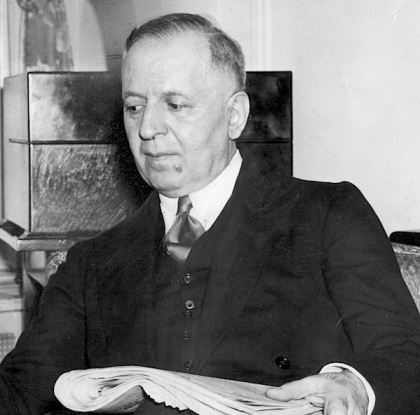
Memorie.al / The years 1877–1954 set the chronological boundaries of the life span of Father Pashko Gjadri, this Albanian Jesuit priest, while the content of that life was defined by the end of the tangled and powerless Turkish occupation in Albania and the brutal beginning of the Communist regime. Both the old occupation and the new power passed without glory, leaving behind all-encompassing backwardness, deep wounds, and above all, moral deterioration among the people. But even there, men like Father Gjadri forged strong characters, expressed human feelings, demonstrated ardent patriotism, possessed a broad culture, and worked with zeal and unshakable will. He mastered five foreign languages: Latin, Greek, Italian, German, and English.
Dr. Pjetër Pepa, in his voluminous work, notes: “He was a professor at the Papal Seminary in rhetoric and the humanities; he was a professor at the Saverian College; he had a rich activity in the Itinerant Mission among our highlands, such as: Pult, Shalë, Shosh, Dushman, Malësi e Madhe, Mirditë, etc., especially with blood-feud reconciliations, aid, and charity, there where the material, spiritual, and cultural conditions were the most difficult.”
The long, exhausting, and relatively liberal Turkish occupation allowed him to become a Catholic priest; the Albanian Communist regime forbade his religious, social, and cultural activity. He began his public activity as a collaborator of the magazine named “Albania”. He also wrote many articles scattered across various publications, but this was interrupted in the prisons of Albanian-Slavic communism. At a rather advanced age, he experienced trampling, contempt, mistreatment, discrimination in odium fidei (out of hatred for the faith), and inhuman torture.
A life full of suffering, but with unshakable ideals, full of worries, but also full of hope. This man, with that immense spiritual and cultural potential, was arrested and “found guilty” of “crimes against the state,” was sentenced, and endured torture in his old age, so much so that, upon his release from prison, he died after just a few months.
Even today, the echo of this name inspires respect for high ideals, sensitivity for moral values, and devotion to social activity.
Father Gjadri, wise and gentle, loving and virtuous, learned and patriotic, wrote this letter to Konica of “Albania”:
Most beloved patriot,
Oh, how our hearts rejoice when the post brings us the “Albanien,” which is truly written in a strong and refined language and presents to the reader a true school for the language and for the interests of one’s own homeland.
May “Albania” spread, especially in Shkodër, and not only among Catholics but also among the other gentlemen and the affairs of Albania would soon improve – not through war and blood, but through peace and good deeds.
But alas, the enemy of Albania strives by all means to prevent us from uniting and from coming together for the flourishing of our nation, just as our fathers united in the time of the beloved Skanderbeg.
Yet (perhaps this is a dream of mine), I believe that all Albanians will fix their eyes on this Sun of Albania; if they wish to emerge from the darkness that envelops them, we must teach them from early childhood about his life and works, and especially about the love he held for his own land.
But Your Lordship knows these matters better than we do, and we have had no other purpose in writing here, except to vent to a dear friend the sorrow of our hearts over the miseries of Albania.
And the reply we believe Faik Konica gave him:
Most esteemed compatriot,
I have read with the greatest interest the letter that you were kind enough to write to me, and I will publish it translated into Albanian, understandably, without revealing the author. Your thoughts are correct; your patriotic lessons are sound.
Unfortunately, our homeland suffers from a strange illness: all people among us seek to command, and no one wishes to obey. Albanians have lost the sense of obedience, and as long as this anarchic tendency continues, it is difficult to accomplish anything.
We must fight, and the best way to do so is to always act in a spirit of unity and understanding.
I will gladly always accept your suggestions and advice, and I beg you, dear compatriot, to have faith in my devotion./ Memorie.al
Faik Konica
22. IV. 1906
(The original is in French, my translation. The letter is found in the A.Q.SH. (Central State Archive), in the Bazhdar file, and is published for the first time. (Published by “Dielli”, 18 September 2015. Reprint on the occasion of the Year of Konica).