From Afrim Krasniqi
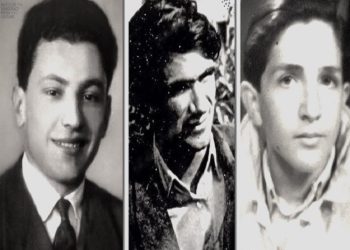
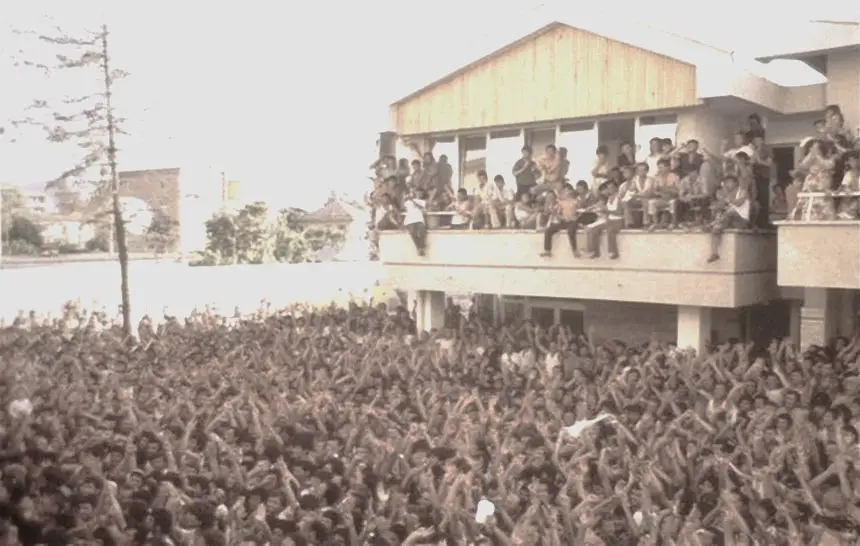
Memorie.al/ 17-year-old Altin Basha, who had just completed his second year at the Industrial High School in Tirana, was the only official victim of the killing by police on July 2, 1990. He was shot on the evening of the 2nd, while he was at the German embassy, and died in the hospital from his wounds on July 4, 1990. As expected, the official media gave no notice of his death, and no official accepted changing the statements that there had been no killed on July 2, even though young Basha had passed away. In official documentation, his surname is always recorded as “Barka,” but according to researcher Kastriot Dervishi, his real surname is “Basha,” not “Barka.” [1]
Regarding the killing of the Albanian citizen on July 2 on the premises of the German embassy in Tirana, the head of the General Investigation Office, Qemal Lame, reported a few hours after the event:
“From the investigation and verifications at the civil hospital, it appears that Altin Përparim Barka, 17 years old, residing in the Kombinat i Tekstileve area, was wounded by a firearm in the abdomen. Two employees of the embassy of the FRG claim that he was wounded by a policeman on the embassy grounds and that they brought him to the hospital to receive medical treatment, also organize his security in the ward. He has undergone surgery and is in intensive care. They treat him as a political refugee and request that no one meets with him” [2].
Two days later, the Ministry of Foreign Affairs referred to the Investigation Office’s statement to inform the most important state institutions that “the competent Albanian authorities also inform that the Albanian citizen Altin Përparim Barka, wounded by gunfire in the abdomen, who had been sheltered in the German embassy, is hospitalized in serious condition at Clinic No. 2 in Tirana” [3]. In this part of the text, Minister Malile changed the person’s surname from “Barka” to “Basha,” and rewrote the end of the last sentence, removing the phrase “sheltered in the German embassy” and adding “who was taken to the hospital by the employees.”
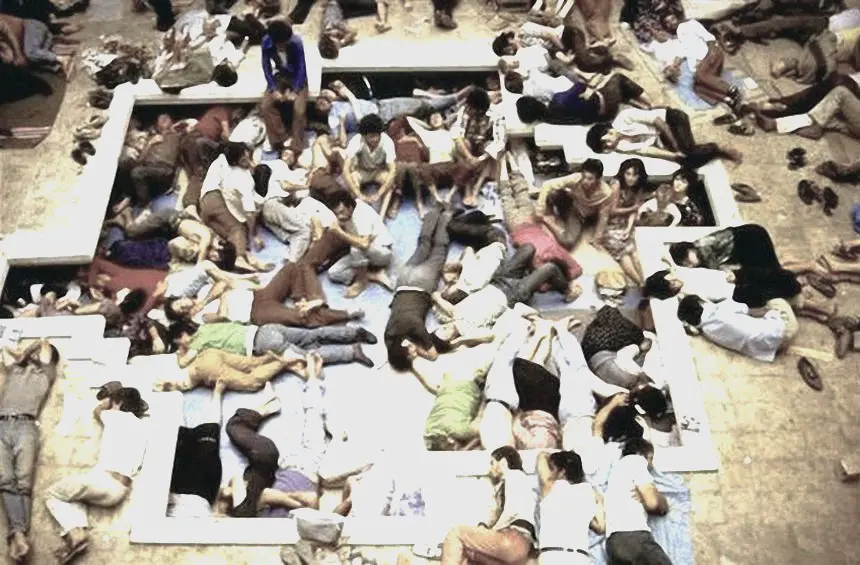
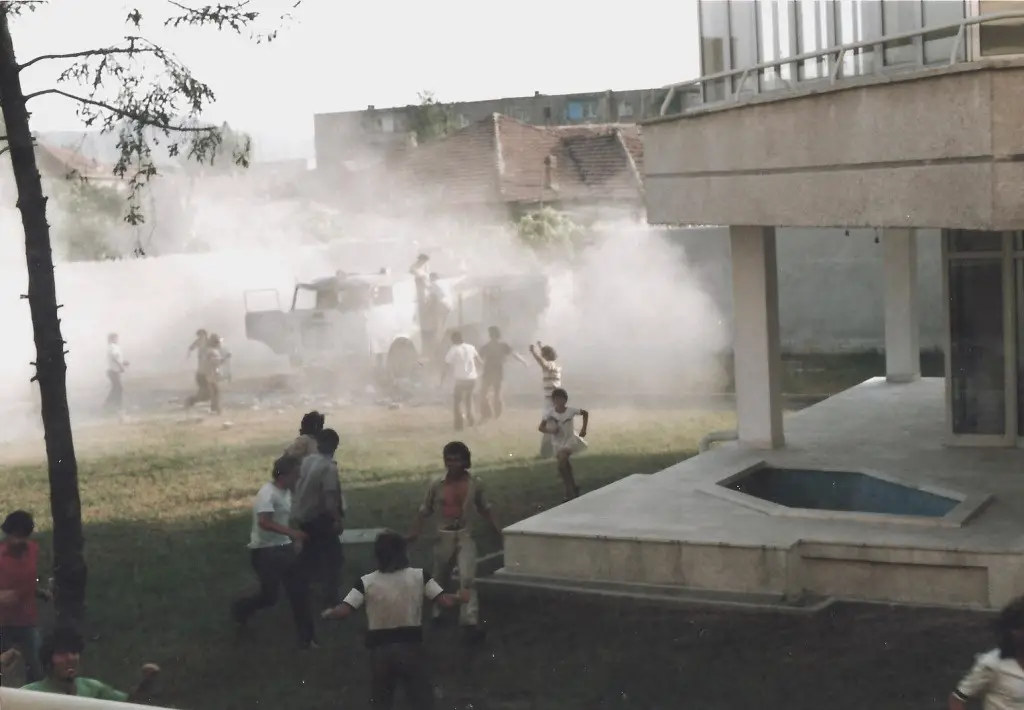
The security employee at the embassy, Lothar Parzeller, who was at the embassy at that moment, describes the event in his testimony as follows: “We couldn’t see those who were being shot before they entered through the gap into the territory belonging to our embassy. I remember a young boy who, as soon as he passed through the gap, collapsed. He couldn’t breathe and had turned pale, his face like chalk. We took off his clothes. We saw he had two holes, one on the left side of his chest, the other on the right. Small holes, without blood. From one, when he breathed, air came out. Together with an embassy police officer, we took him to the hospital, to surgery. We told the doctor he was under our care. He rushed him into the operating room. We waited outside the door. At a certain moment, the Sigurimi [Security Service] people came to the hospital.
They were civilians, a different type of policeman from those I had seen up to then in Tirana; they were bulky, muscular, frightening. They wanted to enter the operating room and take the boy. The only weapon we had was the diplomatic passport we had brought with us. We told the Sigurimi, ‘you cannot enter here,’ waving our passports in their faces. We stayed without moving for 48 hours in front of the intensive care room; we were hungry, thirsty, but we didn’t move.
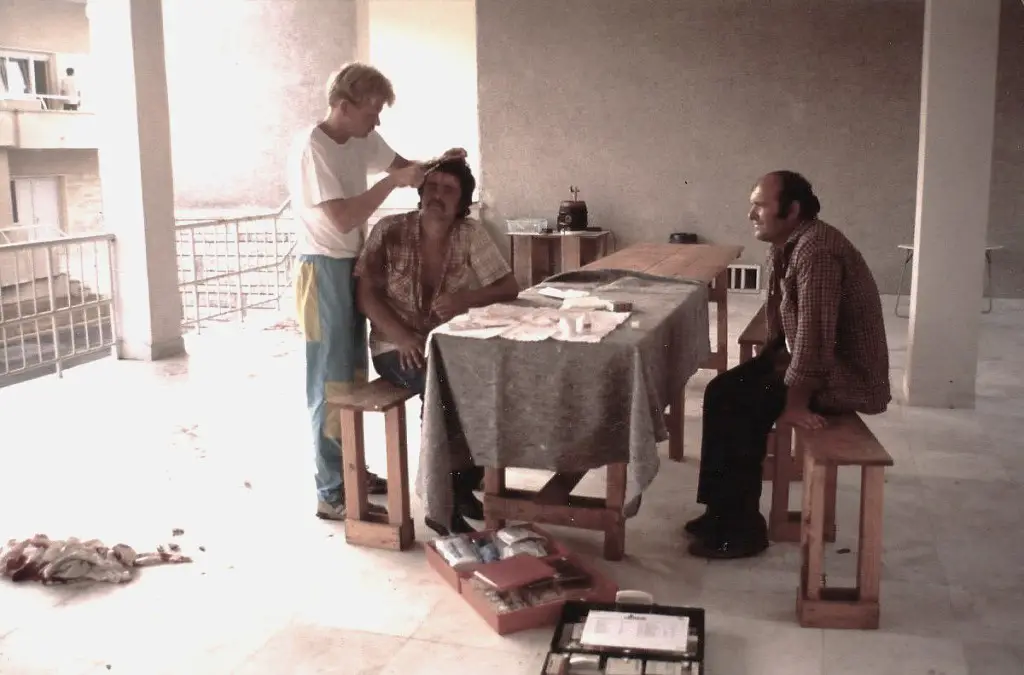
Then an order came by radio to return to the embassy. The Sigurimi had made it known that the diplomatic passport would no longer be taken into account, and if we didn’t leave, we would be declared ‘persona non grata.’ We returned to the embassy, where other wounded awaited us. Later, from a Cuban doctor who was at the hospital, we learned that the Sigurimi had taken him from intensive care and moved him to a ward. I felt very bad when I learned that he had died” [4].
The German side reiterated its position in several official communications with the Ministry of Foreign Affairs. In the note dated July 3, the embassy informed in detail about the moment when “the policeman, who was standing to the side shooting sideways, fired at an Albanian who was inside the embassy courtyard” [5]. The German side repeatedly inquired about the young man’s health and fate. The case was handled at high levels and constitutes one of the main topics in the official message that German Foreign Minister Hans Dietrich Genscher addressed to his Albanian counterpart Malile on July 4.
According to the original text of Genscher’s letter, it stated: “On the evening of July 2, 1990, a person seeking shelter was wounded, with life-threatening injuries, by a shot from the Albanian Security forces in the courtyard of the FRG embassy. Due to the acute danger to life, the wounded person was transported to the Tirana hospital. Two members of the embassy, who with the consent of the interested party remained at the hospital to accompany the wounded person, were forced, at the request of the chief of protocol, to leave the hospital on July 3.
I am deeply shocked by the wounding of this Albanian citizen within the courtyard of our embassy and by the request that embassy members leave the hospital. In the interest of humanity and taking into account the further development of German-Albanian relations, I urgently appeal to you to give the embassy members the opportunity for immediate contact at any time with the wounded person (naturally within the limitations arising from medical measures)” [6]. The next day, in an official meeting with the director for Europe at the MFA, Chargé d’Affaires Werner was told: “The condition of the wounded person who was operated on is good and is out of danger for his life” [7].
In fact, young Basha had passed away 24 hours earlier, and Albanian authorities, including the MFA, were aware of this fact. They made maximum efforts to keep the news of the death from becoming public, so that it would not be subject to international media coverage. This reason can also explain the order to remove the German embassy staff from the hospital.
The police authorities of the time, including former Minister Stefani and the police director, Bengasi, never accepted the killing of the 17-year-old by police. They offered no alternative version but treated his killing as a mysterious event, alluding to shifting responsibility to the German side.
Bengasi’s question: “If he was wounded outside the embassy perimeter so seriously that he ended up dead, how could he have reached the interior premises of the embassy?” [8] Received answers several times from the German side, but also from Albanians who were witnesses to the event. The former head of the Investigation Office, Lame, writes in his memoirs that, being himself in the embassy area on the evening of July 2, he met two senior police officials, Z. Ramizi and D. Bengasi, who confirmed to him that they had fired weapons. When he asked them if there were any victims or wounded, they replied that “we know nothing” [9], while Lame’s testimony continues:
“In the frightening and so emotional silence of that night, the smell of gas caused by the gunpowder of the bullets that had just been fired from the policemen’s weapons could be felt.”
References
[1]. Kastriot Dervishi. 4,755 people left with the events of July 2, 1990, Newspaper “55,” 4.7.2018.
[2]. Archive of the Ministry of Internal Affairs. Year 1990, Report of the General Investigation Office, no. 699, 3.7.1990, p. 1.
[3]. Archive of the Ministry of Foreign Affairs. Year 1990, file 1349, box 49, p. 25.
[4]. Lothar Parzeller. Interview by Ani Ruci. Deutsche Welle, July 18, 2015.
[5]. Archive of the Ministry of Foreign Affairs. Year 1990, file 1339, box 49, p. 4.
[6]. Ibid, p. 10.
[7]. Archive of the Ministry of Foreign Affairs. Year 1990, file 1349, box 49, p. 28.
[8]. Dilaver Bengasi. The Enigmas of July 2, ’90, Redona, Tirana 2003, p. 73.
[9]. Qemal Lame. Cited work, p. 84.
Source: Afrim Krasniqi, “The Embassy Crisis: Albania in 1990,” Institute of History, December 2021.