Dashnor Kaloçi
Part Five
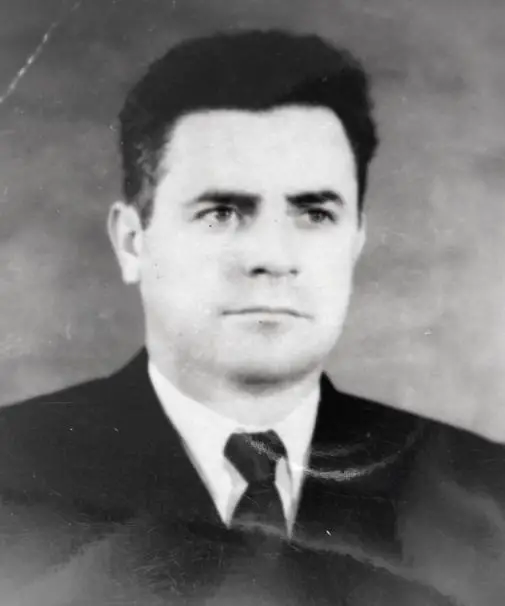
Memorie.al / publishes the unknown history of Major General Panajot Plaku, originally from the village of Hoçisht in Devoll, Korçë. After graduating from the “Normal” school of Elbasan in 1936, he returned to the city of Korçë, where he connected with communist groups. During the occupation of the country (1939–1944), he became engaged in the Anti-Fascist Movement and for his activity was arrested and imprisoned by the Italian authorities in the city of Durrës. After his release, he joined the partisan ranks; being appointed deputy commissar of the First Assault Brigade commanded by Mehmet Shehu, upon its formation in August 1943 in the village of Vidhkuq, Korçë. How did Panajot Plaku climb the ranks of his military career after the war, starting as commissar and division commander in the Korçë district, corps commander, Director of the Operations Directorate and deputy chief of the General Staff of the Albanian Army in the Ministry of People’s Defence with the rank of major general, deputy minister of People’s Defence for the Border Directorate, and finally to the post of minister without portfolio in the government headed by Mehmet Shehu? How did Panajot Plaku manage to escape from Albania in June 1957 (while holding the position of minister without portfolio and Chairman of the State Committee for Geology) by secretly crossing the state border near Lake Pogradec from the village of Lin and reaching Yugoslavia, where he settled in Belgrade as a political asylum seeker and sent a letter to the leader of the Soviet Union, Nikita Khrushchev, denouncing all the crimes of Enver Hoxha and his regime? The mystery of Panajot Plaku’s death in 1966 in the hotel where he lived in Belgrade, and what he wrote in his memoirs about Enver Hoxha and the high leadership of the Party of Labour of Albania, which he compiled for publication in a book titled “Violence upon the Revolution in Albania”. After his death, the book was also translated into Serbo-Croatian (by Predrag Vuqiviq, editor of the newspaper “Borba”, and Vela Popoviq, editor of Belgrade Television), a book that had great resonance and was later published by the “Rilindja” Publishing House in Pristina in the Albanian language in 1985.
Continues from the previous issue
Panajot’s escape in June ’57!
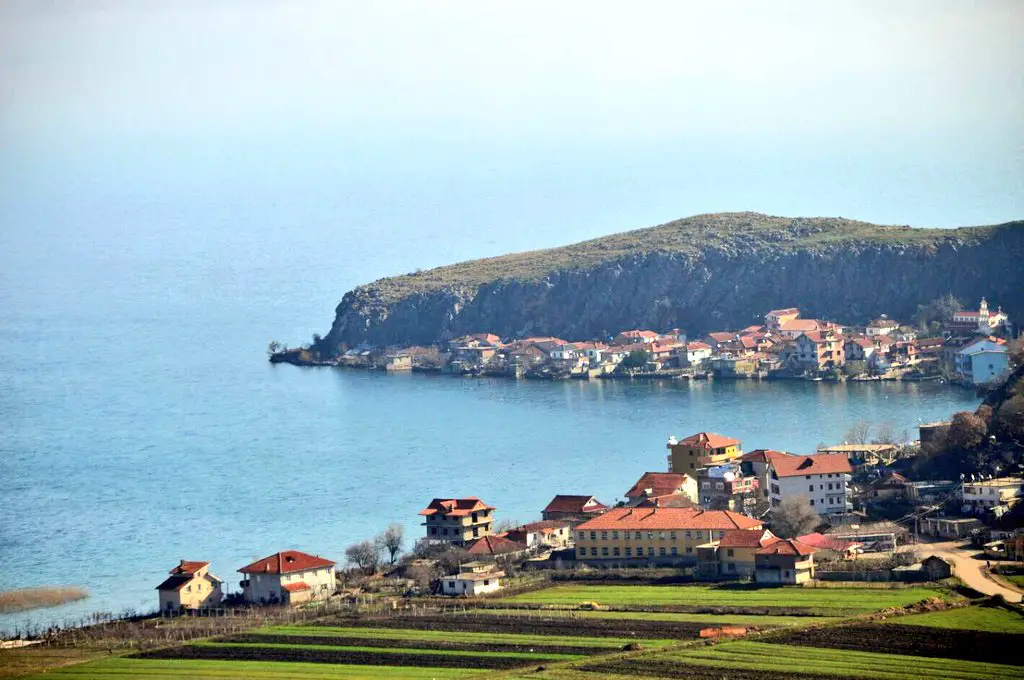
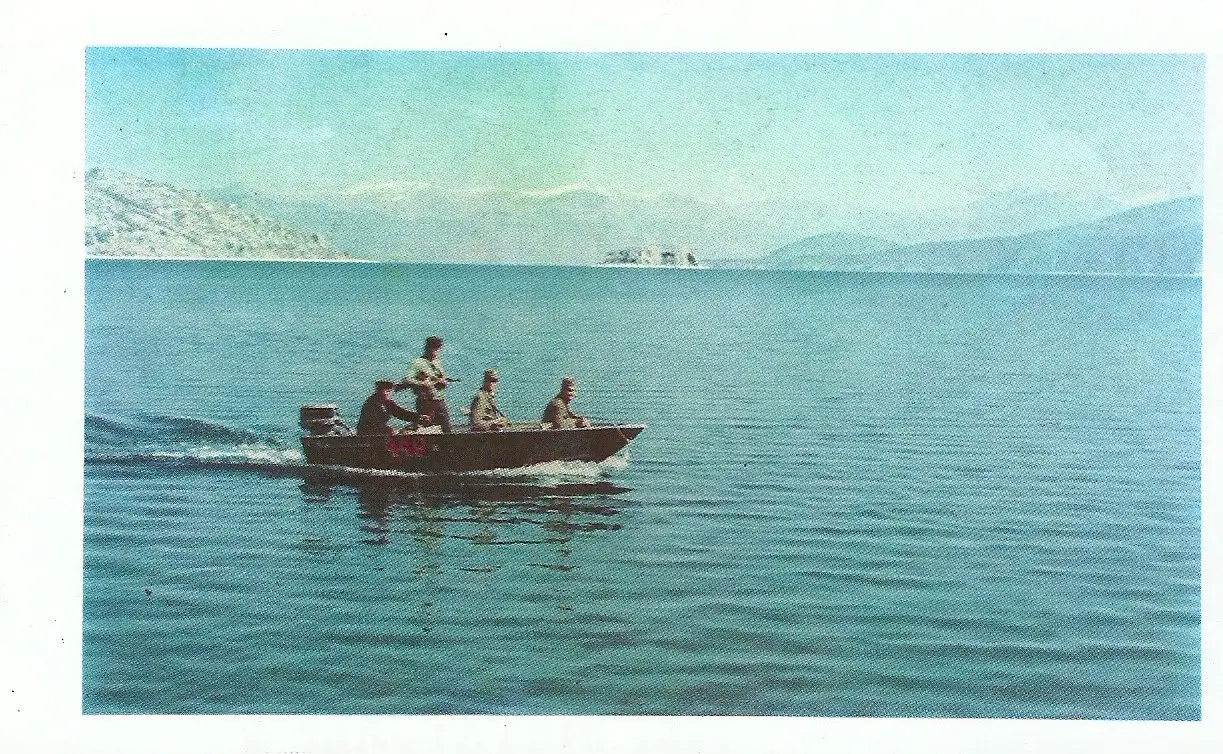
But how did the minister without portfolio, Panajot Plaku, manage to escape, and where and how did he cross the state border? What happened to his family afterwards, and how did the State Security force his elderly mother, Kostandina, to publicly curse her son in the newspaper “Zëri i Popullit”? Regarding this, family members of Panajot Plaku have testified to the author of this article, stating: “After leaving home with his car and driver, Panajot traveled to the Pogradec district and somewhere near Qafë-Thanë, he headed toward the state border with Yugoslavia. His trip to that border area was supposedly for control and inspection of the mines, since at that time, besides his function as minister without portfolio, Panajot also held the position of Chairman of the State Committee for Geology. So, in case he was detected by border forces or other competent authorities that he was going to that border area, Panajot thought or hoped he could justify himself because of that duty related to geology. When he approached the village of Lin on the shore of Lake Pogradec, he told his driver: ‘Go have a coffee, because I have some work here.’ While the driver went to have coffee, Panajot fled and crossed the state border without any problem and without being detected by border guards, because he knew that area like the palm of his hand, since he had been a military officer with the duty of deputy minister of People’s Defence for the Border. The day after Panajot’s escape, State Security people came to our house and took his wife, Vjollca, together with his little brother, Koço, and held them for three days, interrogating them and applying various pressures. They mainly asked whether they had known about Panajot’s escape and demanded an explanation as to why they had accepted Major General Tahir Kadare at the funeral of Kalo Plaku. Koço and Vjollca answered that they could not stop or chase anyone away from the house, let alone at a funeral ceremony! After they were released, according to the order they had been given, Vjollca had to report every day to the Directorate of Internal Affairs of Tirana, which at that time was located at Selvija. After two or three weeks, Panajot’s entire family was removed from Tirana (all their belongings and household items were confiscated) and sent into internment in the city of Çorovoda,” recall Panajot Plaku’s relatives, regarding the truth of his escape in June 1957, and the internment of the family.
The persecution of the Plaku family!
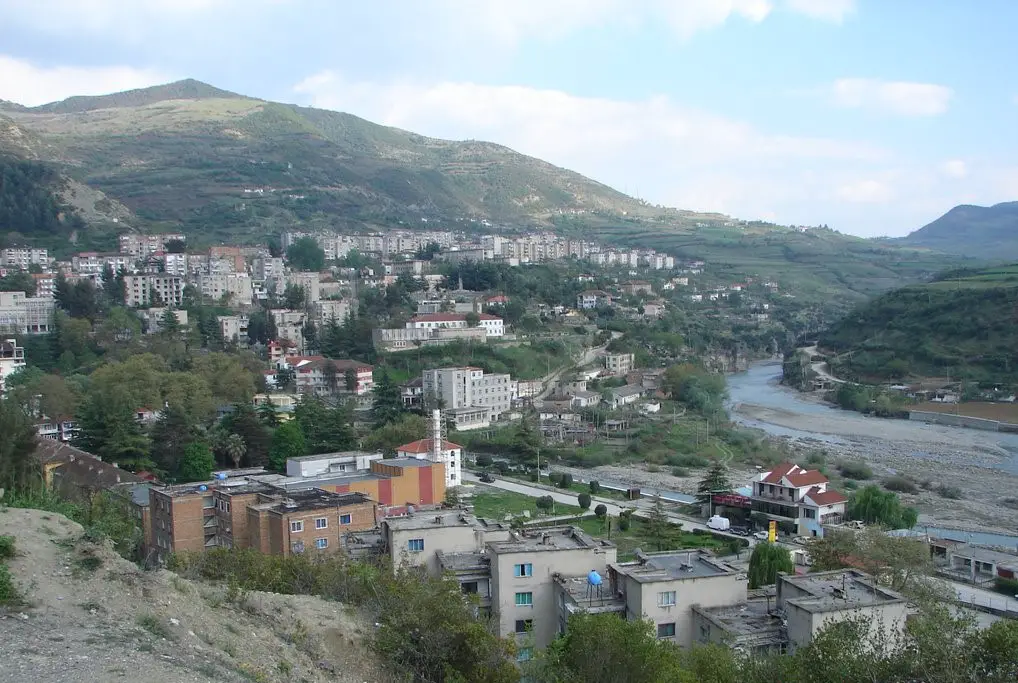
And what happened afterwards to Panajot Plaku’s family after the internment in the city of Çorovoda, and how was it treated by the communist regime of Enver Hoxha? Regarding this, they testify: “Shortly before the family was interned in Çorovoda, State Security people came to our family and forced Panajot’s mother, Kostandina, to sign a letter that they had not even given her to read at all! That letter, written by State Security, in which the elderly mother supposedly cursed her son Panajot, ‘declaring the milk of her breast forbidden to him’, was published the next day in the newspaper ‘Zëri i Popullit’. In the city of Çorovoda, Panajot’s wife, with her three small children and elderly mother Kostandina, were placed in a wretched barrack, while Vjollca was forced to report three times a day to the Internal Affairs branch of that city. After staying for 11 months in that small and isolated city, Panajot’s family was brought to the city of Durrës, where again Vjollca had to report three times a day to the Internal Affairs branch. Also, only two months after Panajot’s escape, two State Security people traveled to Poland, where Panajot’s sister, Theodhora (Lola) Katragjini, was studying, and pressured her to denounce her brother, but she refused to say a single bad word about Panajot. As a result of that stance Lola took, when she came on vacation to Albania, they did not allow her to return to Poland to continue her studies. But the high leadership of the PPA, which commanded State Security, was not satisfied only with interrupting Lola’s studies and bringing her back to Albania; she continued to be followed and surveilled regularly by the ‘competent organs’, who arrested her and held her for six months under inhuman torture. After the trial of Teme Sejko in 1961, Panajot’s wife, Vjollca, was fired from her job as a kindergarten teacher and sent to work as a construction laborer. Also at that time, several special meetings were held about Vjollca in the city of Durrës by State Security and the Democratic Front organization, with the aim of discrediting and humiliating her. Although Panajot’s children at that time were somewhat helped and supported by their uncle, who was a prosecutor in the city of Durrës, their persecution by the communist regime of Enver Hoxha continued until 1990, when the Minister of Education of that time, Skënder Gjinushi, told Panajot’s daughter, Donika: ‘You will never obtain the right to study at a higher school, because you are the daughter of Panajot Plaku.’ Thus recall the family members of the former minister without portfolio, Major General Panajot Plaku, regarding the harsh conditions and savage persecution faced after his escape by his wife, Vjollca Taja, with their three children: Donika, Besniku, and Kristaqi, as well as the elderly mother, Kostandina, and her daughter, Theodhora!”
Letter of the former minister without portfolio, Major General Panajot Plaku, sent to the leader of the Soviet Union, Nikita Khrushchev, in 1957
“Regarding the informing of our Party and people, it is worth noting that in Albania no newspaper or magazine from foreign countries arrives, except those from the Soviet Union; even the press of the people’s democracies is not imported or sold, not to mention the information organs of the communist parties of Western countries. All those who listen to any other radio station besides Tirana and Moscow are persecuted by State Security as undesirable people.
Before the informative plenum, one of the members of the government and party delegation told me regarding the return of our delegation from the USSR, what you said about Stalin: ‘If he had lived another year or two, we would have finished them off completely.’
However, Enver Hoxha noted with joy at the plenum that you had supposedly spoken about Stalin with great respect. There are hundreds of examples showing that the Party is not only being poorly informed but is also being disinformed.
The last issue, which in my opinion is being presented incorrectly, is the relations between Albania and the Soviet Union. I am convinced that the Soviet government and the Communist Party of the Union of Soviet Socialist Republics present the issue of relations between our two countries correctly, but in this regard great distortions are made by the main leading people, such as Enver Hoxha, Mehmet Shehu, and some important collaborators of the Soviet embassy in Tirana.
The worst thing in the relations between our two countries is the fact that the successes of the Albanian people are attributed to the aid of the Soviet Union! This is a basis of inequality in relations between the two countries; this is the main reason why Grigoriev, Korostov, and some other experts feel themselves in Albania as masters with unlimited privileges, as unassailable persons who tolerate no remarks or criticism from Albanian workers, except from Enver, Mehmet, and some other highest leading persons.
Enver Hoxha is doing his utmost to prove his unlimited loyalty to the USSR, to hide his weakness and inability to creatively apply the experiences of the C.P. of the USSR and Marxism-Leninism in the concrete conditions of our country, and to secure his own position.
In the relations between Albania and the Soviet Union, I see no danger of losing our country’s independence, but I see another danger – the danger of stagnation and parasitism, the danger of disrupting the most friendly and truly socialist relations between our countries.
I think that only you are able to help the PPA to take the right path. I also think that democratization of party life is impossible if Enver Hoxha is at the head of the party, because regarding Enver Hoxha’s past as a leader, a report similar to the one you read at the 20th Congress of the C.P. of the USSR about Stalin could be written.
I am convinced that, thanks to the measures taken recently and the economic aid that the C.P. of the USSR and the Soviet government have decided to give to Albania, our country will be able in the near future to develop economically independently, but it is necessary to eliminate all those distortions that the mentioned factors have made and are making in the life of the party and in the leadership of our country, so that Albania may develop.
The Party of Labour of Albania has extraordinarily great forces at its disposal; it was born and forged in the people’s revolution for the liberation of the country and in the struggle against all difficulties in the construction of socialism. The PPA and the entire Albanian people will be friends of the Soviet Union. This friendship was not forged by Enver Hoxha; it was forged in the common struggle of our two peoples.
I am convinced that nothing like what happened in Hungary will happen in Albania, and for this reason I think that the mentioned distortions should be eliminated more boldly and resolutely. I know that you have made efforts to help the leadership of our party by sending an adviser to the Central Committee for a time, and also by giving Enver Hoxha and other leaders the opportunity to participate in the consultations of your Central Committee, but I speak with full conviction that all this has helped very little, because Enver Hoxha is afraid of party democracy as of fire.
It must be added that Enver Hoxha is not the only party cadre who participated in the National Liberation War; he is not the only friend of the USSR, and he is not the founder of the party, as they call him! For this reason, Enver’s removal from the party leadership would strengthen our party and its relations with the Soviet Union.
Finally, I beg you, as Kedrov Andreyevich was begged, save my three children and my wife from certain death; they have been interned, and if they are kept there, they will surely die, because my oldest child is five and a half years old, the middle one less than four, and the youngest not yet two.
Please save my elderly mother, whom they forced to sign an inhuman declaration, which shows the weakness and meanness of Enver Hoxha and his agents, and of State Security.
Please save my brother and my sisters, who are followed and surveilled by State Security and who are threatened with physical elimination. I am convinced that you will not allow the blood of my children, my wife, my mother, my brother, and my sisters to stain socialism.
I assure you that absolutely no one knew anything about my escape, and that no one told me anything regarding the decision to eliminate me. For this reason, I beg you to do whatever you can so that no member of the Central Committee or the government, or anyone else, is persecuted for this reason.
Concluding, I express the content of this letter in two lines: Comrade Khrushchev, please study and save the Party of Labour of Albania.
I assure you that no one dictated the content of this letter to me, and that no one pushed me to write it.
I have thought of writing to you since I was in Albania, immediately when I learned of the decision to liquidate me.
All that I have written to you, I and my entire party have experienced. I am convinced that this letter of mine will contribute to normalizing the situation in the party and in my country.”/Memorie.al
With communist greetings,
Panajot Plaku