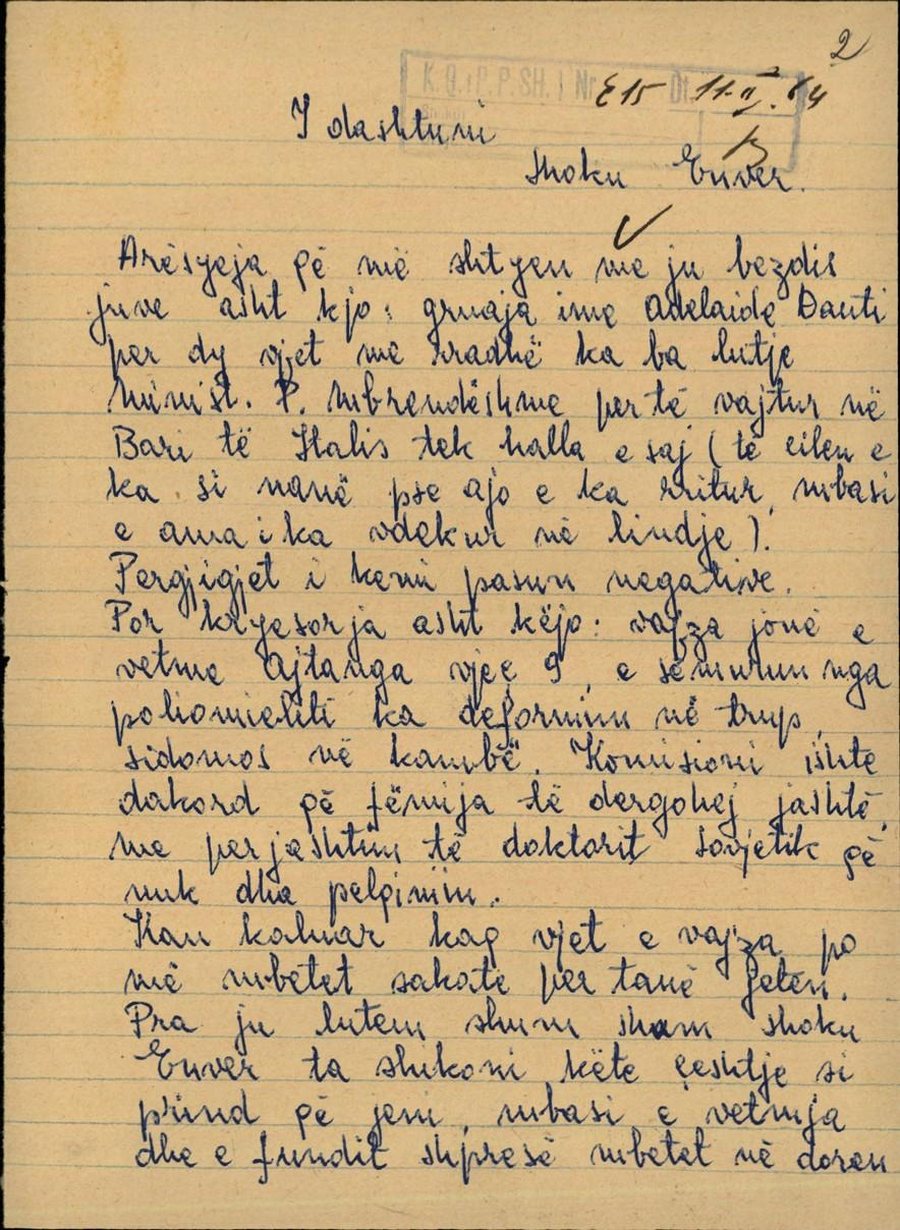
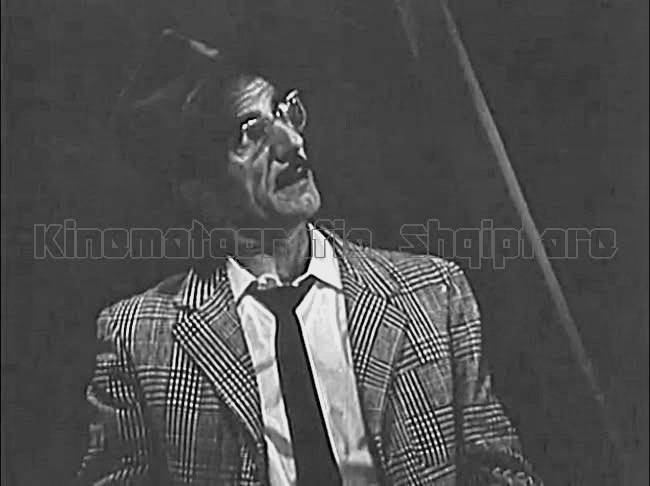
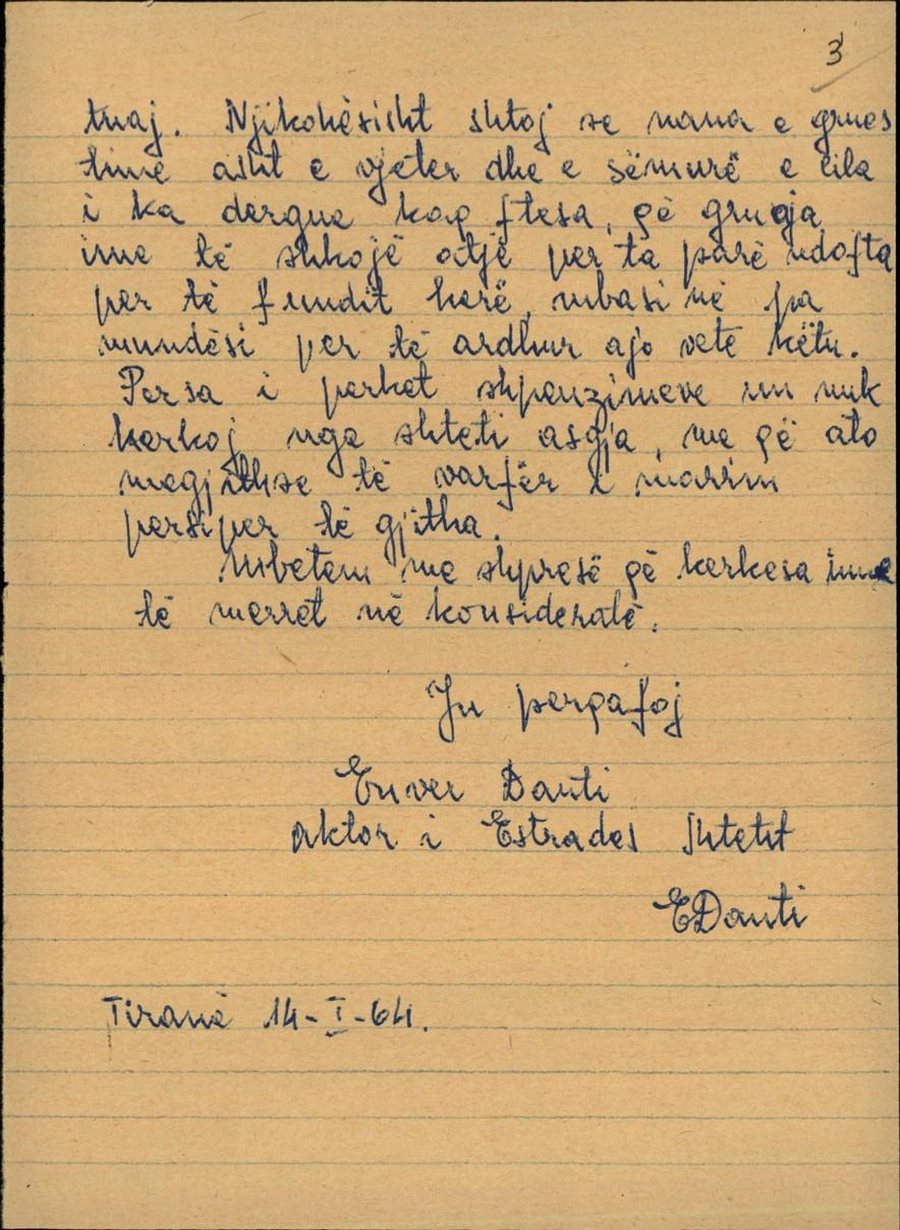
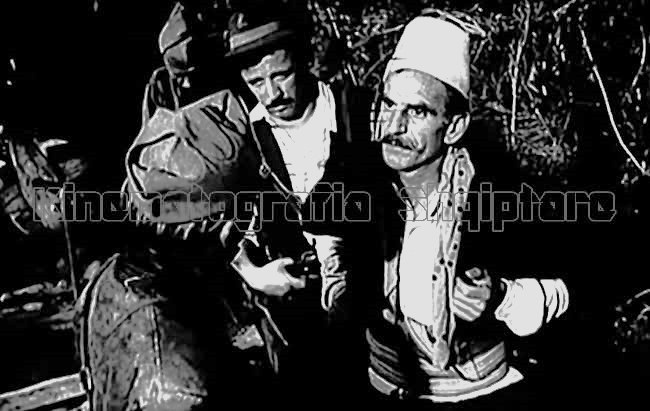
Memorie.al / In 1961, Enver Dauti, an actor of the State Estrada (variety theater), addressed a letter to Enver Hoxha, requesting permission for his wife, Adelaide Dauti, to travel outside Albania for health reasons. The request was directly related to the condition of their daughter, who was ill with polio and had severe physical deformities, especially in her legs, for which treatment options within the country were very limited. In the letter, Dauti clarifies that the destination was Bari, Italy, and that the trip would not entail any cost to the Albanian state, as the expenses would be covered by family members living there. He emphasizes that it was only a matter of medical treatment and not emigration or permanent residence abroad.
In the same request, the actor also mentions the serious health condition of his wife’s aunt, who had raised Adelaide like a mother and wished to see her for the last time. The request was formulated in a restrained manner and in careful language, typical of communication with the power structures of the time.
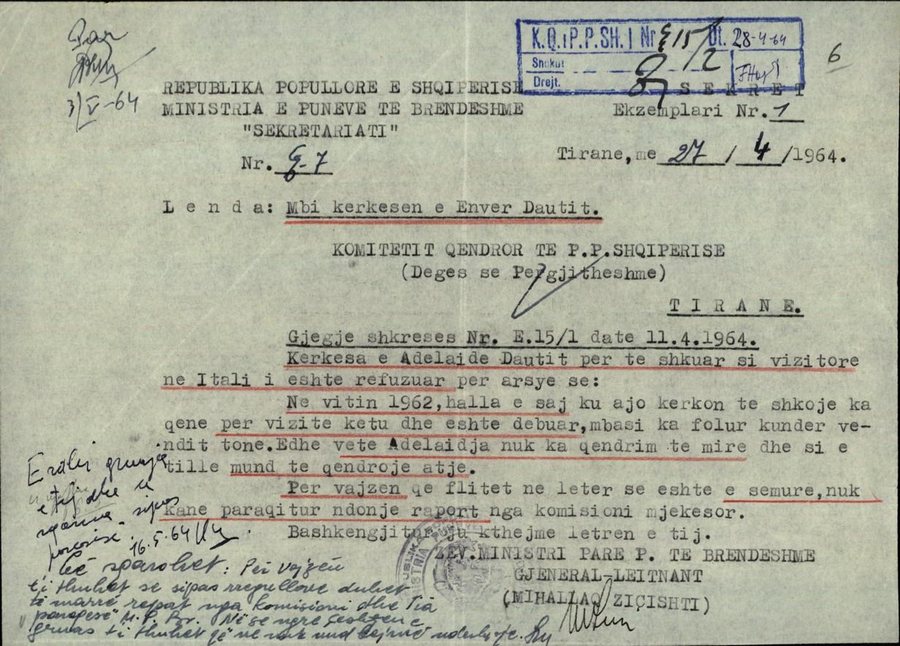
However, the letter produced no results. The matter was handled in silence for years, and only in 1964 was a final official response given. The Ministry of Internal Affairs, through a letter addressed to the Central Committee of the PLA, confirmed the rejection of the request.
The document, signed by Deputy Minister Mihallaq Ziçishti, did not base its decision on medical reasons. The refusal was linked to the family’s political past: Adelaide Dauti’s aunt had previously been expelled from Albania for “hostile attitude towards the country,” while Adelaide herself was considered a person with “not good political stance.” The document also mentions that no official report from a medical commission regarding the daughter’s illness had been submitted.
Thus, the request for medical treatment was refused not due to technical or financial impossibility, but for political and biographical reasons. The case of Enver Dauti shows that even matters directly related to a child’s health were processed through the ideological filter of the regime, where decision-making did not depend on humane need, but on the political assessment of the family. / Memorie.al