
By Dr. Gjovalin Gjeloshi*
Part One
Memorie.al / Exactly 45 years ago, in the autumn of 1976, the Agricultural School of Golem, Kavajë, was celebrating. Nearly all 600 of its students were involved in demonstration exercises titled; “Books high, rifles raised, barns full.” (This title came from an initiative taken by the students of class II-B of that year, of which I was also a part. These demonstration exercises, the reader should know, resembled the rallies held by school and university youth on the occasions of the May 1st or November 29th holidays, the latter known as Liberation Day). Preparations lasted several months. In those weeks leading up to the celebration, there was great seriousness. It was expected that a high leader of the Albanian state, Haxhi Lleshi, who had once been a student at this school, would visit it. Besides the demonstration exercises held at the school’s sports center, a considerable number of other activities followed on the day of the celebration.
Surprisingly, I remember that no significant speech was given that day, one that would recount the school’s history: when it first opened its doors, who had contributed, who was its first director, and other such details that are the first and everlasting words at an anniversary.
We were children, and even more so since we came to that school from other districts. No one had ever told us anything about the history of that school, except that it was simply considered “traditional,” “among the first secondary agricultural schools in Albania,” “a secondary school whose pedagogical-teaching staff is almost like that of a faculty,” etc.
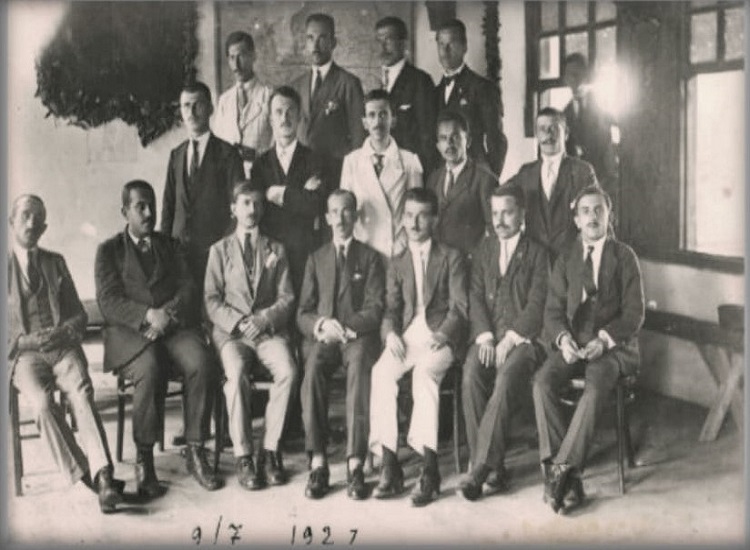
But these characterizations, especially the latter, we noticed ourselves, without anyone telling us. The teachers (in fact, the pedagogues) who taught us, most of whom came from European universities, were a model in teaching and in the accountability they demanded from us. Xhevdet Hydi and Reshat Kosturi (whom our generation did not catch up with; they came from Western universities, such as Austria and Italy), were followed by the teachers who taught us our specialty subjects: Suat Babani, Syrja Hako, Llazar Daka, Genc Jukni, etc., who had studied in Bulgaria, Italy, or Romania.
But there was also a younger generation of teacher-pedagogues, led by the mathematician Stavri Llambiri, a true scientist in his field, who later became for many years the undisputed director of the Institute of Pedagogical Studies in Tirana; the passionate chemistry teacher Mihal Barko, whose white lab coat had become full of holes from the chemical experiments he conducted in the laboratory; or the “intolerable” Ahmet Gallavata, who made us memorize conversational sentences in Russian, so dear to him, since he himself was originally from Golloborda, etc.
There are other names as well. Apologies to those I have mentioned, because besides Stavri Llambiri, the others have passed away…! We had experienced all of these ourselves and consolidated it even further until the end of the state matriculation exams, but years would pass before we learned about the true founders of this renowned school.
The Agricultural College: in 1925 or 1926?
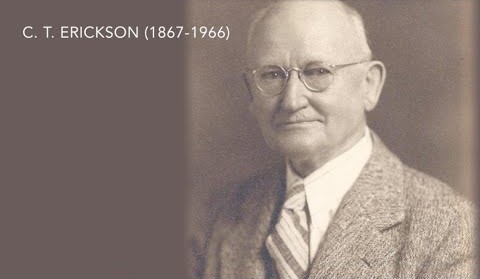
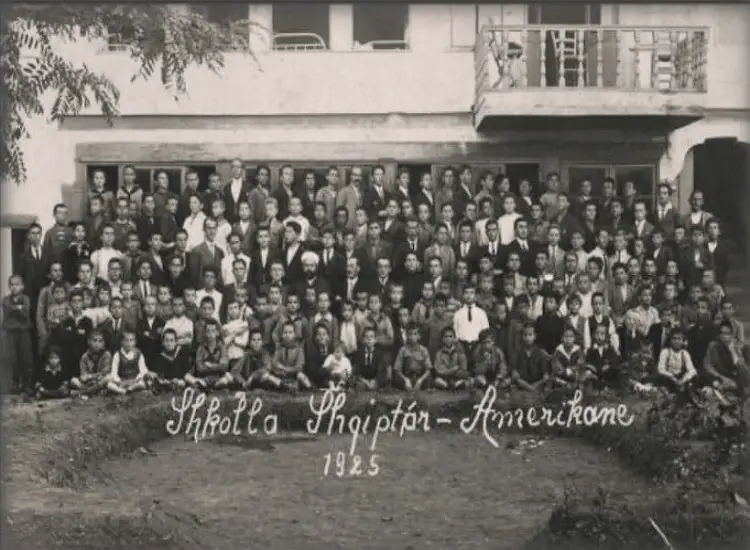
Regarding the year of the founding of the Albanian-American school (institute) of Kavajë, there are two different viewpoints. One dates it to 1925 and the other to September 1926. If we rely on the very notes-memoirs of its founder, Telford Erikson (prepared and published by the diplomat Mal Berisha), I believe that those who support the year of the school’s creation as 1925 have a slight confusion: with the support and insistence of the Prime Minister and later President of the country, Ahmet Zogu, the “great Albanian American” opened two schools.
While the opening of the agricultural college, where boys would study, was being discussed, Zogu urged Erikson to open the girls’ school first. And indeed, according to these notes, it appears that the girls’ school opened in 1925 with 46 girls from various regions. Furthermore, in Erikson’s notes published in 2012, it does not clearly state whether the Albanian-American Agricultural College was opened that year or a year later, in 1926. Given the President’s insistence on opening the girls’ school first, logic leads one to believe that the boys’ school opened a year later.
That the boys’ school was founded in 1926 is also supported by other authors such as Ilinden Spasse, Hektor Veshi, or Iljaz Goga, etc. Likewise, I am convinced of this year, also referring to the 50th anniversary celebration that our school in Golem held in the autumn of 1976. In fact, Erikson himself writes: “…I gave the King my word that I would make the girls’ school the first, even though I had brought everything for the boys’ school.”
“Red Star” or “Telford Erikson”
Nothing connected the Albanian-American school of Golem with the name “Red Star,” with which it was baptized after 1945. According to the data, it was initially officially called the “Albanian-American Institute,” because despite the initial unilateral investments for its opening (by the American side), it was a bilateral institution, with the participation of the Albanian state as well. Meanwhile, the “Board of Trustees,” which met in Boston, USA, called it the “Albanian-American School of Agriculture.”
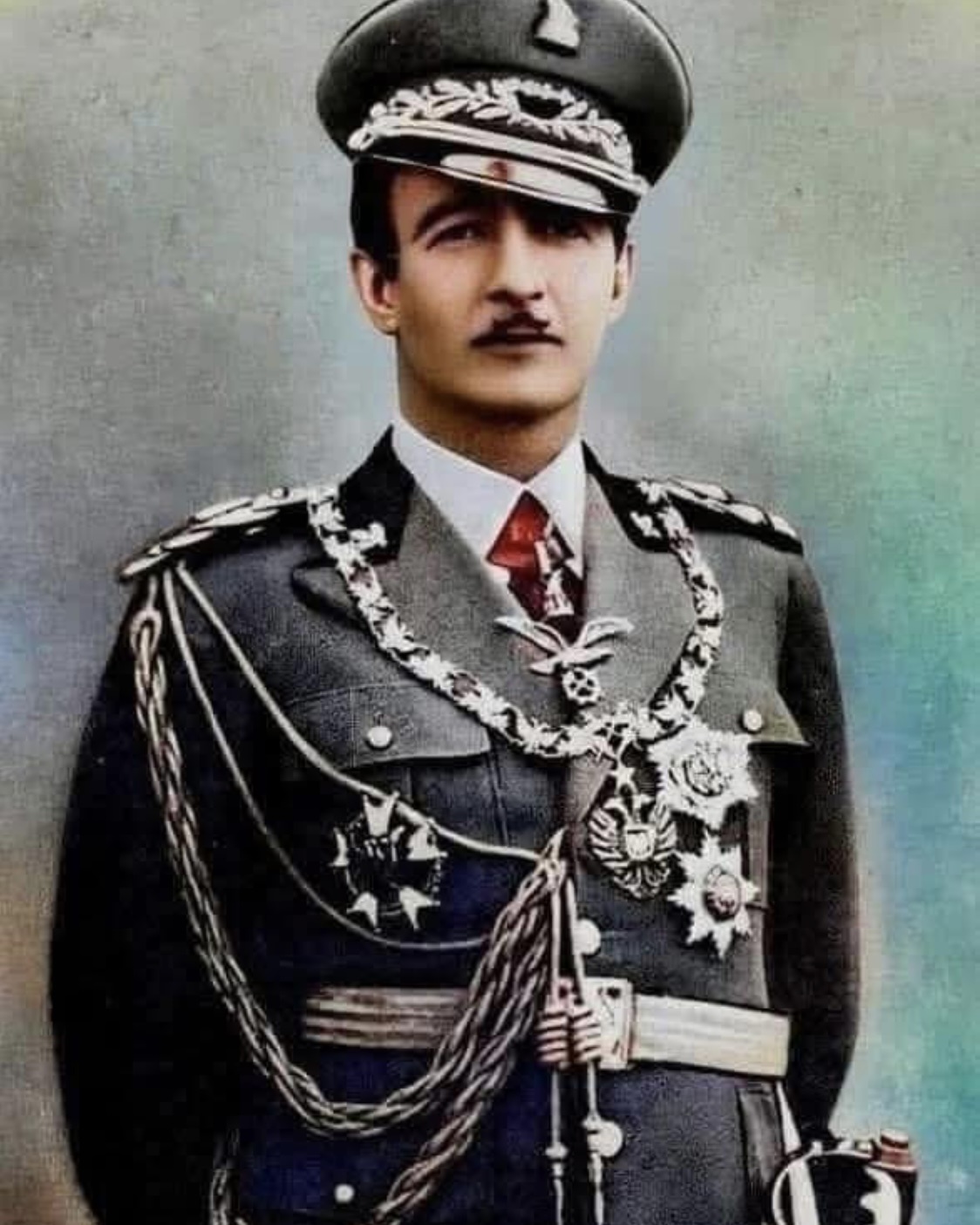
The truth is that this school, according to the memoirs of its first general director, had the direct care of Ahmet Zogu from the position of the three important state functions he held: Prime Minister, President, and also as Monarch.
He not only supported the idea of founding this school but also backed it with state-owned land and property, in the most suitable location for carrying out the students’ practical training. Later, other names were used for the school, such as the “Albanian-American Agricultural College” or, in short, the “American College,” etc.
(Under Italian occupation, with the departure of the Americans, this school also took the name “Arnaldo Mussolini”). I keep a diploma from this school, belonging to a relative of my family, which bears the date of issue as June 26, 1931. On this diploma, the name of this school is “The Albanian-American Educational and Agricultural Institute.” According to this diploma, “The theoretical and practical course of this Institute” has “a four-year program approved by the Royal Government.”
(According to various authors, the school at the time began as a three-year institution, but at different times it was also 4, 5, or 6 years long). Meanwhile, three years later, in 1934, in a document kept in the school’s archive, instead of “Diploma” we have a “Certificate of Release,” and the institution is called the “Agricultural School for Boys of the Albanian-American Institute.”
“Red Star,” a name commonly placed everywhere, was widely used during the communist system. The “five-pointed star,” besides weighing down on the national flag, was also multiplied as the name of villages, enterprises, and various institutions. But one thing the reader should know: I do not know why, but our school was never known by this name. (And if this name had not been written on a glass sign, it would never have come to our minds).
At Olympiads, competitions, theatrical performances, participation in physical labor, etc., it was officially called the “Golem Secondary Agricultural School” or, more often, the “Golem School.” “Golemites” – a name that united all those who had graduated from this school and every single one of them felt proud to have sat in those desks. And the name that suited it best was: “The Golem Agricultural Technical School.”
Today, the Golem school bears the name it truly deserved from its very founding: “Telford Erickson.” According to the history now known to us, two men built, strengthened, and cared for that school, from the beginning until 1939: Erikson and Ahmet Zogu. To be closer to reality and in respect of the truth, the school could have had a combined name: “Telford Erikson – Ahmet Zogu.”
But this is not a request or a suggestion; it is simply an opinion to express each person’s contribution. Nevertheless, names for this school do not matter greatly: it will still continue to be known as the “Golem School.”
A True College…
In Albania, we have usually not used the word “college” to name civil educational institutions. In reality, this word has existed among us as well, but more often when we said “college,” we primarily meant religious schools. Such have been, for instance, the “Franciscan College” of Shkodra, the “College of Troshan” in Lezhë, etc., which started from the lower grades up to the higher ones.
Around the world, there are also civil schools that are called colleges. Colleges, at least the religious ones in our country, are remembered for the strict discipline they had in their functioning. This applied both to the teachers and the learners – let me call them students.
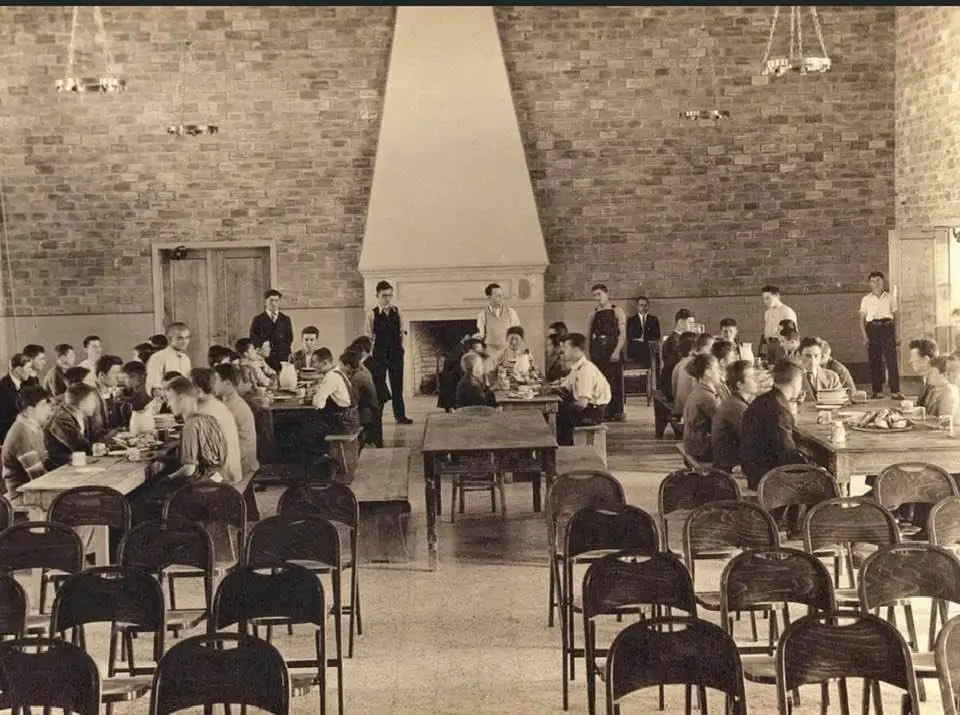
Reading these days the handwritten memoirs of the late priest from Tuzi, Father Kolë Berishaj, about his life as a student at the Franciscan College of Shkodra during the 1930s, I was reminded of my own life as a student at the school and dormitory of Golem. Among other things, I singled out two things: the morning wake-up call at 5:30 AM, whether sunny or rainy, summer or winter, and secondly, the organized morning study session before classes began.
Then the similarity continued throughout the 24 hours of the day and night. (A few months ago, I was recalling to Luan Xhevizi, my classmate, who is from Golem and today a teacher at this school, the envy we boarders had for the “locals,” who were not subject to the dormitory rules. – But that was for back then, Luan, – I tell him).
It is natural that not all “Golemites” went on to attend university faculties after the technical school, but of one thing I am sure: their technical school is the equivalent of a university faculty for many others. If I have become someone in life (I don’t know to what extent), the credit, outside of my family, goes to the Golem “college.”
The Dormitory on the Foundations of the Balkan University
Where today, and for decades now, the dormitory of the Golem school stands, the foundations had been laid for a building of an ambitious enterprise: the construction of a Balkan university. At almost the same time as Erikson, another American, named Irving, began work in 1926 on the construction of this building.
Since he failed to realize what he had started, the building was taken over by Erikson, through his association. Upon taking over this building, according to the published notes, Erikson, seeing the progress of the agricultural school, began to think of continuing his compatriot’s project himself. He envisioned it as a great university that would offer scholarships to young people from all the countries of the region…! Anyway, I do not want to say more about this idea that was circulating at that time in the minds of the Americans who wished us well, than I want to talk about the special feeling we Golem students had for this building: we slept in a dormitory that was initially intended to become a university. This is true; we felt as proud of the dormitory as we did of the school.
Time Passes, Agronomy Remains
I started with the university-dormitory to move on to the directions and departments the school had. From its creation, the Golem school had two departments: agricultural for boys and home economics for girls. Here, perhaps, lies the “confusion” made regarding the year of the school’s founding. As a school for girls, it began in 1925 and as an agricultural school for boys, in September 1926.
Many winds have blown (as the people say to indicate a long time that has passed) since the Golem school was established. Over the years, there may have been two, three, or more departments. Everything may have changed, but one thing has remained untouched: the agricultural direction, the agronomy department. In its 90 years of life, it has never ceased to prepare skilled technicians for agricultural technology.
Just as in the programs of its founders – “to have specialists for a complex agricultural farm,” “for preparing agricultural administrators and businessmen,” etc. – the Golem agricultural school did not change its direction: hundreds of mid-level agronomists who came out of the desks of this school either shone in the production fields with their technical skills or were directed to the Agricultural University, where they stood out from other students primarily for the theoretical and practical knowledge they had acquired at this school.
Dozens of scientists in the field of agriculture who made a name for themselves both at home and abroad were students of this technical school: Lufti Bajrami, Sali Kubati, Dhimitër Muço, Ilia Pali, Sotir Pasko, Shkëlqim Agolli, Polo Çakalli, Palokë Kolnikaj, Ibrahim Kumria, etc., and hundreds of others took places of honor in local agriculture and economy. /Memorie.al