From Ergys Alushi
Part Two
Memorie.al / “The history of a city is not two or three dates. The history of a city is every day, every hour and minute that it lives; it is its people, because without people there is neither city nor history!” With these words concludes an article by Gëzim Zile, “In the Footsteps of Vlorë Photography,” published 25 years ago. It is one of the few writings dedicated to the history of Vlorë’s photography. And who better than photographers to capture the history of a city, the history of its people? The truth is that Vlorë has an early tradition in the profession of photography. And it couldn’t be otherwise with a city that descends from hills and mountains and freshens itself on the seashore. Nature had bestowed upon it all beauties, so it is no coincidence that the people of Vlorë are somewhat photographers, painters, and enthusiasts with pretensions to the beautiful.
A photograph taken in Vlorë takes on other values; it is full of colors. Not by chance was the first cinema in Albania opened in Vlorë. And also what has been called the “Vlorë School of painting.”
Continued from the previous issue
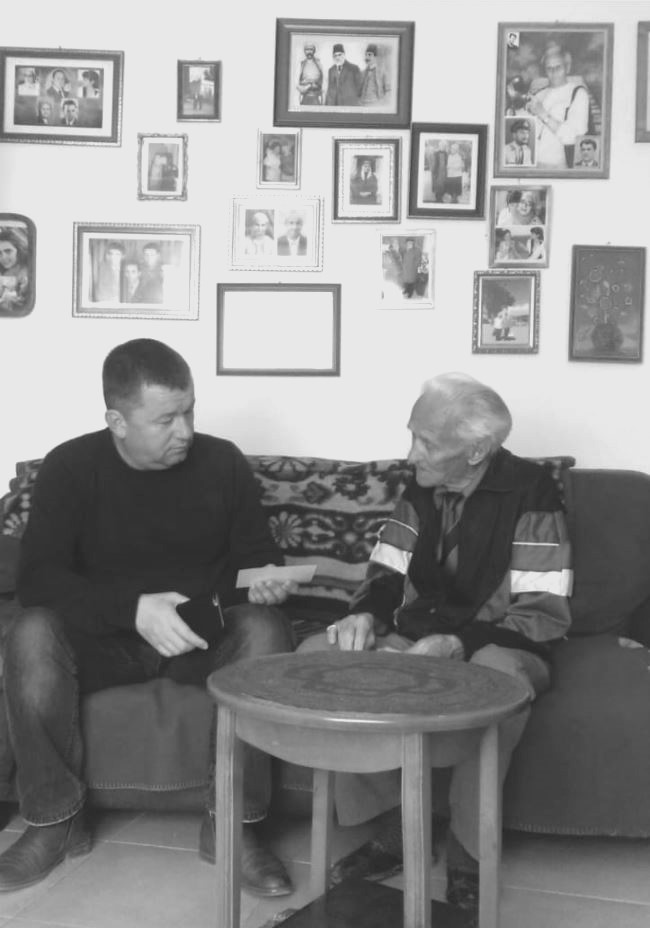
Until 1978, when Skënder Beqiri together with Halim Halimi was ordered to establish the Çam Ensemble, very little was spoken in Vlorë about Chameria. This had been the case since the time of the punishment of Teme Sejko and his group. Regarding this, he recalls: “I remember once I met Dasho Matodashi and told him that I had written a piece about Chameria. ‘I’ve got it ready, I’ve written it,’ I said, ‘titled: “Let Us Unite Our Hearts and Arms.”’ Dasho took it, looked at it, turned it over in his hands, and told me:
‘Skënder, I cannot publish it.’
‘Why?’ I asked him.
‘If the article about Chameria comes out, the Greek ambassador will come here.’
‘So what will you do?’ I asked.
‘I’ll keep it for a while; maybe I’ll publish it later!’
After a week, once Dasho had spoken with those at the Party Committee, they agreed that it should be published, because in fact the article contained nothing that could be called provocative to the Greeks. One day, Dasho called me on the phone at the exhibition ‘Vlora Today,’ where I worked as a manager, and says to me: ‘Skënder, come give me a coffee.’ I understood that he had gotten approval to publish the article,” recalls Skënder Beqiri, the veteran photographer of Vlorë.
Enver Hoxha’s order for the establishment of the Çam Ensemble
Piro Cakrani, a local official covering art and culture in Vlorë, called them to his office and instructed them to begin work together with Halim Halimi on establishing the Çam artistic ensemble. It would happen for the first time. The Ensemble had to prepare to compete in the National Folk Festival of Gjirokastër, in 1978. Skënder Beqiri expressed his fear to the official about taking on such an initiative.
First, because he had never dealt with folklore, and second, out of fear that any mistake could risk imprisonment. Skënder recalls that for a single word, his brother, Fabit Beqiri, who was a director with a higher education, had also been condemned. “He made a mistake with one word in the libretto of a performance at the House of Culture, and the party bureau punished him, sending him to work for three months as a laborer at the Smokthinë hydroelectric plant,” Skënder recalled.
But while he refused the task ordered by Pirro Cakrani, it did not go the same way with the Party Secretary of the District, Niqi Shtylla. Regarding this, Skënder recalls:
“They called me and told me the Secretary was asking for me for a meeting.
‘Do you know why I called you?’ she asked me.
‘No,’ I said.
‘What Piro told you, put into practice immediately.’
‘I can’t do it,’ I told her.
‘You will do it, whether you like it or not,’ the Secretary cut me short.
I was afraid of making a mistake and ending up in prison. After several objections, the Secretary asked me to close the door and sit down.
‘I have no desire for Cham folklore, but it is an order from above,’ she told me. I objected again, because in truth I didn’t know that field, and I was genuinely afraid of making a mistake. ‘Well, then listen here,’ Niqi Shtylla told me, ‘if you don’t do this job, not only will you be fired, but you will have other consequences as well.
This is not my word, but don’t tell anyone. It is personally the word of Enver Hoxha,’” Skënder recalled of the meeting with the Secretary of the Executive Committee, regarding the order given by Enver Hoxha himself.
Why was the creation of the Çam ensemble sought?
But why did Enver Hoxha demand the establishment of the Çam ensemble? According to Skënder Beqiri, the cause was Bilal Xhaferri, a writer of Cham origins, who after escaping had written in an Albanian-language newspaper in America, criticizing the Albanian government and the Albanian historians of the time for not giving Chameria the place it deserved in the history of the Albanian nation.
Enver Hoxha had read the newspaper and wanted to refute what had been written. The communist leader’s order had set in motion the highest local officials of Vlorë. America and the whole world had to be shown that the Cham issue and the Cham community in Albania were well-treated.
The Reaction of the Greek Government
The Ensemble was created and won first prize at the Folklore Festival held with folklore groups from Vlorë. It won with: “The Song of Tahir Çapari”
“Delvina with Chameria,
once upon a time they stood frozen on their feet,
tribunal is held over Ioannina,
Tahir Çapari with comrades,
became friends with Gjoleka,
Kurvelesh conquered Ioannina,
three battalions of soldiers froze him”!
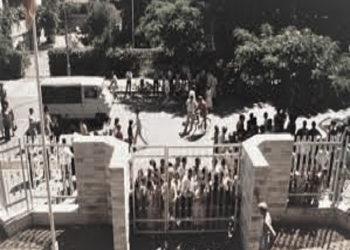
The song caused a great stir, as it was no small thing to win First Prize in Vlorë, among all the folklore of the Vlorë regions. All the more so, since for the first time a Çam ensemble sang and danced in “Flag Square.” Regarding this event, Skënder Beqiri recalled:
“They told us that we would go to represent Vlorë at the National Festival in Gjirokastër. We began preparations. We found the costumes in Cham families of Vlorë who had preserved them. One had a women’s dress, another men’s outfit. The shoes (vivello) — as they were made in Ioannina — were needed. We ordered the shoes too, six pairs of shoes for women.
But after two or three days, we were informed that we would not go to Gjirokastër, because there were no minutes planned for us in the program. The disappointment was great for everyone. The entire Party Committee in Vlorë was engaged in getting the Çam Ensemble to go and be represented as best as possible in Gjirokastër. But there was nothing we could do.
It was said that the Greeks had filmed the concert that the Çam Ensemble gave in ‘Flag Square’ before they left for Gjirokastër. After that, they had protested to our Ministry of Foreign Affairs: ‘what is this Chameria, what is this Çam Ensemble?! Who is doing these things; they are Albanian provocations!’ The Greek pressure removed us from Gjirokastër!”
Today’s Photographers
The tradition of Vlorë photography continues with new names, but also with descendants of the old photographers. Many photographic studios operate in the city, from the simplest ones to those with the latest technology for shooting and printing. Among the main and oldest photographic studios, we mention: “Axhushi,” “Lution,” “Kotro,” “Bleta,” etc.
In “Flag Square,” where for decades dozens of photographers have stood and taken photos for generations of Vlorë citizens, there are still several photographers who continue to stand there waiting for customers — who, it must be admitted, are increasingly rare, as a consequence of technological development. Ahmet Axhushi is one of the old photographers of the new generation of photographers, who were formed in the 1980s, following the path of the older photographers.
He began the profession in the early 1980s, together with several other photographers, being one of the 17 photographers of Vlorë in those years. With the change of the system, he continued his work as a photographer, having his own studio and becoming one of the most well-known and beloved photographers in Vlorë. “Bleta” Studio is one of the most famous in the city of Vlorë, with long and many years of experience.
Its photographers are encountered more and more often at many public and family events in the city of Vlorë. A few days ago, this studio also held its first photographic exhibition, with photos of Vlorë’s beauties — now creating a photographic exhibition with landscapes from Vlorë.
The Bleta brothers, for these interesting works, had to work for many years and rely heavily on the tradition of Vlorë photography. These photos with landscapes from Vlorë will now also be postcards for those who want to visit Vlorë, while Julian Bleta told us that: “the entire purpose of this exhibition is the promotion of Vlorë.” / Memorie.al