
By Bashkim Trenova
Part Five
NAZIBOLSHEVISM – LITERATURE AND THE ARTS
PREFACE
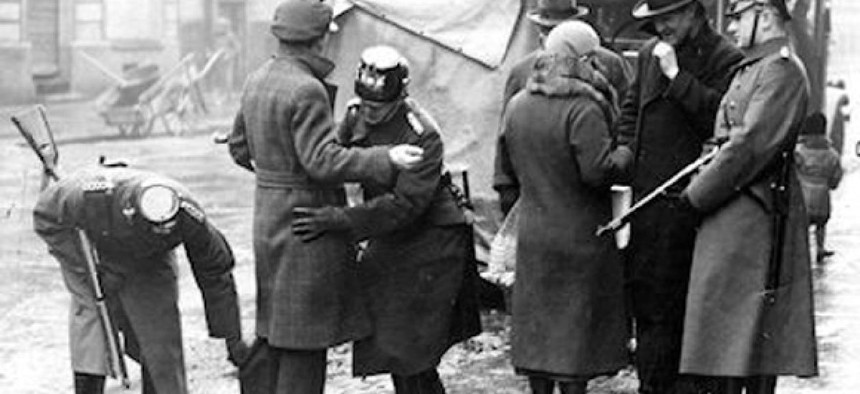
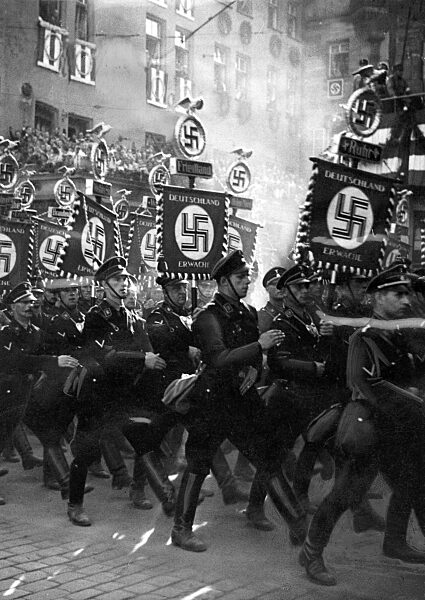
Memorie.al / Historians, political philosophers, scholars, and intellectuals of various schools and leanings have dedicated thousands upon thousands of pages, entire volumes, studies, and articles to the comparison between Nazism and Communism. Generally, their publications and studies focus on the police control of society by these dictatorships, the role of the dictatorial state hierarchy, and the head of state as the stifler of free thought. They examine the omnipresent place of official propaganda in society, mass massacres, the network of concentration camps, and the activities of the police – the NKVD (later the KGB) in the USSR and the Gestapo in the Third Reich. In his book “Le Passé d’une illusion” (The Passing of an Illusion), François Furet notes that Nazism and Communism share the same opposition to liberal democracy and what they call the “capitalist bourgeoisie.” Both ideologies claim to be socialist and utilize the imagery of socialism. Communist countries called themselves “socialist,” while “Nazism” is an abbreviation for National Socialism.
Continued from the previous issue
Beyond Paul Heinrich Kuntze’s map and as an echo of it, German literature of the time also dealt tendentiously with the fate of Germans outside state borders. It simultaneously called for their unification with Germany or aimed to instrumentalize them, using them as “cannon fodder” in Hitler’s adventures for world domination. These populations served as a pretext to justify aggression against sovereign countries, cloaking such acts in a false veil of national liberation. Georg Löbsack, for example, published the autobiographical novel ‘Einsam kämpft das Wolgaland’ (The Volga Land Fights Alone) in 1936.
He writes as a defender of the German minority of 400,000 people concentrated in the southern Pokrovsk regions since the time of Catherine II (1763). The novel depicts the lives of the starving Volga Germans persecuted by Stalin’s Bolshevik dictatorship. On page 369 of the novel, we read: “Where the Bolsheviks have stepped, an entire continent has tumbled into the depths of the universe. They claimed they would make this continent a paradise and turned it into a hell of misery… The peoples of Russia call out in fear, and from the Volga colony, reports of population displacement arrive ever more frequently.” In these circumstances, according to the author, the Volga Germans wait impatiently for the day when Hitler will reach their region and liberate them.
Friedrich Jaksch, an author of novels, short stories, poems, and plays, wrote about another German minority – the Sudeten Germans in Czechia. He published: Das Christkindl-Spiel des Böhmerwaldes (The Christmas Play of the Bohemian Forest), 1929; Sonne über Böhmen (Sun over Bohemia), 1934; Alle Wasser Böhmens fließen nach Deutschland (All of Bohemia’s Waters Flow toward Germany), 1937; and Söhne am anderen Ufer (Sons on the Other Shore), 1940. The last publication enjoyed particular success. It describes the disputes between the Czechs and the German minority of Bohemia from a German nationalist perspective. In 1943, the book was published with a circulation of 260,000 copies.
On page 281, the author puts these words into the mouth of the main character, Hans Kargut: “It was precisely then that Adolf Hitler took power in Germany. A border German, therefore, a front-line German, a battle German. Call it what you will. A German who knows the suffering of his people. When old Hindenburg gave power to Hitler, the bells in Potsdam were not the only ones ringing in his ears. He heard a cry, a cry coming from the Saar, from Bohemia, from Poland, and from this unfortunate Austria, his homeland.” Thus, for the author, expressing himself through the novel’s protagonist, Hitler is God’s chosen one to unite Germans wherever they are and to end their suffering within a great Germanic empire.
Erhard Wittek is another writer who dedicated his works to the German minority in neighboring countries. In Germany, his books reached a circulation of 790,000 copies during the 1930s. He published novels inspired by his experiences during World War I and by National Socialist ideology. Among them is Ein Becher Wasser, und andere Begebenheiten aus Polen (A Cup of Water and Other Incidents from Poland), published in 1940. Wittek writes about massacres committed by Poles against Germans in Poland, “forgetting” the massacres committed on September 3, 1939, by Hitler’s troops. To be as convincing, provocative, and realistic as possible, the book is structured in the form of testimonies.
On page 18, for instance, the author places this discourse in the mouth of Wanda Schopsa: “I was alone at home with my husband when the Polish soldiers approached us. I fled the house to hide in the fields. Suddenly, the soldiers opened fire. I saw my husband leave the house and step into the yard. I heard a gunshot and saw my husband lying on the ground. When I approached him, he was already lifeless…! On December 7, 1939, in the Rzew forest, the lifeless body of our racial comrade, Ferdinand Draber, 34, was discovered…! Draber had been violently beaten and nailed by his feet to a pine tree.” Similar publications, using testimonies as a mode of communication, described the suppression of the German minority by Polish authorities in regions like Danzig (today’s Gdansk), etc. Nazi literature attempted, in this way, to justify Hitler’s aggression against Poland.
National Socialist authors, or those inspired by the movement, also wrote about the German minority in Hungary and its aspirations to join the Reich in the battles for a “New European Order.” There was no shortage of publications regarding other non-German minorities in countries such as France or Great Britain. Reinhold Ziekel, for example, published a 675-page novel in 1940 titled Der Strom (The Current). Set in Ireland, the novel handles the theme of German technological superiority over the British and more. The author puts forward the idea that oppressed minorities – in this case, the Irish – has an interest in cooperating with the Reich against the English. This is the same idea proposed for the Breton and Corsican independence movements in France. The gaze of National Socialist authors even extended beyond our continent to regions where the colonial and hegemonic interests of the Reich reached.
During these years, what is known as the colonial literature of the Reich was also in full “bloom.” The writer Senta Dinglreiter – author of many texts belonging to German colonial literature and known as a staunch racist and ultra-nationalist – published the novel Wann kommen die Deutschen endlich wieder? (When Will the Germans Finally Return?) in Leipzig. According to the author, the inhabitants of Togo – a former German colony divided between France and England after WWI – are nostalgic for Germany’s civilizing role in that African space and are eagerly awaiting its return.
In this novel, presented as autobiographical, Senta Dinglreiter sets the events in the Togolese capital, Lome. On page 56, she writes: “Suddenly, I understood the meaning of the wild waves, and it caused me a painful shock: lost German land! But it wasn’t just the roar of the waves. The flaming colors of the blue-white-red flag rose atop what had once been the seat of the German government made this loss even more painful, like a red-hot iron pressed into my skin. I arrived in Lome in a foul mood.
On the front of the former ‘Kaiserhof’ hotel, a sign read ‘Hotel de France.’ I spent the night there…! At the German counter, Pierre was waiting for me – the Black man who would serve as my guide in Lome. He took me to the cemetery where the remains of former local German governors lie, those who had paid with their lives for thirty years of civilizing duty. An elderly man approached me with a tired step. Upon learning I was German; he took my hand… and told me that for fourteen years he had served in the German police: ‘To be near my former master, I became a gravedigger.’ Then a sigh escaped him: ‘When will the Germans finally come?'”
Another writer, Otto Pentzel, author of Der Strom Kulola (The Kulola Stream) and Heimat Ostafrika (Homeland East Africa), deals with the clash of interests between the powers of the time in Portuguese and English African colonies. He composes hymns to Germanic bravery and Führertum (Leadership). In his books, this author seeks to demonstrate the civilizing mission of colonizers toward the natives, who are described as primitive, drunken, and quarrelsome individuals – natural-born slaves.
Another author, Joachim Barckhausen, published the voluminous novel Ohm Krüger: Roman eines Kämpfers (Uncle Krüger: Novel of a Fighter) in 1941. It aims to reflect and condemn the inhumane practices of British colonialism during the Second Boer War (1899-1902), focusing on the genocide against the local Boers and the barbaric techniques used for this purpose in concentration camps, mass extermination, the burning of farms, the killing of livestock, and the destruction of crops and food reserves.
In fact, these are the same inhumane practices that the Nazis exercised during WWII against the European “Boers” – the peoples of the countries they occupied. This reality did not stop Joachim Barckhausen from writing and publishing the aforementioned novel. Indeed, one cannot seek morality in an immoral literature that is a co-author and accomplice in crime, as is the case with National Socialist authors. Barckhausen is also known for other books such as the one on Genghis Khan titled Das gelbe Weltreich: Lebensgeschichte einer Macht (The Yellow World Empire: History of a Power), Männer und Mächte am Bosporus: Abdul Hamid und seine Zeit (Men and Powers on the Bosphorus: Abdul Hamid and His Era), and Panik in Arranca (Panic in Arranca). However, his biographical book Ohm Krüger is his most famous. It has been translated several times and adapted into a film used by the Hitlerites as anti-British propaganda.
Part of the German colonial literature of the time is also Verlorene Heimat (Lost Homeland) by Wilhelm Mattenklodt. The author describes the defeat of Emperor Wilhelm II’s troops in Southwest Africa (modern-day Namibia), a former German colony. Again, the targets are the British, who supported South Africa against the German troops. Verlorene Heimat was written as a response to the British White Paper of 1918, which denounced the genocide and suppression of the Herero and Nama people between 1903-1909 by German General Adrian Dietrich Lothar von Trotha.
Colonial literature serves as a vehicle for Hitler’s expansionism and the extension of Nazi Germany into spaces justified as “vital” (Lebensraum), whether in Europe or Africa. Also included in this column is the writer Hans Emil Wilhelm Grimm, known for his support of Pan-Germanist sentiments and Hitler’s policies. His 1926 novel Volk ohne Raum (A People without Space), published before the Nazis took power, resonated deeply with the German public and political elites of the 1930s. As the title suggests, the author emphasizes Germany’s need for the space it lacks, appearing as an inspiring pioneer for the concept of Lebensraum as a necessity for the German people’s existence. By 1943, the book had sold 500,000 copies.
Generally, it can be said that German National Socialist literature is distinguished not by its ethical or aesthetic values, but by its sheer political zeal. According to Hans Wilhelm Hagen, a known art historian and culture official in the Nazi Party, the role of literature is not “to defend some kind of aesthetics or philosophical thesis, but to spread the thought, spirit, and morality that led to the sacrifice of the youth of Langemarck, the regiments of Verdun, and the victims of the November 1923 coup.”
Like schools, literature must serve the formation of a warrior nation and the absolute mobilization of society to implement Hitler’s imperialist and expansionist appetites. However, the general consensus is that the Hitlerite or pro-Hitler literature of the Third Reich, characterized by its propagandistic nature – turning art into propaganda and composing hymns to the “grandeur” of war, the peasantry, and the “Aryan” Volk – is of exemplary mediocrity and presents no historical-aesthetic interest. The study of National Socialist art serves only to demonstrate how literature and art should not be made – showing a primitive, grotesque, and destructive “model” that must not be followed.
Officially, Soviet literature proclaimed itself the heir to the critique of 1840-1860 Russian democrats and the renowned writers of 19th-century Tsarist Russia. The Bolsheviks also accepted ancient Greco-Roman art and literature, Renaissance art, and the anti-obscurantist, anti-clerical intellectual thought of the late 17th and 18th centuries. This entire heritage, which has nothing in common with the literature of Soviet authors, was treated in service of the Bolshevik rulers’ domestic and foreign goals.
Russian literature before the October Revolution is characterized by Great Russian nationalism and chauvinism. Russian authors of this period wrote about “Holy Russia,” “Great Russia,” and the “Russian Soul.” Nikolai Gogol, Leo Tolstoy, and Fyodor Dostoevsky, among others, dedicate significant space in their works to the “Russian Soul.” Dostoevsky’s ideas on the “Russian Soul” are closely linked to Eastern Orthodox Christianity, Christ, and his ideals: suffering for others, dying for others, and simplicity. The same ideas, stripped of their old religious cloak and dressed in a new revolutionary one, are found in the works of Socialist Realism./Memorie.al