By Agim Xh. Dëshnica
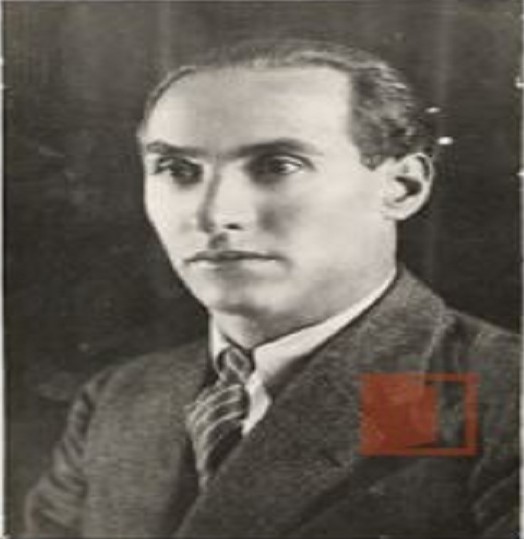
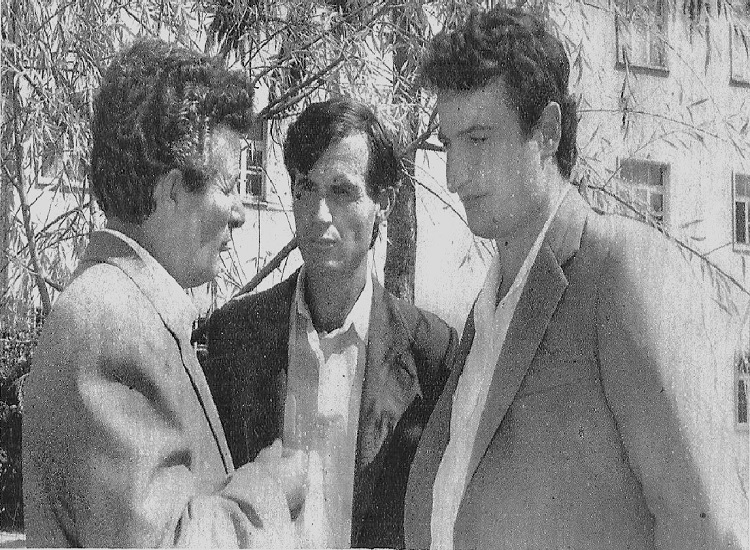
Memorie.al / He was one of those arrested in November 1944, when the communists began their campaign of killings and imprisonment of their enemies. Although he escaped punishment at that time, the beloved and well-prepared literature teacher was dismissed from his job. The scholar from Kosovo was deliberately kept in the shadows for all the years of his life, but not at all forgotten. The State Security filled his dossier, and when he was nearly 80 years old, they took him from his home on “Fortuzi” Street and interned him in Çerma, Lushnjë, where, due to the shock, he lived no more than four months. When you look at the photograph with the noble face and radiant eyes of Prof. Jonuz Blakçori – companion of Bajram Curri in Europe – you recognise the appearance of the wise scholar at St. Mary’s College in Calabria and the laureate of the University of Rome.
Jonuz Blakçori was born in the village of Brojë in Lower Drenica on May 15, 1895. He received his first lessons in the city of Peja, continued gymnasium in Skopje, and then attended the “Normal” school in Elbasan. After that, he moved to the Arbëresh school of St. Mary in Calabria, together with Avni Rustemi.
At a young age, while living in Kosovo, he took part in the national movement, distributing tracts and newspapers in support of the Albanian uprisings in Kosovo. Several times he had to interrupt his studies to take part in actions to defend the borders of Albania, which had been unjustly mutilated in 1913 by the Conference of Ambassadors in London.
In support of the Congress of Lushnjë and its government, he took part in the Battle of Koplik in 1920, against Yugoslav aggression. In Koplik, Blakçori and other patriots gathered and sent volunteers also to the Battle of Vlorë. In 1923, Jonuz Blakçori completed his studies in pedagogy, language and literature at the University of Rome.
Equipped with a broad culture, master of Italian, French, Turkish and Serbo-Croatian, he returned to Albania. That same year, he was appointed education inspector in Berat. Afterwards, he was sent as a teacher to the villages of Kurvelesh and Tepelenë, tasked with opening new schools – welcomed by parents, leaving pleasant memories among the students of those regions.
Alongside the preparation of textbooks and teaching, he also engaged in studying the local dialect and collecting the rich Lab folklore: songs, proverbs, fairy tales, riddles, etc. In the years 1923–1924, he published some of these studies in the periodical *Revista Pedagogjike* (Pedagogical Review) in Tirana.
Elected to the leadership of the society “Bashkimi” (The Union), in 1924 he was in Tirana. He worked as editor of the newspaper *Bashkimi* as well as at the Ministry of Education of Fan Noli’s government, as first secretary. After the fall of that government, he was interned in Gramsh.
Following the amnesty declared by King Zog, he returned to Tirana. Thanks to his abilities and culture, respected by distinguished figures of education and culture, among them Hil Mosi and Mirash Ivanaj, in 1928 he worked as editor of the magazine *Mësuesi* (The Teacher) and the newspaper *Telegraf*.
He was then appointed director of the National Library and teacher at the Tirana Gymnasium. During these years he would publish a detailed study on Machiavelli and various Albanological writings. He greeted the fascist invasion of April 7, 1939 with contempt. Taking advantage, like many others, of a certain leniency shown by the occupiers toward the creation of an Albanian government (much talked about by communist historians), he continued his work as a professor of Albanian language and literature at the Shkolla e Punës (Labor School).
On June 23, 1941, according to an official document, the Minister of Education Ernest Koliqi commissioned a mission to study the state of primary and secondary education in Kosovo, as well as the organisation of summer courses in the Albanian language for adults and children. At that time, he gave his help to Albanian schools in Kosovo and wrote optimistic articles, especially for the youth of Kosovo, against despair. He maintained a cold attitude toward those who had become entangled in an unclear and hopeless policy. He was convinced that the war would be won by the Allies with the USA at the helm.
The post-war period – more despairing than the war
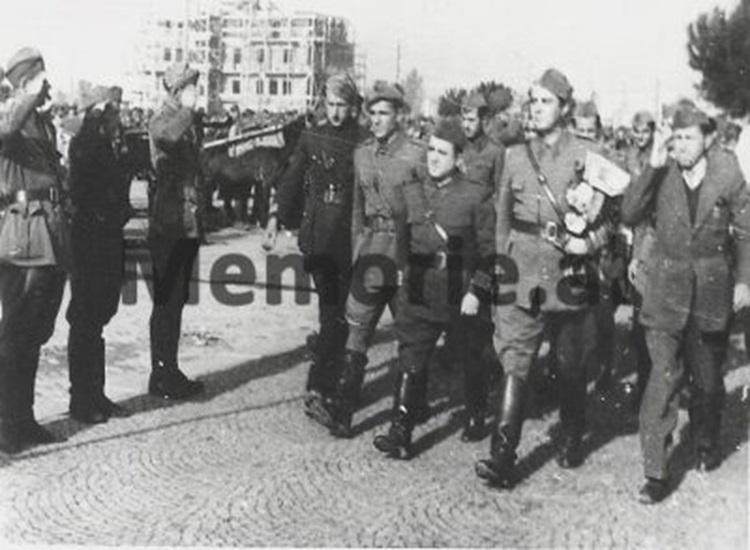
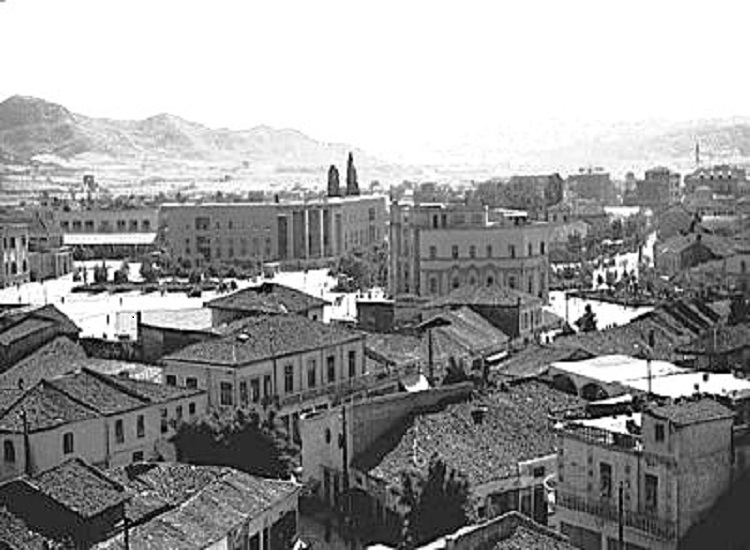
From time to time, the professor recalled with some weariness the drama of his life toward the end of the war, when the partisan brigades had approached the northern part of Tirana and often entered “Fortuzi Street” as well. One evening, just after dusk, five armed partisans appeared in the yard. They asked for the professor and escorted him to a gathering place for people, somewhere in Tirana.
He had taken with him, just in case, some food and a sweater. When he entered the hall, he saw many people sitting on benches. He recognised many of them: they were teachers, writers, lawyers, merchants, etc. He took a seat at the back. Among the worried people, he noticed the well-known publicist Nebil Çika. From time to time a military man appeared and called out a name.
The person called would go out and never return. The hall would sometimes fill with bewildered people, and sometimes seem to empty. Several bags, with clothes and food, would remain there as if forgotten. Suddenly a partisan approached Blakçori, looked at him carefully and asked:
– “You too, Professor, here!? Do you recognise me?”
– “No!” – he replied.
– “I am your student, ‘Çakmaku’!” – the other added and took off his cap.
– “Is that so! Now I remember you. I’m glad!”
– “You will wait a bit!” – the former student told him and left.
The professor had a premonition that fate was helping him. As the new day dawned, he was overcome by drowsiness with meaningless dreams. He woke up worried and waited all day. Toward evening, he heard his name called.
– “You are free; you can go home!” – Another partisan informed him.
This account coincides with what is written in the book *Antologjia e Krimit Komunist* (Anthology of Communist Crime), published in 2006: “The dictator Enver Hoxha, from Berat, instructed: ‘Annihilate all those who are not with us, who are obstacles to implementing the decisions of our heroic party! Act without mercy.’”
Furthermore: “As soon as night fell and until dawn, death squads with lists in hand roamed back and forth through the alleyways of the capital, broke violently into the homes of those marked, bound them with handcuffs and ropes, and took them before the partisan headquarters, before the all-powerful Kristo Themelko (‘Shule’).”
In 1945, Jonuz Blakçori was called to teach Albanian language and literature and Italian at the Tirana Gymnasium. Later, in old age, he would tell how, toward the end of the 1945–1946 school years, a wartime cadre appeared at the gymnasium – a short, dark-browed man.
It was whispered by someone that he was an inspector from the Ministry of Education. Another said he was the new director. The teachers were notified to gather in their hall. The professor was overcome by a bad premonition. The deputy director, after escorting the newcomer through the classrooms, took him to the teachers’ room and pointed him out to them.
“This is comrade K. Baboçi, our new director,” he said. He spoke briefly, without sitting down. At the end, he read out the names of the professors who would remain at the gymnasium from then on. “The others,” he added seriously, “will no longer work here. Explanations will come later.” Professor Blakçori did not hear his name. Thus, the patriot, freedom fighter, democrat, teacher, journalist, scholar, renowned professor was left without work, without any explanation given.
In those turbulent times, the Ministry of Education, following Yugoslav teachings, carried out a great disruption: it abolished the gymnasiums with eight-year programs, classical and real. After five years of primary school, three-year unified schools followed, then four-year secondary schools and three-year technical schools.
The unemployed teacher, Professor Blakçori, tried to find work with the help of friends. Sometimes he was given hours as a substitute in the unified schools, sometimes at the “Muhamet Gjollesha” Construction Enterprise, or at collection enterprises as a simple clerk, sometimes as a temporary boarding school supervisor at the Agricultural School in Kamëz – being denied every opportunity to teach, even in primary schools.
Thus, this is the state to which they reduced the capable professor who could have excelled with lectures on Albanian and Italian language and literature at any university, even outside our country. At the peak of his maturity, he was forced into retirement with a low pension. His only daughter, Elizama, together with her husband, the renowned physician Thoma Nano, came often and cared for him. Meanwhile, his friends did not forget him.
The studio that cast light onto “Fortuzi” Street
Around the 1960s, after a slight relaxation of the dictatorship in education and culture, Blakçori opened in his studio a course for a few students and young citizens who wanted to learn Italian and French – languages that had by then been erased from the school curricula. And thus he recovered a little from his economic difficulties. In those years, he completed two books: one on the life of Isa Buletini, the other on Bajram Curri.
He edited translations by young writers, etc. He added his own translations from the great poets – Petrarch, Leopardi, and D’Annunzio – and read them to friends. He would visit or receive in his studio old comrades such as Ahmet Gashi, a renowned teacher and patriot from Kosovo; Xhevdet Dëshnica, a teacher and former chairman of the “Bashkimi” society for the Berat district – schoolmates and partners in efforts for education and democracy.
They would converse calmly about the problems of the time, about literature and its authors; they would recall together their efforts for the homeland, life, society, etc. Meanwhile, he established links with the Institute of Popular Culture.
He submitted dossiers with studies, the former creations of his friends from their own archives, and proverbs from folk sources, collected while he worked in education. It would have to be the year 1983, when the professor no longer lived, for some of those philosophical proverbs to be included in a publication of the Academy of Sciences, prepared by the Institute of Popular Culture.
Those who passed by late in the evening along the pavement of “Fortuzi” Street would notice that the light of the studio on the ground floor remained on until late. The professor was working. One day, while pondering the evolution of languages in the world, he inadvertently made a mistake: he wrote a letter to the well-known publishing house “Zanichelli” in Italy, requesting dictionaries and modern methods for Italian and French.
With the Italian publishing house
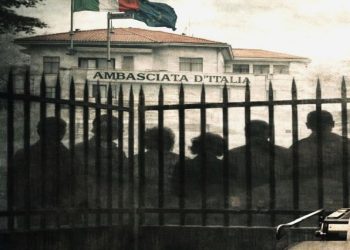
It was 1971. Professor Jonuz Blakçori – tall, with a beret on his head and a confident step – was walking, according to an official notification, to the “Dajti” hotel, toward a fateful meeting with an editor from the Italian publishing house who had come on business, of course, for some contract with state institutions. Before going there, he sought the opinion of the Internal Branch.
– “There is nothing to worry about. Go and meet him!” – they told him.
The Italian official, after a simple and cordial conversation, handed him the requested books. After the meeting, the professor went again to the Internal Branch.
– “It’s fine. Don’t worry, enjoy them!” – the chief told him after casting a cold glance at the books.
Their arrival, on the one hand, raised the quality of his teaching, and on the other hand, the State Security increased vigilance, with tracking and wiretapping. It naturally sent its own man to learn Italian and to listen to what the old man from Peja said about Kosovo, what he said about European culture, what books were hidden on the shelves behind the cherry curtains. Thus, a trap was set inside the studio.
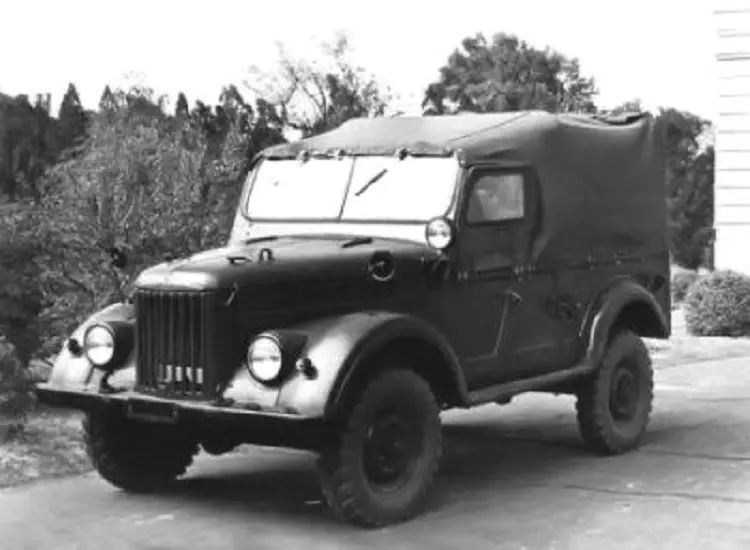
Finally, the year 1975 arrived – the black year of “revolutionary vigilance” against “agencies,” “agents,” “polyagents,” “putschists” – the time when, because of endless injustices, Enver Hoxha would suffer a heart attack. On the cold night of January 8, they knocked at the professor’s house – he would turn 80 in four months. They told him to dress and take personal belongings with him. They tied his hands and sent him off. After a terrible journey, he learned that he was in the camp of Çerma, in Lushnjë.
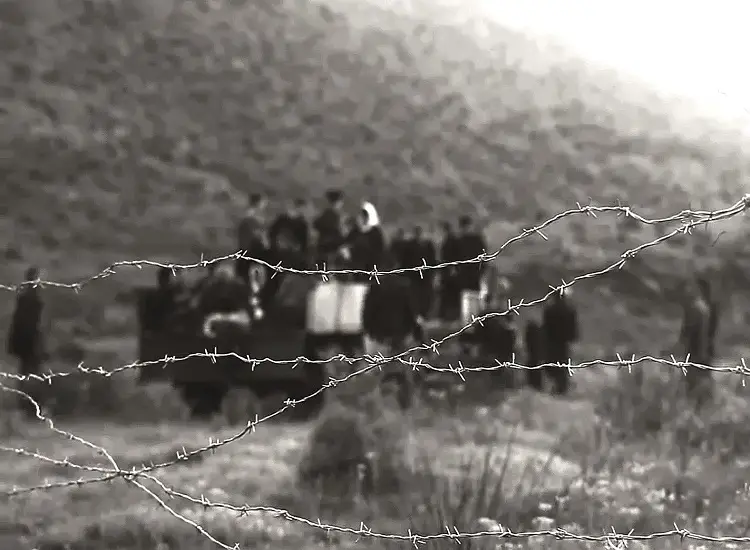
From the speech of the young men who happened to be near him, he understood that they were Albanian boys from Kosovo, interned there years earlier. So the tragedy was not leaving the Albanian sons of Kosovo; persecution followed them step by step, not only in their homeland but also in the mother country. Apart from the physical suffering, what was happening was a grave humiliation that struck like a nail in the head and in the tormented soul of the Albanian nation.
Insulted and shattered, in April 1975, Jonuz Blakçori – freedom fighter, “Bashkimi” member, professor and publicist from Peja – passed away in the hospital of Lushnjë, despite the care of his fellow-countrymen, who stood by him like his own sons, disappointed in the shackles of the extermination camp – a shame that would follow the communist regime after its fall, with the toppling of idols and clay walls. The news crossed the border and saddened Peja and the cities of Kosovo.
Passers-by, walking along the pavement of “Fortuzi” Street in Tirana, noticed that behind the shutters, the studio window no longer gave out light. A sad shadow covered the house and themselves. / Memorie.al